by Christopher Jones
What if the most underrated mushroom at the farmers market could transform an ordinary weeknight dinner into something genuinely memorable? Hen of the woods mushroom recipes deliver a meaty texture, deep earthy flavor, and remarkable versatility that our team keeps coming back to — and they work for beginners and experienced cooks alike. Browse our recipe blog for more inspiration across all cooking styles and skill levels.

Also called maitake (pronounced my-TAH-keh), hen of the woods mushrooms — scientific name Grifola frondosa — grow in large, fan-shaped clusters at the base of hardwood trees like oak. They're prized in Japanese cooking for their bold umami flavor and firm, layered texture that doesn't fall apart under high heat. According to Wikipedia's entry on maitake, these mushrooms have been used in East Asian cuisine and traditional medicine for centuries. Our team finds them one of the most rewarding wild-foraged — or store-bought — ingredients to cook with.
What follows is a practical breakdown: where to start, what gear helps most, the fastest recipes worth adding to regular rotation, real meal ideas our team actually makes, and a side-by-side method comparison that makes it easy to choose the right technique for any situation.
Contents
Most people who cook maitake for the first time are surprised by how little effort produces excellent results. The mushroom does most of the heavy lifting. These are the beginner-friendly fundamentals our team always shares first:
A straightforward butter sauté over medium-high heat is the entry point our team recommends for first-time cooks. It takes under 10 minutes, requires almost no specialized skill, and immediately showcases what makes this mushroom worth seeking out.
Once the fundamentals feel natural, there's genuine room to experiment. More advanced preparations our team has worked through:
The line between beginner and advanced isn't really about difficulty. It's about heat control and patience. High, sustained heat builds the caramelization and crust that make hen of the woods mushroom recipes genuinely impressive.
Pro tip: Never crowd the pan — maitake releases moisture quickly and will steam instead of sear if pieces overlap. Cook in batches rather than rushing it.
Great maitake doesn't require a professional kitchen setup. Our team consistently relies on a short list of quality basics:
In our experience, pan material matters more than almost any other equipment variable. A thin, lightweight pan simply cannot hold the heat needed for proper browning once the mushroom goes in.
A few extra tools open up more cooking options without a major investment:
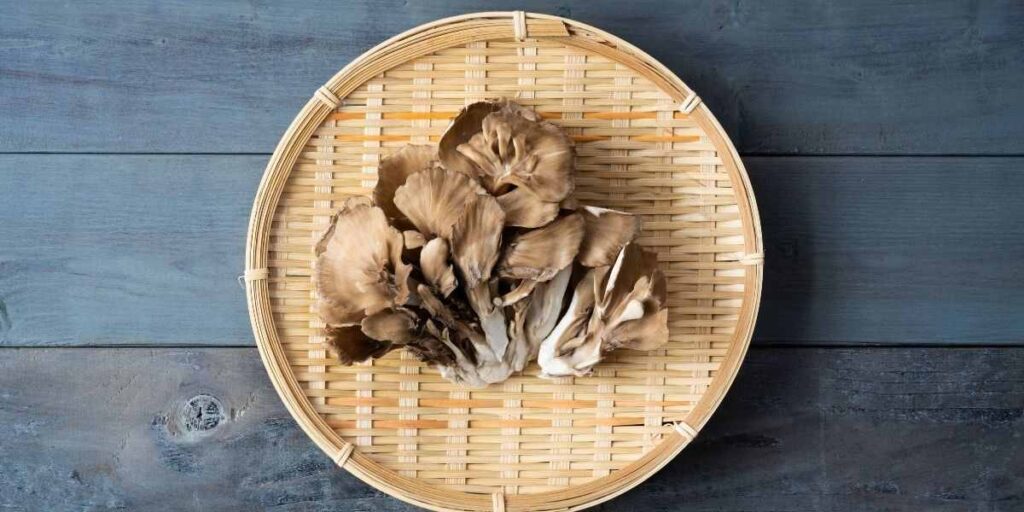
This is the fastest path to a result worth repeating. Our team uses this approach regularly for weeknight meals and considers it the foundation that all other techniques build on:
Total active time: under 10 minutes. This preparation pairs well with eggs, rice, crusty bread, or pasta. For anyone building plant-forward meals, our team regularly references healthy vegan recipe ideas where sautéed maitake fits as a natural centerpiece ingredient.
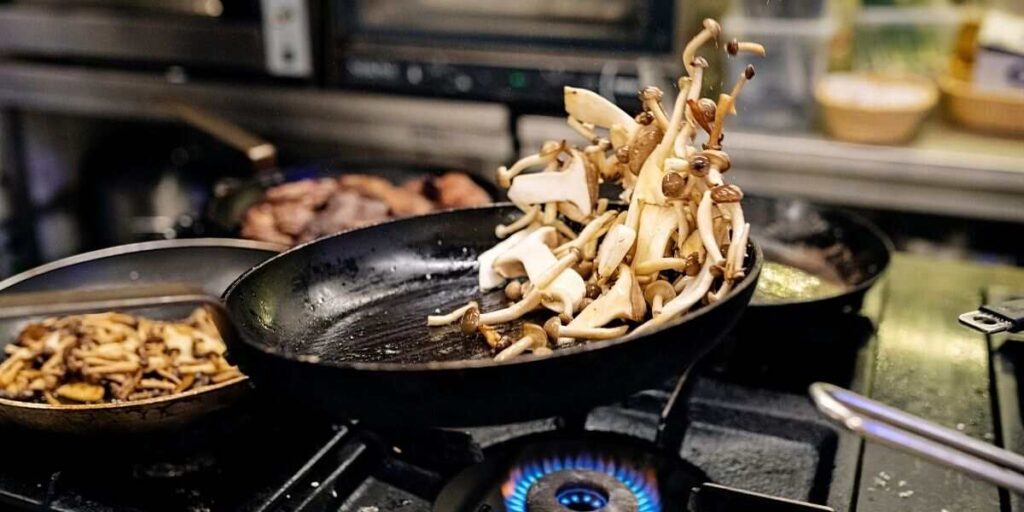
Pan-frying produces a crispier, more textured result — the thinner frond edges become almost chip-like while the thicker sections stay tender inside. Our team's preferred method:
Pan-fried maitake works as a side dish, a topping for grain bowls, or a meat substitute in tacos and sandwiches. Our team has also used it as a garnish for healthy soups — the contrast between a silky broth and crunchy maitake fronds is genuinely satisfying.
Hen of the woods mushroom recipes slot into a regular weeknight rotation more easily than most people expect. Our team reaches for maitake across a wide range of situations:
These uses fit naturally into healthy dinner meal planning since maitake is low in calories, high in fiber, and satisfying enough in both flavor and texture to stand in for meat across many dishes.

Grilling adds a smoky char that transforms maitake into something far more dramatic. Our team's approach for whole-cluster grilling:
A whole grilled maitake cluster serves as a compelling vegetarian main course. The presentation alone tends to get attention at the table, and the flavor earns its place alongside grilled proteins. Our team considers this the showpiece preparation in any hen of the woods mushroom recipe lineup.
Not every method suits every situation. Our team put together this reference to help anyone match the technique to their actual goal:
| Method | Active Time | Texture Result | Flavor Profile | Best For |
|---|---|---|---|---|
| Sauté | 8–10 min | Tender with crispy edges | Buttery, rich, umami | Weeknight sides, pasta, eggs |
| Pan-Fry | 10–12 min | Very crispy throughout | Nutty, savory, slightly rich | Tacos, grain bowls, soup garnish |
| Oven Roast | 20–25 min | Crispy edges, soft center | Deep, concentrated, earthy | Sheet pan meals, large batches |
| Grill | 15–18 min | Smoky exterior, meaty inside | Smoky, charred, bold | Main course, BBQ spreads |
| Braise / Simmer | 20–30 min | Soft, silky, sauce-forward | Deeply savory, rich broth | Soups, stews, ramen broth |
Our team's practical guidance based on common situations:
One thing our team considers universal across every method: thoroughly drying maitake before any high-heat cooking is the single most impactful preparation step. Wet mushrooms steam instead of brown, and the flavor and texture both suffer noticeably when that happens.
Maitake has a deep, earthy umami flavor with a slightly peppery, woodsy quality. The texture is firm and layered — it doesn't collapse or turn mushy under high heat the way button mushrooms sometimes do. Most people find the flavor noticeably richer and more complex than everyday grocery store varieties.
Farmers markets stock them seasonally, primarily in autumn. Many specialty and natural grocery stores carry them year-round, fresh or dried. Asian grocery stores often stock them regularly since maitake is common in Japanese and Korean cooking. Dried maitake rehydrates well and stores for months.
Our team doesn't recommend eating maitake raw. Cooking breaks down the tough cell walls, improves digestibility, eliminates any residual bitterness, and develops the characteristic rich flavor the mushroom is known for. A quick sauté is all it takes.
Store fresh maitake loosely wrapped in a paper bag — never sealed in plastic, which traps moisture and accelerates spoilage. Most clusters stay fresh for 5–7 days under proper storage. Signs of age include a slimy surface or ammonia-like smell.
 |
 |
 |
 |

About Christopher Jones
Christopher Jones holds an MBA from the University of San Francisco and brings a business-minded approach to kitchen gear evaluation — assessing products not just for performance but for long-term value, build quality, and real-world usability in everyday home cooking. He has spent years testing appliances, cookware, and kitchen gadgets with the same analytical rigor he developed in business school. At BuyKitchenStuff, he covers kitchen appliance reviews, buying guides, and practical cooking tips.
Check for FREE Gifts. Or get our Free Cookbooks right now.
Disable the Ad Block to reveal all the recipes. Once done that, click on any button below
|
|
|
|
