Kitchen Gadgets & Equipment Reviews ›
by Rick Goldman
Over half of professional chefs name a serrated knife as the single most underrated tool in the kitchen — yet most home cooks own only one, and it's almost always a cheap, dull afterthought sitting in the back of a drawer. That changes in 2026. The serrated knife market has evolved dramatically, with Japanese super steels, ergonomic offset handles, and precision-forged European blades giving you more options than ever before.
Whether you're slicing through a sourdough boule with a thick, crackling crust or cutting perfectly uniform tomato slices without crushing the flesh, the right serrated knife makes every cut cleaner, faster, and safer. The wrong one tears, rips, and leaves you with a pile of crumbs and frustration. If you've ever struggled with a bread knife that felt like it was fighting you, you already know what's at stake.
In this guide, we've tested and reviewed the top 7 serrated knives of 2026, covering everything from budget workhorses to premium Japanese Damascus blades. These are the knives that actually perform — not just look good in a block. You can also browse the full serrated knives category for more options and comparisons. Let's get into it.

Contents
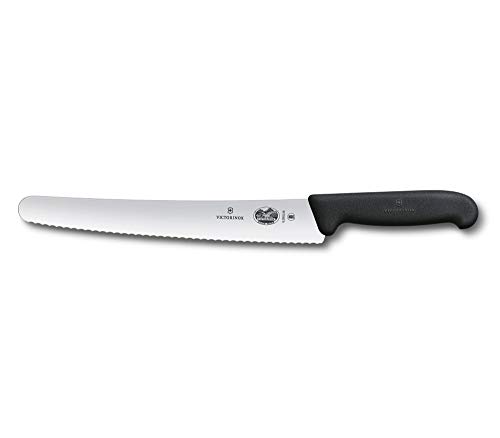




The Victorinox Fibrox is the knife that professionals use when they need reliable performance without paying a premium. At 10.25 inches, this is one of the longer bread knives on this list — and that extra length is a genuine advantage. You can slice an entire baguette or jumbo sandwich loaf in one smooth pass without sawing back and forth. The blade is made from high-carbon stainless steel with a stamped construction that keeps the knife lightweight yet surprisingly durable.
What separates this from cheap bread knives is the Fibrox Pro handle design. The textured, non-slip grip stays secure even when your hands are wet from rinsing tomatoes or handling produce. Victorinox built this knife for professional pastry chefs and bakers, and you can feel that intent in how it handles. It glides through crusty artisan loaves without compressing the soft interior, and it transitions effortlessly to slicing tomatoes, citrus fruits, and angel food cake.
For anyone building a kitchen toolkit on a budget, this is the serrated knife to start with. It's the choice of culinary schools, professional kitchens, and serious home bakers across the country — and for good reason. Pair it with a quality pastry setup like the options covered in our best pastry mats guide and you've got a baking station that punches above its weight.
Pros:
Cons:
Wüsthof has been making knives in Solingen, Germany for over 200 years, and the Classic IKON Double Serrated Bread Knife is one of their most refined achievements. What makes this knife stand out is the double serration pattern — each large tooth is flanked by a smaller serration, creating a cutting edge that bites into crust aggressively while still allowing precise control through the softer interior. The result is fewer crumbs, cleaner slices, and less effort on every single cut.
The blade is precision-forged from a single block of high-carbon stainless steel and tempered to 58 HRC. Wüsthof's Precision Edge Technology (PEtec) means this blade arrives 20% sharper than earlier models, with edge retention that doubles previous generations. The Classic IKON series features a distinctive double bolster design — one at the handle and one at the spine — that creates exceptional balance in the hand. The sleek black handle is ergonomically shaped with a subtle finger groove that positions your grip naturally and safely.
This is the knife you reach for when results matter. It handles baguettes, sourdough boules, and brioche with equal authority. If you're investing in a serious kitchen toolkit in 2026, the Wüsthof Classic IKON earns every dollar of its price tag through sheer performance and German craftsmanship.
Pros:
Cons:
If you want the sharpest serrated knife you can buy in 2026, the Shun Classic is the answer. Built with VG-MAX steel and 68 layers of Damascus cladding, this knife achieves a hardness and sharpness level that European-style bread knives simply cannot match. The 16-degree edge angle — compared to 20–22 degrees on most Western knives — slices through bread with a precision that feels almost surgical. Wide teeth grab tough crusts without compressing the soft crumb inside, producing bakery-quality slices every time.
Shun is a brand from the Kai Corporation in Seki City, Japan, the historic home of Japanese blade-making. The Classic series was the original authentic Japanese cutlery line introduced to the United States, and it remains the benchmark for Japanese kitchen knives in the Western market. The handle is crafted from ebony PakkaWood — a resin-impregnated hardwood composite that resists moisture, warping, and bacteria while looking stunning on any countertop. The D-shaped handle fits naturally in the right hand, though left-handed users should be aware of this orientation.
This knife rewards serious home cooks and culinary enthusiasts who understand that Japanese steel performs differently than German steel — not better or worse in all categories, but exceptionally sharper right out of the box. Handle it carefully, hand-wash it always, and it will outlast almost anything else in your kitchen.
Pros:
Cons:
ZWILLING J.A. Henckels has been forging knives in Germany since 1731 — nearly three centuries of expertise that shows in every detail of the Pro 9-inch Bread Knife. The SIGMAFORGE construction produces a blade from a single piece of Special Formula High-Carbon NO STAIN stainless steel, with no seams, weak points, or compromise in the material. It's ice-hardened using FRIODUR technology, which improves corrosion resistance and gives the blade a precise, long-lasting edge.
The standout feature of the ZWILLING Pro series is the curved bolster. Unlike a straight bolster that blocks the full length of the blade, the Pro's curved design exposes the entire cutting edge and encourages a rocking motion that improves precision, comfort, and safety simultaneously. The POM handle is virtually indestructible — resistant to impact, heat, and moisture — and ergonomically shaped to reduce fatigue during extended prep sessions. If you're already familiar with quality kitchen cookware like the sets reviewed in our top pot and pan sets guide, you'll recognize the same commitment to functional engineering here.
The Z15 serration pattern is engineered to minimize crumb loss while maximizing bite into hard crusts. It handles baguettes and sourdough bread expertly, but also performs well on roasts, pastries, and soft vegetables. This is a workhorse bread knife built to last decades in a serious kitchen.
Pros:
Cons:
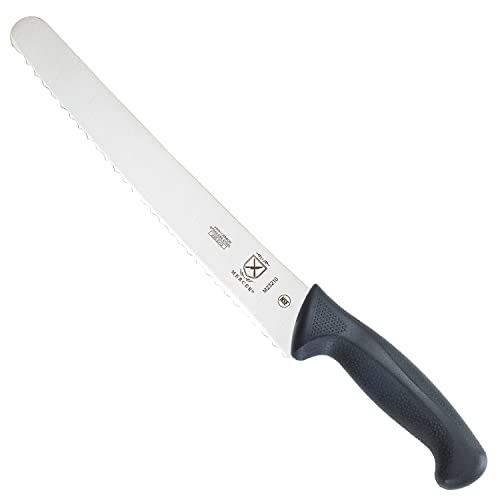
Mercer Culinary is the brand behind the knives used in culinary schools across North America, and the Millennia 10-Inch Bread Knife tells you exactly why. It's built from one-piece high-carbon Japanese steel with a wavy edge that slices through both tough crusts and delicate interiors without tearing. At 10 inches, it's one of the longer options on this list, giving you full coverage on oversized artisan loaves and large sandwich breads in a single pass.
The Millennia handle is where this knife earns its reputation with culinary students and professional cooks. Textured finger points on the handle provide a non-slip grip that stays secure even in wet conditions, while the ergonomic design reduces hand fatigue during long prep sessions. The handle is NSF-certified and meets the hygiene standards required for commercial food service environments. You're getting a knife that was literally designed for professional kitchens at a price that makes it accessible to every home cook.
The wavy edge design is particularly versatile. Beyond bread, this knife handles angel food cake, meatloaf, tomatoes, pineapple, and citrus with the same clean, controlled cut. It won't win beauty contests next to a Damascus-clad Shun, but in terms of raw performance-to-dollar ratio, this is the most efficient knife on this list.
Pros:
Cons:
Rada Cutlery has been manufacturing knives in Waverly, Iowa since 1948, and the R143 Bread Knife represents everything that makes American-made cutlery enduring. The T420 high-carbon stainless steel blade features a unique serration design with cutouts, ridges, and a distinctive forked end that you won't find on any other knife on this list. These aren't standard scalloped serrations — Rada's proprietary tooth pattern grabs and releases material in a way that reduces drag and improves slicing efficiency, especially on dense, chewy breads.
At 8 inches, this is one of the more compact options here, which makes it a practical choice for smaller kitchens, apartment living, or anyone who finds longer knives unwieldy. The brushed aluminum handle with satin finish is clean, classic, and built to last — though it is handwash-only and can become slippery with wet hands, so be mindful of your grip during use. The knife's balance feels slightly blade-forward due to the lighter handle material, which some users prefer for aggressive slicing tasks.
Rada knives are frequently sold through church fundraisers and community organizations, which speaks to their broad appeal and reputation for reliability among everyday home cooks. If you value American manufacturing and a proven design over flashy Damascus patterns, the Rada R143 delivers consistent, dependable performance year after year.
Pros:
Cons:
The Dalstrong Shogun Series Offset Bread Knife is unlike anything else on this list — and that's entirely the point. The L-shaped offset blade design lowers the handle above the cutting plane, giving your knuckles complete clearance from the cutting board on every stroke. If you've ever scraped your knuckles while slicing bread, you know exactly how valuable that feature is. The ergonomic benefit is real and immediate: less wrist strain, more natural cutting motion, greater control over each slice.
The blade itself is built from a single piece of AUS-10V Japanese super steel — one of the hardest, sharpest alloys available in consumer cutlery — with 67 layers of Damascus cladding and a vacuum heat treatment for outstanding durability. The blade is hand-sharpened using the honbazuke method to a single-bevel edge at 8–10 degrees, making this among the sharpest serrated knives you can own in 2026. The G10 Garolite handle is ambidextrous, virtually impervious to heat and moisture, and fitted with copper and brass mosaic pins that give it a distinctive, premium appearance. The included sheath protects the blade beautifully. According to Wikipedia's overview of kitchen knives, offset bread knives were originally developed for professional bakery and deli use — Dalstrong has taken that professional concept and executed it at a premium level for home cooks.
This knife handles everything from sourdough and baguettes to watermelon, pineapple, and barbecued meats. It's a genuine multi-purpose serrated blade that excels anywhere its offset geometry gives you an advantage. If you're serious about building a high-performance knife collection, the Dalstrong Shogun Offset is a genuinely distinctive addition. If you enjoy baking and slicing, pair this with quality tools like the ones featured in our best rolling pin guide for a complete baking setup.
Pros:
Cons:
Blade length is the most practical consideration when choosing a serrated knife. Here's how to think about it:
If you bake your own bread regularly — and especially if you make large loaves — go with 10 inches. For everything else, 9 inches covers you completely.
Not all serrations are equal. The pattern directly affects how the knife cuts and how often it needs maintenance.
The two dominant steel traditions each offer distinct trade-offs you should understand before you buy:
Bottom line: If you want maximum sharpness and edge retention and you'll treat your knife carefully, go Japanese. If you want durability and easy maintenance, go German. If you want great performance at an honest price, stamped high-carbon steel delivers.
A knife you can't hold securely is a knife that will eventually hurt you. Evaluate handles on these criteria:
If you're also investing in other baking tools, check out our guide to the best pastry mats — a great companion to any serious serrated knife upgrade.
A bread knife is a type of serrated knife specifically designed for slicing bread and baked goods. It features a long blade (typically 8–10 inches) with larger serrations optimized for cutting through tough crusts without compressing the soft interior. General-purpose serrated knives are often shorter with finer serrations better suited for fruits, tomatoes, and other soft foods. In practice, a quality bread knife handles most tasks you'd use any serrated knife for, making it the more versatile choice for most kitchens.
Yes, but it requires the right tool and technique. Standard whetstones and pull-through sharpeners won't work on serrated blades. You need a tapered ceramic sharpening rod that fits into each individual serration. Sharpen each gullet separately with a few light strokes, then use a flat stone to remove the burr on the flat side of the blade. Many cooks choose to have serrated knives professionally sharpened every 2–3 years instead — especially on premium Japanese blades where the angles are critical.
A quality serrated knife from a reputable brand should last 10–20 years or longer with proper care. The serrations are actually more durable than straight edges in one sense — they don't require frequent sharpening because each individual point does less work per stroke. If your serrated knife is tearing bread rather than slicing it cleanly, it's time to sharpen or replace it. Cheaper knives with stamped serrations may dull within 2–3 years of regular use.
A double serrated knife, like the Wüsthof Classic IKON reviewed above, features a two-tier serration pattern: large primary teeth alternating with smaller micro-serrations. This design creates more cutting contact with the bread surface, which means fewer crumbs, cleaner slices, and less effort on every stroke. The double pattern is particularly effective on extremely crusty artisan breads where a standard serration might skip or tear the exterior before engaging the cut properly.
If you've ever scraped your knuckles on the cutting board while slicing bread, the answer is an unqualified yes. The L-shaped offset design of knives like the Dalstrong Shogun lowers the blade below the handle, giving your knuckles full clearance from the board on every stroke. Beyond safety, the offset geometry encourages a more natural wrist position that reduces fatigue during extended slicing. It does take a few sessions to adjust your technique, but most users adapt quickly and never go back to a standard design.
Any well-sharpened serrated knife will slice tomatoes cleanly — the key is sharpness, not length. For tomatoes specifically, a shorter blade (8–9 inches) with a scalloped or wavy serration pattern gives you the most control. The Mercer Culinary Millennia, Victorinox Fibrox, and Dalstrong Shogun Offset all excel at tomatoes. The offset handle of the Dalstrong is particularly useful for tomatoes on a flat board. Avoid dull knives at all costs — a dull serrated blade will crush and tear tomatoes rather than slicing them cleanly.
 |
 |
 |
 |

About Rick Goldman
Rick Goldman grew up traveling the Pacific Coast and developed an early appreciation for regional and international cuisines through exposure to diverse food cultures from a young age. That culinary curiosity shaped his approach to kitchen gear — he evaluates tools based on how well they perform across different cooking styles, ingredient types, and meal occasions. At BuyKitchenStuff, he covers kitchen equipment reviews, recipe guides, and food-focused buying advice.
