by Christopher Jones
Ever pulled leftover fried fish out of the fridge and wondered if there's any way to bring back that golden, crispy coating? Our team has tested dozens of methods, and reheating fried fish in an air fryer is hands down the best approach for restoring crunch without drying out the meat inside. Most people assume that yesterday's fried fish is destined for the trash or a sad microwave session, but that's simply not true. With the right temperature, timing, and a few tricks our kitchen crew has picked up over the years, anyone can enjoy leftover fried fish that tastes nearly as good as it did fresh out of the fryer. This guide covers everything from cooking techniques and cost breakdowns to troubleshooting common problems — all tested in our own kitchen.

The secret isn't complicated. An air fryer circulates hot air at high speed around food, which re-crisps the breading while gently warming the fish inside. Unlike a conventional oven that takes forever to preheat, or a microwave that turns everything into a rubbery mess, the air fryer hits a sweet spot between speed and quality. Our team has reheated everything from beer-battered cod to panko-crusted tilapia, and the results speak for themselves.
Below, we break down the full process — including the gear that matters, what it costs, mistakes that ruin the texture, and side-by-side comparisons with other reheating methods. Whether someone is working with a compact basket-style air fryer or a large oven-style unit, these tips apply across the board.
Contents
One of the biggest reasons our team recommends air fryer reheating is the cost. Compared to firing up a full-size oven, an air fryer uses a fraction of the electricity. Most home cooks don't think about energy costs for something as simple as warming up leftovers, but it adds up — especially for families that cook in large batches and reheat throughout the week.
A typical air fryer draws between 1,200 and 1,800 watts. Reheating fried fish takes roughly 5 to 8 minutes at 370°F. That works out to about 0.15–0.24 kWh per session. At the national average electricity rate of roughly $0.16 per kWh (according to the U.S. Energy Information Administration), each reheat costs between 2 and 4 cents. A conventional oven running at 400°F for 15–20 minutes costs roughly 15–20 cents per session. Over a month of regular reheating, the air fryer saves a noticeable amount.
Anyone shopping for an air fryer specifically for reheating doesn't need to spend a fortune. Budget basket models in the $30–$50 range handle fried fish beautifully. Mid-range units ($60–$120) offer larger capacity and digital controls. Premium oven-style models ($150+) are great for bigger households but aren't necessary just for reheating. Our team's advice: a basic basket-style air fryer in the $40–$60 range is the sweet spot for most people who primarily want to reheat fried foods. Those interested in other convection cooking methods might also enjoy exploring turbo convection oven recipes for similar crispy results.
A light mist of cooking spray on the fish before reheating adds crunch without adding sogginess — one quick pass from 6 inches away is all it takes.
Our team has made every mistake in the book so that others don't have to. Reheating fried fish in an air fryer seems straightforward, but a few common errors can turn a perfectly good piece of fish into something disappointing. Here are the ones we see most often.
This is the number one mistake. When pieces of fish overlap or touch each other in the basket, the hot air can't circulate properly. The result is patches of soggy breading where the pieces were pressed together, while the exposed edges get too crispy or even burnt. A single layer with at least half an inch of space between pieces is non-negotiable. For larger batches, reheating in two rounds produces far better results than cramming everything in at once.

Putting cold fish into a cold air fryer means the breading absorbs moisture from the fish as both warm up together. That leads to a soggy exterior. Preheating the air fryer for 2–3 minutes at 370°F creates an immediate blast of heat that starts crisping the coating the moment the fish goes in. It's a small step that makes a dramatic difference. Some people also skip bringing the fish to near room temperature first — pulling it from the fridge 10–15 minutes early helps it heat more evenly throughout.
Another common pitfall is setting the temperature too high. Cranking it to 400°F or above might seem like a shortcut, but it dries out the fish inside before the center gets warm. Patience at 370°F delivers the best balance every time. The same principle applies when reheating pizza in an air fryer — moderate heat preserves texture far better than blasting it on high.
Even with proper technique, things go sideways sometimes. Here's how our team diagnoses and fixes the most common problems when reheating fried fish in an air fryer.
Soggy breading almost always comes from excess moisture. If the fish was stored without proper wrapping, condensation builds up on the surface. The fix is simple: pat the fish dry with a paper towel before placing it in the basket. For heavily battered fish (like British-style fish and chips), a very light spritz of cooking oil spray helps the exterior re-crisp. Our team also found that placing a small piece of parchment paper under the fish — with holes punched in it for airflow — prevents the bottom from getting steamy.
If the coating is falling off entirely, the fish may have been stored while still hot. Steam trapped in a sealed container loosens the breading from the fish. The long-term fix is letting fried fish cool completely on a wire rack before refrigerating. This keeps the coating intact and makes reheating much easier.
Dry fish means it was reheated too long or at too high a temperature. Thin fillets (like tilapia or flounder) need only 3–4 minutes at 370°F. Thicker pieces (cod, haddock) need 5–7 minutes. Checking at the 3-minute mark and flipping the fish halfway through prevents overcooking. If the fish is already borderline dry from the initial frying, wrapping it loosely in foil for the first 2 minutes and then removing the foil for the final 2 minutes helps retain moisture while still crisping the outside.
Never reheat fried fish more than once — each cycle pulls more moisture from the meat, and no amount of technique can fix fish that's been reheated twice.
Our team ran controlled tests with several types of fried fish to see exactly how the air fryer performs. The goal was to find the ideal time and temperature for each style of breading and thickness.
Beer-battered cod is notoriously tricky to reheat because the thick, puffy batter tends to go limp. We stored freshly fried pieces in the fridge overnight, wrapped loosely in foil with paper towels underneath to absorb moisture. The next day, we preheated the air fryer to 370°F, placed the cod in a single layer, and reheated for 6 minutes, flipping at the 3-minute mark. The result was impressive — the batter had about 85% of its original crunch, and the interior was moist and flaky. The trick with thick batter is the flip. Without it, the bottom stays soft.
Cornmeal-coated catfish reheats better than almost any other fried fish. The fine, grainy coating crisps up fast and holds its texture well. Our test showed that 4 minutes at 370°F was perfect for standard-thickness fillets. No flip needed — the cornmeal coating is thin enough that hot air penetrates evenly from all sides. This is a great option for anyone doing meal prep with seafood recipes who wants quick lunches throughout the week. The catfish came out with a satisfying crunch that honestly rivaled the fresh version.
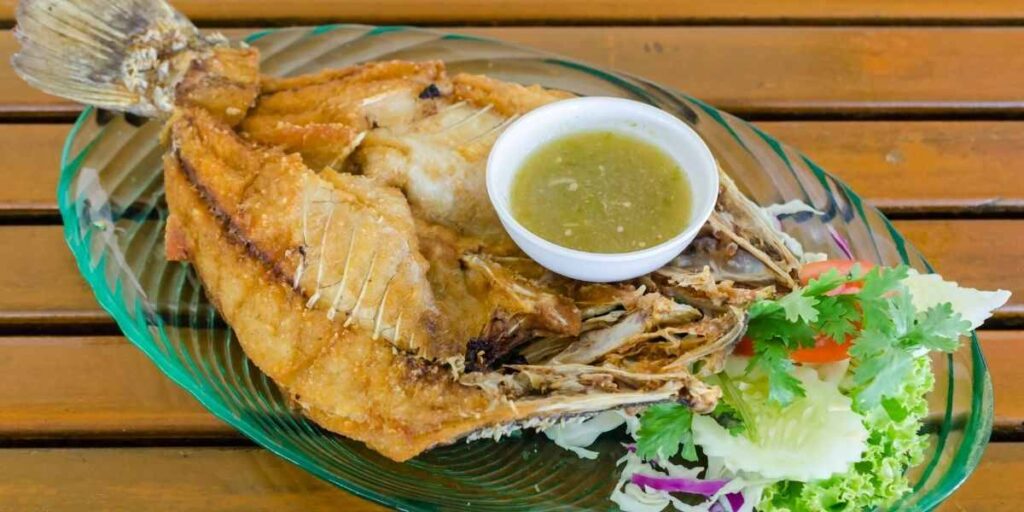
Most people default to whatever reheating method is fastest, but speed isn't everything. Our team tested the same batch of fried fish across three methods to compare crispness, moisture retention, energy cost, and total time. The differences are significant.
| Method | Temperature | Total Time | Crispness (1–10) | Moisture (1–10) | Energy Cost | Best For |
|---|---|---|---|---|---|---|
| Air Fryer | 370°F | 5–8 min | 9 | 8 | ~$0.03 | All fried fish |
| Conventional Oven | 400°F | 15–20 min | 7 | 7 | ~$0.18 | Large batches |
| Toaster Oven | 375°F | 10–12 min | 7 | 7 | ~$0.08 | Small portions |
| Microwave | High | 1–2 min | 2 | 5 | ~$0.01 | Emergencies only |
| Skillet (stovetop) | Medium | 4–6 min | 8 | 6 | ~$0.05 | Thin fillets |
The air fryer wins in nearly every category that matters. The only scenario where a conventional oven makes sense is when reheating a very large quantity — like an entire tray of fish for a family gathering. For everyday reheating of one to four pieces, the air fryer is unmatched. The microwave scores lowest on crispness because it heats by exciting water molecules, which turns crispy coatings soft and rubbery. Our team only recommends microwaving fried fish as an absolute last resort.
To be fair, a microwave has one legitimate use case with fried fish: when someone genuinely doesn't care about the breading and just wants warm fish fast. Removing the breading entirely, placing the fish on a microwave-safe plate with a damp paper towel over it, and heating for 30-second intervals produces acceptable plain fish. But at that point, it's no longer fried fish — it's just reheated fish. For anyone who values the crispy coating, the air fryer remains the clear winner.
Reheating fried fish in an air fryer works best when it's part of a deliberate system rather than an afterthought. Our team has developed a simple routine that ensures leftover fried fish always turns out well, every single time.
How fried fish is stored determines at least half of how well it reheats. The biggest mistake most people make is tossing hot fried fish straight into a plastic container and sealing the lid. The trapped steam destroys the breading within minutes. Instead, letting the fish cool on a wire rack for 15–20 minutes before storing keeps the coating crisp. Once cooled, wrapping each piece loosely in foil or placing them in a container lined with paper towels absorbs residual moisture. Fish stored this way reheats dramatically better than fish dumped into a container while still warm.
For longer storage, fried fish keeps well in the freezer for up to a month. Freezing actually works in favor of reheating — the dry cold environment preserves the breading texture. When reheating from frozen, add 2–3 extra minutes to the air fryer time and keep the temperature at 370°F. No need to thaw first. Keeping the kitchen organized and clean also helps with efficient meal prep — our team has found that maintaining a tidy workspace makes batch cooking and storing leftovers much smoother.
For households that eat fried fish regularly, batch frying on a weekend and reheating throughout the week is a game-changer. Our team recommends frying a large batch on Sunday, cooling and storing properly, and then reheating individual portions as needed. The air fryer makes this practical because each reheat takes under 8 minutes — faster than most people spend waiting for delivery food. Pairing reheated fish with quick air fryer sides like air fryer carrots creates a full meal in minutes with minimal cleanup.
Always store fried fish on a wire rack or paper towels — never in a sealed container while still warm. Moisture is the enemy of crispy breading.
The air fryer itself does the heavy lifting, but a few inexpensive accessories make the process smoother and more consistent.
An instant-read thermometer is the single most useful tool for reheating any protein. Fried fish should reach an internal temperature of 145°F (the safe minimum set by the USDA for fish). Guessing by time alone works most of the time, but a thermometer removes all doubt — especially with thicker cuts. A good one costs $10–$15 and lasts for years.
Perforated parchment liners designed for air fryers prevent breading from sticking to the basket without blocking airflow. They come in rounds or squares sized to fit standard baskets and cost a few dollars for a pack of 100. Our team uses them for every reheat — cleanup becomes almost nonexistent. A pair of silicone-tipped tongs is also essential for flipping delicate fish without tearing the breading. Metal tongs work but risk scratching the basket's nonstick coating and can break apart fragile batter.
A small oil mister (refillable spray bottle) gives more control than aerosol cooking sprays. Most aerosol sprays contain propellants that can damage nonstick coatings over time. A manual mister filled with avocado oil or light olive oil lets anyone apply a precise, even coat. It costs about $8–$12 and pays for itself quickly. For anyone who reheats fried foods frequently, a second air fryer basket or rack insert allows back-to-back batches without waiting for the first basket to cool. These accessories run $15–$25 depending on the brand and size.
Our team consistently gets the best results at 370°F. This temperature re-crisps the breading without drying out the fish inside. Going above 390°F risks burning the coating before the center warms through, while anything below 350°F takes too long and can leave the breading soft.
Most pieces take between 4 and 8 minutes depending on thickness. Thin fillets like tilapia need only 3–4 minutes. Thicker cuts like cod or haddock need 5–7 minutes. Our team recommends checking at the 3-minute mark and flipping halfway through for even heating.
Absolutely. There is no need to thaw first. Simply add 2–3 minutes to the normal reheating time and keep the temperature at 370°F. Frozen fried fish actually reheats surprisingly well because the freezer preserves the breading texture better than refrigeration in some cases.
Reheating itself doesn't change the nutritional content significantly. However, the air fryer doesn't add any extra oil during reheating, unlike re-frying in a pan. Some excess oil from the original frying also drips away into the basket, which can slightly reduce the overall fat content of the finished piece.
This usually happens because the fish was stored improperly. If hot fried fish is sealed in an airtight container, steam loosens the bond between the breading and the fish. Cooling the fish completely on a wire rack before storing and using paper towels to absorb moisture prevents this problem almost entirely.
Yes, as long as the fish was refrigerated within two hours of the original cooking and stored at 40°F or below. Reheated fried fish should reach an internal temperature of 145°F. Properly stored fried fish is safe to reheat for up to 3–4 days after the initial cooking.
It can, but our team recommends reheating them separately for the best results. Chips (fries) and fish often need different times — fries usually take a minute or two longer. Reheating them together means either the fish gets overdone or the fries stay limp. Running two quick batches gives better results overall.
Cornmeal-coated fish (like catfish) and panko-breaded fish reheat the best because these coatings are naturally dry and crisp up quickly. Beer-battered fish reheats well too but requires flipping halfway through. The only type that struggles is very thinly battered tempura-style fish, which can dry out before the coating re-crisps properly.
Great reheated fried fish starts the moment the original batch comes out of the fryer — cool it right, store it right, and the air fryer handles the rest.
 |
 |
 |
 |

About Christopher Jones
Christopher Jones holds an MBA from the University of San Francisco and brings a business-minded approach to kitchen gear evaluation — assessing products not just for performance but for long-term value, build quality, and real-world usability in everyday home cooking. He has spent years testing appliances, cookware, and kitchen gadgets with the same analytical rigor he developed in business school. At BuyKitchenStuff, he covers kitchen appliance reviews, buying guides, and practical cooking tips.
Check for FREE Gifts. Or get our Free Cookbooks right now.
Disable the Ad Block to reveal all the recipes. Once done that, click on any button below
|
|
|
|
