by Daisy Dao
Psyllium husk powder benefits are well-established and immediately usable — this soluble fiber binds gluten-free doughs, lowers cholesterol, and regulates blood sugar, all from a single pantry ingredient. One teaspoon added to your morning smoothie or your next baking project puts those benefits to work right away. Whether you landed here through a baking problem or a health question, the BuyKitchenStuff blog has the practical answers you need.
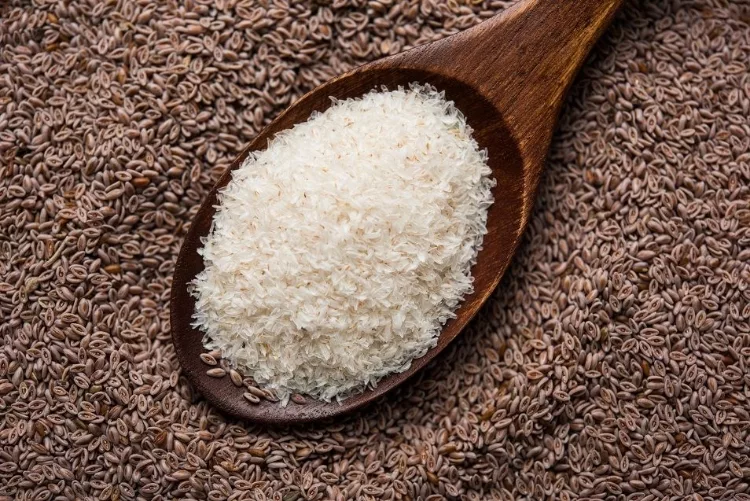
Psyllium husk powder comes from the husks of Plantago ovata seeds — a plant cultivated primarily in India for its remarkable mucilaginous fiber content. When it contacts liquid, it swells into a thick, viscous gel. That single property drives every digestive, cardiovascular, and culinary benefit it provides. The powder form dissolves faster and mixes more evenly than whole husks, making it the preferred format for both supplementation and precision cooking.
In this guide you'll get the benefits backed by evidence, the kitchen techniques that actually work, an honest head-to-head comparison with whole husks, reliable substitutes, and the most common errors that ruin results. Let's get into it.
Contents
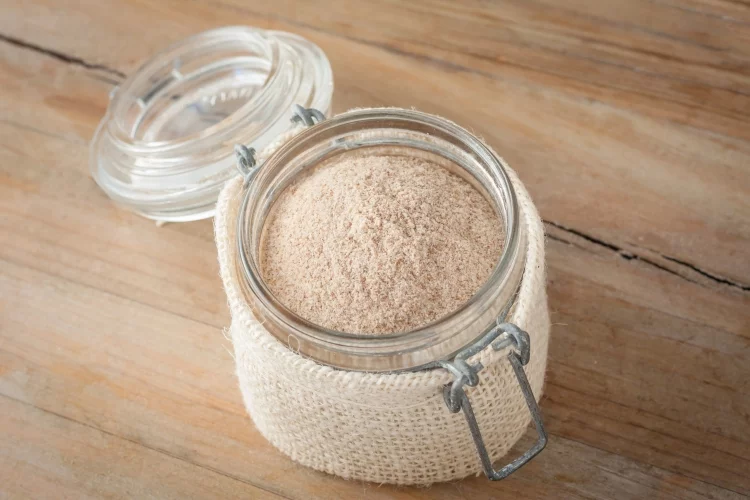
Psyllium husk powder is a finely milled form of the outer seed coat of Plantago ovata. It is one of the richest natural sources of soluble fiber available — roughly 70% of its fiber content is soluble, which is significantly higher than oat bran or flaxseed. According to Wikipedia's overview of psyllium, the plant has been used medicinally for centuries in Ayurvedic and traditional Chinese medicine, and modern clinical research has validated most of those traditional uses.
Understanding this mechanism explains every use case:
In a glass of water, psyllium is a supplement. In bread dough, it's the structural glue that replaces gluten. Same powder, completely different applications — all from the same mechanism.
For cooking precision, powder is the better choice. For a quick fiber drink where some texture is acceptable, either works.
Not every supplement delivers what it promises. Psyllium husk powder benefits are among the most consistently replicated findings in dietary fiber research — the clinical evidence is solid, the mechanisms are understood, and the FDA has issued formal health claims for two of them. Here's what it actually does.

Psyllium husk powder is the most evidence-backed natural remedy for both constipation and mild diarrhea. That dual action — bulking stool when you're constipated, absorbing excess water when you're not — is why it's the active ingredient in commercial fiber supplements like Metamucil.
If you're recovering from a stomach illness, psyllium can help normalize gut function quickly. Combining it with the advice in our guide on what to eat after food poisoning gives your digestive system a two-front recovery approach.

The gel psyllium forms in your gut binds to bile acids — compounds synthesized from cholesterol. Your liver then pulls more cholesterol from your bloodstream to produce new bile acids, effectively lowering your circulating LDL. Multiple meta-analyses confirm LDL reductions of 5–10% with consistent psyllium use at standard doses.

By slowing carbohydrate absorption, psyllium husk powder blunts the glucose spike after meals. For people managing type 2 diabetes or insulin resistance, this is a meaningful, non-pharmaceutical tool. Take it before meals — not after — to get maximum effect on postprandial glucose levels.
If you're on medication for diabetes or blood pressure, consult your doctor — psyllium can significantly enhance medication effects and may require dosage adjustment.

Psyllium husk powder contributes to weight control through satiety — the gel in your stomach slows emptying and keeps you feeling full longer. It's not a fat-burner. It's a reliable, stimulant-free appetite regulator. Combine it with a calorie-conscious approach (our guide on what to eat for dinner to lose weight covers the diet side) and the results compound. Our cabbage soup recipe for weight loss pairs naturally with a fiber-forward eating plan.
This is where psyllium husk powder separates itself from every other fiber supplement — it's genuinely useful as a cooking ingredient, not just a health add-on you choke down with water.

Psyllium husk powder is the closest functional analog to gluten that gluten-free baking has. It binds dough, traps gas bubbles during fermentation, and gives bread and muffins structural integrity that rice flour, almond flour, or tapioca alone cannot provide. Standard dosing ratios:
If you're baking in a convection oven, moisture management is even more critical. Our guide on baking brownies in a convection oven covers adjustments to time and temperature that apply broadly to any gluten-free bake.
Beyond baking, psyllium husk powder is a reliable low-carb thickener for sauces, soups, and drinks. Use it wherever you'd reach for cornstarch, but want zero net carbs and added fiber.
For smooth, lump-free blending, a high-powered blender makes a measurable difference. Our Vitamix vs. Blendtec comparison covers exactly which machine handles high-fiber, high-viscosity blends best.
Pro tip: Always disperse psyllium husk powder into liquid before it contacts other dry ingredients — pre-hydrating it for 30 seconds prevents clumping and ensures even distribution in your final mix.
The format you choose matters more in the kitchen than most people realize. Here's the direct comparison:
| Property | Psyllium Husk Powder | Whole Psyllium Husks |
|---|---|---|
| Texture in finished bakes | Smooth and invisible | Slightly gritty, visible specks |
| Gel strength per gram | Stronger | Moderate |
| Dispersal speed in liquid | Fast — disperses within seconds | Slower, requires stirring |
| Best applications | Baking, sauces, supplements | Fiber drinks, overnight oats |
| Conversion ratio | Use ¾ tsp powder… | …to replace 1 tsp whole husks |
| Price | Slightly higher per ounce | Slightly lower per ounce |
| Shelf life (sealed) | 2+ years | 2+ years |
For most kitchen applications, powder is the superior choice. The finer grind disappears into doughs and sauces without affecting texture. Whole husks are perfectly acceptable for drinks where slight texture is not a problem.
Psyllium husk powder is dose-sensitive. Too little and you won't see structural results in baking or health benefits from supplementation. Too much and your bake turns dense and gummy, or your supplement causes uncomfortable fullness.
This is the most overlooked part of psyllium husk use. The gel it forms requires adequate water — not just for effectiveness, but for safety.
Staying consistently hydrated amplifies every benefit psyllium delivers. Our guide on hydrating for health by drinking more water gives you daily intake strategies that work alongside a fiber-heavy diet.
Psyllium husk powder earns its reputation, but it's not perfect for every situation.
Pros:
Cons:
When you're out of psyllium or need a different texture profile, these alternatives hold up best:
If your bakes are turning purple, that's a chemical reaction between psyllium and alkaline ingredients like baking soda. Slightly reduce the baking soda in your recipe, or add a small amount of apple cider vinegar or cream of tartar to acidify the dough and neutralize the reaction.
Psyllium husk powder is used as a dietary fiber supplement to improve digestion, lower LDL cholesterol, and regulate blood sugar. In the kitchen, it functions as a gluten replacement in gluten-free baking and as a low-carb thickener in sauces, soups, and smoothies.
The standard dose is 5–10 grams (roughly 1–2 teaspoons) per serving, taken 1–3 times daily with a full glass of water. Start with one dose per day and increase gradually over one to two weeks to minimize bloating and gas.
Yes — psyllium husk powder supports weight loss by increasing satiety hormones and slowing gastric emptying, which reduces overall caloric intake. It is not a fat burner, but it is a well-supported, stimulant-free appetite regulator with no significant side effects at normal doses.
Ground flaxseed is the best all-around baking substitute — it forms a similar gel, provides binding strength, and adds a mild nutty flavor. For fine pastries where flavor neutrality is critical, xanthan gum at a ½:1 ratio is the better option.
No — psyllium husk powder has a nearly neutral flavor and does not affect the taste of baked goods, drinks, or sauces at standard doses. Very high concentrations can contribute a faintly earthy undertone, but at normal cooking amounts it is essentially undetectable.
Yes, psyllium husk powder is safe for daily use at standard doses, provided you consume adequate water with each serving. Long-term use is well-tolerated in clinical trials and is associated with sustained improvements in cholesterol and bowel regularity without dependence.
The discoloration is caused by a chemical reaction between psyllium's mucilage compounds and alkaline ingredients like baking soda. To prevent it, slightly reduce the baking soda in your recipe or add a small amount of apple cider vinegar or cream of tartar to bring the pH down.
 |
 |
 |
 |

About Daisy Dao
Daisy Dao grew up in Honolulu, Hawaii, where coastal living and access to fresh local ingredients shaped her approach to home cooking from an early age. She has spent years experimenting with seafood preparation, healthy cooking methods, and ingredient substitutions — developing hands-on familiarity with a wide range of kitchen tools, techniques, and produce. At BuyKitchenStuff, she covers healthy recipes, cooking techniques, and ingredient substitution guides.
Check for FREE Gifts. Or get our Free Cookbooks right now.
Disable the Ad Block to reveal all the recipes. Once done that, click on any button below
|
|
|
|
