by Christopher Jones
With more than 20,000 known ant species on Earth and colonies that can contain up to 500,000 workers, knowing how to get rid of ants in garden beds without harming your plants is one of the most valuable skills any home grower can develop. Ants aren't always bad — but when they start tunneling through your raised beds or farming aphids on your tomatoes, you need a real strategy. This guide cuts through the noise and gives you proven, plant-safe methods that actually work, straight from your gardening toolkit.
The good news is that most ant problems respond to items you already own. Diatomaceous earth, boiling water, garlic spray, and targeted bait stations can eliminate the worst infestations without a single drop of harsh pesticide. The bad news? A lot of popular advice is flat-out wrong — and following it can make your ant problem significantly worse.
Whether you're protecting a small herb pot on the windowsill or a full raised bed setup, the methods here scale to any garden size. Read through the whole thing before you start — understanding what not to do is half the battle.
Contents
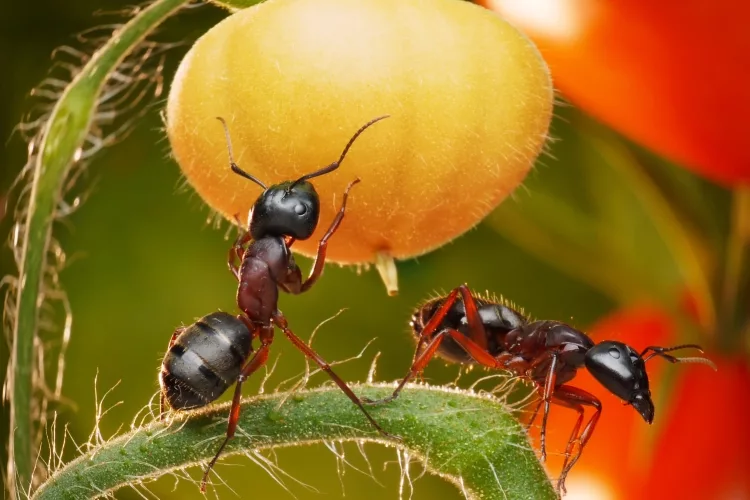
Before you can fix the problem, you need to understand what's drawing ants to your space in the first place. Most ants colonize gardens for one of three reasons: food, shelter, or to farm aphids. Aphids (tiny soft-bodied insects) produce a sugary liquid called honeydew, and ants love it. They'll actively guard aphid colonies from natural predators — like ladybugs — because aphids are their food supply. If you see ants clustering on plant stems, check the undersides of nearby leaves for aphids immediately.
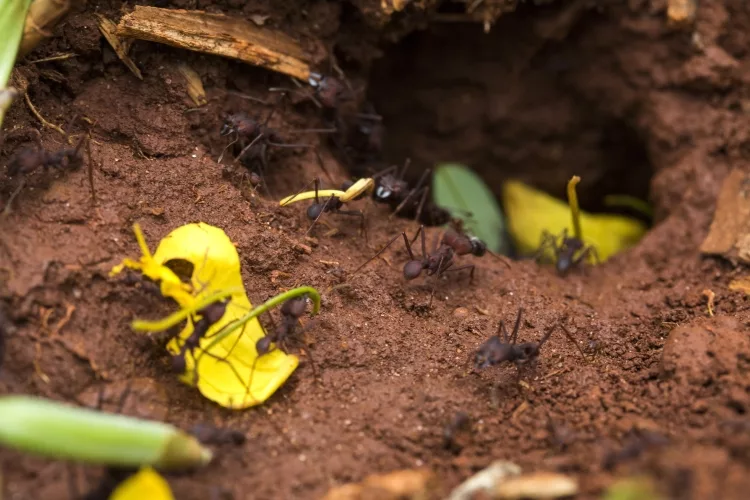
Ants are also attracted to loose, well-aerated soil — exactly what a healthy garden bed provides. They're not targeting your plants. They're colonizing prime real estate. Understanding this distinction changes how you approach control.
Here's one of the most repeated myths about how to get rid of ants in garden beds: vinegar kills them. It doesn't — not meaningfully. White vinegar disrupts ant scent trails temporarily, which scatters foragers for a couple of hours. But the colony is intact, and the trail is re-established quickly. Pour vinegar on a trail at 9 a.m., and by noon the ants are back.
The same limitation applies to coffee grounds, citrus peels, chalk lines, and talcum powder. These are surface-level deterrents at best. If the colony has a strong reason to be in your garden — like a food source — they'll route around every soft barrier you set.
Pro tip: Eliminating aphids from your plants removes the ants' food supply — sometimes that single step is enough to make the entire colony relocate without any direct ant treatment at all.
You don't need a specialty store to start. Most of the most effective ant control tools are already in your home:
For severe or persistent infestations, a few targeted products make a significant difference. Ant bait stations work by letting worker ants carry slow-acting poison back to the queen. Once the queen dies, the entire colony collapses. Look for products containing borax or spinosad — both are considered lower-risk options for garden environments. The EPA's ant control guidance is a reliable reference for understanding which active ingredients are safest near edibles.
Copper tape is excellent for containers and raised beds. Ants respond adversely to copper and won't cross it. Wrap it around pot rims and raised bed frames for a long-lasting physical boundary that requires zero maintenance.
Physical methods are the safest starting point because they carry zero risk to your plants or soil biology. If you've invested real effort in building out your growing space — including following best practices like those covered in our guide on how to fill a tall raised garden bed — you don't want to undo that work with a careless chemical application.
Garlic is the most underrated natural ant repellent available to home gardeners. Blend several cloves with water, strain out the solids, and spray the liquid around nest entrances and along active trails. The sulfur compounds in garlic are genuinely repellent to ants — and the spray doubles as a general-purpose pest deterrent. If you cook with garlic regularly, you already have everything you need. It's the same ingredient that makes our honey garlic pork tenderloin Instant Pot recipe so effective — powerful in the kitchen, powerful in the garden.
Other repellents worth using:
Bait stations are the most reliable method for eliminating an entire colony rather than just redirecting worker traffic. Place them directly on active trails where you see consistent ant movement. The key is patience — don't kill workers you see carrying bait back to the nest. Those workers are doing your job for you, delivering the poison to the queen. Visible activity should decrease noticeably within one to two weeks.
Reaching for a broad-spectrum pesticide is the most common mistake in garden ant management. These products kill the worker ants you can see, but they almost never reach the queen. Worse, they destroy beneficial insects — including ladybugs, lacewings, and ground beetles — that naturally regulate aphid populations. Eliminate those predators, and your aphid problem (and therefore your ant problem) will escalate.
If you grow any edible plants — herbs, vegetables, fruit — pesticide residue is a real and legitimate concern. The extra step of using food-safe methods is always worth it.
Treating ants without addressing aphids is like mopping the floor while the tap is still running. Ants won't abandon a reliable food source because you've scattered some cinnamon around. Check every plant for aphid colonies — particularly the undersides of leaves and along new stem growth — and knock them off with a strong blast of water or treat with diluted neem oil before tackling the ants themselves.
A balanced garden ecosystem matters more than any single intervention. If you forage or grow specialty produce, you already understand how interconnected a healthy garden is — the same principles that go into sourcing ingredients for something like our hen of the woods mushrooms recipe apply to managing garden health holistically.
Don't escalate until you've tried the basics. For most minor infestations, this three-step approach produces clear results within two to three weeks:
Check progress every three days and reapply DE after watering or rain. Most moderate infestations respond well to this routine without anything more involved.
For large established colonies or multiple nest sites, combine methods simultaneously:
Root vegetables are especially vulnerable to colonies tunneling through the soil. If you grow sweet potatoes or similar crops, protecting the soil environment is critical — and it starts with the same care you'd put into preparing sweet potatoes well once they're harvested.
Raised beds are easier to protect than ground-level gardens because you control the perimeter completely. A three-layer defense works reliably: copper tape along the outer frame, diatomaceous earth along the interior top rim, and sticky barriers on any wooden support stakes. Raised beds with solid foundations give ants fewer entry points to exploit. For best results building and filling your raised beds from the ground up, our guide on how to fill a tall raised garden bed covers the structural fundamentals.
Open beds require a more active, persistent approach since ants can enter from any direction. Focus on disrupting major trails first — this immediately reduces the population you're dealing with. Then locate the primary nest and treat it directly with boiling water. Follow up by scattering DE around the treated area to catch survivors establishing new trails.
For larger plots, border planting with natural deterrents like mint, tansy, or lavender creates a passive long-term barrier. These plants look good, deter multiple pest types, and many are edible — which fits naturally into a garden-to-table cooking approach. Our collection of healthy recipes for weight loss includes plenty of dishes that showcase the kind of fresh produce a well-managed garden produces.
Not every method is right for every situation. Use this table to match the best approach to your specific setup and goals.
| Method | Kills Colony? | Safe for Plants? | Safe for Edibles? | Speed | Cost |
|---|---|---|---|---|---|
| Diatomaceous Earth | Partial | Yes | Yes (food-grade) | Days–weeks | Low |
| Boiling Water | Yes (direct) | Avoid roots | Yes | Immediate | Free |
| Borax Bait Station | Yes (colony) | Yes | Keep separate from edibles | 1–3 weeks | Low |
| Garlic Spray | No | Yes | Yes | Hours | Free |
| Copper Tape Barrier | No | Yes | Yes | Immediate | Medium |
| Neem Oil Spray | No | Yes (diluted) | Yes (observe pre-harvest gap) | Days | Low–Medium |
| Broad-Spectrum Pesticide | Partial | Depends on product | No | Hours | Medium |
The most effective long-term strategy combines two or three complementary methods — a physical barrier to restrict access, a natural repellent to disrupt trails, and a bait station to eliminate the colony at the queen level. Single-method approaches rarely deliver permanent results. After any DIY spray session, keeping your tools clean is simple — the same descaling and residue-removal principles from our guide on how to clean a copper apple butter kettle apply to spray bottles and garden containers alike.
Start with food-grade diatomaceous earth dusted around the nest area and along active trails. It kills ants by damaging their exoskeletons but is completely safe for plant roots, soil microbes, and edible crops. Pair it with boiling water treatment poured directly into the nest for faster results. Avoid any product labeled as a broad-spectrum insecticide near edible plants.
No. Vinegar disrupts ant scent trails temporarily, which scatters foragers for a short period, but it doesn't harm the colony or reach the queen. Ants re-establish trails within hours. Vinegar is at best a short-term deterrent, not a solution. For anything beyond minor nuisance activity, you need a method that addresses the nest directly.
Boiling water poured directly into visible nest entrances is the fastest method. It kills workers and brood (developing larvae) on contact. For best results, pour slowly to allow the water to penetrate deep into the tunnel system. Repeat every 48 hours until activity stops. Follow up with diatomaceous earth around the treated area to intercept survivors.
Ants rarely damage plants directly. The real problem is their relationship with aphids — ants farm aphids for honeydew, actively protecting them from predators and moving them to new plant growth. This dramatically amplifies aphid infestations. Ants tunneling through soil can also disrupt root systems of young seedlings in heavily colonized beds, though this is a secondary concern compared to the aphid connection.
Address the aphids directly first. Blast colonies off with a strong stream of water, or apply diluted neem oil to affected leaves. Once the aphid population drops, ants lose their food incentive and often relocate on their own. You can also install sticky barriers on plant stakes to prevent ants from climbing up to tend aphid colonies, which allows natural predators like ladybugs to do their job uninterrupted.
Yes — food-grade diatomaceous earth is safe around vegetables, herbs, and fruit plants. It's the same grade used in food storage. Avoid inhaling the dust during application (use a mask), and reapply after rain or irrigation since moisture renders it temporarily ineffective. Don't use pool-grade DE in the garden — that formulation is chemically treated and not safe for food-growing environments.
Cinnamon works as a short-term trail disruptor, not a colony eliminator. Sprinkling it along active trails or around specific plants can redirect ant traffic temporarily. It's a useful supplementary tool — especially around seedlings you want to protect while a bait station or DE treatment takes effect. On its own, cinnamon won't solve a significant ant infestation.
The ants aren't your real problem — what's feeding them is, and fixing that changes everything.
 |
 |
 |
 |

About Christopher Jones
Christopher Jones holds an MBA from the University of San Francisco and brings a business-minded approach to kitchen gear evaluation — assessing products not just for performance but for long-term value, build quality, and real-world usability in everyday home cooking. He has spent years testing appliances, cookware, and kitchen gadgets with the same analytical rigor he developed in business school. At BuyKitchenStuff, he covers kitchen appliance reviews, buying guides, and practical cooking tips.
Check for FREE Gifts. Or get our Free Cookbooks right now.
Disable the Ad Block to reveal all the recipes. Once done that, click on any button below
|
|
|
|
