Kitchen Gadgets & Equipment Reviews ›
by Christopher Jones
Which pasta roller is actually worth your money in 2026 — and which ones will leave you frustrated after the first batch? If you've spent any time searching, you already know the options range from bare-bones manual machines to motorized Italian-made workhorses. The good news: after researching the top-rated models available right now, one name kept rising to the top for everyday home cooks looking for reliability and results.
Fresh pasta has a texture and flavor that dried pasta simply cannot match. Making it at home is more accessible than most people think — but only if you have a roller that handles dough smoothly, holds its thickness settings accurately, and doesn't leave you fighting with flimsy clamps or sticky rollers. Whether you're rolling out wide lasagna sheets or ultra-thin tagliolini, the machine you use makes a real difference. You can find related kitchen tools in our kitchen product reviews section if you want to explore the full pasta-making setup.
This guide covers seven of the best pasta rollers on Amazon in 2026. You'll get a full breakdown of each product's performance, who it's best suited for, and what to watch out for before you buy. We've also included a buying guide and FAQ section to help you make a confident, informed decision. If you're pairing your new roller with a drying rack, check out our guide to the best pasta drying racks as well — it's a natural companion purchase.

Contents




The Marcato Atlas 150 is the benchmark that almost every other manual pasta roller gets compared against. Made in Italy from chrome-plated and nickel-plated steel, this machine has been a staple in home kitchens for decades — and the 2026 version continues that tradition without cutting corners. The rollers are 150mm wide, giving you a full sheet width that works for lasagna, tagliolini, and fettuccine right out of the box. The black hand crank included in the box feels solid and attaches securely, though the machine is also motor-compatible if you want to upgrade later.
What sets this roller apart is the precision in its thickness dial. There are ten settings that produce consistently even sheets every pass through. Dough doesn't stick, tear, or bunch up the way it tends to on cheaper machines. The build quality is immediately obvious the moment you pick it up — it's heavier than budget models and clamps to most countertops without any wobble. The cleaning process is straightforward: no water, just a dry brush to remove dough bits before storing.
One honest note: this machine comes with the basic roller and a hand crank but no extra cutters beyond lasagna, fettuccine, and tagliolini. If you want angel hair or other specialty shapes, you'll need to purchase separate attachments. For most home cooks, though, those three shapes cover the vast majority of recipes. If you're interested in machines that go further into specialty shapes, our pasta extruder machine guide covers some complementary options.
Pros:
Cons:
If you already own a KitchenAid stand mixer, this attachment set might be the most logical next step in your pasta-making setup. The KPRA set attaches directly to the mixer's multipurpose power hub, meaning your mixer's motor drives the rollers — no hand cranking required. That makes this one of the smoothest and most effortless experiences available for rolling pasta dough, particularly when you're making large quantities. The set includes a pasta roller, a spaghetti cutter, and a fettuccine cutter.
The engineering here is tight. KitchenAid designed, tested, and optimized this attachment specifically for its own mixers, which shows in how seamlessly it operates. You feed dough in with one hand while the mixer does all the work, leaving you free to guide sheets through without juggling a crank simultaneously. Thickness settings adjust from thin to thick with a dial on the roller attachment itself, giving you good control over the final sheet.
The catch is obvious: this only works if you own a KitchenAid stand mixer. It's also a premium-priced attachment. For those who already have the mixer, the investment makes sense. If you don't, the cost of mixer plus attachment puts you well above the price of a standalone machine. That said, if you're a frequent baker and pasta maker, this setup pays for itself in convenience alone.
Pros:
Cons:
The Imperia Pasta Presto is an all-in-one electric pasta maker made in Italy from heavy-duty 18-10 stainless steel. Unlike the manual rollers on this list, this machine is fully motorized with a built-in motor — meaning you simply feed dough in and the machine handles the rest. It includes two built-in cutters for tagliatelle and fettuccine, along with six thickness settings that take you from thick fresh pasta sheets down to delicate thin cuts. The non-stick coating is a standout feature, making cleanup far easier than bare steel rollers.
For anyone who finds manual cranking tedious or physically difficult, this is a genuine game-changer. The non-stick surface ensures pasta releases cleanly without flour buildup clogging the rollers mid-session. The stainless steel construction feels premium and is built to withstand regular use. Six thickness settings might feel limiting compared to machines offering nine or ten, but for most recipes, the range is more than adequate.
The tradeoff with electric machines is typically price and complexity — and this one is no exception. It costs more than most manual options on this list, and if something goes wrong mechanically, it's harder to repair than a simple crank machine. That said, Imperia has a strong reputation, and Italian-made appliances in this category tend to hold up well over time. If you want to eliminate the physical effort of pasta-making entirely, this is your best option in 2026.
Pros:
Cons:
The Imperia Classic Line is a thoughtfully designed manual pasta maker that competes directly with the Marcato Atlas at the premium end of the market. Like the Atlas, it's 100% made in Italy and features high-quality chromed steel cutting rollers. The machine produces dough sheets up to 150mm wide and offers six height adjustments ranging from 0.5mm to 5mm — giving you precise control over everything from thick fresh pasta to delicate lasagna sheets. It comes with a wood grip handle that feels comfortable during extended rolling sessions, and a cleaning brush is included.
One feature that sets this model apart is the easy-lock dial, which holds thickness settings firmly in place during use. On cheaper machines, the dial can slip mid-roll and ruin a batch. The Imperia Classic Line's dial locks precisely, which means your sheets come out the same thickness every time. It also has a clamp slot that's compatible with the Pasta Facile 4600 electric motor attachment, so you're not locked into manual use forever.
Beyond fettuccine and lasagna sheets, this machine includes a tagliolini cutter at 2mm, which is impressively fine and difficult to achieve consistently with lesser machines. If you're serious about Italian pasta shapes and want a machine that will last years without degrading in performance, the Imperia Classic Line earns its price. It's a strong alternative to the Marcato Atlas, and the choice between the two often comes down to personal preference on handle feel and dial design.
Pros:
Cons:
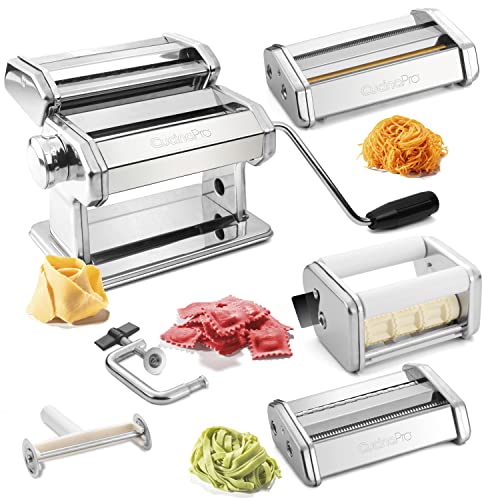
If you want to make five different types of pasta without spending a fortune on a single machine plus multiple separate attachments, the CucinaPro Pasta Maker Deluxe Set is worth a serious look. This stainless steel machine comes with three interchangeable attachments that together produce lasagnette, fettuccine, angel hair, spaghetti, and ravioli. The set also includes a hand crank, countertop clamp, and cleaning brush — everything you need to get started immediately.
The chrome-coated steel construction is solid for the price range. Getting five pasta shapes in one purchase is genuinely hard to beat at this price point. The roller handles most dough types competently, and the attachments swap in and out without a lot of fuss. For casual home cooks who want versatility without committing to a premium Italian brand, this set delivers good value.
The limitations are real, though. The precision and smoothness of the rolling mechanism don't match what you get from Marcato or Imperia. Thickness settings exist but aren't as finely calibrated, and experienced pasta makers will notice the difference in sheet consistency. For beginners or occasional pasta makers, those limitations matter less. Think of this as a great starter kit that lets you explore multiple shapes before you decide which ones you actually use most.
Pros:
Cons:
The Sailnovo 3 in 1 Pasta Maker stands out in this lineup because it bridges the gap between pasta rolling and dumpling skin making. With nine adjustable thickness settings — one of the widest ranges on this list — you can roll sheets as thick as 3mm or thin enough (0.5mm) for delicate dumpling wrappers. The machine is made from food-grade aluminum alloy and stainless steel, and it includes two width cutters that produce spaghetti (2.0mm) and fettuccine (4.5mm) cuts.
The food-grade material claim is worth noting for anyone concerned about metallic odors or tastes — common complaints with lower-quality machines. Nine thickness settings give you more flexibility than most competitors in this price range, which is especially useful if you cook a variety of Asian and Italian pasta dishes. The silver finish looks clean on a countertop, and the machine clamps securely to most surfaces.
One thing to keep in mind: the blade attachment must not be washed in water. You clean it with a brush or toothpick to remove dough residue. That's standard practice for pasta machines, but worth knowing upfront. The two-width cutter limits your shape variety compared to the CucinaPro set, but the nine-setting thickness dial more than compensates if precision matters to you. For households that make both Italian pasta and Asian dumplings, this machine earns its spot on the counter.
Pros:
Cons:
The O'Creme Cavatelli Maker is the most specialized tool on this list, and that's exactly the point. If you've ever tried to make cavatelli or gnocchi at home without the right tool, you know how tedious hand-rolling each piece can be. This machine uses natural wooden rollers with a non-stick coating and a food-grade metal structure to produce authentic cavatelli shapes quickly and consistently. The Italian-inspired design keeps things traditional, and the build quality reflects that heritage.
Using this machine is genuinely intuitive. You feed ropes of dough through the wooden rollers, and the grooved surface creates the signature ridged, shell-like cavatelli shape that holds sauce beautifully. The wooden rollers grip and release dough more naturally than metal, which is why this type of tool has been used in southern Italian kitchens for generations. According to Wikipedia's overview of cavatelli pasta, the shape originated in southern Italy and is traditionally made using exactly this kind of board-and-roller technique.
This tool won't replace a flat pasta roller — it does one thing, and it does it well. If cavatelli, gnocchi, or similar ridged pasta shapes are part of your regular cooking rotation, this is an excellent addition to your kitchen. If you're primarily interested in lasagna sheets or long-cut pasta, you'll want one of the other machines on this list instead. Think of the O'Creme as a specialist alongside your main roller, not a replacement for it.
Pros:
Cons:
The most fundamental decision you'll make is whether to go manual or electric. Manual rollers — like the Marcato Atlas and both Imperia models — are more affordable, easier to repair, and give you direct tactile feedback as you roll. Many experienced pasta makers actually prefer the control that comes with cranking by hand. Electric options, like the Imperia Pasta Presto, eliminate physical effort entirely and are genuinely better for people who make pasta frequently or have joint issues that make cranking uncomfortable.
If you already own a KitchenAid stand mixer, the KPRA attachment is a middle-ground option: it's electric in the sense that the motor does the work, but it requires a separate machine to function. Think about how often you plan to make pasta and how much physical effort you're willing to put in before deciding. For most casual home cooks, a quality manual roller is the smarter buy.
Thickness settings determine how thin or thick your pasta sheets come out, and the range varies significantly across these machines. The Sailnovo offers nine settings; the Marcato Atlas offers ten; both Imperia manual models offer six. For most recipes — lasagna, fettuccine, tagliolini — six to eight settings covers everything you need. What matters more than the number of settings is how accurately the machine holds each setting during a pass. Look for machines with a locking dial mechanism that doesn't slip under the pressure of firm dough.
If you're planning to make dumpling wrappers or ultra-thin Asian noodles alongside Italian pasta, the Sailnovo's nine settings and 0.5mm minimum give you extra precision worth having. For Italian pasta only, the six settings on the Imperia Classic Line are entirely adequate.
Pasta rollers live in a wet, doughy environment — flour dust, moisture, and dough residue accumulate quickly. Chrome-plated and nickel-plated steel machines like the Marcato Atlas resist corrosion and clean up well with a dry brush. Stainless steel models, like the Imperia Pasta Presto, are similarly durable. Aluminum alloy machines like the Sailnovo are lighter but still hold up well with proper care.
Avoid machines with significant plastic components in the rolling mechanism itself. Plastic rollers or plastic gears wear down faster and can affect sheet consistency over time. The frame and handle can incorporate plastic without issue, but the rollers and cutting blades should be metal. Also check that the countertop clamp is sturdy — a wobbly clamp turns every rolling session into a frustrating battle with the machine.
Before buying, be honest about which pasta shapes you'll actually make. If your goal is lasagna and fettuccine, almost any roller on this list serves you well. If you want angel hair, spaghetti, and ravioli in addition to those basics, the CucinaPro Deluxe Set gives you all five shapes at a budget-friendly price. If cavatelli is your priority, the O'Creme is the only tool on this list designed specifically for that shape.
For a full pasta station at home, many cooks pair a flat roller with a specialty tool. You might also want to read our guide to the best pasta maker options for a broader comparison of flat rollers vs. extruders vs. specialty machines — it's a helpful resource if you're building out your pasta toolkit from scratch.
A pasta roller flattens dough into thin sheets, which you then cut into shapes like fettuccine, lasagna, or tagliolini. A pasta extruder pushes dough through shaped dies to create tubular or specialty shapes like penne, rigatoni, or bucatini. If your goal is flat-cut pasta, a roller is the right tool. If you want tube shapes, you need an extruder. Some households own both for full versatility.
For most home pasta recipes, six to eight thickness settings is more than enough. Standard Italian pasta dough is typically rolled to settings 5 or 6 on a ten-setting machine. Thinner settings are used for delicate shapes like pasta for ravioli or very thin tagliolini. Ten settings gives you more precision, but the practical difference between seven and ten is minimal for everyday cooking.
No — you should never oil or lubricate a pasta roller's rollers or blades. These parts are designed to work dry. Instead, lightly dust dough with flour before each pass to prevent sticking. After each use, clean the machine with a dry brush or cloth, never water. Moisture causes rust on metal parts and degrades the machine's performance over time.
Technically yes, but it's not recommended. Pasta rollers are calibrated for pasta dough, which has specific elasticity and hydration levels. Pie crust dough is much more crumbly and can leave behind fats that are difficult to clean from the rollers. If you regularly roll multiple types of dough, a dedicated rolling pin is a better tool for non-pasta applications.
Fresh and dried pasta serve different purposes rather than one being strictly better. Fresh pasta has a tender, silky texture that pairs beautifully with delicate cream or butter-based sauces. Dried pasta has more structure and holds up better in hearty tomato and meat sauces. Many Italian chefs use both depending on the dish. Making fresh pasta at home lets you control ingredients, thickness, and shape in ways that store-bought dried pasta cannot match.
After rolling and cutting, fresh pasta should be dried slightly before cooking or storing. Dust cut pasta with flour and either use it immediately or hang it on a pasta drying rack for 15–30 minutes. For longer storage, let pasta dry fully (several hours) and keep it in an airtight container in the refrigerator for up to two days, or freeze it for up to a month. Avoid letting wet fresh pasta sit in a pile — it will stick together.
 |
 |
 |
 |

About Christopher Jones
Christopher Jones holds an MBA from the University of San Francisco and brings a business-minded approach to kitchen gear evaluation — assessing products not just for performance but for long-term value, build quality, and real-world usability in everyday home cooking. He has spent years testing appliances, cookware, and kitchen gadgets with the same analytical rigor he developed in business school. At BuyKitchenStuff, he covers kitchen appliance reviews, buying guides, and practical cooking tips.
