Kitchen Gadgets & Equipment Reviews ›
by Christopher Jones
You're standing in the kitchen appliance aisle — or more likely, scrolling through a sea of Amazon listings — wondering which air fryer or pressure cooker combo is actually worth the counter space. With so many options promising to replace half your kitchen cabinet, it's genuinely hard to know where to start. The good news is that in 2026, the technology has matured enough that even mid-range picks deliver real results.
Whether you want a true pressure cooker and air fryer combo or simply a dedicated air fryer with extra versatility, this guide covers the top picks across both categories. We've looked at cooking performance, build quality, ease of use, and value so you can make a confident decision without wading through hundreds of reviews yourself. If you want a broader look at kitchen appliance picks, check out our full reviews section for more guides like this one.
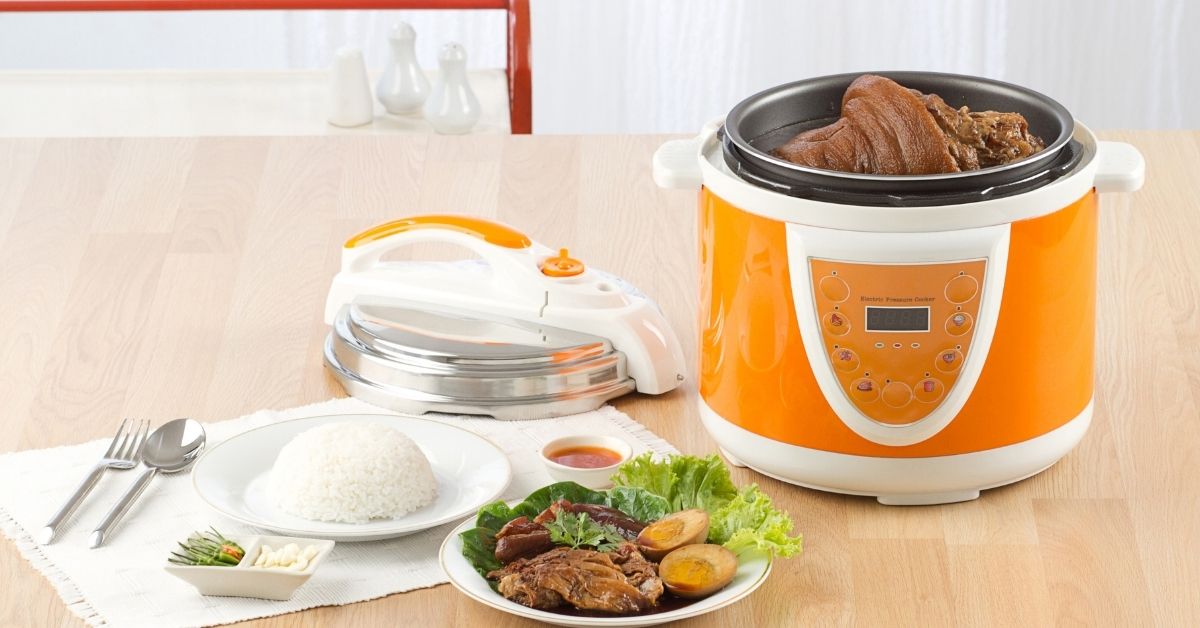
The category has expanded well beyond Instant Pot's early dominance. Brands like Ninja and Gourmia have brought smart dual-basket designs and better airflow technology into the mix. And if you're someone who already loves a good electric hot pot for soups and broths, you'll find that a pressure cooker combo takes that convenience even further. Let's get into the picks.
Contents


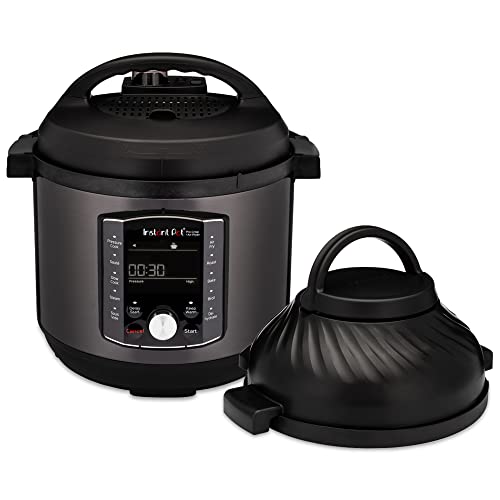



If you want one appliance that genuinely replaces several others, the Instant Pot Duo Crisp 11-in-1 is the most sensible starting point. It handles pressure cooking, air frying, slow cooking, sautéing, steaming, dehydrating, sterilizing, warming, and rice — eleven functions in a single 6-quart pot. The dual-lid system (one for pressure, one for air frying) is clever in practice: you swap lids depending on what you're making, and the machine adjusts accordingly. For a household of two to four people, the 6-quart capacity hits the sweet spot between being large enough for a full meal and compact enough not to take over your counter.
Performance-wise, this unit cooks up to 70% faster than traditional slow cooking methods — which sounds like marketing speak, but the pressure cooking side of things genuinely delivers on that promise. A chicken breast that would take 35 minutes in the oven is done in under 10 minutes under pressure. The air fry function produces crispy results without the mess of deep frying, though it works best when you don't overcrowd the basket. The 15 one-touch smart programs (ranging from soup to desserts) take the guesswork out for newer cooks, and the free app with over 800 recipes means you'll never run out of things to try.
Build quality is solid — the stainless steel inner pot feels premium, and the silicone sealing ring is easy to remove and clean. One honest trade-off: switching between lids takes a moment to get used to, and the air fryer lid is bulkier than a standalone unit. If your primary use case is air frying and not pressure cooking, a dedicated air fryer might serve you better. But if you want genuine dual-function performance in a well-built package, this one earns its shelf space.
Pros:
Cons:
Think of the Pro Crisp as the Duo Crisp's more capable sibling. It shares the same 11-function lineup — pressure cook, air fry, slow cook, steam, sauté, sous vide (slow-temperature precision cooking), roast, bake, broil, dehydrate, and keep warm — but steps up to an 8-quart capacity. That extra room matters more than you might expect. You can fit a full 4-pound chicken, a larger batch of ribs, or a big pot of stew without any guesswork about whether everything will fit.
The standout addition here is the EvenCrisp Technology, which circulates hot air more efficiently than the Duo Crisp and produces noticeably crispier results with 95% less oil than deep frying. If you're coming from a traditional fryer and worried about missing that crunch, this unit gets closer than most. The Pro model also adds sous vide functionality — a feature that home cooks rarely use but genuinely comes in handy for perfectly cooked steaks and custards when you want precision temperature control. The two removable lids (pressure and air fry) give you the same flexibility as the Duo Crisp but with more room to work with.
It does take up more counter space than the 6-quart version, so measure your available area before ordering. Cleanup is straightforward — the inner pot, air fry basket, and dehydrating tray are all dishwasher safe. For households of five or more, or anyone who regularly cooks for guests, the 8-quart Pro Crisp is the version worth the extra investment. You pay more upfront, but you won't find yourself wishing for a bigger pot on Sunday afternoons.
Pros:
Cons:
If you don't need pressure cooking and just want a solid, versatile air fryer from a trusted brand, the Vortex Plus makes a strong case. It handles air frying, baking, roasting, broiling, dehydrating, and reheating — six functions that cover the vast majority of what people actually cook in an air fryer day to day. The intuitive touchscreen display shows each cooking stage as it progresses, which is a genuinely useful feature rather than a gimmick. You always know exactly where you are in the cook without opening the basket.
Temperature range runs from 95°F all the way to 400°F (35 to 205°C), giving you real flexibility — low temps for gentle dehydrating, high temps for properly crispy chicken wings and French fries. Little to no preheating time is required, which speeds up weeknight cooking considerably. The stainless steel exterior looks clean on a counter, and the air fryer basket is dishwasher safe, making cleanup a non-issue. One-touch settings handle the most common tasks so you're not consulting a manual every time.
The honest trade-off here is that this is a pure air fryer — no pressure cooking, no slow cooker mode. If you already own an Instant Pot and want to add air frying capability without the combo units, this pairs nicely. If you're starting from scratch and want a single do-everything appliance, you're better served by the Duo Crisp or Pro Crisp. But for straightforward, reliable air frying performance in a 6-quart basket, the Vortex Plus is one of the easier choices on this list.
Pros:
Cons:
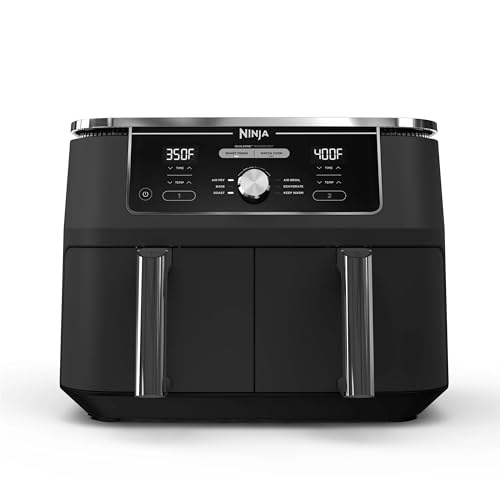
The Ninja DZ401 solves a problem every air fryer owner eventually runs into: you want fries and chicken at the same time, but they cook at different temperatures for different durations. The DualZone Technology gives you two completely independent 5-quart baskets that can run simultaneously. Smart Finish mode lets you cook two different foods two different ways, timed so they finish at exactly the same moment. Match Cook mode copies the same settings across both zones for a full 10-quart capacity meal. It sounds complicated but works intuitively once you try it.
The unit handles air frying, air broiling, roasting, baking, reheating, and dehydrating across its six functions. A 10-quart total capacity means you can genuinely cook for a crowd — a full meal for six to eight people in one go is realistic. The stainless steel build looks sharp and feels durable. Cleanup is manageable since both baskets are dishwasher safe, though fitting two large baskets in a standard dishwasher rack requires some Tetris-level arrangement. If you tend to cook the whole meal in one appliance, the ability to run two zones simultaneously is a significant quality-of-life improvement over a single-basket unit.
The footprint is notably wider than a standard single-basket air fryer, so counter space is a real consideration. It's also purely an air fryer — no pressure cooking in this one. But for large households or anyone who hosts dinner regularly, the two-basket system is one of the smartest design choices you'll find in a home air fryer in 2026. If you're also a grill lover who cooks different proteins simultaneously, you'll appreciate this the same way you appreciate a good indoor electric grill that gives you multiple cooking zones.
Pros:
Cons:
Gourmia doesn't get mentioned in the same breath as Instant Pot or Ninja as often, but this 8-quart unit punches well above its price point in 2026. The FryForce 360° Technology (rapid 1700W air circulation that hits food from all directions) is the headline feature, and it delivers — food comes out evenly golden without you having to manually flip or shake the basket halfway through. An 8-quart capacity at this price level is genuinely generous, letting you cook a whole chicken or a full batch of wings in a single go without crowding.
The XL viewing window with a built-in interior light is a feature that sounds minor until you actually use it. Being able to see your food without opening the basket means you're not letting heat escape or interrupting the cook cycle — you can just glance, judge, and leave it alone. Eight digital presets cover the most common cooking tasks, and the digital display is clean and easy to read. The basket is dishwasher safe, which is non-negotiable for anything that's going to see regular use with oily foods.
Where does it fall short? The preset options are fewer than the more premium Ninja or Instant Pot units, and there's no companion app or smart home integration. The build quality, while perfectly adequate, doesn't feel quite as robust as a Ninja or Instant Pot unit in hand. But if your budget doesn't stretch to the premium options and you need 8-quart capacity for a family, the Gourmia delivers real cooking performance at a price that makes sense. It's a honest, no-frills large-capacity air fryer.
Pros:
Cons:
Countertop real estate is a genuine constraint in most kitchens, and the Chefman 6 Qt is built with that in mind. The sleek, narrow design maximizes its 6-quart internal capacity while keeping the external footprint noticeably smaller than competing 6-quart units. If you've been putting off getting an air fryer because you're not sure where it would live, this is the model to look at. It fits three to five people comfortably for most meals — wings, fries, salmon fillets, roasted vegetables.
The standout feature is Hi-Fry Technology: in the final two minutes of cooking, you can crank the temperature to 450°F to get that extra finishing crunch that most air fryers top out at 400°F and miss. It sounds like a small difference, but it's the difference between "pretty crispy" and "actually crispy like a restaurant" for chicken tenders and French fries. The digital touch screen with four preset functions keeps operation simple. An easy-view window lets you check progress without interrupting the cycle, which keeps food cooking at consistent temperature throughout.
The trade-off for compactness is capacity ceiling — for five or more people, you'll likely need to cook in batches. There's no pressure cooking here, no dual basket, and fewer preset programs than the more feature-rich units. But for apartment dwellers, people cooking for two to three, or anyone who wants an air fryer that stores neatly under a cabinet, the Chefman's form factor is genuinely its strongest selling point. It does what it does — air fry well — without unnecessary bulk.
Pros:
Cons:
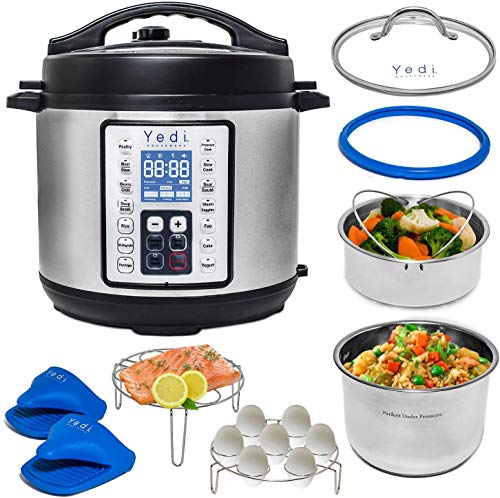
The Yedi Houseware earns its spot on this list for a specific type of buyer: someone who wants a multi-function pressure cooker with a comprehensive accessory kit, at a price that doesn't require a second thought. This is the only pressure cooker on the Oprah's Favorite Things list — a detail that says something about its crossover appeal beyond the usual appliance enthusiast crowd. Nine cooking modes cover pressure cooking, slow cooking, sautéing, steaming, cake making, pasteurizing, yogurt making, rice cooking, and warming. That's a genuinely wide net.
The 15 instant-touch microprocessor cooking programs include some you won't find on every pressure cooker — cake, egg, and yogurt modes alongside the expected soup, poultry, and rice settings. You can also manually input cooking times and adjust pressure levels, which gives you flexibility that rigid preset-only units don't. The included deluxe accessory kit adds real value: most pressure cookers at this price point come with just the basics. The 6-liter (roughly 6.3-quart) stainless steel pot is a practical size for everyday cooking.
What you're trading away here is air frying entirely — this is a pure pressure cooker and multi-cooker, with no air fry lid or basket. If you're specifically shopping for the combo of pressure cooking and air frying, this isn't it. But if you want a well-rounded pressure cooker with a broad program list, solid accessories, and a track record of customer satisfaction, the Yedi Houseware is a dependable choice that won't leave you wishing you'd spent more. It pairs naturally with someone who enjoys hearty one-pot meals the way a dedicated hot pot cooker pairs with broth-based cooking enthusiasts.
Pros:
Cons:
Before anything else, decide whether you genuinely need the pressure cooking function or primarily want an air fryer. True combo units like the Instant Pot Duo Crisp and Pro Crisp give you the best of both — fast pressure cooking for tough cuts of meat and legumes, plus air frying for crispy finishes. But they're bulkier, more expensive, and involve swapping lids, which adds a small friction to daily use. Dedicated air fryers like the Ninja DZ401, Gourmia, and Chefman are simpler to operate daily and often produce better air fry results because the design is fully optimized for that one task.
Ask yourself: do you cook dried beans, tough roasts, or recipes that genuinely require pressure? If yes, a combo unit earns its place. If most of your cooking involves weeknight proteins and vegetables, a dedicated air fryer will likely see more daily use and cause less frustration. According to Wikipedia's entry on air fryers, the technology works by circulating hot air around food at high speed to produce a Maillard reaction (the browning process) similar to deep frying but with significantly less oil — a dedicated unit typically optimizes this airflow better than a multi-mode appliance.
Capacity is where most buyers make their first mistake. A 6-quart unit is comfortable for two to four people for most meals. Jump to 8 quarts if you regularly cook for five or more, batch cook on weekends, or regularly cook whole chickens and large roasts. The 10-quart Ninja DZ401 is overkill for a couple but genuinely useful for a large family or anyone who hosts frequently. One thing to keep in mind: air fryer baskets should never be more than half to two-thirds full for best results. If you're feeding four people and filling the basket to the brim, you'll get steamed food rather than crispy food. Account for that when sizing up.
Every unit on this list has dishwasher-safe baskets and inner pots, which is the minimum standard you should expect in 2026. The practical differences show up in design details: how many parts does the unit break down into, how easy is the sealing ring (for pressure cookers) to remove and clean, and are there hard-to-reach corners where grease accumulates? Combo units with pressure cooking lids have more parts to clean than a standalone air fryer. If easy cleanup is a top priority, simpler dedicated air fryers like the Chefman or Gourmia win on pure convenience.
The Instant Pot ecosystem includes a free app with 800+ guided recipes that sync with the appliance's settings — useful if you're newer to pressure cooking and appreciate step-by-step guidance. Ninja doesn't have a comparable app ecosystem, but the DualZone controls are intuitive enough that you rarely feel like you need one. The Gourmia and Chefman units are app-free but also offer the simplest possible operation. Decide whether guided recipe support genuinely matters to your cooking style, or whether you'll use the app once and never again. Most experienced home cooks skip the apps entirely.
For most households, yes — with some trade-offs. Combo units like the Instant Pot Duo Crisp and Pro Crisp handle both functions genuinely well, and the cooking results are very close to dedicated appliances in each category. The main compromise is that the air fry basket in a combo unit is slightly smaller relative to its stated quart size than a standalone air fryer, and you need to swap lids between modes. If you cook both pressure-cooked and air-fried foods regularly, the combo unit simplifies your kitchen. If you use one function 90% of the time, a dedicated appliance for that function will serve you better.
A 6-quart unit is the standard recommendation for a family of four, and it works well for the majority of meals. You'll be able to pressure cook a whole chicken, air fry a generous portion of wings, or slow cook a full pot of stew without running out of room. Where it starts to feel tight is if you're cooking for four and also want leftovers, or if you regularly make large-batch meals. In those cases, stepping up to 8 quarts gives you noticeably more breathing room and is worth the additional cost and counter space.
Air frying uses significantly less oil than deep frying — some air fryer recipes require no added oil at all. The hot air circulation produces a similar browning and crisping effect with a fraction of the fat and calories. The Instant Pot Pro Crisp, for example, claims 95% less oil than traditional deep frying. That said, air frying doesn't transform an inherently unhealthy food into a healthy one — breaded and battered foods are still calorie-dense regardless of cooking method. But for reducing unnecessary added fat in everyday cooking, switching from deep frying to air frying is a straightforward and meaningful improvement.
Absolutely — multi-function appliances are well-suited for meal prep. Pressure cooking dramatically reduces the time needed for grains, legumes, and tough cuts of meat, which are meal prep staples. Air frying lets you crisp up large batches of roasted vegetables, proteins, and snacks quickly. The larger capacity units — the Instant Pot Pro Crisp at 8 quarts and the Ninja DZ401 at 10 quarts — are particularly good for batch cooking because you can process more food in a single run. The Ninja's dual-basket system is especially effective for meal prep since you can cook two different items simultaneously.
Soggy results in an air fryer almost always come down to overcrowding and excess moisture. First, don't fill the basket more than halfway to two-thirds — food needs space for hot air to circulate around it, not just over it. Second, pat proteins and vegetables dry before air frying; surface moisture turns to steam and prevents crisping. Third, a light coat of oil (not a heavy drenching) helps browning. For combo units, make sure you're using the air fry lid and basket rather than the pressure cooking insert, as the basket design is what allows proper air circulation.
Yes — all of the pressure cookers and air fryers on this list are UL-certified (safety tested and certified by Underwriters Laboratories) and include multiple built-in safety features. Modern electric pressure cookers like the Instant Pot include lid-lock mechanisms that prevent opening under pressure, automatic pressure release valves, and overheat protection. They're far safer than traditional stovetop pressure cookers. Air fryers have automatic shutoff features and cool-touch exteriors on most models. Standard kitchen safety practices apply: keep the appliance away from flammable materials, use it on a stable flat surface, and follow the manufacturer's maximum fill line guidelines.
 |
 |
 |
 |

About Christopher Jones
Christopher Jones holds an MBA from the University of San Francisco and brings a business-minded approach to kitchen gear evaluation — assessing products not just for performance but for long-term value, build quality, and real-world usability in everyday home cooking. He has spent years testing appliances, cookware, and kitchen gadgets with the same analytical rigor he developed in business school. At BuyKitchenStuff, he covers kitchen appliance reviews, buying guides, and practical cooking tips.
