Kitchen Gadgets & Equipment Reviews ›
by Rick Goldman
The Rubbermaid Brilliance takes our top spot for 2026 — its crystal-clear Tritan construction and leak-proof seal outperform containers costing twice as much. If you've been dealing with stained, warped, or leaky food storage containers, you already know how frustrating the wrong choice can be.

Whether you're meal prepping for the week, storing leftovers from a big family dinner, or packing lunches for work, your containers need to do more than just hold food. They need to seal properly, resist stains, survive the dishwasher, and stack without turning your cabinet into a avalanche zone. The market in 2026 gives you more options than ever — from premium glass sets to eco-friendly silicone bags — but that also makes choosing harder. We tested and compared seven of the best-selling food storage container sets available right now, evaluating them on leak resistance, durability, ease of cleaning, and overall value. If you're also looking to upgrade other kitchen essentials while you're at it, check out our guide to the best bakeware sets for 2026.
This guide breaks down each product with honest pros and cons, a side-by-side comparison table, and a buying guide to help you match the right container set to your actual kitchen habits. No filler — just the information you need to make a smart purchase.
Contents




Rubbermaid has been a household name in food storage for decades, and the Brilliance line shows exactly why. This 10-piece set (5 containers, 5 lids) uses crystal-clear Tritan plastic that gives you 360-degree visibility into what's stored inside. You won't need to pop open every container to find last night's pasta — you can see it instantly. The material is BPA-free and genuinely stain-resistant, which matters if you store tomato-based sauces regularly. After weeks of use, these containers still look brand new.
What sets the Brilliance apart is the built-in venting system hidden under the latches. You can microwave with the lid on and get splatter-resistant reheating without removing anything. The latches snap down securely on all four sides, creating a leak-proof seal that holds up even when you toss the container in a bag. The modular design stacks cleanly in the fridge, and the lids nest together when not in use.
The only real drawback is the set size — five containers might not be enough if you're doing serious meal prep for a full week. But as a core set that handles daily leftovers and lunch packing, it's hard to beat the combination of clarity, durability, and microwave convenience at this price point.
Pros:
Cons:
If you're done with plastic and want to move to glass, Pyrex Simply Store is the gold standard. This 18-piece set (9 glass containers, 9 plastic lids) gives you a comprehensive range of sizes — from a small 1-cup round perfect for dressing or dips, all the way up to a 7-cup round that handles big batches of soup or chili. The mix of round and rectangular shapes means you get the right container for almost any food type.
The tempered glass construction is the real selling point here. Glass doesn't absorb odors or stains, period. You can store curry, marinara, beet juice — whatever you want — and a quick wash brings it back to spotless. It's also completely safe for the dishwasher, microwave, and freezer. The glass is thick enough to feel substantial without being unnecessarily heavy, and it won't warp or degrade over hundreds of wash cycles the way plastic eventually does.
The trade-off is weight. A fully loaded fridge shelf of Pyrex containers is noticeably heavier than plastic alternatives. The plastic snap-on lids also aren't oven-safe, so you'll need to remove them before reheating at high temperatures. And glass breaks — there's no getting around that. But for home kitchen use where you're not tossing containers into a backpack, the durability and food-safety benefits of glass make Pyrex a smart long-term investment. If you're rethinking your entire kitchen setup, our kitchen utensil holder guide covers another often-overlooked organizational upgrade.

Pros:
Cons:
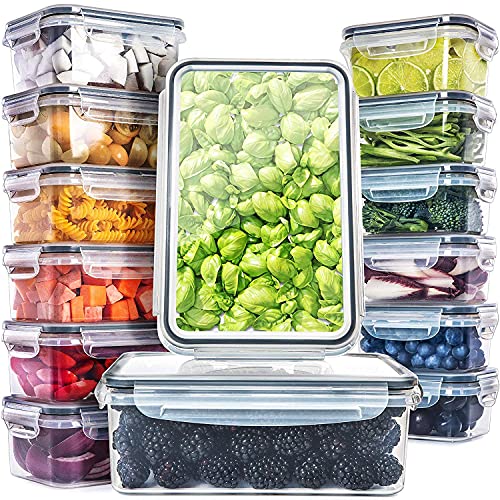
If you need to stock your kitchen with containers without spending a fortune, the fullstar 28-piece set delivers serious quantity at a price that's hard to argue with. You get 14 containers and 14 matching lids across three practical sizes: two large 59 oz containers for big batches, six mid-size 25 oz for standard leftovers, and six compact 11 oz for snacks, dips, or portion-controlled meals. That's enough to handle a full week of meal prep in one go.
The 4-hinge snap-lock lid system creates a genuinely airtight seal that surprised us with how well it holds up against leaks. We tested it with soup and thin sauces in a bag — no spills. The containers are microwave-safe (without lids, under 5 minutes at 700 watts or lower), freezer-safe, and dishwasher-safe. They stack neatly thanks to consistent rectangular shapes, which is a major advantage over sets with mixed shapes that create gaps.
The quality-per-container ratio leans toward the budget end, as expected. The plastic is thinner than premium options like Rubbermaid Brilliance, and it will eventually show staining from heavily colored foods. The lids can feel a bit stiff to snap on initially. But for the sheer number of containers you get, this is the best value pick on our list — especially for college students, first apartments, or anyone who loses lids regularly.
Pros:
Cons:

Stasher takes a completely different approach to food storage — ditching rigid containers entirely in favor of flexible, reusable silicone bags. This 6-pack includes a range of sizes from a tiny 4 oz pocket bag up to a 64 oz half-gallon, plus sandwich, snack, and two bowl sizes in between. The concept is simple: one Stasher bag replaces approximately 260 single-use plastic bags per year. If you're serious about reducing kitchen waste, this is one of the most practical switches you can make. For more ways to make your kitchen more eco-friendly, take a look at our roundup of the best biodegradable trash bags.
The bags are made from platinum food-grade silicone — free from BPA, BPS, lead, latex, and phthalates. The Pinch-Loc seal is surprisingly effective at keeping liquids contained, though it requires a learning curve to close properly compared to a snap-lid container. The versatility is where Stasher really shines: these bags are safe for the dishwasher, microwave, oven (up to 425°F), freezer, and even sous vide cooking. That kind of temperature range is something no plastic container on this list can match.
The downsides are real, though. Silicone bags don't stand upright on their own — you'll need to lean them against something or hold them while filling. They're also harder to dry thoroughly because the interior doesn't air out easily. And at a higher price point than traditional containers, you're paying a premium for the sustainability factor. But if your priority is cutting single-use plastic and you want maximum cooking versatility, Stasher delivers on both fronts.
Pros:
Cons:
Caraway has built a reputation for making kitchen products that look as good as they perform, and their glass food storage set is no exception. This 13-piece set features clear glass containers with matching glass lids — a significant upgrade over the plastic lids you get with Pyrex. The glass-on-glass design means every component is oven-safe up to 450°F, microwave-safe, and freezer-safe. No removing lids before reheating. No worrying about plastic degradation over time.
The aesthetic factor is genuinely compelling here. These containers look good enough to go from the fridge straight to the dinner table without embarrassment. The clear glass lids let you see exactly what's inside without opening anything. Each set also includes a dedicated storage organizer — a thoughtful addition that keeps lids paired with their containers and prevents the dreaded lid drawer chaos that plagues every kitchen.

The premium positioning comes with a premium price tag — this is the most expensive set on our list by a wide margin. The glass lids, while beautiful, don't create the same airtight snap-lock seal you get from plastic or silicone-rimmed lids. They rest on top and hold well for fridge storage, but you wouldn't want to transport liquids in these. If design and non-toxic materials are your top priorities and you primarily use containers for home storage and reheating, Caraway is the luxurious choice that won't disappoint.
Pros:
Cons:

Joseph Joseph engineered the Nest Lock set to solve one specific problem: storage containers that eat up all your cabinet space when they're not in use. The color-coded nesting system lets every container fit inside the next size up, and the lids snap together in a matching stack. When nested, the entire 10-piece set takes up roughly the footprint of the largest single container. In a small kitchen or apartment, that space efficiency is transformative.
Beyond the clever nesting, these containers perform solidly. The lockable lids create an airtight and leakproof seal that handles soups and sauces without issue. They're BPA-free, freezer-safe, microwave-safe, and top-rack dishwasher-safe. The color-coding isn't just decorative — it makes matching lids to containers intuitive, eliminating the guessing game that wastes minutes every morning when you're packing lunch.
The nesting design does introduce a constraint: you can't use all containers simultaneously and then nest them away, because the smaller ones need to fit inside the larger ones. If you regularly have five different leftovers stored at once, you lose the nesting benefit until they're emptied. The plastic is also mid-range in terms of stain resistance — it handles most foods fine but will pick up color from turmeric or beet-heavy dishes. For kitchen organization enthusiasts or anyone working with limited cabinet space, the Nest Lock system is genuinely clever and well-executed.
Pros:
Cons:

When you need to outfit an entire kitchen in one purchase, the Sistema KLIP IT 34-piece set gives you the most containers per dollar on this list. The set includes a diverse mix of rectangular, square, and yogurt-style containers — covering everything from dry pantry staples like flour and rice to wet leftovers and portion-sized snacks. It's the kind of set that replaces every mismatched container you've accumulated over the years.
The easy-locking clips with extended flexible seals keep food fresh and prevent the kind of slow air leaks that dry out leftovers overnight. The rectangular and square shapes are specifically designed for modular stacking, which makes organizing your fridge or pantry shelves noticeably more efficient. No wasted gaps between round containers — everything tiles together like building blocks.
The volume of containers is both the strength and the weakness here. You get an incredible amount of storage capacity, but you also need somewhere to put 34 pieces when they're not in use. If your cabinets are already tight, storing this many containers gets challenging fast. Individual build quality is decent but not exceptional — the clips hold up well for the first year or two, but heavy daily use can eventually wear down the hinge points. For families, shared kitchens, or anyone who wants to do a complete container overhaul in a single purchase, the Sistema KLIP IT is the practical, high-volume choice. According to the FDA's guidance on food contact materials, all containers used for food storage should be made from approved food-safe materials — every product on this list meets those standards.
Pros:
Cons:
Your material choice shapes everything else about your experience. Glass containers (Pyrex, Caraway) won't stain, won't absorb odors, and last essentially forever — but they're heavy and breakable. Plastic containers (Rubbermaid, fullstar, Joseph Joseph, Sistema) are lightweight, affordable, and durable against drops, but lower-quality plastics stain and degrade over time. Silicone bags (Stasher) offer the widest temperature range and best eco-credentials, but sacrifice the rigid structure that makes containers easy to stack and organize.
If you primarily store food at home and reheat in the same container, glass is the better long-term investment. If you pack lunches, transport food, or need to survive a drop from the counter, go with high-quality plastic. If sustainability is your driving factor, silicone bags replace hundreds of disposable alternatives.
A container is only as good as its seal. Look for multi-latch systems (Rubbermaid's 4-latch, fullstar's 4-hinge snap-lock) over single-clip designs — they distribute pressure evenly and maintain the seal longer. Test by filling with water and inverting. Sets that advertise "airtight" don't always mean "leakproof" — those are different things. Airtight keeps air exchange minimal to preserve freshness. Leakproof means you can literally flip the container upside down with liquid inside. You want both.
Glass lids (like Caraway's) look beautiful but typically rest in place rather than locking. They're fine for fridge storage but aren't the right choice if you transport meals regularly.
More containers isn't automatically better. A 5-piece set of premium containers you actually use daily beats a 34-piece set where half the sizes sit in the back of a cabinet. Think about your actual habits: how many meals do you prep at once? Do you pack lunches? Do you need tiny containers for dips and dressings, or mostly large ones for batch cooking?
For singles or couples, a 5-10 piece set usually covers everything. Families of four or more typically need 15-20 containers in active rotation. If you meal prep for an entire week, look at sets with at least six same-sized containers so you can portion consistently. If your kitchen needs a broader refresh, check out our full reviews section for more curated product roundups.
This is the factor most people ignore until they're wrestling with a cabinet full of mismatched containers. Rectangular and square containers stack far more efficiently than round ones — they tile without gaps. Nesting designs (like Joseph Joseph) collapse when empty, saving dramatic amounts of space. Modular sets where containers share the same footprint dimensions stack the cleanest and make opening the fridge door a less chaotic experience.
Also consider lid storage. Loose lids are the number one source of kitchen drawer frustration. Sets that include an organizer (Caraway) or that nest lids together (Joseph Joseph) solve this problem elegantly. If neither option comes with your set, invest in a cheap lid organizer rack — it's a small purchase that prevents daily annoyance.
Yes, but only containers explicitly labeled microwave-safe. All plastic containers on this list — Rubbermaid Brilliance, fullstar, Joseph Joseph Nest Lock, and Sistema KLIP IT — are rated for microwave use. Always remove or vent the lid before microwaving (Rubbermaid Brilliance has built-in vents that make this easier). Avoid microwaving containers that aren't labeled safe, as non-rated plastics can release chemicals when heated. When in doubt, transfer food to a glass or ceramic dish.
Airtight containers with quality seals generally keep refrigerated leftovers fresh for 3-5 days and frozen foods safe for 2-3 months without significant quality loss. The seal quality matters more than the container material. Glass containers won't affect food taste or absorb flavors over time, giving them a slight edge for longer storage periods. For vacuum-sealed storage, which extends shelf life further, see our guide on how long vacuum sealed meat stays good.
Pyrex and Caraway containers are technically freezer-to-oven safe, but you should avoid extreme thermal shock. Let the container sit at room temperature for 10-15 minutes before placing it in a preheated oven, or start it in a cold oven and let them heat together. Sudden temperature swings — freezer straight into a 400°F oven — can crack even tempered glass. Caraway containers handle up to 450°F with their glass lids on.
Make a paste with baking soda and water, spread it inside the stained container, and let it sit for 30 minutes before scrubbing. For stubborn stains, fill the container with a mixture of warm water and a tablespoon of white vinegar, let it soak overnight, then wash normally. Rubbing the stained area with vegetable oil before washing also works well for tomato-based stains. Prevention is easier than removal — spray containers with cooking spray before storing tomato sauces, or switch to glass containers for heavily pigmented foods.
Stasher silicone bags are exceptionally durable in terms of material longevity — the platinum-grade silicone resists tears, punctures, and degradation through thousands of uses and wash cycles. They handle temperature extremes from freezer to 425°F oven that would destroy any plastic container. However, they lack the structural rigidity of traditional containers, which means they can't be stacked in the fridge the same way and are harder to fill without support. For durability of the material itself, silicone matches or exceeds most plastics.
Most households function well with 10-15 containers in active rotation across three size categories: 4-6 small containers (1-2 cups) for snacks and condiments, 4-6 medium containers (3-4 cups) for standard leftovers and lunch portions, and 2-3 large containers (6+ cups) for batch cooking and meal prep. If you meal prep weekly, add another 5-7 same-sized containers. A set like the fullstar 28-piece or Sistema 34-piece gives you comprehensive coverage in one purchase, while smaller premium sets like Rubbermaid Brilliance work best supplemented with a few additional sizes over time.
 |
 |
 |
 |

About Rick Goldman
Rick Goldman grew up traveling the Pacific Coast and developed an early appreciation for regional and international cuisines through exposure to diverse food cultures from a young age. That culinary curiosity shaped his approach to kitchen gear — he evaluates tools based on how well they perform across different cooking styles, ingredient types, and meal occasions. At BuyKitchenStuff, he covers kitchen equipment reviews, recipe guides, and food-focused buying advice.
