Kitchen Gadgets & Equipment Reviews ›
by Rick Goldman
Which rice storage container actually keeps your grain fresh for months without letting in moisture, pests, or stale odors? After evaluating dozens of options on the market in 2026, our top pick is the Lifewit Rice Dispenser 25 Lbs — a press-button dispenser with airtight sealing that makes portioning effortless. But depending on your household size, kitchen layout, and storage habits, one of the other containers on this list might serve you better.
Storing rice properly is one of those kitchen fundamentals that too many people overlook. According to the USDA's food safety guidelines, dry goods like rice can last indefinitely when stored in airtight conditions away from moisture and heat. Yet a flimsy bag clip or a loosely sealed container can invite pantry moths, absorb ambient kitchen odors, and let humidity clump your grains together. The right container eliminates all of those problems.
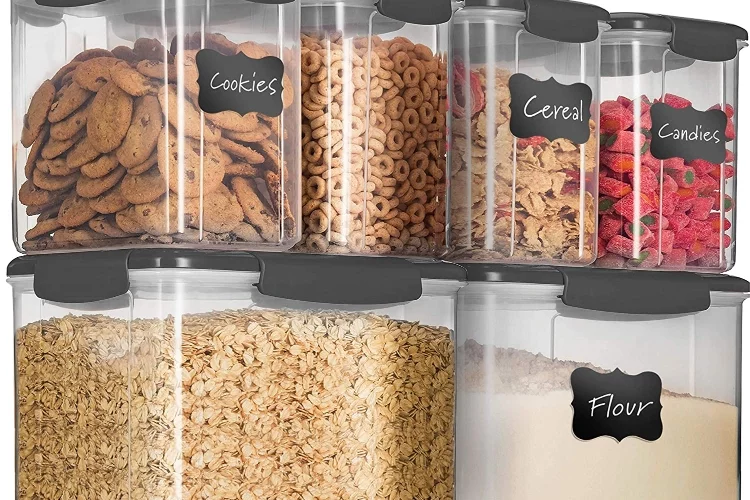
Whether you buy rice in 5-pound bags or 50-pound bulk sacks, the containers below cover every capacity and budget. We looked at seal quality, ease of dispensing, material safety, stackability, and real-world durability. If you're also rethinking your broader food storage container setup, several of these options pull double duty for flour, cereal, and pet food. Let's get into the picks.
Contents


The Lifewit Rice Dispenser is the container that convinced us a dedicated rice dispenser is worth the countertop space. It holds up to 25.4 pounds of rice — enough for a family of four to go weeks without refilling. The press-button dispensing mechanism is genuinely satisfying to use. You press the button, rice flows into the measuring cup below, and you release to stop. No scooping, no spilling, no guessing portions.
Build quality is solid for the price point. The body is constructed from BPA-free PP plastic that feels thick and durable rather than flimsy. What sets it apart is the internal sealing ring inside the lid that creates a genuinely airtight barrier. We found that rice stored in this container for several weeks came out smelling exactly as fresh as the day it went in — no mustiness, no absorbed kitchen odors. The transparent scale markings on both the dispenser body and the measuring cup let you see at a glance how much rice remains and how much you're dispensing.
The Lifewit isn't just limited to rice. It handles soybeans, corn, sago, lentils, and other small grains without jamming the dispensing mechanism. Disassembly for cleaning is straightforward — the components separate without tools and reassemble intuitively. If you're looking for one container that handles daily rice use with zero friction, this is it.
Pros:
Cons:
The ComSaf set gives you two 9.5-liter containers that together hold 20 to 25 pounds of rice at comfortable fill levels — or up to 34 pounds if you pack them to the brim. For households that go through rice quickly or want to separate different varieties (jasmine in one, basmati in the other), this two-pack makes immediate sense. The included accessories sweeten the deal: two measuring cups, a rice colander for rinsing, and writable labels so you can mark contents and dates.
The sealing system uses a four-sided clip-on lid with a silicone gasket, and it's one of the tightest seals we've encountered in this price range. Each clip locks firmly with a reassuring snap, and the silicone gasket creates a barrier that genuinely keeps moisture and air out. If you've ever dealt with pantry ants getting into your rice, this container solves that problem decisively. The included rice colander is a thoughtful touch — you can rinse your rice right in the colander and drain it without needing a separate strainer, which saves time and cleanup.
The containers are stackable and sized to fit standard pantry shelves. The clear body lets you monitor fill levels without opening anything. For bulk rice buyers who want flexibility and accessories out of the box, the ComSaf set delivers exceptional value. This is also a smart pick if you regularly cook different grain types and want to keep them organized — something we appreciate alongside other rice storage solutions we've reviewed.
Pros:
Cons:
Not everyone has a sprawling pantry or deep countertops. The Tight-Lock container measures just 8.5 × 5.7 × 11.8 inches — a deliberately slim profile that slides into narrow shelf spaces, cupboard gaps, and refrigerator doors. Despite the compact footprint, it holds up to 15 pounds of rice, 12 pounds of flour, or about 9 pounds of dog food. It's proof that you don't need a massive bin to store a meaningful quantity of grain.
The sealing system combines a silicone seal gasket with a clip-lock lid that clicks shut with authority. You can feel the seal engage, and it holds firm even when the container is tilted or moved. This makes it a reliable choice for keeping moisture and pests out over extended storage periods. The included scoop nests inside the container, so you never have to rummage through a drawer looking for a measuring cup.
Where the Tight-Lock really shines is in smaller kitchens and apartments where every inch matters. If you're working with limited pantry space — similar to how apartment dwellers think carefully about appliance sizing when choosing a compact air fryer — this container earns its spot. It's also a solid secondary container for specialty rices that you don't buy in bulk. The slim design stacks well with other containers of the same brand, letting you build a modular storage system on a narrow shelf.
Pros:
Cons:
If you buy rice in 25 or 50-pound sacks from wholesale clubs, most standard containers force you to split your purchase across multiple bins. This collapsible container holds up to 40 pounds in a single unit, making it the highest-capacity option on our list. The standout feature is the foldable design — when the rice runs low or you need to store the container between uses, it collapses flat for space-efficient storage and transportation. That flexibility is something rigid containers simply cannot offer.
Mobility is another strength. The container comes with silent rotating wheels or detachable casters, so you can push a fully loaded 40-pound bin across the kitchen floor rather than lifting it. That's a genuine quality-of-life improvement if you're dealing with heavy loads regularly. The lid features a built-in silicone sealing ring with a locking mechanism that keeps air and moisture out effectively. Your rice stays dry, crisp, and free from humidity damage.
The container includes both a measuring cup and a scoop, covering your dispensing needs whether you're portioning for a meal or transferring to a smaller countertop container. The soft, thick material used for the collapsible body is surprisingly durable — it resists punctures and holds its shape under the weight of a full load. For large families, meal preppers, and anyone buying rice in serious bulk, this container eliminates the hassle of multiple bins and heavy lifting. It also doubles capably as pet food storage for dog or cat food.
Pros:
Cons:
OXO's POP containers have earned a reputation in kitchen storage that few competitors can match, and the round 3.3 Qt model is the ideal size for daily rice use. It holds about 5 pounds of rice — roughly a week's supply for a typical household. The patented push-button mechanism is the signature feature: press the button to create an airtight seal, and the same button doubles as a lid handle. It's an elegant one-handed operation that never gets old.
The airtight seal on the POP container is engineered to a higher standard than most competitors. OXO is clear that even if the lid feels like it can be opened, the airtight seal is engaged — similar to how your refrigerator door works. This engineering confidence shows in practice: rice stays perfectly fresh, dry goods stay crisp, and there's zero moisture intrusion. The round shape is efficient for scooping and pouring, with no corners for rice to get trapped in.
At 3.3 quarts, this isn't a bulk storage solution. It's a countertop-ready container for the rice you're actively using this week. Pair it with one of the larger containers on this list for your reserve supply, and you have a complete system. The OXO also works beautifully for coffee, pasta, cereal, and other dry staples. Build quality is unmistakably premium — the materials feel substantial, the button mechanism is precise, and it looks clean on any countertop. If you value design and daily usability over sheer volume, this is your container.
Pros:
Cons:
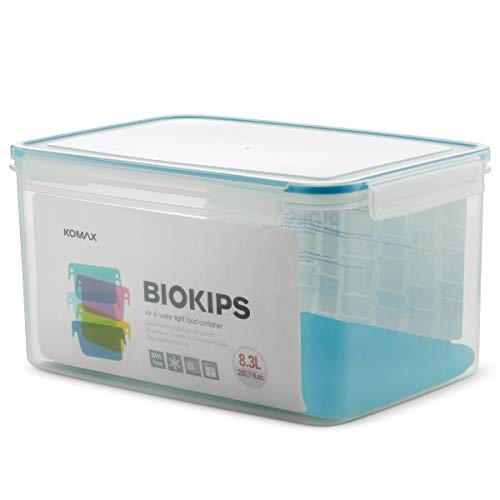
The Komax Biokips is a genuine workhorse container that handles rice as capably as it handles bread, flour, cereal, or pasta. With a 35-cup (8.3 liter) capacity supporting up to 18 pounds of food storage, it sits in a useful middle ground — large enough for meaningful bulk storage, but not so massive that it dominates your pantry. The rectangular shape is space-efficient, stacking neatly and fitting flush against pantry walls without the wasted space that round containers create.
The 4-point locking mechanism combined with a silicone lid delivers genuinely airtight and leakproof performance. Komax specifically engineered this seal to protect against moisture, pantry moths, and other invasive insects — and it delivers on that promise. Each of the four locking points clicks firmly into place, distributing pressure evenly across the seal for consistent protection. You can store this container in the kitchen, refrigerator, or pantry with equal confidence.
What makes the Biokips stand out is its versatility. While we're reviewing it as a rice container, it's equally at home storing bread, flour, oats, beans, herbs, or baking supplies. The BPA-free construction means you don't need to worry about chemical leaching. It's even practical for transporting large meals to school, work, or picnics. If you want a single container that adapts to whatever your kitchen needs this week — rice today, flour tomorrow, party snacks this weekend — the Komax Biokips is the most flexible choice. It pairs well with keeping your broader kitchen organization streamlined and efficient.
Pros:
Cons:
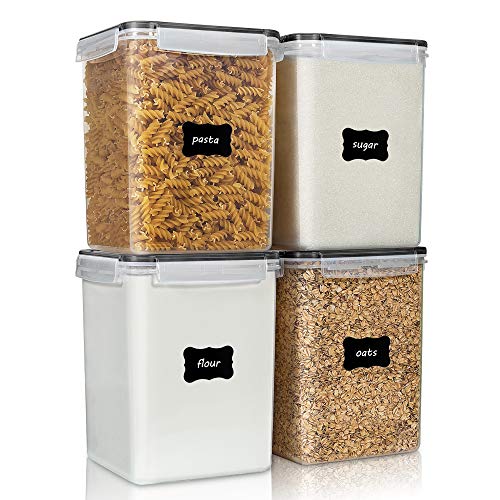
The Vtopmart set is for the person who wants to overhaul their entire pantry in one purchase. You get four 5.2-liter containers, four measuring cups, and 24 chalkboard labels — everything you need to go from cluttered bags and ties to a clean, uniform storage system. Each container measures 7.5 × 7.5 × 9.1 inches, holding 175 ounces of dry goods. That's enough for a meaningful quantity of rice, flour, sugar, cereal, or any other pantry staple in each container.
The clear plastic construction is a practical win. You can identify contents at a glance and monitor fill levels without opening lids. The wide mouth opening is generously sized — large enough to reach in with a measuring cup and scoop from the bottom without contorting your hand. The chalkboard labels are a thoughtful inclusion that lets you relabel as contents change, and they look clean and organized on the shelf.
Build quality is above average for the price. The BPA-free plastic is thick enough to feel sturdy rather than disposable, and the containers hold their shape under the weight of dense dry goods like rice and sugar. The lids seal firmly to keep food fresh, though the seal isn't quite as robust as the clip-lock systems on some competitors. For the price of a single premium container from another brand, you're getting four containers with accessories. If your goal is a complete pantry makeover in 2026 — rice, flour, sugar, and cereal all in matching, labeled containers — the Vtopmart set is the most cost-effective way to get there.
Pros:
Cons:
The first question is simple: how much rice do you go through? A single person or couple cooking rice a few times a week will do fine with a 5-pound container like the OXO POP. A family of four that eats rice daily should look at the 15 to 25 pound range — containers like the Lifewit or ComSaf set. If you buy from wholesale clubs in 25 or 50-pound sacks, skip the mid-size options entirely and go straight to the 40-pound collapsible container.
Don't forget to factor in whether you keep multiple rice varieties. If you rotate between jasmine, basmati, and brown rice, you need either multiple smaller containers or a set like the Vtopmart four-pack. One large container is more space-efficient, but multiple containers give you flexibility.
The seal is the single most important feature of any rice storage container. A weak seal lets in moisture, air, odors, and pests — every one of which degrades your rice. Look for containers with silicone gaskets rather than simple friction-fit lids. Clip-lock mechanisms (like the ComSaf and Tight-Lock) provide the most reliable compression against the gasket. Push-button systems (like the OXO POP) offer convenience but require proper engagement to maintain the seal.
If you live in a humid climate or have ever dealt with pantry moths, don't compromise on seal quality. The containers with four-point locking and silicone gaskets — the ComSaf and Komax Biokips — offer the strongest pest and moisture barriers on this list. Think of proper rice storage the same way you'd think about vacuum-sealing meat — the tighter the seal, the longer your food stays fresh.
Measure your available space before you buy. A 40-pound collapsible bin is useless if you have 10 inches of shelf space. Rectangular containers like the Komax Biokips maximize shelf density because they tile together without gaps. Round containers like the OXO POP look cleaner on countertops but waste corner space on shelves. The Tight-Lock's slim profile fits into spaces that other containers can't reach.
Consider where you'll use the container most. Countertop containers should be attractive and easy to operate one-handed. Pantry containers can be purely functional. Floor-level storage benefits from wheels, which is why the collapsible container includes casters for heavy loads.
Every container on this list is BPA-free, which is the baseline expectation for food-grade plastic in 2026. Beyond BPA, look for containers made from PP (polypropylene) or high-grade food-safe plastic that won't crack, warp, or yellow over time. The Lifewit's PP construction and the Vtopmart's thick plastic walls are both examples of materials that hold up well through years of daily use.
If you're concerned about plastic altogether, note that glass alternatives exist but are impractical for rice storage at scale — they're heavy, breakable, and expensive in large sizes. For the quantities most households store, BPA-free plastic remains the most practical material. Check that any container you buy is dishwasher-safe or at least easy to disassemble for hand washing, since rice dust and starch buildup can accumulate over time.
White rice stored in a properly sealed airtight container in a cool, dry location can last virtually indefinitely — 10 years or more. Brown rice has a shorter shelf life of 6 to 12 months due to its higher oil content, even in airtight conditions. The key factors are keeping moisture below 14% and preventing pest access, both of which a quality airtight container handles effectively.
For white rice, a cool pantry is perfectly fine. Refrigerator storage is unnecessary and wastes valuable fridge space. For brown rice, refrigerating or even freezing extends shelf life significantly because the oils in the bran layer can go rancid at room temperature. If you go through brown rice quickly (within a few months), pantry storage in an airtight container works. Otherwise, refrigerate it.
Yes, but only if the container has a true airtight seal with a silicone gasket or equivalent compression seal. Friction-fit lids that simply sit on top won't stop determined pantry moths — they can squeeze through surprisingly small gaps. Containers with clip-lock mechanisms and silicone gaskets, like the ComSaf and Komax Biokips, provide the strongest pest barriers. Also wash and dry the container thoroughly before filling, since moth eggs can already be present in the rice you buy.
A 25-pound bag of rice requires approximately 12 to 13 liters (about 3.2 to 3.4 gallons) of container volume. The Lifewit 25 Lb dispenser is sized specifically for this. The ComSaf set's two 9.5-liter containers can split a 25-pound bag comfortably with room to spare. Avoid buying a container that's exactly the right volume — you want at least 10% headroom for easy scooping and pouring.
Yes, provided the container is made from food-grade, BPA-free plastic. All containers reviewed here meet that standard. Look for PP (polypropylene) or HDPE (high-density polyethylene) markings, both of which are considered safe for dry food storage by food safety authorities. Avoid storing rice in containers that previously held non-food items, and never use containers with visible cracks or damage where chemicals could leach.
Absolutely. Every container on this list works for flour, sugar, cereal, oats, beans, pasta, coffee, and other dry pantry staples. Some — like the Komax Biokips and Vtopmart set — are explicitly designed as multi-purpose storage. The main consideration is that flour is finer than rice and can work its way through seals that would hold rice just fine, so prioritize containers with strong gasket seals if flour storage is a primary use case.
Buy the seal, not the size — the best rice container is the one that keeps air and moisture out completely, whether it holds 5 pounds or 40.
 |
 |
 |
 |

About Rick Goldman
Rick Goldman grew up traveling the Pacific Coast and developed an early appreciation for regional and international cuisines through exposure to diverse food cultures from a young age. That culinary curiosity shaped his approach to kitchen gear — he evaluates tools based on how well they perform across different cooking styles, ingredient types, and meal occasions. At BuyKitchenStuff, he covers kitchen equipment reviews, recipe guides, and food-focused buying advice.
