Kitchen Gadgets & Equipment Reviews ›
by Daisy Dao
The Avalon A12BLK takes our top spot for best plumbed countertop water dispenser in 2026, delivering three temperature settings with dual filtration in a sleek black stainless steel package that eliminates bottle hassles for good. If you're tired of lugging heavy water jugs or dealing with the recurring cost of bottled water delivery, a plumbed countertop dispenser connects directly to your water line and gives you unlimited filtered water on demand.
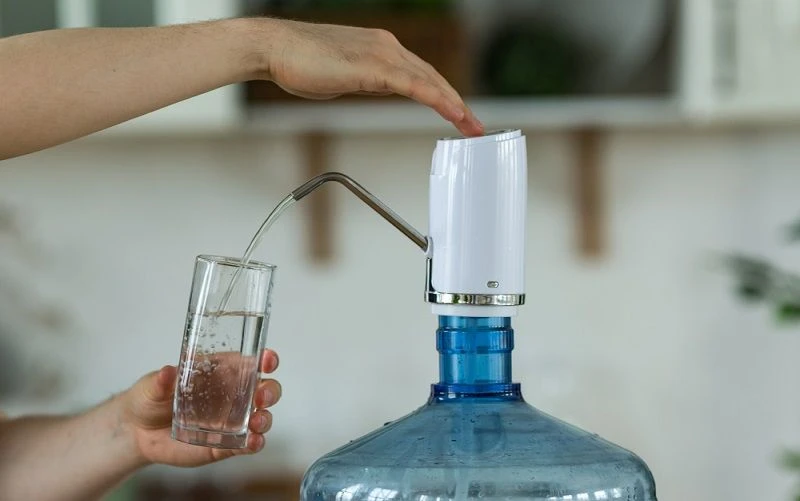
The market for countertop water dispensers has evolved significantly over the past few years. Modern units now pack advanced filtration — including reverse osmosis — self-cleaning technology, and multiple temperature outputs into compact designs that sit neatly on your kitchen counter. Whether you need piping hot water for tea, ice-cold refreshment in summer, or room-temperature drinking water throughout the day, there's a dispenser built for your exact needs. We've evaluated five of the best options available right now, ranging from budget-friendly filtration systems to premium bottleless coolers with four-stage RO filtration.
What separates a great countertop water dispenser from a mediocre one comes down to three things: filtration quality, temperature consistency, and ease of maintenance. The dispensers in this roundup cover a wide range of budgets and use cases, from the EPA's drinking water standards perspective to everyday convenience. If you're also outfitting your kitchen with other appliances, check out our full reviews section for more recommendations across categories. Let's break down each option so you can find the right fit for your household.
Contents




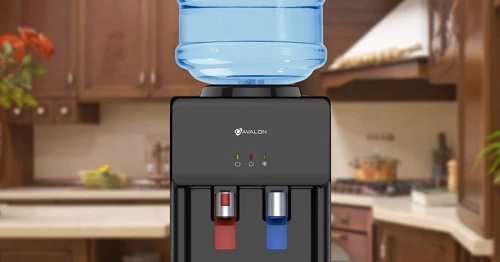
The Avalon A12BLK is the dispenser we recommend to most people, and for good reason. It delivers three distinct temperature outputs — cold, cool, and hot — through a single countertop unit that connects directly to your water line. The black stainless steel finish looks sharp in any kitchen, and the built-in nightlight is a surprisingly useful touch when you're grabbing a glass of water at 2 AM. This isn't a flashy gimmick; it's a thoughtful design detail that shows Avalon actually thinks about how people use these machines in real life.
Filtration is handled by a dual-stage system consisting of a sediment filter and a carbon block filter. The sediment filter catches particulates like sand and rust, while the carbon block tackles chlorine taste and odor. It's not reverse osmosis, but for most municipal water supplies, this level of filtration produces clean, great-tasting water without the waste that RO systems generate. The self-cleaning feature uses ozone to sanitize the internal tanks and pathways, which means you're not manually scrubbing out biofilm buildup every few weeks.
Safety is another area where this unit stands out. It carries both UL and Energy Star certifications, and the hot water spout includes a child safety lock. If you have young kids roaming the kitchen, that lock gives you genuine peace of mind. The hot water reaches temperatures suitable for instant oatmeal, tea, and soup — handy if you're someone who likes to prep quick meals. If you're looking for kitchen appliances that make meal prep more efficient, our guide to the best commercial rice cookers covers another category where the right equipment saves you serious time.
Pros:
Cons:
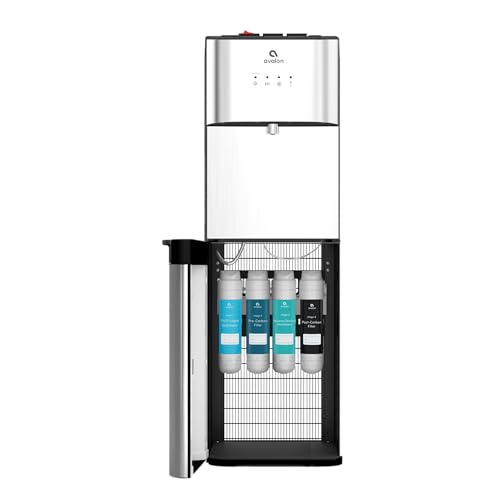
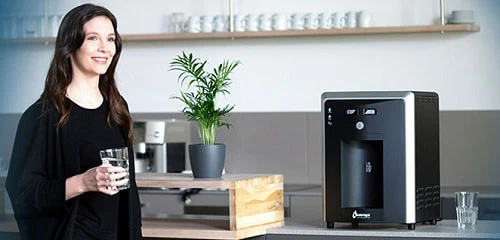
If water quality is your primary concern — maybe you're on well water, or your municipal supply has known contaminant issues — the Avalon Self Cleaning Bottleless Water Cooler with reverse osmosis is the unit to buy. Its patented 4-stage filtration system is the most comprehensive in this roundup, running water through a sediment filter, pre-carbon filter, RO membrane, and post-carbon filter in sequence. That RO membrane is the key differentiator. It strips out dissolved solids, heavy metals, and contaminants that standard carbon filters simply can't catch.
The included installation kit makes setup straightforward even if you're not particularly handy. You get 20 feet of quarter-inch tubing, a three-way push-connect adapter, an under-sink adapter with a shut-off valve, a filter flushing adapter, and detailed illustrated instructions. Everything you need is in the box. The durable stainless steel cabinet gives it a professional appearance, and the self-cleaning function works the same way as the A12BLK — ozone sanitization that runs automatically. Temperature-wise, you get hot and cold outputs. No room temperature option here, which is the one trade-off versus the A12BLK.
Filter replacement is straightforward. Avalon lists the specific model numbers for each filter stage (A5FILTER for sediment, A4FILTER for pre-carbon), making reordering simple. Each filter set lasts approximately 6 months or 1,500 gallons, whichever comes first. For a household of four, that's roughly on schedule. The ongoing filter cost is higher than basic carbon-only systems, but you're getting dramatically better water quality in return. This is the dispenser for anyone who wants the cleanest possible drinking water without installing a separate under-sink RO system.
Pros:
Cons:
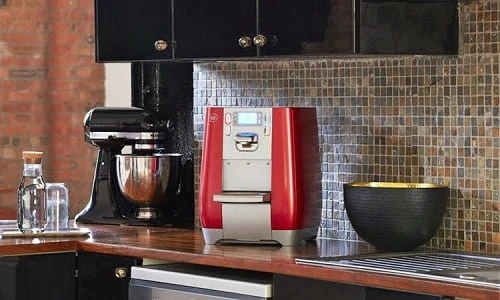
The Brio 800 is built for people who hate waiting. Its larger solenoid valve delivers water at twice the speed of standard dispensers, which makes a noticeable difference when you're filling a large water bottle or pitcher. That 11-inch dispense height is another standout feature — tall enough to fit most reusable bottles and pitchers underneath without having to tilt them at an awkward angle. If you've ever struggled to fit a Nalgene under a dispenser spout, you'll appreciate this design choice immediately.
Filtration uses a 2-stage system that eliminates dust, particles, and rust while also reducing PFAS and microplastics. That PFAS reduction capability is increasingly important in 2026, as awareness of forever chemicals in drinking water continues to grow. The digital display gives you clear readouts of temperature and system status, which is a step up from the basic indicator lights on many competing units. You get three temperature options — hot, cold, and room temperature — covering the full range of drinking preferences.
The self-cleaning function rounds out a well-designed package. Build quality feels solid, and the countertop footprint is reasonable for a unit with this many features. The Brio 800 doesn't have the most advanced filtration in this lineup — that honor goes to the Avalon RO model — but it strikes an excellent balance between water quality, dispensing performance, and everyday usability. For a busy kitchen or office break room where multiple people are filling bottles throughout the day, the faster flow rate alone justifies choosing this over slower competitors.
Pros:
Cons:
Not everyone needs a hot-and-cold dispenser with digital displays and self-cleaning technology. If your primary goal is simply getting clean, great-tasting filtered water from your tap without a complicated installation, the iSpring CKC1C is the most practical and affordable option in this roundup. It connects directly to your kitchen faucet — no drilling, no plumber, no under-sink modifications required. A simple twist switch lets you toggle between unfiltered tap water and filtered water on demand.
The clear housing is one of the smartest design features here. You can literally see the filter inside, which means you know exactly when it's time for a replacement without guessing or counting days on a calendar. The included 5-micron carbon block cartridge removes 95% of chlorine along with odors, sand, silt, sediment, and rust. It's been independently tested to meet NSF/ANSI standards, so you're not just taking the manufacturer's word for it. For most city water supplies, this level of filtration produces a dramatic improvement in taste and clarity.
The trade-off is obvious: you get filtration only, not temperature control. There's no cooling, no heating, no dispensing mechanism beyond your existing faucet. But that simplicity is exactly the point. The iSpring costs a fraction of what the Avalon or Brio units run, filter replacements are cheap, and installation takes about ten minutes. If you're renting an apartment where permanent plumbing modifications aren't an option, or you're working with a tight budget, this is the smart entry point into filtered countertop water. Pair it with a separate electric kettle for hot water and you've essentially replicated the core functionality of pricier units at a fraction of the cost.
Pros:
Cons:
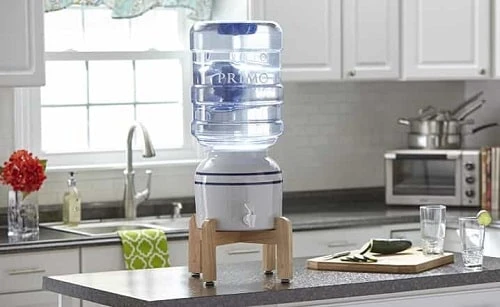
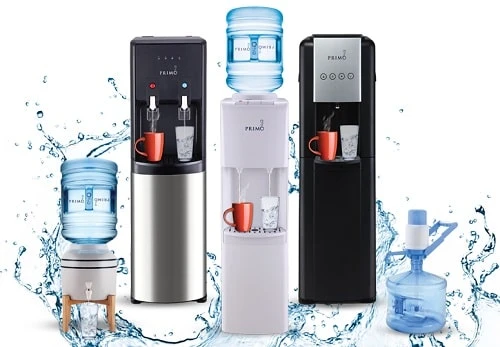
The Housiwill takes a different approach from the other dispensers in this roundup. Instead of connecting to your water line, it's a top-loading unit designed for 1.2 to 5-gallon water bottles. That makes it technically not "plumbed," but it earns its spot here because of its innovative dispensing mechanism and the fact that many buyers shopping for countertop dispensers are comparing both plumbed and bottled options. The rotating dual spout system eliminates the need to press buttons or levers — you simply rotate the dispensing knob for a continuous, hands-free flow of water.
That rotation-based dispensing is genuinely useful in practice. When you're brewing pour-over coffee, filling a pot for cooking, or just holding a glass with one hand while managing something else with the other, the no-press design keeps things flowing smoothly. It's especially practical for elderly users or anyone with limited hand strength who finds traditional push-button dispensers uncomfortable. The integrated transparent dustproof door is another thoughtful detail — it closes over the spout area when not in use, keeping dust and insects out while letting you see the dispensing mechanism at a glance.
Temperature performance is solid for the price point. The cooling system delivers water at 15°C or below at a rate of about 1 liter per hour, while the heating system produces water at 85°C or above at 5 liters per hour — hot water is ready in just 2 to 3 minutes. Those numbers are competitive with plumbed units. The main limitation is that you're dealing with water bottles instead of a direct line connection. You'll need to buy and replace bottles, and there's no built-in filtration. But if you want a countertop dispenser that prioritizes user-friendly operation above all else, the Housiwill delivers. Similar to how the right kitchen tools make cooking easier — like having a quality countertop blender — the right water dispenser removes friction from your daily routine.
Pros:
Cons:
The filtration system is arguably the most important factor in your decision. The options range from basic single-stage carbon block filters (like the iSpring CKC1C) to full 4-stage reverse osmosis systems (like the Avalon RO model). For most households on treated municipal water, a dual-stage carbon and sediment filter handles chlorine taste, odors, and particulates effectively. But if you're dealing with well water, known contaminant issues, or you simply want the highest level of purification, reverse osmosis is worth the investment. Keep in mind that RO systems produce some wastewater — typically a 3:1 or 4:1 ratio of waste to purified water — which is worth factoring into your decision if water conservation matters to you.
Think about how you actually use water throughout the day. If you drink coffee or tea regularly, a hot water output eliminates the wait for a kettle to boil. If you prefer cold water but also want room temperature for cooking or mixing beverages, look for a three-temperature unit like the Avalon A12BLK or Brio 800. Two-temperature models (hot and cold only) work fine if you don't need room-temp water. And if you only need filtration with no temperature control, a simple filter system like the iSpring saves you significant money. Match the temperature features to your actual habits rather than paying for capabilities you won't use.
Plumbed countertop dispensers need a connection to your cold water supply line, typically under the kitchen sink. Most include installation kits with tubing and adapters, but you'll need basic comfort with plumbing connections — or a willingness to call a plumber. Measure your countertop space carefully before buying. These units are compact compared to floor-standing coolers, but they still occupy valuable counter real estate. The dispense height matters too — the Brio 800's 11-inch clearance is the best in this roundup for fitting tall bottles, while other units may require you to use shorter glasses or cups. If permanent installation isn't feasible — maybe you're renting — consider the iSpring's faucet-mount design or the Housiwill's bottle-loading approach as alternatives that require zero plumbing modification.
Every water dispenser requires ongoing maintenance, primarily filter replacements. Budget for this when comparing prices. A unit with a lower purchase price but expensive proprietary filters can end up costing more over two to three years than a pricier unit with affordable replacement filters. Self-cleaning models like the Avalon units save you the hassle of manual sanitization, which is more than a convenience — regular cleaning prevents biofilm and bacterial growth in water lines and storage tanks. Check filter availability before buying. Established brands like Avalon, Brio, and iSpring have widely available replacement filters on Amazon and through their own sites. Lesser-known brands sometimes discontinue filters or make them difficult to source, which can render your entire dispenser useless. If you're investing in quality kitchen equipment that lasts, the same principle applies here as with tools like a cast iron griddle — buy once from a reputable brand and maintain it properly.
Most manufacturers recommend replacing filters every 6 months or after filtering a specified volume of water, typically 1,000 to 1,500 gallons. The exact interval depends on your water quality and usage. Households with harder water or higher sediment levels may need more frequent changes. Units with clear housings like the iSpring CKC1C let you visually inspect filter condition, while others rely on indicator lights or calendar-based reminders. Always follow the manufacturer's specific recommendations for your model.
For anyone comfortable with basic plumbing, installation is manageable. Most units come with complete installation kits including tubing, adapters, and illustrated instructions. The typical process involves connecting a T-adapter to your cold water supply line under the sink, running tubing up to the countertop unit, and flushing the system. The entire job usually takes 30 to 60 minutes. If you're not confident working with water connections, hiring a plumber for a one-time install is a worthwhile investment — a botched connection can cause leaks and water damage.
A bottleless (plumbed) dispenser connects directly to your water line and filters water on demand, giving you unlimited supply with no bottles to buy, store, or replace. A bottled dispenser uses pre-filled water jugs, typically 3 or 5 gallons. Bottleless units have higher upfront costs but lower long-term expenses since you only pay for filter replacements. Bottled dispensers are more portable and require no plumbing work, but the recurring cost of water delivery or jug refills adds up significantly over time.
Energy consumption varies by model and features. Units that actively heat and cool water use more power than filtration-only systems. Most hot-and-cold dispensers consume between 100 and 500 watts, depending on whether the heating element or compressor is actively running. Energy Star certified models like the Avalon A12BLK are designed to minimize standby power draw. In practical terms, expect to add roughly $3 to $8 per month to your electric bill for a typical hot-and-cold countertop dispenser. Filtration-only units like the iSpring use no electricity at all.
Standard carbon block filters do not remove fluoride. If fluoride removal is important to you, you need a unit with reverse osmosis filtration, like the Avalon Self Cleaning Bottleless Water Cooler. RO membranes remove 85% to 95% of fluoride along with other dissolved minerals and contaminants. Some specialized filters — such as activated alumina or bone char — also reduce fluoride, but these are not standard in most countertop dispensers. Check the manufacturer's filtration specifications if fluoride removal is a priority for your household.
Self-cleaning dispensers use ozone (O3) to sanitize their internal components. The unit generates ozone from ambient air using a small built-in generator, then circulates it through the water tanks, lines, and dispensing pathways. Ozone is a powerful oxidizer that kills bacteria, viruses, and molds on contact, then naturally breaks down into regular oxygen. The cleaning cycle typically runs automatically on a set schedule — often every 6 to 8 hours — and requires no user intervention. This process keeps the system hygienic without the need for manual cleaning with bleach or vinegar solutions.
Match the filtration to your water quality, the temperature options to your daily habits, and let the dispenser do the heavy lifting — the best countertop water dispenser is the one you never have to think about after installation.
 |
 |
 |
 |

About Daisy Dao
Daisy Dao grew up in Honolulu, Hawaii, where coastal living and access to fresh local ingredients shaped her approach to home cooking from an early age. She has spent years experimenting with seafood preparation, healthy cooking methods, and ingredient substitutions — developing hands-on familiarity with a wide range of kitchen tools, techniques, and produce. At BuyKitchenStuff, she covers healthy recipes, cooking techniques, and ingredient substitution guides.
