Kitchen Gadgets & Equipment Reviews ›
by Christopher Jones
Over 80 percent of home chocolatiers report that inconsistent tempering is the single biggest obstacle between them and professional-quality confections, according to a 2025 survey by the Fine Chocolate Industry Association. The difference between glossy, snap-worthy bonbons and dull, streaky chocolate comes down to precise crystal formation during the tempering process, and that precision is nearly impossible to achieve by hand on a consistent basis. A dedicated chocolate tempering machine eliminates the guesswork by automating the heating, cooling, and agitation cycles that produce stable cocoa butter crystals.
Whether you are a passionate home baker looking to elevate your truffles and dipped strawberries, or a cottage-industry entrepreneur scaling up production for farmers markets, the right tempering machine can transform your workflow entirely. The machines in this roundup range from compact melting pots ideal for occasional use to commercial-grade units capable of processing over 100 pounds of chocolate per day. We have evaluated each model based on temperature precision, capacity, ease of cleaning, and overall value to help you find the perfect match for your operation in 2026.
If you are already comfortable with basic kitchen equipment reviews and want to jump straight into chocolate work, this guide covers everything from professional revolation-style temperers to budget-friendly dual-pot melters that pair beautifully with your existing chef apron and confectionery setup.
Contents




The ChocoVision Revolation Delta represents the pinnacle of home and small-commercial chocolate tempering technology, built to the exacting specifications of professional pastry chefs and master confectioners. With a 10-pound working capacity and the ability to process up to 100 pounds of chocolate per day, this machine bridges the gap between artisan home production and full commercial operation. The advanced software system provides real-time temperature monitoring and automated cycle management that consistently produces perfectly tempered chocolate with Type V cocoa butter crystals.
What sets the Delta apart from every other machine in this roundup is its microprocessor-controlled tempering algorithm that adjusts heating and cooling rates based on the specific type of chocolate you are working with, whether that is dark couverture at 88-90°F, milk chocolate at 84-86°F, or white chocolate at 80-82°F. The unit builds upon everything ChocoVision learned from the Revolation X 3210 platform, adding a more sophisticated display interface and refined temperature curves that reduce total cycle time significantly.
The build quality matches the price point here, with food-grade stainless steel construction and a bowl design that facilitates even heat distribution throughout the entire chocolate mass. For anyone running a home confectionery business or producing chocolates for events and gifting at scale, the Delta is the machine that will not limit your growth for years to come.
Pros:
Cons:
The ChocoVision Revolation 2 delivers genuine professional tempering performance in a remarkably space-efficient tabletop format that fits comfortably in home kitchens. This machine melts, tempers, sets, and holds up to 1.5 pounds of chocolate at a time, maintaining temperature accuracy to an impressive 2/10 of a degree Fahrenheit throughout the entire process. The forced hot air heating system, controlled by a fully automatic microprocessor, provides gentle and uniform heat distribution that prevents scorching and ensures consistent crystal formation.
With a daily output capacity of 10 pounds, the Revolation 2 hits the sweet spot for dedicated home chocolatiers and small-batch artisans who need reliable results without the footprint or investment of a full commercial unit. The white exterior gives it a clean, professional appearance that blends well with kitchen décor, and the conventional design means anyone familiar with chocolate work will understand the workflow immediately upon unboxing.
The forced hot air heating methodology deserves special attention because it eliminates the hot spots that plague direct-contact heating elements in cheaper machines. Your chocolate heats from all angles simultaneously, which is critical for achieving uniform crystal nucleation during the cooling phase. If you are producing bonbons, molded bars, or dipped confections for a small business or serious hobby, this is the machine that will deliver consistent results batch after batch.
Pros:
Cons:

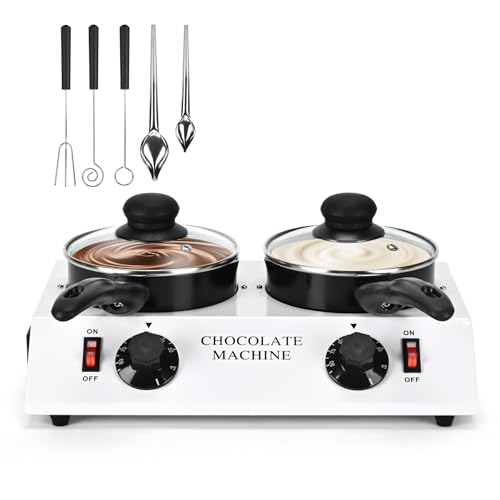
This 2026 upgraded dual-compartment melting pot offers an excellent entry point for home chocolatiers who want simultaneous access to two different chocolate types without investing in professional-grade equipment. Each 1-liter compartment operates independently with precise temperature control ranging from 32°F to 176°F, which covers the full spectrum from gentle warming through complete melting for every variety of chocolate, candy coating, and butter. The included candy dipping tools complete the package, providing everything a beginner needs to start producing dipped confections immediately.
The intelligent constant temperature chip monitors chocolate temperature in real time, and the PTC energy-efficient heating technology with fully bonded aluminum alloy thermal plates delivers remarkably fast melt times of just 8 to 12 minutes for the full 2-liter capacity. The waterless heating design is a significant safety advantage over traditional double-boiler setups, eliminating any risk of water contamination that would cause chocolate to seize. The temperature protection indicator light adds an additional layer of safety that makes this unit appropriate for family kitchens.
While this is technically a melting pot rather than a true tempering machine with automated crystal formation cycles, the precise temperature control allows experienced users to manually temper by adjusting settings through the correct temperature curve. For occasional chocolate work like holiday truffles, cake pop coating, or fondue entertaining, this dual-pot system delivers outstanding value at a fraction of the cost of dedicated tempering equipment.
Pros:
Cons:
The FRANREADER Chocolate Coating Machine brings a unique combination of large-capacity melting, dual-zone temperature control, and an eye-catching chocolate waterfall feature that makes it ideal for parties, catering events, and small commercial operations. With a 5.5-liter capacity handling approximately 5 to 8 kilograms of chocolate, this unit comfortably serves gatherings of 50 to 100 people from a single fill, eliminating the need for constant refilling during service. The creative waterfall guide tube distributes chocolate in a visually stunning cascade that doubles as both functional coating tool and decorative centerpiece.
The dual-zone heating system provides independent temperature control for the main heating pan and the spray tower, allowing you to maintain optimal melting temperature in the reservoir while keeping the waterfall section at the slightly lower working temperature needed for smooth, continuous flow. This separation is particularly valuable in cooler environments where a single-zone system would struggle to maintain consistent flow at the waterfall point. The commercial-grade high-power heating element ensures rapid initial melt times even when starting with solid chocolate blocks.
All food-contact surfaces are constructed from 201 stainless steel, which provides good corrosion resistance and compliance with food safety standards. The removable waterfall guide tube deserves special praise for eliminating cleaning dead spots that plague similar designs, and the quick-disconnect system allows you to switch between chocolate varieties without extensive teardown. For anyone who hosts regular events or operates a chocolate fountain service alongside a confectionery business, this machine offers genuine versatility.
Pros:
Cons:
VEVOR's 26.5-pound, three-tank chocolate tempering machine delivers impressive commercial capacity at a price point that makes it accessible to ambitious home operations and startup confectioneries. The 1500W heating system paired with an internal M-shaped heating tube and water bath methodology ensures rapid, even heating throughout all three tanks simultaneously. The water bath approach is a tried-and-true technique in commercial chocolate work because it provides exceptionally gentle and uniform heat transfer that prevents localized overheating near the element.
The three separate tanks give you the flexibility to work with dark, milk, and white chocolate simultaneously, each maintained at its optimal working temperature within the 86°F to 185°F adjustable range. This multi-tank configuration is invaluable for production environments where you need multiple chocolate types ready for immediate use without waiting for temperature changes between batches. The 304 stainless steel construction across the entire body, detachable pots, and dust covers represents a meaningful upgrade in material quality over competitors using lower-grade alloys.
Practical design details like the maximum and minimum water level lines on the inner pot walls prevent both overflow during heating and dangerous dry-burning that would damage the heating elements. The detachable pot design simplifies cleaning considerably, and the included dust covers maintain chocolate quality during extended holding periods. If you are looking to set up a chocolate station at a bakery, dessert bar, or home production kitchen where multiple chocolate types need to stay at temperature throughout a working session, this VEVOR unit offers exceptional capability per dollar spent.
Pros:
Cons:
The Wilton Candy Melts Melting Pot is the most accessible entry point into chocolate and candy work, designed specifically for home crafters who want reliable melting performance without complexity or a steep learning curve. The dual temperature settings provide straightforward control with a melting mode for initial liquefaction and a warming mode for maintaining fluidity during extended dipping sessions. The 2.5-cup capacity is perfectly sized for coating cake pops, dipping strawberries and pretzels, or producing small batches of molded candies for family enjoyment.
The removable silicone insert is the standout convenience feature here, offering non-stick performance and dishwasher-safe cleanup that eliminates the tedious scraping and soaking that chocolate work typically demands. The easy-pour spout facilitates controlled dispensing into molds or onto items being decorated, reducing waste and mess significantly. The compact tabletop design stores easily in a cabinet between uses, making it practical for seasonal crafters who bring it out for holidays and special occasions rather than daily production.
It is important to set expectations correctly with the Wilton pot: this is a candy melter, not a tempering machine, and it will not automatically produce properly tempered chocolate with the snap and gloss of professionally processed confections. However, it works beautifully with Wilton's own Candy Melts product line and compound coatings that do not require traditional tempering, and experienced users can achieve acceptable temper manually by monitoring temperatures carefully. For anyone just beginning their journey into chocolate and candy making, or for crafters who primarily work with compound coatings, this is the ideal starting point. It also pairs well with other kitchen essentials you might already own if you have invested in quality chef jackets and professional-grade tools for your home kitchen.
Pros:
Cons:
The single most critical specification in any chocolate tempering machine is temperature accuracy, because the difference between properly tempered and poorly tempered chocolate often comes down to just one or two degrees Fahrenheit. True tempering machines like the ChocoVision models offer precision to 2/10 of a degree, which guarantees consistent crystal polymorphism in your finished product. Budget melting pots typically provide temperature ranges rather than pinpoint accuracy, which means you will need to use an external thermometer and manual technique to achieve proper temper.
Look for machines with microprocessor-controlled heating systems rather than simple thermostatic switches, as these provide continuous monitoring and adjustment rather than cycling between on and off states that create temperature fluctuations. PTC heating elements offer an advantage over traditional resistance elements because they self-regulate and provide more consistent thermal output as the chocolate approaches target temperature.
Match your machine capacity to your realistic production needs rather than aspirational volumes. A 1.5-pound capacity machine like the Revolation 2 processes 10 pounds per day through multiple batches, which satisfies most home operations producing for personal use, gifts, or small local sales. The 10-pound Revolation Delta pushes daily throughput to 100 pounds, entering the territory of dedicated small-business production. Multi-tank systems like the VEVOR offer volume through parallel processing rather than single-batch size.
Consider your typical batch frequency as well: if you produce chocolate weekly for a farmers market, a machine that handles your entire production run in one or two batches saves hours compared to running six or eight smaller batches through a compact unit. Conversely, a massive machine running at quarter capacity wastes energy and makes temperature management less predictable due to the thermal mass of unused space.
Three primary heating methods dominate this category: forced hot air, water bath, and direct-contact heating elements. Forced hot air, used in ChocoVision machines, provides the most uniform heating with zero risk of water contamination. Water bath systems like the VEVOR deliver excellent gentleness and even distribution but require water level maintenance and introduce a contamination risk if seals fail. Direct-contact PTC elements in budget units heat quickly but may produce minor temperature variations across the chocolate mass.
Material quality directly impacts longevity, food safety, and ease of maintenance. Prioritize 304 stainless steel over 201 grade for any food-contact surfaces, as 304 offers superior corrosion resistance against the acids present in chocolate. Silicone inserts, like the Wilton's removable pot, provide non-stick convenience but may retain odors over time. For serious investment, look for machines with food-grade certifications and construction that facilitates complete disassembly for thorough cleaning between production sessions.
Understanding the distinction between a tempering machine and a melting pot is essential before making your purchase decision. A true tempering machine automates the complete cycle of heating chocolate above 120°F to destroy all existing crystals, cooling to the specific seeding temperature for your chocolate type, then raising slightly to working temperature while maintaining agitation. This automation produces consistent Type V beta crystals that give tempered chocolate its characteristic snap, gloss, and shelf stability.
Melting pots, regardless of their temperature precision, simply bring chocolate to a liquid state and hold it there. Achieving proper temper with a melting pot requires manual seeding technique where you add pre-tempered chocolate to the melted mass and stir until the correct crystal structure propagates throughout. This is entirely achievable with practice, but it demands skill and attention that an automated system handles without intervention. If you are producing chocolate products for sale where consistency is non-negotiable, invest in a true tempering machine rather than attempting to replicate the process manually with a melting pot.
Dark chocolate requires heating to approximately 120°F to melt all existing crystals, cooling to 82°F to initiate Type V crystal formation, then raising to a working temperature of 88-90°F. Milk chocolate works at 86°F and white chocolate at 82°F working temperature. A quality tempering machine handles these curves automatically based on your chocolate type selection, but knowing the targets helps you verify your machine is performing correctly.
You can absolutely temper chocolate manually using the tabling method on a marble slab, the seeding method with pre-tempered chocolate pieces, or careful microwave technique with frequent stirring and temperature checking. However, these manual methods require practice, attention, and consistent technique that machines automate entirely. For occasional use a manual approach works fine, but for regular production or commercial sale a machine pays for itself quickly through time savings and reduced waste from failed batches.
Most tempering machines have a minimum fill requirement, typically around 60 to 75 percent of their stated capacity for optimal performance. The ChocoVision Revolation 2 needs approximately one pound minimum in its 1.5-pound bowl for the sensors and agitation system to function correctly. Running a machine significantly under capacity results in poor temperature readings and inconsistent results because the thermal mass is insufficient for the machine's calibrated heating curves.
A chocolate melter simply liquefies and holds chocolate at a set temperature, while a tempering machine automates the complete heating, cooling, and reheating cycle that produces stable cocoa butter crystals. Melters are suitable for compound coatings and candy melts that do not require tempering, or for experienced users who temper manually using seeding technique. True tempering machines like the ChocoVision line produce consistently tempered chocolate without any manual intervention or crystal management from the operator.
Allow remaining chocolate to cool and solidify completely, then remove the bulk with a plastic scraper to avoid scratching surfaces. Wipe residual chocolate with paper towels moistened with warm cocoa butter or food-safe mineral oil. Never submerge electrical components or use water near heating elements unless the manufacturer specifically indicates water-safe construction. Removable bowls and inserts like the Wilton silicone pot can typically be washed separately, and stainless steel tanks in commercial units can be cleaned with warm water and mild detergent after full removal from the machine base.
If you produce chocolate confections more than twice monthly or sell any chocolate products, a dedicated tempering machine will save you significant time, reduce waste from failed batches, and dramatically improve the quality and consistency of your finished products. The entry-level Wilton melting pot costs less than a few bags of premium couverture, making the barrier to entry minimal. Professional models like the ChocoVision series represent a larger investment but typically last a decade or more with proper maintenance, making the per-use cost negligible for regular producers. Consider also that your setup might complement other kitchen equipment like a quality cheese press for a well-rounded artisan food production kitchen.
 |
 |
 |
 |

About Christopher Jones
Christopher Jones holds an MBA from the University of San Francisco and brings a business-minded approach to kitchen gear evaluation — assessing products not just for performance but for long-term value, build quality, and real-world usability in everyday home cooking. He has spent years testing appliances, cookware, and kitchen gadgets with the same analytical rigor he developed in business school. At BuyKitchenStuff, he covers kitchen appliance reviews, buying guides, and practical cooking tips.
