by Daisy Dao
Switzerland produces over 29,000 metric tons of Gruyère per year, and it's still the cheese most likely to be absent from your local grocery shelf when you need it most. If you're staring at a recipe that calls for Gruyère and coming up empty, gruyere cheese substitutes are your best friend. The right swap keeps your dish on track without sacrificing flavor or texture. Whether you're making fondue, quiche, or a creamy pasta sauce, this guide covers every substitute worth knowing. For more ingredient swap advice and cooking tips, visit our cooking guides.
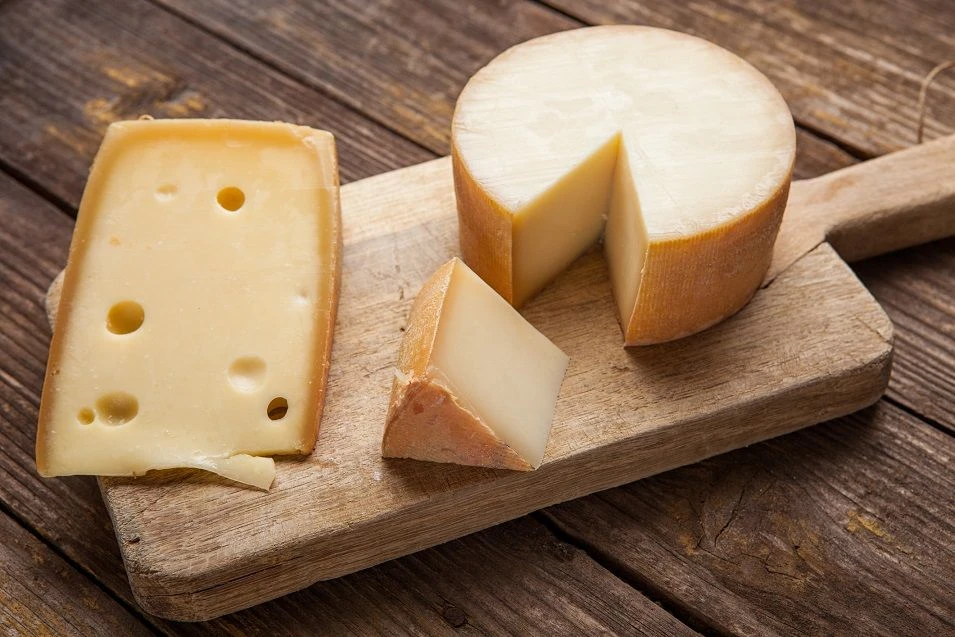
Gruyère is a firm Alpine cheese from Switzerland, aged a minimum of five months and prized for its complex, nutty-sweet flavor and exceptional melting properties. According to Wikipedia, Gruyère has been produced in the canton of Fribourg since the 12th century — which explains why it has such a developed, layered flavor profile that's genuinely hard to replicate exactly.
The good news: you don't need to replicate it exactly. You need a cheese that performs the same function — melting smoothly, contributing richness, and hitting the right balance of salty and nutty. Several cheeses do this well. Knowing which one to reach for in which situation is what separates a cook who panics from one who improvises with confidence.

Contents
Most everyday cooking scenarios are perfectly suited for a Gruyère substitute. Here's when you can swap without hesitation:
Some situations call for the authentic article. Don't substitute when:
The rule of thumb: heat hides the gap, cold reveals it. The more heat involved in your recipe, the more forgiving your substitute choice can be.

You don't need to visit a specialty cheese shop to find a solid Gruyère substitute. These are available at most well-stocked grocery stores:
If you're willing to visit a cheese counter or specialty grocer, these options get much closer to Gruyère's full complexity:

Emmental is the first cheese you should reach for when you need a Gruyère substitute. It shares the same Swiss Alpine heritage and uses a similar aging process. The key differences: Emmental is milder in flavor — less complex, less nutty — and features the characteristic large holes most people associate with "Swiss cheese."
The flavor gap is noticeable when you taste it cold. Once melted into a sauce or baked into a dish, most people cannot tell the difference.

Jarlsberg is a Norwegian semi-hard cheese with a mild, buttery, slightly sweet flavor that mirrors Gruyère's most approachable qualities. It's one of the most popular gruyere cheese substitutes in the US market because of its consistent quality and lower price point.
Comté is produced in the French Jura mountains under strict AOC regulations — every wheel is inspected and graded. Aged Comté (12 months or longer) matches Gruyère's nuttiness, sweetness, and complexity nearly perfectly. It's the substitute to use when you're entertaining or when cheese flavor is the primary note in your dish.
Comté costs more than Emmental or Jarlsberg, but it earns its price in dishes like a classic French onion soup or a cheese-forward quiche where the flavor can't hide behind competing ingredients.
This is the most common mistake home cooks make. "Swiss cheese" on an American grocery store label typically refers to a mild, semi-processed version of Emmental — it lacks the aging time, fat content, and flavor complexity of true Gruyère. It functions adequately in cooked dishes but falls completely flat in anything where cheese flavor matters.
Always choose named varieties — Emmental, Jarlsberg, Comté, Beaufort — rather than generic "Swiss." The named options have defined production standards that produce consistent, predictable results.
For firmer alpine-style substitutes, a 1:1 ratio is correct. But for creamier cheeses, you need to adjust. Here's the breakdown:
In cooked applications, melt quality is actually more critical than raw flavor. A cheese that seizes, breaks, or turns greasy under heat ruins the texture of your dish regardless of how good it tastes cold. Always prioritize cheeses with strong melting properties. Semi-hard alpine-style cheeses in the 45–50% fat-in-dry-matter range perform best and hold up reliably across every application that involves heat.
Even a good substitute fails if you melt it incorrectly. Follow these steps every time:
Pro tip: Toss freshly shredded Gruyère substitute with one teaspoon of cornstarch before adding it to any sauce or fondue — it prevents clumping and gives you a silky, smooth result every time.
If your substitute tastes a bit flat compared to authentic Gruyère, these additions close the gap without changing the recipe's structure:
These flavor-layering techniques apply any time you're compensating for a substitute's shortcomings. If you've worked through our guide on serrano pepper substitutes, you'll recognize the same principle at work: adjust the supporting ingredients to fill the gap left by your swap.
| Substitute | Flavor Profile | Melt Quality | Best Use | Availability | Price |
|---|---|---|---|---|---|
| Emmental | Mild, nutty, slightly sweet | Excellent | Fondue, quiche, gratins, soups | Most grocery stores | $ |
| Jarlsberg | Mild, buttery, sweet | Excellent | Dips, casseroles, sandwiches | Most grocery stores | $ |
| Comté (aged) | Complex, nutty, fruity | Very Good | All applications including raw | Specialty stores | $$$ |
| Beaufort | Rich, buttery, slightly floral | Very Good | Fondue, cheese boards | Specialty stores | $$$ |
| Fontina | Earthy, creamy, mild | Good | Pasta sauces, gratins, pizza | Most grocery stores | $$ |
| Raclette | Savory, slightly pungent | Excellent | Melted dishes, potatoes, bread | Specialty stores | $$ |
| Generic Swiss | Very mild, bland | Good | Emergency backup only | All grocery stores | $ |

You don't need a cheese cave to cook consistently with alpine-style cheeses. A strategic approach to your fridge means you're never stuck without a solid gruyere cheese substitute:
Proper storage extends the usefulness of any alpine-style cheese. Follow these four rules:
These habits apply to the broader challenge of smart kitchen ingredient management. If you're working on reducing waste across your pantry and fridge, our guide on how to reduce food waste at home covers practical strategies that extend to every ingredient you buy — including specialty cheeses.
Emmental is the closest widely available substitute for Gruyère. It shares the same Swiss Alpine heritage, melts identically, and delivers a similar nutty-sweet flavor at a lower price point. For dishes where flavor complexity takes center stage — a cheese board, an elevated quiche — Comté is the premium choice and comes even closer to authentic Gruyère's full profile.
Mozzarella melts well but makes a poor Gruyère substitute. It has a much milder, milkier flavor with almost none of the nutty complexity that defines Gruyère. In a pinch, you can blend mozzarella with a small amount of aged Parmesan to approximate some richness, but the result remains a distant second to Emmental or Jarlsberg in both flavor and performance.
Mild or medium cheddar works as an emergency Gruyère substitute in fully cooked dishes, but the flavor difference is noticeable — sharper, less nutty, with none of the Alpine sweetness. Use it only when no better option is available, and always choose mild varieties. Sharp cheddar dominates the dish and throws off the balance of most recipes that call for Gruyère.
Emmental and Comté are the top picks for French onion soup. Both melt smoothly under the broiler, develop a golden, bubbly crust, and have enough flavor depth to stand up to a rich beef broth. Jarlsberg also works well if you want a milder result. Avoid processed Swiss slices — they don't brown properly and contribute little flavor.
No. Gruyère is a specific variety of Swiss Alpine cheese with defined geographic origin and strict production standards — every wheel is produced and aged in a designated region of Switzerland. "Swiss cheese" on an American grocery label typically refers to a generic, milder, semi-processed version of Emmental. Gruyère has a stronger, more complex flavor, a denser texture, and small holes or no holes at all in aged versions.
 |
 |
 |
 |

About Daisy Dao
Daisy Dao grew up in Honolulu, Hawaii, where coastal living and access to fresh local ingredients shaped her approach to home cooking from an early age. She has spent years experimenting with seafood preparation, healthy cooking methods, and ingredient substitutions — developing hands-on familiarity with a wide range of kitchen tools, techniques, and produce. At BuyKitchenStuff, she covers healthy recipes, cooking techniques, and ingredient substitution guides.
Check for FREE Gifts. Or get our Free Cookbooks right now.
Disable the Ad Block to reveal all the recipes. Once done that, click on any button below
|
|
|
|
