by Rick Goldman
What if the best jerky doesn't start with beef at all? Our team has been perfecting a homemade bacon jerky recipe for years, and we're convinced it beats traditional jerky in flavor, texture, and simplicity. Bacon jerky delivers that smoky, sweet, savory punch that most people crave — and it takes a fraction of the time to make compared to classic beef jerky. Whether someone's brand new to making jerky or a seasoned pro looking for a fresh twist, this guide covers every angle. We've also put together plenty of kitchen guides on our site for anyone looking to level up their cooking game.
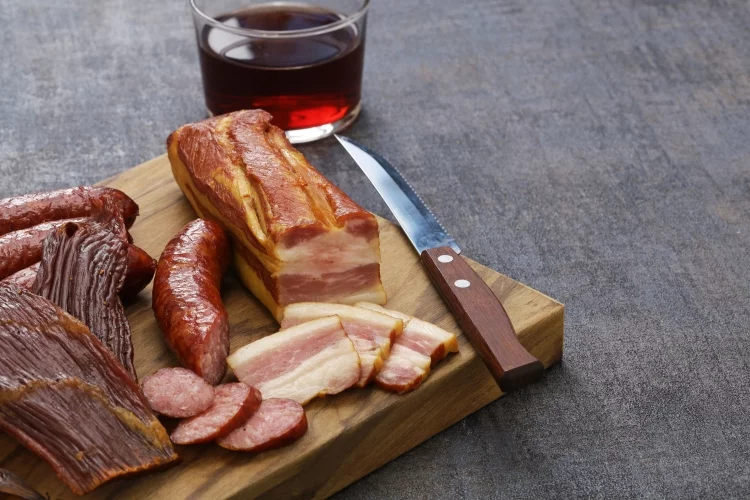
The beauty of bacon jerky is how forgiving it is. Unlike beef jerky, which demands precise slicing, long marinating, and careful dehydration, bacon comes pre-sliced, pre-cured, and packed with fat that renders into incredible flavor. Our team has tested ovens, dehydrators, smokers, and even air fryers — and we've nailed down what works and what's a waste of time.
This post walks through everything: the gear, the process, beginner and advanced methods, common pitfalls, storage tips, and a few myths we're happy to bust. Let's get into it.
Contents
Most people think of jerky as dried beef strips. Bacon jerky flips the script entirely. It starts with a different cut of meat, uses a different process, and delivers a completely different eating experience. Understanding these differences matters because the techniques that work for beef jerky can actually backfire with bacon.
Beef jerky uses lean cuts — the fat is the enemy because it goes rancid. Bacon is the opposite. That fat is the whole point.
Our team considers this the single most important thing to understand before starting. Bacon jerky isn't dehydrated meat — it's slow-cooked, candied, smoky bacon taken to the next level. Anyone who's explored other protein-based recipes like learning how to cook turkey bacon on the stove already knows that bacon varieties each have their own quirks.
Store-bought bacon comes pre-cured with salt and nitrates, and most varieties are already smoked. This gives bacon jerky makers a massive head start:
According to the Wikipedia article on bacon, the curing process for commercial bacon typically involves sodium nitrate or nitrite, salt, and sometimes sugar — all of which contribute to the preservation and flavor profile that makes bacon jerky work so well.
One of the best things about bacon jerky is that most people already own everything they need. No specialty equipment required for the basic version.
| Equipment | Purpose | Worth It? |
|---|---|---|
| Food dehydrator | Lower, slower drying for chewier texture | Yes, if making jerky regularly |
| Smoker (electric or charcoal) | Real smoke flavor, superior results | Yes, for advanced batches |
| Meat thermometer | Ensures proper internal temp | Absolutely — cheap and essential |
| Silicone baking mat | Replaces foil, easier cleanup | Nice but not necessary |
| Vacuum sealer | Extended shelf life for storage | Yes, if making large batches |
| Spice grinder | Fresh-ground spice blends | Makes a noticeable difference |
Our team's honest take: an oven, a baking sheet, and a wire rack handle 90% of the work. Everything else is a bonus. Keeping the kitchen well-organized helps too — anyone dealing with clutter issues like pantry pests might want to check out our guide on how to get rid of ants in the kitchen before stocking up on jerky-making supplies.
Here's the core homemade bacon jerky recipe our team uses every time. It's been refined over dozens of batches, and it consistently produces bacon jerky that disappears within hours.
Ingredients (for 1 pound of thick-cut bacon):
Mix everything in a bowl. Lay out the bacon strips on a sheet of parchment or directly in the bowl. Coat each strip on both sides. Let it marinate for at least 2 hours — overnight in the fridge is even better. The longer the marinade sits, the deeper the flavor penetrates.
Total cook time runs 50–60 minutes for most ovens. The finished jerky should be chewy but not brittle. If it snaps clean in half, it went too long. If it's still floppy, give it another 5–10 minutes.
Not everyone wants to fire up a smoker, and that's perfectly fine. Our team has tested both approaches extensively, and here's an honest breakdown of how they compare.
The oven method is where most people should start. It's predictable, repeatable, and produces great results with zero learning curve.
The one limitation is smoke flavor. Oven-baked bacon jerky relies on the bacon's existing smoke and whatever smoked paprika or liquid smoke gets added to the marinade. It's good — but it's not the real thing.
For anyone ready to go further, smoking bacon jerky is a game-changer. The process adds real wood smoke flavor that no liquid substitute can replicate.
Our team's verdict: smoked bacon jerky is the best version, but oven-baked is 85% as good with 20% of the effort. Most people making their first batch should stick with the oven and graduate to smoking once they're hooked.
We've wrecked enough batches to know exactly what goes wrong and why. Here are the errors our team sees most often.
Seasoning matters a lot in any kitchen project. Keeping ingredients fresh is half the battle — our guide on how to keep salt dry covers some practical tips that apply to spice storage in general.
Bacon jerky isn't the right choice for every situation. Our team is blunt about this: knowing when to make it — and when to skip it — saves time, money, and frustration.
The internet is full of bad advice about bacon jerky. Our team has tested these claims, and most of them fall apart under scrutiny.
"Bacon jerky needs a dehydrator." False. A standard kitchen oven at 275°F produces excellent bacon jerky. Dehydrators work fine too, but they're slower and not required. Our team actually prefers the oven for most batches because of the faster turnaround and better caramelization.
"Any bacon works the same." Not even close. Thick-cut, center-cut bacon is ideal. Thin-cut bacon turns into chips. Turkey bacon doesn't have enough fat to render properly (though it can work in a dehydrator at lower temps). Cheap, water-injected bacon shrinks dramatically and produces disappointing results. Spending a few extra dollars on quality bacon makes a noticeable difference in the final product.
"Bacon jerky lasts as long as beef jerky." This one gets people into trouble. Commercial beef jerky can last months at room temperature because it's ultra-lean and loaded with preservatives. Homemade bacon jerky, with its higher fat content and no commercial preservatives, stays good for about a week at room temperature and two to three weeks refrigerated. Vacuum-sealing extends that, but it's still not a shelf-stable product the way commercial jerky is.
"Liquid smoke is just as good as real smoking." Our team disagrees strongly. Liquid smoke adds a one-dimensional smokiness. Real wood smoke from a smoker adds layers of flavor — different woods produce different profiles. Apple wood gives sweetness, hickory gives intensity, cherry gives a mild fruity note. Liquid smoke is a fine shortcut for oven batches, but calling it equivalent to real smoke is misleading.
"Bacon jerky is unhealthy junk food." Perspective matters here. Bacon jerky is high in protein, has no carb fillers, and the rendering process actually removes a significant portion of the fat. It's not a health food, but compared to most packaged snacks — chips, candy, granola bars — it's a reasonable protein snack in moderation.
Proper storage is the difference between bacon jerky that lasts and bacon jerky that goes rancid in three days. Our team takes this seriously because a bad batch is a waste of good bacon.
Freezing is the best option for anyone making large batches. Our team regularly makes double or triple batches and freezes the excess.
Proper food storage techniques make a big difference across the kitchen. Anyone who also makes burgers in bulk might find our tips on how to freeze hamburger buns useful for similar reasons — getting the air out and labeling everything prevents waste.
Thick-cut, center-cut bacon produces the best results. It has enough meat to create a chewy texture while the fat renders properly. Our team avoids thin-cut bacon because it crisps too quickly and turns brittle instead of chewy. Applewood-smoked or hickory-smoked varieties add extra flavor depth right from the start.
At room temperature in an airtight container, homemade bacon jerky lasts about 5–7 days. Refrigerated, it keeps for 2–3 weeks. Vacuum-sealed and frozen, it stays good for 2–3 months. The higher fat content compared to beef jerky means it doesn't have the same extended shelf life as commercial lean jerky.
Yes, but with caveats. Air fryers work at higher temperatures and with strong airflow, which can overcook the outside before the inside dries properly. Our team recommends setting the air fryer to 250–275°F and checking every 5 minutes after the 15-minute mark. Results are decent but less consistent than the oven method.
Technically, no — plain bacon can be slow-baked into jerky. But the marinade is what elevates it from "dried bacon" to actual jerky. The brown sugar and maple syrup create the signature candied crust, and the spices add depth. Our team strongly recommends marinating for at least 2 hours, ideally overnight.
Turkey bacon can be used in a dehydrator at lower temperatures, but it doesn't work as well in the oven. It lacks the fat content that gives pork bacon jerky its texture and flavor. The result tends to be dry and tough rather than chewy. If health concerns are the motivation, our team suggests using center-cut pork bacon, which is leaner than regular cuts.
The jerky is ready when it bends without snapping and feels firm but not rigid. It should be noticeably darker than raw bacon, with a caramelized, slightly tacky surface. If it snaps cleanly in half, it's overdone. If it's still floppy and pale, it needs more time. The jerky also firms up as it cools, so pulling it when it's slightly softer than desired usually produces perfect results.
Bacon is already cured with salt, so adding more salt to the marinade is the most common cause of overly salty jerky. Our team never includes salt in the marinade recipe. If someone has already made a batch that's too salty, soaking the raw bacon in cold water for 30 minutes before marinating draws out some of the excess salt from the cure.
 |
 |
 |
 |

About Rick Goldman
Rick Goldman grew up traveling the Pacific Coast and developed an early appreciation for regional and international cuisines through exposure to diverse food cultures from a young age. That culinary curiosity shaped his approach to kitchen gear — he evaluates tools based on how well they perform across different cooking styles, ingredient types, and meal occasions. At BuyKitchenStuff, he covers kitchen equipment reviews, recipe guides, and food-focused buying advice.
Check for FREE Gifts. Or get our Free Cookbooks right now.
Disable the Ad Block to reveal all the recipes. Once done that, click on any button below
|
|
|
|
