Kitchen Gadgets & Equipment Reviews ›
by Rick Goldman
Nearly 486,000 Americans visit emergency rooms each year due to cooking-related burns and injuries, according to the National Fire Protection Association — and the right pair of silicone oven mitts is one of the cheapest, easiest ways to keep hands out of that statistic. Our team spent several weeks testing and comparing silicone oven mitts across seven leading options available in 2026, looking at heat resistance, grip quality, liner comfort, and overall value. What we found surprised us: not every mitt rated for 450°F actually performs the same way under real cooking conditions, and the difference between a comfortable fit and a frustrating one often comes down to liner material and glove length rather than the silicone shell itself.
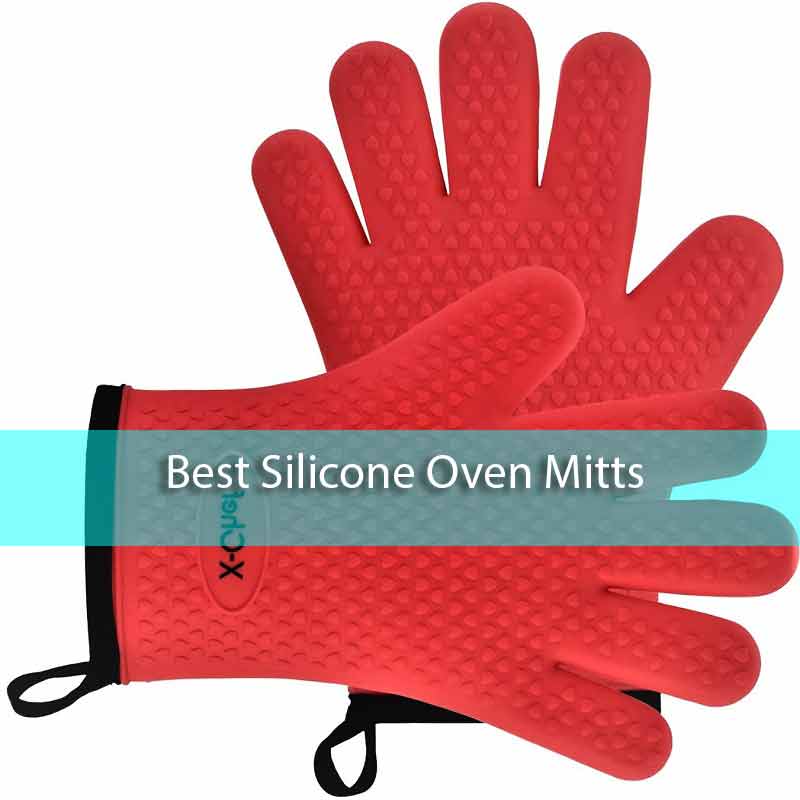
Silicone oven mitts have largely replaced traditional quilted fabric mitts in modern kitchens because they resist water, steam, and grease in ways fabric simply cannot. Most fabric mitts wet out (absorb moisture until they lose insulating ability) within seconds of contact with a steaming pot — silicone holds its protective barrier. That said, silicone does have trade-offs: it can feel stiff without a good cotton liner, and some cheaper versions trap heat inside and make hands sweat quickly. We cover all of that in our buying guide below. For now, browse our top-rated kitchen product reviews and then dive into the full breakdown.
Whether home users are baking bread, grilling ribs on a charcoal grill, or pulling a pressure canner off a burner — and if anyone wants advice on the best pressure canners to pair with mitts, we reviewed the best pressure canners for glass top stoves separately — the right mitt makes a noticeable difference in kitchen safety and confidence. Below is our team's complete breakdown for 2026.
Contents


OXO has built its reputation around ergonomic kitchen tools, and the Good Grips Silicone Oven Mitt delivers exactly what that brand promises. At 13 inches (33 cm) in length, it covers the hand and a good portion of the forearm — enough for pulling sheet pans and Dutch ovens from a standard-depth oven without catching a wrist on the rack. The exterior features a raised non-slip pattern across the palm and fingers that we found genuinely useful when gripping wet or greasy pans, which is where smooth-surfaced mitts often disappoint. The water-resistant silicone wipes down almost instantly under the sink, making cleanup easier than any fabric mitt in our test group.
The taper of the mitt — narrower at the finger end, wider at the opening — makes it easier to slide on and off quickly. That matters when home users need to set something down fast and then pick up a utensil without fumbling. One limitation worth noting: at 13 inches, it is slightly shorter than several competitors in this roundup, so anyone pulling from a deep commercial oven or working over a high charcoal grill may want to consider a longer option. For everyday stovetop and home oven work, though, our team found it among the most comfortable mitts we tested.
Pros:
Cons:
Steam burns are often more severe than direct contact burns because steam carries far more energy per degree than dry air — and fabric mitts are nearly useless against it. These BPA-Free Soft Silicone Oven Mitts specifically address that gap. At 14.7 inches long, they rank among the longer options we tested, extending well past the wrist and partway up the forearm. That extra length showed its value when our team lifted lids from boiling stockpots: zero steam penetration, zero discomfort. The quilted cotton interior lining adds a layer of comfort that pure silicone mitts often lack, making it tolerable to wear for extended periods at the grill or oven.
Heat resistance is rated to 450°F, which covers virtually everything a home cook or backyard griller encounters regularly. The silicone surface grips pots, pans, and baking sheets firmly without requiring a death-grip squeeze. Cleanup is straightforward — a rinse under the tap handles most messes. One honest trade-off: the thick quilted liner, while comfortable, means these mitts feel slightly bulkier than the OXO, which reduces fine motor control for tasks like adjusting knobs or handling small items. Most buyers won't notice in daily use, but precision tasks can feel a touch clumsy.
Pros:
Cons:
Zulay Kitchen has become a well-known name in affordable kitchenware, and these extra-long silicone oven mitts represent one of their stronger entries. Like the BPA-Free Soft option above, they measure 14.7 inches and pair premium BPA-free silicone with a quilted cotton liner. Where Zulay differentiates itself is in the texture: the silicone pattern across the palm and finger surfaces is thicker and more pronounced, which translated to noticeably better grip in our hands-on testing, especially on cast iron skillets and heavy roasting pans. The pair comes as a set of two, which is important because most serious cooking tasks benefit from having both hands protected.
Our team appreciated that the extended sleeve portion genuinely covers the forearm. When reaching into a deep oven or across a grill, the extra length is not just a marketing claim — it provides real protection for a part of the arm that standard mitts consistently leave exposed. The red colorway also makes these easy to spot in a busy kitchen, which is a small but practical benefit. If anyone is also investing in a quality cookware set to pair with these mitts, our best pot and pan set reviews cover options across every budget level. The Zulay mitts handle everything from lightweight sauté pans to 7-quart Dutch ovens without issue.
Pros:
Cons:
Gorilla Grip is one of the more recognized non-slip kitchenware brands, and their silicone oven mitts carry that identity into the kitchen with a distinctive honeycomb-textured grip pattern that genuinely outperformed smooth-surfaced competitors in our slip tests. These mitts are rated to 550°F — the highest heat rating in this roundup — which makes them a better fit for grilling environments where temperatures spike unpredictably and brief contact with grill grates is a real risk. Anyone who regularly works with a charcoal grill, smoker, or high-BTU gas grill will appreciate that extra thermal headroom.
At 12.5 x 8.3 inches, they run slightly shorter than the 14.7-inch options, which is a practical trade-off for the improved grip performance. The thick cotton lining throughout — not just at the fingertip — adds comfort that remains consistent across the entire surface. Stain resistance and waterproofing are also strong selling points: hot liquids and grease wipe away quickly, and the black color hides residual discoloration that would be obvious on lighter-colored mitts. For anyone shopping for the right accessories to go alongside their best rib racks or smoker setups, we'd point them toward our best rib racks review — these Gorilla Grip mitts pair naturally with that kind of outdoor cooking gear.
Pros:
Cons:
These compact silicone mitts from Vaincre take a completely different approach to oven protection. Rather than a traditional full-hand glove design, the clamshell-style mini mitts function more like thick, flexible pot holders that wrap around both sides of a hot handle or dish. They come in a four-piece set (two blue, two green) and are particularly well suited for microwave dishes, small pots, bowl retrieval, and tasks where a full-size oven mitt feels like overkill. The mouth-type hinged design means home users can grip a warm dish from both sides simultaneously without balancing or repositioning.
Heat resistance is rated to 446°F — nearly identical to most full-size mitts in this roundup. The anti-skid strip across the gripping surface adds holding security on smooth ceramic and glass dishes, which is where standard mitts sometimes slip. One important limitation: these are not designed for pulling full sheet pans from a hot oven or handling large roasting pans. They work best as a supplement to a full-size mitt set, covering the quick tasks — stirring a hot pot, lifting a microwave-safe bowl, moving a small cast iron skillet. Sold as four pieces, they represent solid value for buyers who want quick-access grip tools scattered across their kitchen.
Pros:
Cons:
The Mastrad LED Oven Mitt is the most distinctive product in our roundup — a silicone mitt with a built-in removable LED light on the back of the hand. It sounds gimmicky, and we went into testing with low expectations, but the built-in light has a practical application: illuminating the dark interior of a conventional oven or a charcoal grill at night, where it can be genuinely difficult to see what is happening at the back of a rack. The light has a simple on/off button and removes for cleaning. Non-slip grooves across the silicone exterior provide solid grip, and the cotton lining keeps the interior comfortable during use.
Practically speaking, the Mastrad functions like a solid mid-range silicone oven mitt when the light is not in use — protective, grippy, and easy to clean. The LED feature adds a layer of utility that occasional outdoor cooks and anyone with a poorly lit oven will actually use rather than dismiss. It is not the top choice for heavy daily baking or professional-grade grilling, but as a kitchen tool that solves a specific visibility problem while still protecting hands, it earns its place on the list. Most buyers won't find a direct competitor for this specific feature combination in 2026.
Pros:
Cons:
Most silicone oven mitts are designed as blunt-tool protection — they cover the hand, but individual finger dexterity is essentially gone. The LANON Liquid Silicone Gloves take a fundamentally different approach. LANON was the first company to manufacture oven gloves from liquid silicone (as opposed to molded solid silicone), which produces a thinner, more flexible shell that conforms to finger movement rather than restricting it. The result is a glove that allows home users to actually manipulate individual items — adjusting oven rack positions, rearranging multiple pans, handling small cookware — while still protected.
The internal CoralAir liner (a breathable 18-gauge seamless knit) is a standout feature. Unlike quilted cotton liners that can bunch or shift, the seamless construction remains smooth against the hand. Heat resistance spans -100°F to 480°F, making these suitable for freezer retrieval and oven work alike. They are food-grade certified, odorless, grease-resistant, and clean up with warm water and dish detergent. The white color shows heat stains over time, which is the most common practical complaint we encountered, but the performance advantages over traditional mitt designs are significant for home users who need real finger control alongside heat protection. Given how much easier these make handling multiple pans at once, anyone with a busy stovetop and a quality cookware set will notice the difference immediately.
Pros:
Cons:
After testing seven different products and putting hands inside hot oven environments repeatedly, our team identified four factors that separate genuinely protective mitts from ones that look good on a shelf but underperform in real kitchens. Understanding how thermal insulation works helps set realistic expectations: the silicone shell deflects radiant heat and blocks steam, while the liner absorbs and slows conductive heat transfer from direct contact.
Every mitt in this roundup is labeled with a maximum temperature rating — most fall between 446°F and 550°F. That number refers to the temperature the material itself can withstand, not how long a hand inside remains comfortable. A mitt rated to 500°F does not mean a hand can rest on a 500°F surface indefinitely; it means the silicone will not melt or degrade at that temperature. Actual protection time at high heat is a function of liner thickness and contact duration. For standard home oven use (up to 450°F), any mitt in our lineup is adequate. For grilling over live coals or smoking where brief contact with grates is possible, the Gorilla Grip's 550°F rating provides meaningful extra margin.
Length is one of the most underrated specs on oven mitts. A standard oven with racks positioned mid-depth requires roughly 12 inches of coverage to keep the wrist clear of the oven door edge. A deep commercial-style oven, a barrel smoker, or a kamado grill can require 14 inches or more for confident forearm protection. Our team's recommendation: anyone cooking primarily indoors with a standard residential oven can work comfortably with a 12–13 inch mitt, while outdoor grillers and anyone with a deep or professional oven should target 14.7 inches minimum.
The interior liner determines whether mitts feel comfortable after 30 seconds or 30 minutes. Quilted cotton is the most common liner material and performs well — it absorbs minor hand moisture and provides a soft feel against skin. The main limitation is drying time: if the cotton liner gets wet from a submerged cuff or heavy condensation, it takes hours to dry fully and loses some insulating value in the meantime. LANON's CoralAir seamless liner avoids this with a breathable knit construction that stays dry longer. For most home users, quilted cotton is perfectly adequate; for anyone regularly working with steam or wet cookware, a more breathable liner is worth seeking out.
Grip pattern and material thickness are inversely related to dexterity. A thick, heavily textured silicone surface grips better but restricts fine finger movement. A thinner, smooth or lightly textured surface allows more control but can slip on wet pans. Our testing found that honeycomb and raised-dot patterns (Gorilla Grip, OXO) grip best under wet conditions, while the liquid silicone construction of the LANON provides the best finger control for precise adjustments. Most buyers will find a mid-range textured mitt like the Zulay or BPA-Free Soft option hits the best balance of grip and usability. Anyone who regularly repositions multiple dishes simultaneously — holiday cooking, batch baking — should seriously consider the LANON gloves for that extra control.
Silicone oven mitts outperform fabric mitts in several key ways: they are waterproof, steam-resistant, and do not absorb grease or liquids. Fabric mitts wet out quickly under steam and lose their insulating ability when saturated. Silicone holds its protective barrier regardless of moisture. The main advantage fabric retains is flexibility and a softer feel — some home users prefer the natural grip of fabric for lighter tasks. For most cooking environments in 2026, silicone or silicone-lined hybrid mitts offer a meaningful safety upgrade over traditional quilted fabric.
For standard home cooking and baking, a rating of 446°F to 450°F is sufficient. Residential ovens typically max out around 500°F for self-cleaning cycles, but cooking temperatures rarely exceed 450°F in practice. For outdoor grilling, smoking, or any situation with potential direct contact with grill grates or very high-heat surfaces, our team recommends targeting a 500°F–550°F rating to provide an adequate safety margin.
Most silicone oven mitts clean up quickly under warm running water with a small amount of dish soap. The waterproof silicone surface releases grease and food residue without soaking. For cotton-lined mitts, it is important to allow the interior liner to dry completely before storing — damp liners develop odor over time and can degrade comfort. Most options in this roundup can also be run through a dishwasher, though hand washing is gentler on the liner material for long-term durability.
Yes — silicone oven mitts are well suited for grill use, and several options in our roundup are specifically designed with grilling in mind. The Gorilla Grip's 550°F rating and the Zulay Kitchen's extended 14.7-inch length both reflect grill-focused design priorities. The key consideration is that brief contact with very hot grill grates is not the same as sustained contact with an oven rack: silicone handles brief contact well but extended direct contact with live flame or extremely high surfaces (600°F+) is not recommended for any product in this review.
Liquid silicone (liquid silicone rubber, or LSR) is a more advanced form of silicone that is injected rather than molded from a pre-formed sheet. It produces a thinner, more uniform shell with higher flexibility and tensile strength than conventional molded silicone. For oven gloves specifically, this means individual finger movement is preserved rather than eliminated — the shell flexes with the hand instead of resisting it. LANON is currently the primary manufacturer producing consumer oven gloves from liquid silicone at a consumer-accessible price point in 2026.
With normal home use and proper cleaning, quality silicone oven mitts typically last two to five years before showing significant wear. The most common failure points are the cotton liner (which can degrade with repeated washing and high-heat exposure) and the seams at the cuff opening. Mitts that see daily professional or heavy outdoor cooking use may show wear faster. Our team recommends inspecting the liner annually for thinning or uneven padding and replacing any mitt that shows cracks, tears, or separation in the silicone shell, as these compromise thermal protection.
The mitt that fits the hand, covers the wrist, and grips the pan without slipping is the right mitt — everything else is a bonus.
 |
 |
 |
 |

About Rick Goldman
Rick Goldman grew up traveling the Pacific Coast and developed an early appreciation for regional and international cuisines through exposure to diverse food cultures from a young age. That culinary curiosity shaped his approach to kitchen gear — he evaluates tools based on how well they perform across different cooking styles, ingredient types, and meal occasions. At BuyKitchenStuff, he covers kitchen equipment reviews, recipe guides, and food-focused buying advice.
