Kitchen Gadgets & Equipment Reviews ›
by Rick Goldman
Picture this: you're six hours into a double shift, the kitchen floor is slick from a prep spill, and your feet started aching around hour three. The difference between grinding through that shift and barely surviving it often comes down to one thing — what's on your feet. If you're shopping for kitchen shoes in 2026, you already know how much the right pair matters.
Not all kitchen footwear is created equal. Some shoes lead with slip resistance. Others are engineered for all-day cushioning, orthotic compatibility, or lightweight wear across marathon shifts. The best ones do several of those things at once without sacrificing comfort for safety or style for function. This guide covers seven of the top-rated options on the market right now, with detailed reviews, honest trade-offs, and a buying guide to help you narrow down the right fit for your job.
Whether you're a nurse, a line cook, a barista, or a hospitality worker, there's a shoe on this list built for your specific demands. We've also linked to a few other useful resources throughout — if you spend a lot of time in the kitchen, you might also want to check out our picks for the best grill pans for gas stoves or the best electric knife sharpeners to round out your professional setup. Now, let's get into the picks.
Contents
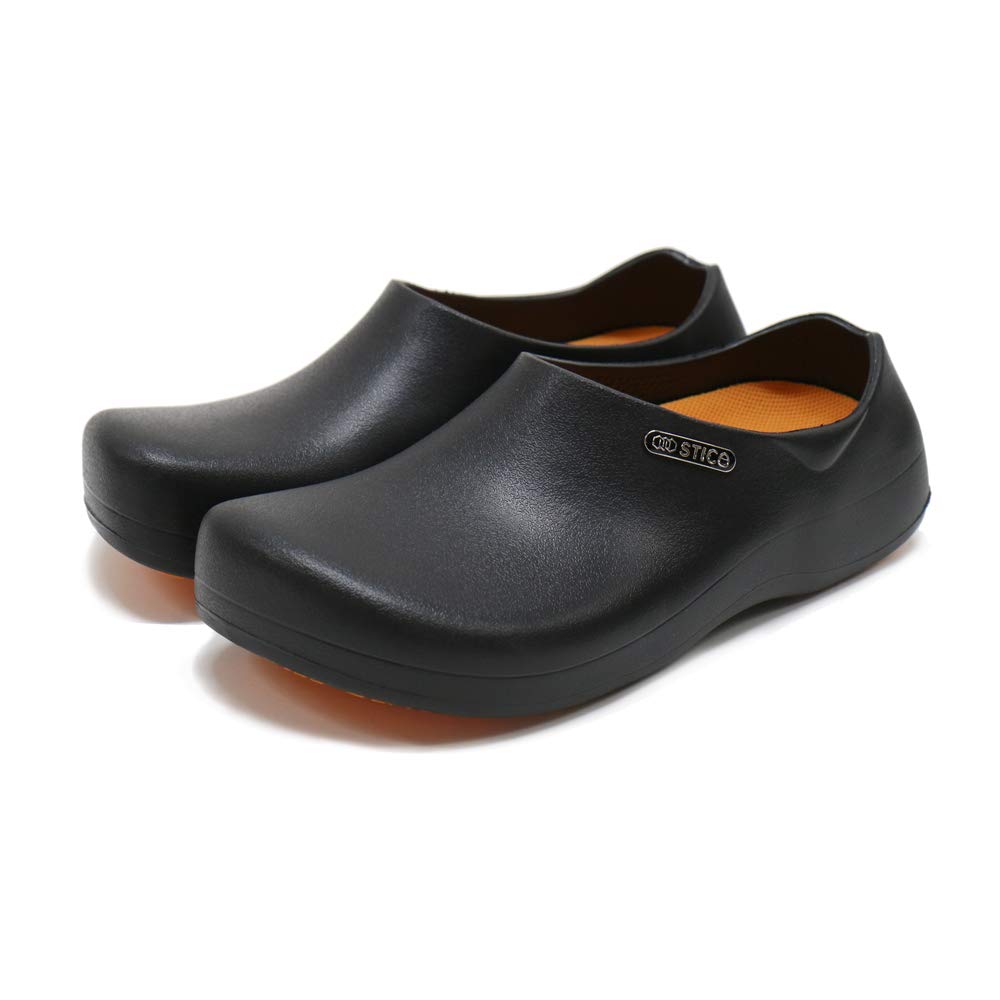


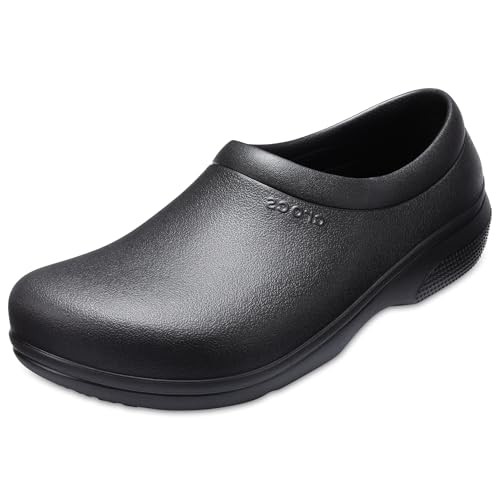

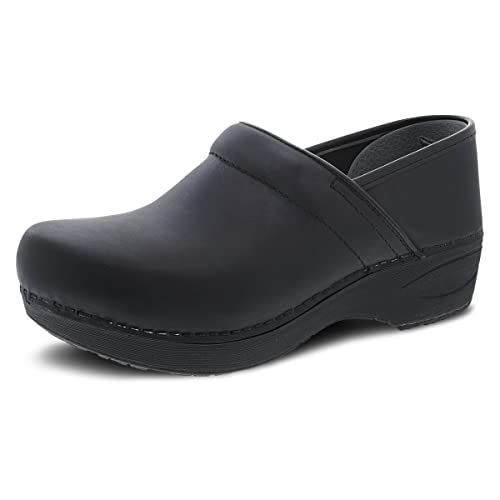


The Dansko Professional is one of the most recognized names in professional footwear, and it has earned that reputation over years of real-world use in hospitals, restaurants, and commercial kitchens. The rocker sole design is the standout feature here — it promotes a natural rolling motion with each step, which reduces fatigue significantly over long shifts. If you've ever come home with aching calves and sore heels after a ten-hour shift, this is the shoe that addresses that directly.
The leather upper is durable and easy to wipe clean, which matters in any food service or healthcare environment. The padded instep collar provides a snug, secure fit that keeps the shoe on your foot even when you're moving quickly. Dansko's roomy toe box gives your toes real space to spread — not the cramped, pinched feeling you get from a lot of work shoes. The outsole delivers reliable slip resistance on wet and greasy surfaces, which is non-negotiable in a kitchen setting.
One thing to know: the break-in period is real. The first few days in these clogs can feel stiff, especially around the instep. Push through it. Once they break in, the fit becomes exceptionally comfortable and these shoes tend to last for years, not months. For nurses, food service workers, or anyone who stands on hard floors for extended periods, the Dansko Professional remains one of the best investments you can make in 2026.
Pros:
Cons:
Crocs has built a loyal following in professional kitchens, and the On The Clock Work Clog is one of the main reasons why. This is a fully enclosed clog — closed toe, closed heel — which gives it the workplace safety profile you need in most commercial kitchen environments. The Croslite foam construction keeps the shoe lightweight and easy on your feet, while the enclosed design protects them from dropped utensils, spills, and the general hazards of a busy kitchen.
The standout feature is the Crocs Lock tread pattern on the outsole. It's engineered specifically for slick kitchen and hospital floors, and it delivers. On wet tile, on greasy mats, on the kind of surfaces that would send you sliding in a regular shoe — this tread keeps you grounded. The shoe meets typical workplace safety guidelines for toe and heel coverage, making it a solid choice if your workplace has formal footwear requirements.
One critical sizing note: these run large. Size down if you're between sizes, and size down in general if you want a snug, secure fit. A shoe that's too big is a slip hazard in its own right, so get the sizing right. Beyond that, the On The Clock is an excellent value option for workers who want reliable slip resistance and workplace compliance without paying premium prices.
Pros:
Cons:
If the standard On The Clock clog is good, the Bistro Pro LiteRide is better — and the difference comes down to the insole. Crocs fitted this model with their LiteRide foam technology, which is a noticeably softer and more resilient material than the standard Croslite used in most of their shoes. After twelve hours on a concrete kitchen floor, that difference is not subtle. Your feet feel it.
Everything else you'd expect from a Crocs work clog is here: enclosed toe, enclosed heel, Crocs Lock tread for slip resistance on wet and oily surfaces, and lightweight construction that keeps the shoe from adding to your fatigue. The Bistro Pro adds the LiteRide insole on top of that foundation, which makes it the better choice if you're prioritizing all-day comfort over price. The shoe still meets workplace standards for toe and heel coverage, so it works in environments with formal footwear policies.
Like the On The Clock, these run large. Size down. Beyond that, this is a genuinely excellent kitchen clog that competes with more expensive options on cushioning and comfort. If you're spending ten to twelve hour shifts on your feet and you want a clog that won't destroy your feet by hour eight, the Bistro Pro LiteRide is the Crocs model to buy.
Pros:
Cons:
The Dansko XP 2.0 is the evolved version of the brand's classic clog, and it addresses the one complaint that long-time Dansko wearers have always had: weight. The XP 2.0 is noticeably lighter than the original Professional clog, which changes the feel completely on twelve-plus hour shifts. You still get the dual-density PU footbed with Dansko Natural Arch technology, which provides genuine anatomical support — not just padding, but structured arch support that keeps your foot aligned hour after hour.
The EVA midsole adds a layer of shock absorption that the older models lacked, making this shoe noticeably better on hard concrete and tile floors. The TPU heel counter keeps the back of the shoe stable and your heel properly positioned, which prevents the lateral wobble that leads to fatigue. High-quality leather uppers round out the package — these are shoes built to last, and the waterproof pull-up leather on this version cleans up easily after a messy shift.
The removable footbed is a significant feature for anyone who uses custom orthotics. You can pull out the stock insole and drop in your own, which is something most clogs don't accommodate well. If you have specific arch or heel needs and you've been told by a podiatrist to use custom orthotics, the XP 2.0 is the kitchen shoe that works with your prescription, not against it. This is the premium choice for professionals who need serious, long-term foot support.
Pros:
Cons:
Not everyone wants a clog. If you prefer the feel of a sneaker for long shifts, the Shoes For Crews Condor II is the slip-resistant work shoe built for you. Shoes For Crews has been making non-slip footwear for professional environments for decades, and the Condor II represents their core competency: serious traction on the surfaces that matter most. The outsole meets ASTM F2913-19 standards for slip resistance on wet, oily, and greasy surfaces — that's a certified safety rating, not a marketing claim.
The TRIPGUARD technology in the outsole is specifically designed to reduce the risk of catching your foot on raised surfaces during fast movement — something that's relevant if you're moving quickly in a busy kitchen or hospitality environment. The removable EVA insole provides genuine cushioning and absorbs impact on hard floors, and the padded collar and tongue keep your ankle comfortable through long shifts. Fits true to size, which takes the guesswork out of ordering.
The water-resistant upper is easy to wipe down at the end of a shift, and the overall construction is clean enough that you could wear these outside of work without looking like you're in uniform. If you're someone who walks or stands across multiple environments in a single day — kitchen to front of house, clinic to break room — the Condor II gives you that versatility without compromising on the traction performance that defines the Shoes For Crews line.
Pros:
Cons:
If arch support is your primary concern — and for a lot of kitchen and healthcare workers, it is — the Skechers Work Arch Fit 2.0 SR is the shoe built specifically around that need. The Advanced Arch Fit insole system was developed using twenty years of biomechanical data and over 120,000 foot scans, and it shows in how the shoe feels underfoot. This isn't just a padded insole — it's a shaped, anatomically precise support system that holds your arch in the right position through every step of a long shift.
On the safety side, the SRO-rated slip-resistant outsole handles wet, dry, and oily surfaces effectively, and the Electrical Hazard (EH) safe design meets ASTM-F2892 standards — making this a valid choice in environments where EH protection is required. The shock-absorbing, well-cushioned midsole backs up the arch support with impact protection, and the removable insole means you can swap in custom orthotics if your needs go beyond what the stock system provides.
What sets the Arch Fit 2.0 SR apart from other slip-resistant sneakers is that it was built from the ground up around foot health, not just traction. If you've been dealing with plantar fasciitis, flat feet, or general arch fatigue, this is the work shoe that addresses the root cause. It's podiatrist-certified, and the insole system is genuinely one of the best you'll find at this price point. Pair these with a good kitchen setup — whether you're using an indoor electric grill or running a full commercial line — and you'll end your shift in far better shape.
Pros:
Cons:
Birkenstock has been engineering ergonomic footwear longer than most kitchen shoe brands have existed, and the Profi Birki brings that heritage directly into the professional kitchen context. The cork-latex footbed that defines every Birkenstock is present here, and it does what it always does: molds gradually to your foot's unique shape, creating a custom-fit platform that supports your arch, heel, and forefoot simultaneously. No other material in kitchen footwear does this quite the same way.
The certified anti-slip outsole provides dependable traction on the surfaces you encounter in commercial kitchens and food service environments. But the feature that genuinely sets the Profi Birki apart is its dishwasher-safe construction. Remove the insole, drop the shoe in the dishwasher, and you have a hygienic cleaning option that no leather or fabric shoe can match. In a professional food service context, that's a practical advantage that's easy to underestimate until you're dealing with a particularly messy shift.
Sizing follows European EU sizing conventions, so check the conversion carefully before ordering. The shoe is available in both men's and women's sizing — the labels on the bottom of the sole indicate M for men and L (ladies) for women, which can be a source of confusion. Once you have the right size, the Profi Birki delivers long-lasting support and comfort that holds up over years of professional use. It's the choice for workers who prioritize biomechanical correctness and long-term foot health above everything else.
Pros:
Cons:
Every shoe on this list has some form of slip-resistant outsole, but not all slip resistance is equal. Look for shoes that carry a certified rating — the ASTM F2913-19 standard is the benchmark for slip resistance on wet, oily, and contaminated surfaces, which are the exact conditions in a commercial kitchen. The Shoes For Crews Condor II explicitly meets this standard. Crocs uses their own Crocs Lock tread, which performs well in real-world kitchen conditions. Birkenstock and Dansko carry certified anti-slip outsoles as well.
According to the U.S. Occupational Safety and Health Administration (OSHA), slips, trips, and falls are among the most common workplace injuries in food service. Your shoe's traction is your first line of defense. Don't buy kitchen shoes based on style or brand recognition alone — verify the outsole's slip resistance credentials before you commit.
The difference between a shoe with adequate cushioning and one with excellent cushioning is invisible for the first four hours of a shift. It becomes very visible after that. EVA midsoles, LiteRide foam, and dual-density PU footbeds all address shock absorption in different ways — what matters is that you get enough cushioning to make it through your longest shifts without significant foot pain.
Arch support is a separate consideration from cushioning. You can have a well-cushioned shoe that provides no real arch support, which is a problem for workers with flat feet or plantar fasciitis. The Skechers Arch Fit 2.0 SR is the best choice here, with a podiatrist-certified insole system built around long-term arch health. The Dansko XP 2.0 and the Birkenstock Profi Birki also provide genuine anatomical arch support. If you use custom orthotics, prioritize shoes with removable insoles — the Dansko XP 2.0, Skechers, and Shoes For Crews Condor II all accommodate them.
Many commercial kitchens, hospitals, and food service employers have specific footwear requirements written into their safety policies. In most cases, that means an enclosed toe and heel — open-toe shoes and slingback clogs are typically prohibited. The Crocs On The Clock and Bistro Pro LiteRide are fully enclosed and designed specifically to meet these requirements. The Dansko Professional and XP 2.0 are enclosed-toe clogs. The Birkenstock Profi Birki has an open back, which rules it out for environments with enclosed-heel requirements.
Before you buy, confirm what your employer actually requires. Some workplaces are strict; others care primarily about slip resistance. Knowing your requirements saves you from buying a shoe you can't legally wear on the job.
Kitchen environments are hard on footwear. Grease, moisture, dropped food, and constant movement all take a toll. Leather uppers — like those on the Dansko Professional and XP 2.0 — are durable and relatively easy to wipe down. Crocs' Croslite material is waterproof by nature and cleans with a damp cloth. The Birkenstock Profi Birki offers the unique advantage of being dishwasher-safe, which gives you a hygienic deep-clean option no other shoe on this list provides.
Expect to replace kitchen shoes every six to twelve months with heavy daily use, and every twelve to eighteen months with lighter use. When the outsole tread starts to wear smooth or the cushioning bottoms out, the shoe's safety and comfort profile has degraded — replace it. The investment in quality footwear pays off in reduced fatigue, fewer injuries, and better long-term foot health.
A kitchen-safe shoe typically has three key features: a certified slip-resistant outsole that performs on wet and oily surfaces, an enclosed toe to protect against dropped objects, and materials that can be cleaned easily after contact with food, grease, and moisture. Many workplaces also require an enclosed heel. Look for outsoles that meet ASTM F2913-19 standards for verified slip resistance, rather than relying on unverified marketing claims.
It depends on your priorities. Clogs like the Dansko Professional offer excellent arch support and a rocker sole that reduces fatigue, and they're easy to slip on and off. Sneakers like the Shoes For Crews Condor II provide more lateral stability, a snugger fit, and versatility across different environments. Both styles can be equally effective if they carry proper slip resistance. The best choice comes down to personal preference, fit, and your workplace's footwear requirements.
Extremely important. A certified rating — specifically ASTM F2913-19 for the U.S. market — means the outsole has been independently tested and proven to meet minimum traction thresholds on wet, oily, and contaminated surfaces. Shoes without a certified rating may still perform adequately, but you're relying on the manufacturer's claim rather than independent verification. In an environment where a slip can result in serious injury, certification matters.
Yes, but only if the shoe has a removable insole. The Dansko XP 2.0, Skechers Work Arch Fit 2.0 SR, and Shoes For Crews Condor II all have removable insoles that accommodate standard and custom orthotics. The original Dansko Professional has a non-removable footbed, which makes it less compatible with custom orthotics. If you've been prescribed custom orthotic insoles by a podiatrist, make sure you verify removable-insole compatibility before purchasing.
For workers who wear kitchen shoes five or more days per week, plan to replace them every six to twelve months. The outsole tread wears down and loses its slip-resistant properties over time, and the cushioning compresses and becomes less effective. If you notice your feet aching more than usual by mid-shift, or if you can see the tread pattern wearing smooth on the outsole, it's time for a new pair. Higher-quality shoes like Dansko and Birkenstock tend to last longer than budget options before hitting this threshold.
Yes — specifically the professional work line models like the On The Clock and Bistro Pro LiteRide, not the standard casual Crocs. The work line features enclosed toes and heels, Crocs Lock slip-resistant tread designed for kitchen and hospital floors, and construction that meets most workplace safety requirements. Casual Crocs with ventilation holes and open backs are not appropriate for kitchen use. The professional line models addressed all of those concerns directly and are widely used in commercial kitchens, hospitals, and food service environments.
Your feet carry you through every shift, and the right kitchen shoes in 2026 make a measurable difference in how you feel at the end of a long day. Browse the full options in our kitchen and cooking gear reviews, pick the shoe that matches your specific needs — whether that's arch support, certified slip resistance, orthotic compatibility, or lightweight comfort — and invest in a pair that will protect your feet for the long haul. The best kitchen shoe is the one you're actually comfortable wearing for twelve hours straight, so use this guide to make that decision with confidence.
 |
 |
 |
 |

About Rick Goldman
Rick Goldman grew up traveling the Pacific Coast and developed an early appreciation for regional and international cuisines through exposure to diverse food cultures from a young age. That culinary curiosity shaped his approach to kitchen gear — he evaluates tools based on how well they perform across different cooking styles, ingredient types, and meal occasions. At BuyKitchenStuff, he covers kitchen equipment reviews, recipe guides, and food-focused buying advice.
