Kitchen Gadgets & Equipment Reviews ›
by Daisy Dao
You're standing in the cookware aisle, staring at a wall of cast iron griddles, and they all look roughly the same. Flat, heavy, black. But the differences between a mediocre griddle and a great one show up fast — uneven heat, poor seasoning that flakes off, handles that burn your hands. After testing and comparing dozens of models, we've narrowed it down to the seven best cast iron griddles worth your money in 2026.
Cast iron griddles remain one of the most versatile pieces of cookware you can own. They sear steaks, cook pancakes, press sandwiches, and handle everything from stovetop to campfire. The material itself is nearly indestructible — a well-maintained cast iron griddle will outlast every non-stick pan in your kitchen. But not all griddles are created equal. Size, weight, reversibility, and seasoning quality all matter, and the wrong choice means frustration every time you cook.
Whether you need a compact round griddle for weekend pancakes or a double-burner beast for feeding a crowd, this guide covers the top picks across every use case. We've also put together a detailed buying guide to help you zero in on exactly what fits your kitchen. If you're also upgrading your cooking setup, you might want to check out our picks for the best flat griddle pans for lighter-duty tasks.

Contents
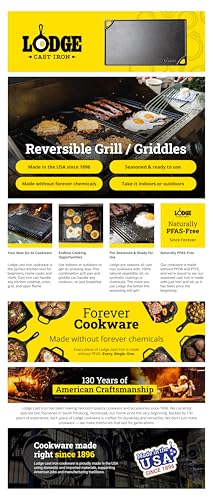




The Lodge Double Play is the griddle that earns its place in more American kitchens than any other model. It spans two burners and gives you a reversible cooking surface — smooth griddle on one side, ridged grill on the other. That dual functionality alone makes it one of the most practical pieces of cast iron you can buy. The pre-seasoning Lodge applies at the factory is solid and improves with every use, giving you a naturally nonstick surface without any synthetic coatings.
What sets this griddle apart is the combination of generous cooking area and genuine versatility. You can flip flapjacks for six people on the flat side, then turn it over and sear burgers with those classic grill marks. The cast iron holds heat remarkably well, so you get consistent results from edge to edge. At roughly 20 inches long, it covers standard double-burner setups on most gas and electric ranges without wobbling.
The weight is the main thing to consider. This is a heavy slab of cast iron — expect around 14 pounds. That's excellent for heat retention but means you need two hands to move it. Lodge's commitment to PFAS-free, non-toxic cookware also makes this a smart pick for health-conscious cooks who want to move away from chemical non-stick coatings.
Pros:
Cons:
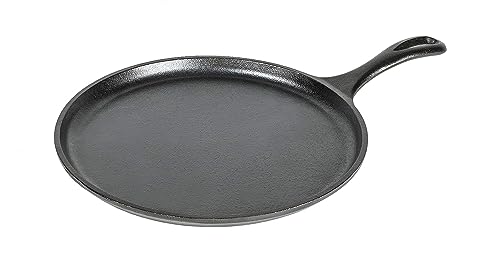
Not everyone needs a double-burner griddle taking up half the stove. The Lodge 10.5-inch round griddle is the right tool when you want a dedicated, single-burner cooking surface for tortillas, pancakes, quesadillas, or grilled cheese sandwiches. It's the kind of griddle you reach for three or four times a week without thinking about it. The round shape sits perfectly centered on a single burner and delivers remarkably even heat distribution for its size.
Lodge's pre-seasoning is the same quality you get on their larger pieces — ready to cook on immediately. The low-profile design with a shallow lip gives you easy spatula access from any angle, which matters more than you'd think when you're flipping delicate crepes or sliding a fried egg onto a plate. It also transitions seamlessly from stovetop to oven to campfire, making it one of the most portable cast iron options available.
The 10.5-inch cooking surface is generous enough for two or three pancakes at a time but won't handle a big family breakfast in a single batch. That's the trade-off for portability and easy storage. If you're cooking for one or two people regularly, this griddle earns its keep every single day.
Pros:
Cons:
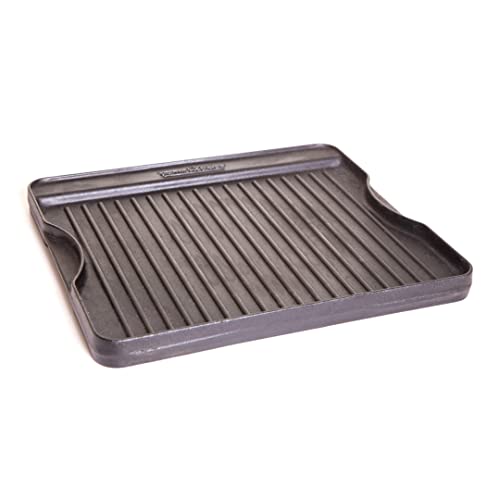
Camp Chef built this griddle specifically for their outdoor cooking systems, and it shows. The 14 x 16-inch reversible surface fits both their 14-inch Blue Flame and 16-inch Orange Flame burner systems, giving you a purpose-built griddle that locks into place and performs consistently in outdoor conditions. If you already own a Camp Chef stove or are planning to buy one, this griddle is the obvious companion piece.
The reversible design follows the same principle as the Lodge Double Play — flat griddle on one side for eggs and pancakes, ridged grill on the other for burgers and steaks. The pre-seasoning comes ready to cook right out of the box, and Camp Chef's cast iron quality is excellent. The material is thick enough for serious heat retention, which matters outdoors where wind and ambient temperature can rob thinner pans of heat quickly.
The main limitation is compatibility. This griddle is sized and designed for Camp Chef systems first. You can certainly use it on a home stovetop, but it's optimized for a single Camp Chef burner rather than spanning two residential burners. For dedicated outdoor cooks and campers, though, it's hard to beat. The cast iron will last a lifetime with basic care — keep it oiled, keep it dry, and it'll reward you with decades of perfectly cooked campfire breakfasts.
Pros:
Cons:
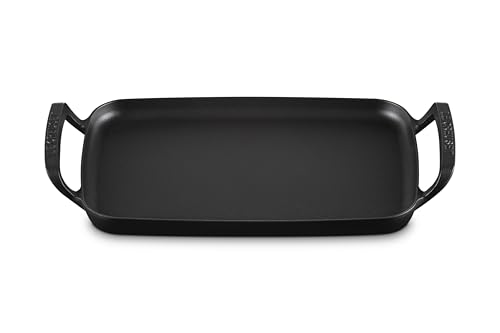
Le Creuset brings their legendary enameled cast iron quality to the outdoor griddle game with this 15.75-inch rectangular model from the Alpine Outdoor Collection. The key differentiator here is the enamel coating. Unlike traditional bare cast iron, this griddle requires zero seasoning — no oil curing, no careful break-in period. You unbox it and start cooking. The matte black enamel resists staining, chipping, cracking, and rusting, which makes maintenance dramatically simpler than raw cast iron.
The enamel surface does something interesting over time: it develops a natural patina that actually enhances cooking performance. You get better and better results the more you use it. Heat distribution is superb, as you'd expect from enameled cast iron, and the rectangular shape provides a practical cooking surface for everything from breakfast spreads to grilled vegetables. The griddle also nests with other pieces in Le Creuset's Alpine Outdoor Collection, which is a thoughtful design detail for storage-conscious kitchens.
The elephant in the room is price. Le Creuset is a premium brand, and this griddle carries a premium price tag. You're paying for the enamel coating, the brand's quality control, and a piece of cookware that genuinely will not rust or require seasoning. For cooks who hate the maintenance side of cast iron but love the cooking performance, this griddle eliminates the biggest pain point. It's also a strong choice if you're shopping for the best French onion soup bowls or other pieces that benefit from Le Creuset's build quality.
Pros:
Cons:
Staub's plancha-style griddle is the choice for cooks who prioritize searing performance above everything else. Made in France, this 18.5 x 9.8-inch double burner griddle features Staub's signature textured black matte enamel interior, which is specifically engineered for exceptional browning and caramelization. The textured surface creates micro-contact points that help food develop a deep, even crust — the kind of sear you associate with high-end restaurant cooking.
Like the Le Creuset, Staub's enameled cast iron eliminates the seasoning requirement. The enamel is durable, easy to clean, and maintains its cooking performance without the oil-and-heat curing ritual that bare cast iron demands. The double-burner footprint gives you plenty of room to work with, and the heat retention is outstanding. Once this griddle reaches temperature, it stays there, which is critical for achieving consistent sears across multiple batches of protein.
The plancha shape — long and relatively narrow — is intentional. It's modeled after the traditional Spanish plancha cooking style, where a flat iron plate gets screaming hot and cooks food through direct conduction. This makes it phenomenal for thin steaks, shrimp, vegetables, and anything else that benefits from intense, direct heat. The trade-off is that the narrower profile gives you less total surface area than wider rectangular griddles at the same length.
Pros:
Cons:
The Amazon Basics reversible grill/griddle punches well above its price point. At 20 x 10.63 inches, you get a large double-burner cooking surface with both a smooth griddle side and a ridged grill side — essentially the same dual-functionality as the Lodge Double Play but at a lower price. The pre-seasoning is decent, though not quite as refined as Lodge's factory coating. It's oven safe to 500°F, which opens up finishing techniques like broiling a crust on thick-cut steaks.
The handles on this model are user-friendly — wide enough to grip securely with oven mitts, which matters when you're moving nearly a foot and a half of hot cast iron. Heat distribution is good for the price category, though you may notice slightly more variation from center to edge compared to premium brands. The cast iron itself is solid and heavy, which translates to reliable heat retention once the griddle is fully preheated.
One important note: Amazon Basics specifies that pre-seasoned products don't have true non-stick function. You'll need to use oil and continue building the seasoning over time to achieve the kind of slick, non-stick performance that a well-maintained cast iron piece develops. Hand wash only — no dishwasher. If you're new to cast iron or want a large reversible griddle without spending Lodge or Camp Chef money, this is your entry point.
Pros:
Cons:
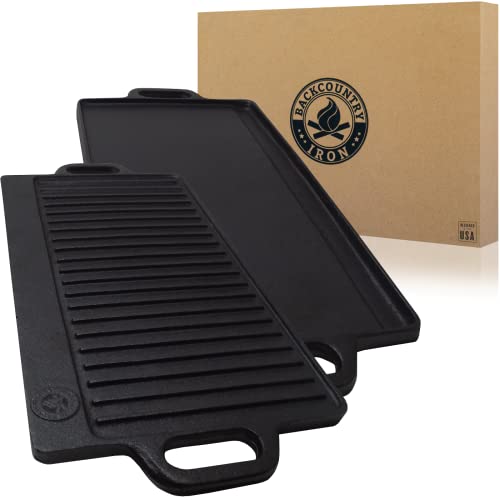
Backcountry Iron offers a compelling alternative for cooks who want a large reversible griddle from a brand that specializes in cast iron. The 20 x 9-inch footprint gives you a 16.25 x 7.5-inch cooking surface on both the flat griddle and ridged grill sides. That's a generous amount of real estate for searing steaks, cooking breakfast spreads, or grilling vegetables — enough to handle a family dinner without multiple batches.
Full compatibility across gas, electric, and induction cooktops is a standout feature. Many cast iron griddles work on gas and electric but skip induction compatibility. Backcountry Iron also rates this for oven, broiler, outdoor grill, BBQ, and fire pit use, making it one of the most versatile pieces in this roundup. The pre-seasoning creates a nonstick-like surface when used with a thin layer of oil, and it builds up nicely over time with regular cooking.
Backcountry Iron includes helpful care instructions — they specifically recommend a stainless steel chainmail scrubber for maintaining a smooth patina, which is solid advice that many brands don't mention. The griddle should never go in the dishwasher, shouldn't soak overnight, and needs to be wiped dry immediately after cleaning with a fresh layer of oil applied. If you're already comfortable with cast iron maintenance, this is a strong performer that competes directly with bigger-name brands at a competitive price. Consider pairing it with a quality flat griddle pan for lighter weeknight cooking.
Pros:
Cons:
The first decision is how much cooking surface you actually need. Single-burner griddles like the Lodge Round are perfect for one- or two-person households and store easily. Double-burner models like the Lodge Double Play and Staub Plancha give you the space to cook for a family or entertain guests without running multiple batches. Consider your stovetop layout — measure the distance between your burner centers to make sure a double-burner griddle will sit level and stable.
Keep in mind that bigger doesn't always mean better. A large griddle on a small stovetop creates cold zones at the edges, resulting in uneven cooking. Match the griddle size to your heat source for the best results.
This is the most important material choice you'll make. Bare cast iron (Lodge, Camp Chef, Amazon Basics, Backcountry Iron) requires seasoning and ongoing maintenance — oil it after every wash, avoid soaking, and build up the nonstick patina over time. In return, you get a surface that becomes genuinely nonstick with use and can be restored if damaged.
Enameled cast iron (Le Creuset, Staub) eliminates the seasoning requirement entirely. You get excellent heat performance with much easier maintenance. The trade-off is higher cost, and enamel can chip or crack if dropped. Enameled griddles also won't develop the same kind of slick, nearly frictionless cooking surface that a well-seasoned bare iron piece achieves over years of use.
Reversible griddles give you a flat cooking surface on one side and raised grill ridges on the other. This effectively doubles your cooking options with a single piece of cookware. The Lodge Double Play, Camp Chef, Amazon Basics, and Backcountry Iron all offer reversible designs. Single-surface griddles like the Lodge Round, Le Creuset, and Staub trade that versatility for a lower profile, lighter weight, and easier storage.
If you primarily cook breakfast foods, tortillas, and smash burgers, a flat-only griddle serves you perfectly. If you want the option to sear steaks with grill marks or cook foods that benefit from fat draining away through ridges, go reversible.
Cast iron is heavy. There's no way around it. A double-burner reversible griddle can weigh 12-16 pounds, which means two-handed lifting every time you move it. Consider whether you'll leave the griddle on your stovetop permanently or store it between uses. If storage is the plan, make sure you can comfortably lift and transport the griddle from shelf to stove and back. The Lodge Round at 10.5 inches is the most manageable option for cooks who prioritize easy handling.
Most cast iron griddles in 2026 come pre-seasoned from the factory, so you can cook on them immediately. To improve the seasoning, apply a thin layer of flaxseed oil, vegetable oil, or shortening to the entire surface, then heat the griddle in a 450°F oven upside down for one hour. Let it cool in the oven. Repeat this process two or three times before your first cook for the best non-stick performance. Each subsequent cooking session continues building the seasoning naturally.
Yes. Cast iron is inherently magnetic, which makes it compatible with induction cooktops. All seven griddles in this review work on induction. However, double-burner griddles may not align perfectly with induction zones on every cooktop, so check your induction surface layout before buying a large model. Some induction cooktops have a bridging function that combines two zones into one — ideal for oversized cast iron pieces.
A griddle has a flat or nearly flat cooking surface with minimal sides, designed for foods that cook on a flat plane — pancakes, eggs, burgers, tortillas, grilled sandwiches. A skillet has raised walls that contain liquids, sauces, and loose ingredients. Griddles excel at direct-contact searing and flipping, while skillets handle sautéing, braising, and any dish that involves liquid. Many cooks use both regularly for different tasks.
Clean your cast iron griddle while it's still warm using hot water and a stiff brush or plastic scraper. For stubborn food, use coarse salt as an abrasive with a small amount of oil. A chainmail scrubber works well for heavy buildup without damaging seasoning. Dry the griddle immediately and completely — never air dry — then apply a thin coat of cooking oil to the surface. Contrary to popular belief, a small amount of mild soap is fine occasionally and won't strip a well-established seasoning layer.
Neither is objectively better — they serve different priorities. Enameled cast iron (Le Creuset, Staub) requires no seasoning, won't rust, and is easier to clean. Regular bare cast iron develops a superior non-stick surface over time, costs less, and can be resurfaced if the cooking surface gets damaged. If you dislike maintenance routines, enameled is the clear choice. If you enjoy the ritual of building seasoning and want the most natural non-stick surface possible, bare cast iron wins.
A well-seasoned cast iron griddle can handle most tasks you'd use a non-stick pan for — eggs, pancakes, fish, and delicate foods all cook beautifully on properly seasoned cast iron. The advantage is durability and the elimination of chemical coatings. The caveat is that cast iron requires more preheating time, more oil initially, and ongoing seasoning maintenance. For cooks looking to eliminate PFAS and other synthetic non-stick chemicals from their kitchens, cast iron is the most proven and reliable alternative.
 |
 |
 |
 |

About Daisy Dao
Daisy Dao grew up in Honolulu, Hawaii, where coastal living and access to fresh local ingredients shaped her approach to home cooking from an early age. She has spent years experimenting with seafood preparation, healthy cooking methods, and ingredient substitutions — developing hands-on familiarity with a wide range of kitchen tools, techniques, and produce. At BuyKitchenStuff, she covers healthy recipes, cooking techniques, and ingredient substitution guides.
