Kitchen Gadgets & Equipment Reviews ›
by Rick Goldman
The Fellowes AP-300PH air purifier review verdict is straightforward: this is a capable, no-nonsense mid-range unit that delivers genuine three-stage HEPA filtration for rooms up to 200 square feet — and it does exactly what it claims without overcomplicating the experience. Our team has evaluated a range of purifiers at this price tier, and the AP-300PH earns a confident spot on our reviews page as one of the most honest performers available.
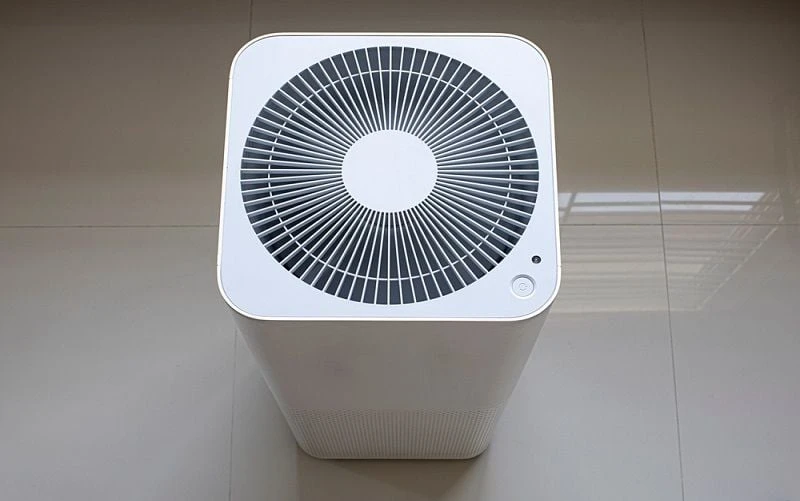
Fellowes built its reputation on office equipment — shredders, laminators, binding machines — so an air purifier from the brand might raise eyebrows. Our testing put those concerns to rest quickly. The unit carries the same engineering discipline that makes Fellowes office products reliable over years of daily use, and that discipline translates well into a home appliance most people can set up and mostly forget about.
Kitchen air quality is something our team takes seriously. Cooking produces fine particulate matter, grease aerosols, and volatile organic compounds that linger long after the meal ends. Range hood ventilation helps, but it doesn't solve the full problem. Pairing a quality purifier with strong kitchen hygiene — including the techniques covered in our guide on removing grease from stove surfaces — gives most people a noticeably cleaner home environment. The AP-300PH fits naturally into that approach.
Contents
Out of the box, the AP-300PH demands very little. The unit arrives with the filter pre-installed, and most people have it running within five minutes of opening the packaging. No app to pair, no account to create, no multi-step calibration sequence. Our team ran it on the highest fan speed for the first 30 minutes — as Fellowes recommends for initial operation — and noticed an immediate reduction in lingering cooking odors from a recent kitchen session.
The control panel is minimal by deliberate design. Three fan speed buttons, a filter replacement indicator light, and a power button. That is the complete interface. For most households, this is the right level of complexity — nothing to misconfigure, nothing requiring a firmware update, nothing to accidentally disable.
The vertical tower design is worth noting. The AP-300PH draws air in from the base and exhausts filtered air from the top, which means it circulates air from floor level — where dust and pet dander concentrate — upward and outward. Our team considers this a smarter intake geometry than front-facing designs at this price point.
The AP-300PH runs air through a three-stage system: a pre-filter catches large particles like dust, hair, and pet fur before they reach the primary layers; a true HEPA filter captures particles down to 0.3 microns at 99.97% efficiency; and an activated carbon layer handles odors and volatile organic compounds from cooking, cleaning products, and off-gassing materials. That three-stage configuration is the core reason our team recommends this unit over cheaper single-filter alternatives that sacrifice one or two of those layers to hit a lower price.
The HEPA filter is the workhorse. According to EPA guidance on indoor air quality, true HEPA filtration is the most effective consumer-grade method for capturing fine airborne particulates, including allergens, mold spores, and some bacteria. The AP-300PH meets that standard without requiring upgrades or premium filter swaps.

Most people buying an air purifier at this price point want one thing: cleaner air with minimal effort. The AP-300PH is built precisely for that expectation. The three speed settings cover the main use cases — quiet mode for overnight operation, medium for daily background running, high for post-cooking or during high-allergen periods. There is nothing to overcomplicate that basic operation.
Our team's position is firm: most households don't need smart sensors, real-time air quality displays, or Wi-Fi connectivity at this room size. Those features add significant cost and introduce software dependencies without changing the fundamental filtration outcome in a 200 sq ft space. The AP-300PH deliberately redirects that budget toward filtration quality, which is the correct trade-off for most home environments.
Pro insight from our team: Running the AP-300PH on medium speed continuously delivers better cumulative air exchange than running it on high only when air quality feels degraded — consistent lower-speed operation cleans more total air volume over the course of a day.
Anyone paying closer attention to air quality metrics will find the CADR ratings telling. The AP-300PH scores 103 cfm for smoke, 90 cfm for dust, and 102 cfm for pollen. That smoke CADR is notably strong for this price tier — cooking-related particulate, wildfire smoke intrusion, and candle combustion byproducts are all handled efficiently. For kitchen-adjacent placement, this is the most relevant performance metric.
The filter replacement indicator runs on hours of operation rather than an air quality sensor. This matters because the unit doesn't adapt to heavy-use conditions. Anyone running the AP-300PH in a particularly dusty or high-smoke environment should inspect the pre-filter visually every 30 days regardless of what the indicator shows. The LED is a minimum baseline, not a precise guide.
| Specification | Fellowes AP-300PH | Typical Budget Competitor |
|---|---|---|
| Room Coverage | 200 sq ft | 150–180 sq ft |
| CADR — Smoke | 103 cfm | 60–80 cfm |
| CADR — Dust | 90 cfm | 55–75 cfm |
| CADR — Pollen | 102 cfm | 60–80 cfm |
| Filter Type | True HEPA + Activated Carbon | HEPA-type (unrated) |
| Filter Stages | 3 (pre-filter, HEPA, carbon) | 1–2 |
| Noise Level (Low) | ~26 dB | 30–38 dB |
| Filter Replacement Indicator | Yes — LED alert | Rare at this price |
| Replacement Filter Cost | ~$35–45 | ~$15–25 |
For comparison, our team has also covered the Coway AP-1512HH Mighty Air Purifier, which adds an air quality sensor and ionizer for a notably higher price point. For most people who want effective, reliable filtration without added complexity, the Fellowes AP-300PH hits the better balance of capability and simplicity.
The word "HEPA" appears on a wide range of products, and this is one of the most persistent misconceptions our team encounters when evaluating air purifiers. Many units marketed as "HEPA" or "HEPA-type" use filters that have never been certified to the 0.3-micron, 99.97% efficiency standard. The AP-300PH uses a certified true HEPA filter. That distinction is not marketing language — it has direct performance implications.
For residential kitchen and living space use, true HEPA is the correct tier. Our team recommends against paying for H13/H14 filtration in home environments — the practical benefit above true HEPA doesn't justify the elevated filter replacement cost for most people.
A common assumption is that air purifiers eliminate all indoor air pollutants, including carbon monoxide and radon. This is incorrect and worth stating clearly. The AP-300PH captures particulate matter and some VOCs — it does not remove gaseous combustion pollutants like carbon monoxide. Anyone with concerns about CO exposure should consult our guide on carbon monoxide poisoning symptoms and prevention, which covers proper detector placement and ventilation requirements.

What the AP-300PH handles effectively in real-world kitchen and household conditions:
What it does not address: carbon monoxide, nitrogen dioxide, radon, and other purely gaseous pollutants. The activated carbon layer captures some light VOCs and odor molecules, but it is not a substitute for proper kitchen ventilation or CO detection equipment.
The most common way the AP-300PH underperforms is neglected pre-filter maintenance. The HEPA filter is rated for approximately 12 months under normal operating conditions, but the pre-filter — which shields it from large particles — needs attention every 30 days in most households. Skipping this step forces the HEPA layer to work harder, reduces airflow through the unit, and shortens the HEPA filter's effective life considerably.
Our team's recommended maintenance schedule for the AP-300PH:
Replacement filters cost approximately $35–45. That runs higher than some budget-brand alternatives, but those alternatives are typically unrated HEPA-type filters, not certified true HEPA. Running an exhausted filter is worse than running no filter at all — it restricts airflow without delivering meaningful filtration benefit, essentially turning the unit into a fan.
Placement is where most people make the biggest performance mistake. The AP-300PH is rated for 200 sq ft — positioning it in a 350–400 sq ft open-plan kitchen and expecting full coverage sets it up to fall short. Our team treats the stated room coverage as a firm ceiling, not a conservative estimate that leaves room to spare.
Placement principles our team follows consistently:
The kitchen is where the AP-300PH earns its highest marks in our experience. Cooking generates more airborne particulate than almost any other routine household activity. Frying, roasting, and even high-heat sautéing release fine oil aerosols and combustion byproducts that settle on surfaces and enter the respiratory system. The AP-300PH's smoke CADR rating of 103 cfm makes it one of the more capable units in its price tier for kitchen-adjacent use.
Our standard recommendation: position the unit within 8–10 feet of the cooking surface rather than across the room from it. At high fan speed in a 200 sq ft kitchen, the AP-300PH achieves approximately 4–5 air changes per hour — enough to meaningfully reduce particulate load during and after cooking. For households that cook every day, this is the single highest-impact placement available.
One practical note: the AP-300PH excels in dedicated room deployment, not as a whole-home solution. For multi-room coverage, most people need multiple units. Our team views this as a feature rather than a limitation — targeted placement in the highest-pollution room consistently outperforms a single oversized unit running from a central hallway.
At approximately 26 dB on low, the AP-300PH is among the quieter units our team has tested at this price. That figure makes it well-suited for bedrooms and home offices where background noise is a meaningful factor in long-term usability. Most people describe it as barely perceptible at low speed — roughly equivalent to ambient sound in a quiet room with minimal outside noise.
For overnight bedroom use, our team's standard approach is to run the unit on high for 30 minutes before sleep to clear accumulated particulate from the day, then switch to low for overnight operation. This routine maximizes filtration efficiency without generating enough noise to affect sleep quality. Anyone managing seasonal allergies consistently reports a noticeably cleaner overnight breathing environment within two or three nights of this practice.
Home office deployment is equally strong. Dust from paper, electronics, and HVAC circulation accumulates quickly in closed workspaces. Running the AP-300PH on low or medium in the background produces a measurable reduction in visible surface dust accumulation over weeks of use — a practical secondary benefit beyond the direct air quality improvements that most people notice first.
The full filter assembly — pre-filter, HEPA layer, and activated carbon — should be replaced approximately every 12 months under normal use. In high-use environments with heavy cooking, pets, or allergy sufferers in the household, our team recommends replacing every 8–10 months. The pre-filter specifically should be inspected and vacuumed or rinsed monthly, regardless of the LED indicator status. Running past the recommended interval significantly degrades both airflow and filtration efficiency.
Our team considers kitchen placement one of the strongest use cases for the AP-300PH. Its smoke CADR rating of 103 cfm is notably high for this price tier, making it effective at capturing cooking particulate, oil aerosols, and post-cooking odors. For best results, the unit should be positioned within 8–10 feet of the cooking surface and kept on high speed during and for 30 minutes after cooking sessions.
Yes — the activated carbon stage in the three-layer filter system is specifically designed to adsorb odor molecules and some volatile organic compounds. Our team finds it effective against cooking odors, pet smells, and general household off-gassing. It is not designed to remove heavy chemical fumes or gaseous combustion pollutants like carbon monoxide, which require dedicated detection and ventilation solutions.
Both units use certified true HEPA filtration, but they serve slightly different priorities. The Coway AP-1512HH adds a real-time air quality sensor, an ionizer, and a slightly larger coverage footprint at a higher price. The Fellowes AP-300PH is simpler, quieter on low (26 dB vs. approximately 30 dB), and focused entirely on mechanical filtration without ionization. Our team recommends the Fellowes for most straightforward residential needs and the Coway for anyone who wants sensor-driven automatic speed adjustment.
 |
 |
 |
 |

About Rick Goldman
Rick Goldman grew up traveling the Pacific Coast and developed an early appreciation for regional and international cuisines through exposure to diverse food cultures from a young age. That culinary curiosity shaped his approach to kitchen gear — he evaluates tools based on how well they perform across different cooking styles, ingredient types, and meal occasions. At BuyKitchenStuff, he covers kitchen equipment reviews, recipe guides, and food-focused buying advice.
Check for FREE Gifts. Or get our Free Cookbooks right now.
Disable the Ad Block to reveal all the recipes. Once done that, click on any button below
|
|
|
|
