Cooking Guides and Tips

Definition of Food Loss and Waste

Discover what food loss and waste really mean, why they happen at every stage of the supply chain, and how smarter kitchen habits can help reduce both.

by Daisy Dao

A bag of wilted spinach discovered in the back of a refrigerator. Produce purchased with good intentions, left untouched until it was no longer edible. These small domestic moments are not isolated incidents — they are part of a global pattern that demands precise understanding. Grasping the distinction between food loss vs food waste is the foundation of any meaningful effort to build a more sustainable kitchen and food system. Explore the full scope of this challenge through the food waste resource hub on BuyKitchenStuff.
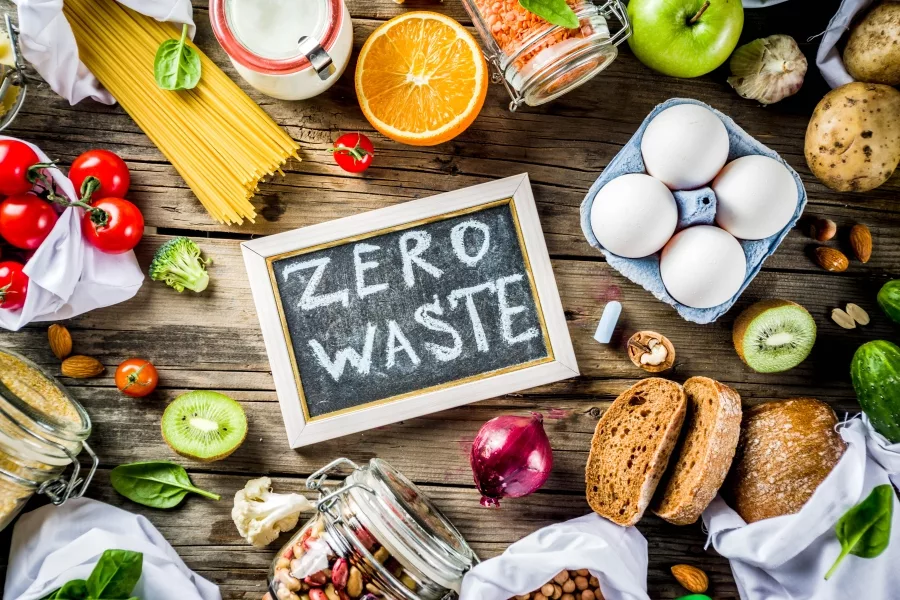
Definition of Food Loss and Waste

According to the Food and Agriculture Organization of the United Nations (FAO), approximately one-third of all food produced for human consumption is either lost or wasted each year — roughly 1.3 billion tonnes globally. That figure carries staggering environmental, economic, and ethical consequences. Yet the two terms are routinely conflated, even though they describe fundamentally different phenomena at different points along the supply chain.

This guide defines both concepts with precision, examines where each occurs, and provides practical strategies for addressing them — from commercial food operations down to the household pantry.

From Farm to Fork: The Full Spectrum of Food Loss vs Food Waste

Both food loss and food waste describe edible food that never reaches a human stomach — but they occur at entirely different stages of the food supply chain. Conflating them leads to misdiagnosed problems and misdirected solutions.

What Is Food Loss?

Food loss refers to the decrease in quantity or quality of food during production, post-harvest handling, storage, and processing — before food ever reaches the retail or consumer stage. Key characteristics include:

  • Occurs at agricultural, slaughter, fish landing, storage, and processing stages
  • Caused by inadequate infrastructure, poor handling techniques, or equipment failure
  • Most prevalent in low- and middle-income countries with limited cold chain capacity
  • Often invisible to the end consumer
  • Examples: crops damaged during harvest, fish spoiled during transport, grain contaminated in storage silos

What Is Food Waste?

Food waste is the deliberate or inadvertent discarding of edible food at the retail and consumer end of the supply chain. It is a behavioral and systemic problem rather than an infrastructure one. Key characteristics include:

  • Occurs at retail outlets, food service establishments, and private households
  • Driven by over-purchasing, cosmetic standards, date label confusion, and plate waste
  • Most pronounced in high-income countries
  • Directly observable by individuals and businesses with minimal measurement effort
  • Examples: supermarkets discarding misshapen produce, households discarding uneaten leftovers

Side-by-Side Comparison

Attribute Food Loss Food Waste
Where it occurs Production, post-harvest, processing Retail, food service, households
Primary cause Infrastructure gaps, poor handling Behavior, purchasing standards, confusion
Most affected region Low- and middle-income countries High-income countries
Consumer visibility Low High
Primary solution Infrastructure investment, technology Education, policy, behavior change
Measurement difficulty High — requires supply chain audits Moderate — observable at point of discard

Measuring What Gets Lost: Tracking at Every Stage

Accurate measurement is the prerequisite for meaningful reduction. Without data, efforts to address food loss vs food waste remain anecdotal and ineffective. Both supply chain actors and individual households benefit from systematic, consistent tracking.

At the Production and Supply Chain Level

Commercial food operations and logistics managers apply several established measurement approaches:

  • Weight-based audits — regular weighing of discarded or spoiled product at each supply chain node
  • Volume tracking through inventory management software integrated across suppliers, distributors, and retailers
  • Shelf-life studies identifying which products are most vulnerable to loss during specific transport or storage conditions
  • Temperature monitoring logs to detect cold chain failures that trigger spoilage
  • Waste stream analysis separating food loss from packaging waste in aggregate disposal data

Standardized protocols — such as those published by the FAO and the World Resources Institute's Food Loss & Waste Protocol — provide consistent frameworks for cross-sector benchmarking.

At the Household Level

Individual tracking requires simpler but equally consistent methods:

  • Maintaining a weekly log of discarded food by category: produce, dairy, proteins, grains
  • Photographing or listing items thrown away immediately before each grocery run
  • Reviewing refrigerator and pantry contents on a fixed schedule — typically twice weekly
  • Using labeled containers with dates to monitor freshness cycles visually

Even a two-week tracking period reveals patterns that are otherwise invisible. Most households systematically overestimate their consumption of fresh herbs, leafy greens, and specialty perishables — categories that consistently top household food waste audits.

When Preservation Works — And When It Does Not

Food preservation is the most accessible tool available to households seeking to reduce food loss vs food waste at the consumer level. It has clear applications — and equally clear limits. Applying it indiscriminately wastes time, energy, and equipment resources.

When Proper Storage Prevents Loss

Preservation delivers the strongest results when food is still at peak or near-peak quality. Recommended methods include:

  • Freezing — extends the life of cooked dishes, raw proteins, bread, and many vegetables. Properly freezing cooked pasta, for example, preserves texture and flavor for up to three months with minimal preparation effort.
  • Dehydrating — removes moisture to inhibit bacterial growth; ideal for fruits, vegetables, jerky, and herbs. A quality commercial food dehydrator handles high-volume batches efficiently in professional or serious home kitchens.
  • Vacuum sealing — reduces oxidation and freezer burn on proteins and dense root vegetables
  • Fermentation — extends shelf life of vegetables, dairy, and grains while enhancing nutritional profiles
  • Proper refrigerator organization — high-humidity drawers for leafy greens, low-humidity settings for fruits, consistent temperature at or below 40°F (4°C)

Pro Insight: The single most effective preservation habit is applying methods immediately after purchase — not when food is already showing signs of deterioration. Waiting until produce begins to wilt reduces preservation success rates significantly and narrows available options.

When Preservation Cannot Solve the Problem

Preservation does not address systemic issues that originate earlier in the supply chain:

  • Food lost due to harvesting equipment damage cannot be recovered at the consumer level
  • Grain contaminated with mycotoxins during improper bulk storage is unsafe regardless of further processing
  • Cosmetic rejection at the retail level — discarding edible but irregularly shaped produce — requires purchasing standard reforms and policy intervention, not household behavior change
  • Overproduction by food manufacturers represents structural food loss that no individual consumer action can offset at scale

Recognizing where household action is effective — and where it is not — prevents misplaced effort and builds a more accurate mental model of the food loss vs food waste distinction.

Evidence-Based Strategies for Reducing Food Loss and Waste

Effective reduction requires coordinated action across multiple levels. Strategies differ substantially depending on whether the focus is food loss in the supply chain or food waste at the consumer end.

Supply Chain and Commercial Approaches

  • Investment in cold chain infrastructure, particularly in developing regions where post-harvest loss rates for perishables exceed 40%
  • Improved packaging technology that actively extends shelf life without compromising food safety standards
  • Real-time inventory visibility tools enabling dynamic redistribution of surplus product to food banks and secondary markets before spoilage
  • Date label standardization — replacing ambiguous terminology such as "sell by" and "best before" with clear, science-based guidance distinguishing quality thresholds from safety limits
  • Formal redistribution networks connecting surplus retail and food service product with charitable organizations
  • Procurement of "ugly" or cosmetically imperfect produce by food service businesses, normalizing irregular appearance in supply chains

Consumer-Level Actions

Households in high-income countries bear disproportionate responsibility for food waste at the final supply chain stage. Proven strategies include:

  • Meal planning before each grocery trip to align purchases precisely with actual consumption patterns for the week ahead
  • First-in, first-out (FIFO) rotation in the refrigerator and pantry — older items consumed before newer arrivals
  • Correctly interpreting date labels: "best by" indicates peak quality, not safety; "use by" marks the actual safety threshold
  • Composting unavoidable organic waste — peels, cores, coffee grounds — to divert material from landfill and recover soil value
  • Portion control during cooking to reduce plate waste at the meal stage

Quick Wins: Immediate Changes That Reduce Food Loss vs Food Waste Now

Not every intervention requires systemic change or capital investment. Several high-impact behaviors reduce food loss vs food waste with minimal friction and produce measurable results within days.

In the Kitchen

  • Designate a "use first" shelf in the refrigerator for items approaching their quality threshold — visibility drives consumption
  • Blanch and freeze fresh vegetables within 24 hours of purchase if they will not be used immediately
  • Repurpose vegetable scraps, bones, and herb stems into stocks and broths rather than discarding them at the prep stage
  • Store fresh herbs with stems submerged in a glass of water, covered loosely with a bag, and refrigerated — this practice reliably doubles typical shelf life
  • Portion proteins before freezing to avoid thawing more than a single meal requires
  • Maintain a running list on the refrigerator of items that need to be used within the next 48 hours

At the Store

  • Purchase imperfect or cosmetically irregular produce deliberately — it is nutritionally identical to perfect specimens and directly reduces retail-level food waste
  • Buy in bulk quantities only for shelf-stable items with confirmed, consistent consumption patterns
  • Check refrigerator and pantry inventory immediately before each shopping trip to prevent duplicate purchases of perishables
  • Choose smaller package sizes for low-frequency items, even at a higher per-unit cost — the savings from reduced waste typically exceed the premium

Frequently Asked Questions

What is the primary difference between food loss and food waste?

Food loss occurs earlier in the supply chain — during production, post-harvest handling, storage, and processing — typically due to infrastructure limitations or handling failures. Food waste occurs at the retail and consumer end of the chain and is primarily driven by behavioral, economic, and cultural factors. The distinction matters because the solutions for each are fundamentally different: food loss requires infrastructure and technology investment, while food waste demands education, policy reform, and individual behavior change.

Which is a bigger problem globally — food loss or food waste?

Both represent roughly comparable volumes of lost food globally, but the dominant form varies by region. Food loss is the predominant challenge in low- and middle-income countries where post-harvest infrastructure — cold storage, transport, processing facilities — is underdeveloped. Food waste is the dominant challenge in high-income countries, where overproduction, retail cosmetic standards, and consumer behavior drive the majority of discards. Addressing the global food system effectively requires targeting both simultaneously.

Can individual households realistically make a difference in reducing food loss vs food waste?

Household-level action is most effective at reducing food waste — the consumer-end form of the problem. Actions such as meal planning, proper food storage, correct date label interpretation, and composting collectively represent meaningful impact at scale. However, food loss at the production and supply chain level lies outside the control of individual consumers and requires systemic, commercial, and governmental intervention. The two problems demand parallel rather than interchangeable responses.

Next Steps

  1. Audit the refrigerator and pantry this week — discard nothing without first logging it by category. Use this data to identify the top two or three recurring waste patterns in the household.
  2. Establish a designated "use first" shelf in the refrigerator and commit to clearing it before opening any new perishables from the pantry or a grocery run.
  3. Invest in at least one active preservation tool — a vacuum sealer, a quality freezer container set, or a food dehydrator — to extend the usable life of surplus ingredients before they deteriorate.
  4. Review current date label interpretation practices. Replace any assumption that "best by" means "unsafe after" with the correct understanding that it marks quality, not safety.
  5. Share the food loss vs food waste distinction with other members of the household. Coordinated behavior across all occupants produces significantly larger reductions than individual effort alone.
Daisy Dao

About Daisy Dao

Daisy Dao grew up in Honolulu, Hawaii, where coastal living and access to fresh local ingredients shaped her approach to home cooking from an early age. She has spent years experimenting with seafood preparation, healthy cooking methods, and ingredient substitutions — developing hands-on familiarity with a wide range of kitchen tools, techniques, and produce. At BuyKitchenStuff, she covers healthy recipes, cooking techniques, and ingredient substitution guides.

Check for FREE Gifts. Or get our Free Cookbooks right now.

Disable the Ad Block to reveal all the recipes. Once done that, click on any button below