Kitchen Gadgets & Equipment Reviews ›
by Daisy Dao
You've just picked out your granite countertops — or maybe they're already installed — and now you're staring at a gaping hole where the sink should go. The wrong choice here is hard to fix. A sink that's too shallow, too small, or made from incompatible materials can create problems you'll live with for years. That's exactly why this guide exists.
Undermount kitchen sinks for granite countertops need to meet a tighter set of requirements than drop-in sinks. The installation bonds the sink directly to the underside of the stone, so the fit, the seal, and the material all matter more than usual. Whether you're leaning toward granite composite, stainless steel, or SILGRANIT, this 2026 roundup covers seven of the strongest options you'll find on Amazon — with real trade-off breakdowns so you can make the call that fits your kitchen.
Before diving in, it's worth knowing what you're comparing. Some sinks in this list are true granite composite (80% crushed stone), some are SILGRANIT (a Blanco-specific composite formula), and others are stainless steel. Each material has a different feel, noise profile, and maintenance story. We'll cover those differences in the buying guide below, and you can also browse our full kitchen sinks reviews section for more options.
Contents





The BLANCO Precis in white is one of the most recognized undermount granite composite sinks on the market, and it's been popular for good reason. SILGRANIT is BLANCO's proprietary composite formula — made from 80% granite, it's non-porous, heat-resistant up to 536°F, and resistant to scratches, stains, and fading. The white finish stays white. That's not a given with cheaper composites that can yellow over time.
At 32" x 19" with a 9.5-inch bowl depth, this sink gives you genuine workspace. The super single bowl design means no divider to work around when washing large pots or baking sheets. You'll need a 36" cabinet to accommodate it properly — check your base cabinet width before ordering. One important note: the drain is sold separately, so factor that into your total cost. That's a minor annoyance, but it's common in the composite sink category.
The SILGRANIT surface is genuinely low maintenance. Daily cleaning with dish soap and water is all it takes. If you're someone who tends to drop the occasional cast iron skillet, you'll appreciate how forgiving this material is compared to porcelain. The white colorway does show water spots and mineral deposits more than darker finishes, so a weekly wipe-down is a good habit in hard water areas. If sink cleanliness is something you think about, check out our guide to best sink protectors in 2026 for accessories that help maintain the basin.
Pros:
Cons:
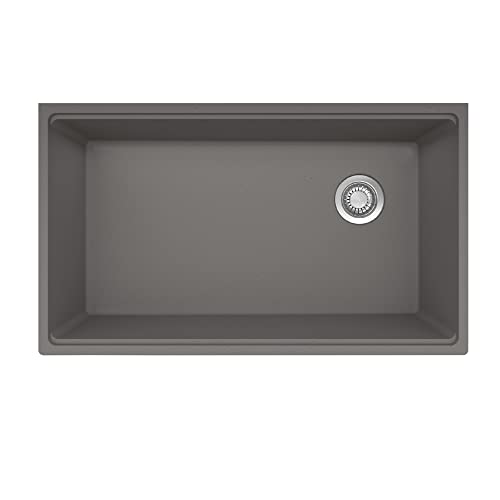
Franke is a Swiss brand with deep roots in kitchen design, and the Maris line reflects that heritage. This 33-inch single basin granite composite sink in Stone Grey is a premium choice for kitchens where the sink is meant to blend into the countertop rather than stand out. The Stone Grey finish pairs naturally with grey granite, quartz, and dark marble surfaces — it just looks like it belongs there.
The offset rear drain placement is a practical design choice. Moving the drain toward the back of the bowl (rather than centering it) gives you more usable flat basin space for resting dishes or produce. It also frees up under-cabinet space on one side for a garbage disposal or pipes. At 33 inches wide, this is a genuinely large single bowl — you're not sacrificing workspace to get an attractive color. Franke's granite composite formulation is also non-porous and highly durable, performing similarly to BLANCO's SILGRANIT in everyday use.
The trade-off here is price. The Franke Maris sits in the premium tier. If you're investing in high-end granite countertops, spending a bit more to match quality on the sink makes sense — but if you're working on a tighter renovation budget, it might be more than you need. This sink is best suited to someone doing a full kitchen remodel who wants everything at the same level of finish.
Pros:
Cons:
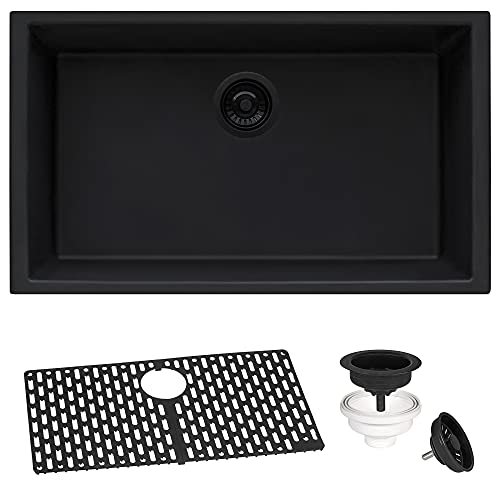
If you've got dark granite or black quartz countertops, the Ruvati RVG2030BK in Midnight Black is one of the most visually striking options in the undermount category. The Midnight Black finish is colored all the way through — it's not a surface coating — so chips or scratches won't reveal a different color underneath. That's a key quality marker in granite composite sinks that's easy to overlook when shopping.
Ruvati sources its granite sinks from Italy, and the craftsmanship shows. The 80% crushed natural granite construction (per their specs) makes it extremely dense and heavy — heat resistant up to 536°F, which means you can set a hot pan directly in the sink without worry. The remaining 20% is a proprietary resin that makes the surface completely non-porous. You won't have to worry about staining from coffee, wine, or acidic foods working their way into the material.
At 30x18 inches, this is a moderately sized single bowl — not the largest in this list, but manageable for most kitchens. Ruvati includes a matching black strainer and a patent-pending silicone bottom grid, which is a genuinely useful accessory. The grid protects the basin from impact when you're dropping dishes in, and water flows freely underneath it. Three color options are available if Midnight Black isn't your style, but it's the most popular for a reason.
Pros:
Cons:
Kraus has built a solid reputation in the mid-range kitchen sink market, and the KBU14 is one of their most reviewed products for good reason. It's a 31.5-inch single bowl undermount in 18-gauge stainless steel (18-gauge means it's slightly thicker than standard 20-gauge, which reduces noise and denting). The premium T-304 stainless steel construction (that's the food-grade alloy used in commercial kitchens) gives you a sink that's legitimately durable at a price point well below the composite options.
The satin finish is thoughtfully chosen. Brushed stainless hides water spots and minor scratches better than a mirror-polished surface — you'll spend less time wiping it down to keep it looking presentable. It's also a neutral finish that coordinates with most kitchen hardware and appliances. For someone who wants a clean, timeless look without paying composite prices, this is a very practical choice.
One honest note: stainless steel does make more noise than composite when water hits it, especially with a garbage disposal running. Kraus includes some sound-dampening pads on the underside, but it's not as quiet as a thick granite composite. It's worth keeping that in mind if noise matters to your household. If you're also upgrading your water filtration at the same time, our guide on the best reverse osmosis systems pairs naturally with a new sink installation.
Pros:
Cons:
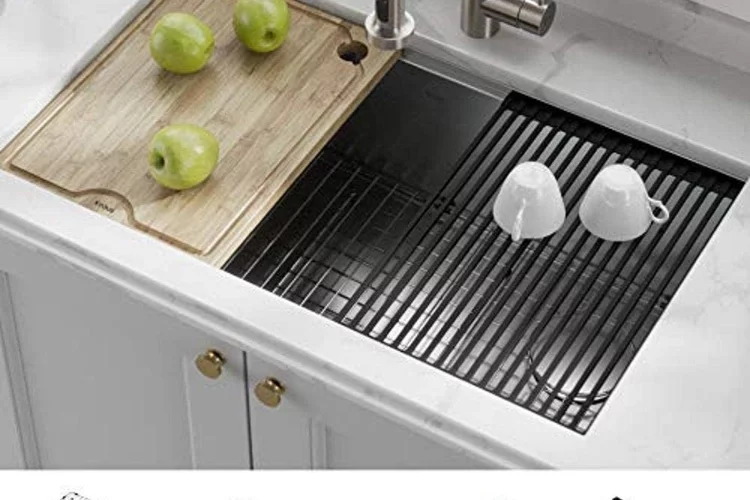
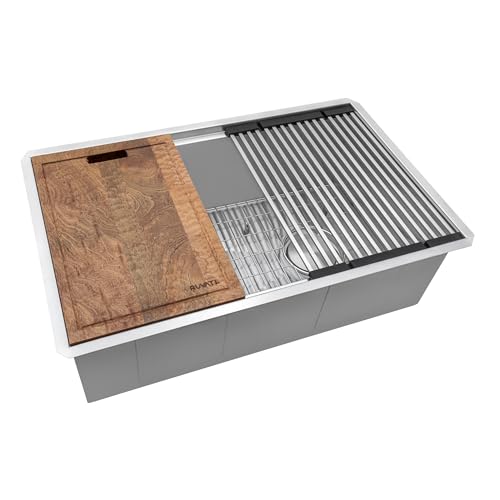
If you do a lot of cooking — and we mean actually cooking, not just reheating — the Ruvati RVH8591 workstation sink is worth serious consideration. The ledge design on the front and back of the sink allows you to slide accessories across the basin, turning your sink area into a food prep station. The included accessories are genuinely useful: a stainless steel drying rack (patented foldable design) and a solid sapele wood cutting board that resists water damage and scratches.
The 16-gauge T-304 stainless steel construction is thicker than most residential sinks, which translates to less flexing, less noise, and a more premium feel when you're using it. The slope-bottom design is clever — there's a 1-inch slope toward the drain so water doesn't pool in the corners. The offset drain can be installed on either the left or right side, which means you can maximize under-cabinet storage by keeping the drain away from your garbage disposal hookup. That kind of thoughtful engineering is what separates a workstation sink from a standard basin.
The brushed commercial-grade finish handles everyday scratches well. Heavy rubber sound dampening on the underside makes this one of the quieter stainless options in the category. The LedgeFit accessory system also means you can add over 40 optional accessories later — colanders, prep bowls, roll-up drying mats — giving you flexibility as your kitchen evolves. If you're the kind of person who reads about kitchen upgrades carefully and takes cooking equipment seriously, this sink fits that mindset well.
Pros:
Cons:
Not everyone wants a single bowl. If your kitchen workflow involves keeping one side for washing and one side for rinsing — or if you tend to leave dishes soaking while prepping food on the other side — a double bowl layout makes sense. The Moen GS20264 is a straightforward, reliable choice in that category. At 32.38" x 18.13" x 7", it fits the footprint of most standard 33-inch base cabinets, which makes it a practical swap-in for many renovation projects.
Moen's SoundSHIELD noise reduction system is one of the better dampening approaches among 20-gauge stainless sinks. At 20 gauge, the steel is thinner than 16 or 18 gauge, which means noise is more of a concern — but Moen has addressed it specifically. For daily tasks like rinsing produce or running the faucet, the noise level is very manageable. The 7-inch bowl depth is shallower than some options here, so it's not ideal if you regularly wash large stockpots or full sheet pans.
The installation process is streamlined — Moen includes a sink template that simplifies the cutout marking, which is helpful whether you're DIYing or working with a countertop installer. The stainless finish coordinates with popular kitchen finishes in 2026, including brushed nickel and stainless appliances. Moen's warranty and customer service history are strong, which adds peace of mind for a fixture that's meant to last a decade or more. If you're also planning kitchen water upgrades, consider reading about the best electric tankless water heaters — often installed alongside a kitchen sink replacement for a full plumbing refresh.
Pros:
Cons:
The Elkay Crosstown EFRU131610T occupies a specific niche: it's a compact 16x19-inch single bowl with a 10-inch depth, built from premium 16-gauge T-304 stainless steel. At first glance, the footprint looks small. But the 10-inch bowl depth is the deepest of any sink in this list, which partially compensates for the narrower width. If your kitchen has a smaller countertop run or a base cabinet under 30 inches, this might be one of the only 16-gauge undermount options that actually fits.
Elkay is an American brand with a long manufacturing history, and they use Type 304 stainless steel with 16-gauge thickness throughout. The polished satin finish is attractive and practical — it doesn't show fingerprints or water spots the way a mirror finish does. The single bowl design keeps the workspace open, and the undermount installation creates that clean, seamless look between the sink and countertop that's one of the main reasons people choose undermount over drop-in.
The trade-off here is obvious: the interior is narrower than a standard 30-inch-plus sink. If you regularly wash large roasting pans or tall stockpots, you may find the 16-inch width limiting. But if you're working in a galley kitchen, a prep area, or a secondary sink installation, the Crosstown's combination of deep bowl and premium construction in a compact form factor makes it a smart pick. Elkay's warranty is solid, and this model has been in production for years — which is usually a sign that it works well.
Pros:
Cons:
Choosing an undermount sink for a granite countertop isn't just about picking a style you like. The installation is permanent (or at least expensive to reverse), so getting the specs right matters a lot. Here are the factors that should drive your decision in 2026.
This is the biggest decision you'll make. Both materials work well under granite countertops, but they perform differently day to day.
Granite composite sinks (like the BLANCO SILGRANIT, Franke Maris, and Ruvati RVG2030BK) are made by binding crushed granite with a resin binder. The result is a heavy, non-porous, highly durable basin that absorbs sound naturally. They don't ring when water hits them. They're resistant to heat, scratches, and stains. The trade-off is cost — granite composite sinks are typically more expensive than stainless, and the color options are more limited.
Stainless steel sinks (Kraus, Ruvati workstation, Moen, Elkay) are lighter, less expensive, and easier to find in a wide range of sizes. Thicker gauges (16-gauge is best, 18-gauge is solid, 20-gauge is budget) reduce noise and resist denting. Stainless is easy to clean and works with nearly any kitchen style. The downside: it shows water spots more easily and can be louder without good soundproofing.
According to Wikipedia's overview of kitchen sinks, composite sinks have grown in popularity significantly over the past decade as a premium alternative to both stainless and porcelain options — largely because of their sound dampening and scratch resistance.
Measure your base cabinet before you do anything else. Most undermount sinks require a minimum cabinet width:
Bowl depth matters more than most people expect. A 7-inch depth (like the Moen double bowl) is adequate for daily use but can feel cramped when washing large items. A 9.5-to-10-inch depth (BLANCO, Elkay) is significantly more practical. Bowl configuration — single vs. double — comes down to how you actually use your sink. If you multitask at the sink frequently, double bowls help. If you cook large meals and need uninterrupted space, a single bowl is usually better.
If you're choosing stainless steel, gauge (the thickness of the steel) is one of the most important specs to check. Lower gauge = thicker steel — which is counterintuitive but important to remember. Here's a quick breakdown:
Sound dampening pads or coatings on the underside of the sink help reduce the ringing noise from water impact. If noise is a concern in your kitchen, look for thick rubber padding (not just spray-on coating) and choose a heavier gauge.
Drain position affects both daily usability and installation practicality. A center drain is most common. An offset rear drain (Franke Maris) gives you more flat basin space and keeps plumbing toward the back wall. An offset drain that can go left or right (Ruvati workstation) gives you the most flexibility for garbage disposal hookup placement.
Check whether a drain assembly is included in the purchase. The BLANCO Precis, for example, does not include one. The Ruvati granite composite does include a matching black strainer. Buying a drain separately adds cost and requires matching finish compatibility — so verify before you checkout.
Yes — granite countertops are actually one of the best surfaces for undermount sinks. The stone is thick enough to support the weight of the sink when properly sealed and clipped from below. The installation creates a seamless edge between the granite and the sink rim, which is easier to clean and looks better than a drop-in rim. Make sure your countertop fabricator seals and polishes the cutout edge before mounting the sink.
SILGRANIT is BLANCO's proprietary brand name for their granite composite formula. Like other granite composites, it's approximately 80% granite and 20% resin binder. The main distinction is quality control and formula specifics — BLANCO is known for consistent non-porous results and color stability over time. Other brands like Ruvati and Franke make their own granite composite formulations with similar performance characteristics. In practice, the differences are minor for most homeowners.
16-gauge is the gold standard for residential undermount sinks. It's thick, rigid, resists denting, and naturally absorbs more sound than thinner gauges. 18-gauge is a solid mid-range choice that performs well in most homes. 20-gauge is acceptable for budget builds but benefits significantly from sound dampening coatings. Remember: lower gauge number means thicker steel.
They work with most granite countertops, but the installation depends on the granite being thick enough (typically 3/4 inch minimum) and properly sealed around the cutout. Thinner granite slabs can crack near the cutout edge if not reinforced during fabrication. Always discuss undermount sink installation with your countertop fabricator before finalizing your countertop order — they may recommend a specific edge profile or reinforcement approach.
Daily cleaning with mild dish soap and warm water is usually sufficient. For tougher stains, a paste of baking soda and water applied with a soft cloth works well. Avoid harsh abrasive cleaners or steel wool pads, which can dull the composite surface. In hard water areas, a weekly wipe-down with a diluted white vinegar solution helps prevent mineral deposits. Most granite composite sinks are also dishwasher-safe for accessories, but the sink itself just needs regular hand cleaning.
It depends on your cooking and cleaning habits. Single bowl sinks give you uninterrupted space for washing large pots, sheet pans, and cutting boards — which is a genuine advantage if you cook frequently. Double bowl sinks let you multitask: soak dishes in one side while prepping food over the other. For granite countertops specifically, a single bowl undermount is often preferred because it creates a cleaner visual line across the stone and allows for a deeper basin within the same overall footprint.
 |
 |
 |
 |

About Daisy Dao
Daisy Dao grew up in Honolulu, Hawaii, where coastal living and access to fresh local ingredients shaped her approach to home cooking from an early age. She has spent years experimenting with seafood preparation, healthy cooking methods, and ingredient substitutions — developing hands-on familiarity with a wide range of kitchen tools, techniques, and produce. At BuyKitchenStuff, she covers healthy recipes, cooking techniques, and ingredient substitution guides.
