Kitchen Gadgets & Equipment Reviews ›
by Daisy Dao
You're standing in the home improvement store staring at a wall of water heaters, trying to figure out if your breaker panel can even handle the unit you want. Your old tank heater just died — or you're just fed up paying to keep 40 gallons of water hot around the clock. Either way, you're in the right place.
Electric tankless water heaters have become one of the smartest upgrades you can make to a home in 2026. No standby heat loss. No tank to rust out. Endless hot water on demand, in a unit that mounts flat on a wall. The catch is that matching the right kilowatt rating to your climate, your household size, and your electrical panel takes some homework — and picking the wrong unit means lukewarm showers.
We've put together detailed reviews of seven top-rated electric tankless water heaters for 2026 — from a compact 13kW apartment-friendly model to a 36kW whole-home powerhouse. We cover performance, installation requirements, build quality, and exactly who each unit is right for. If you're also upgrading your home's water quality, check out our guide to the best reverse osmosis systems for a complete water improvement setup.

Contents


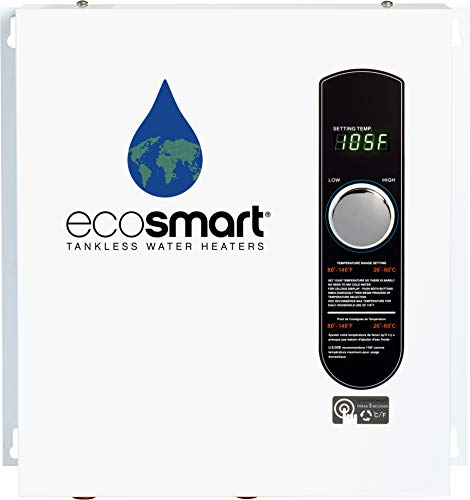
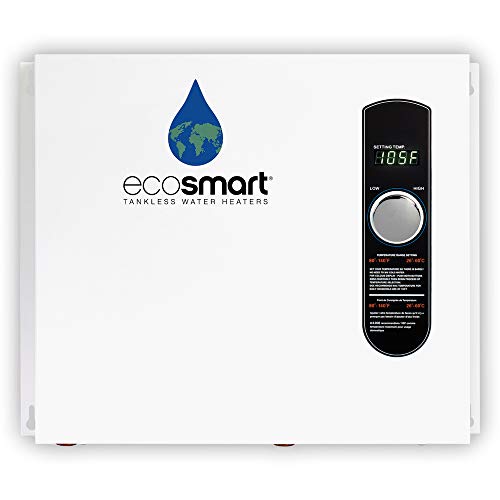


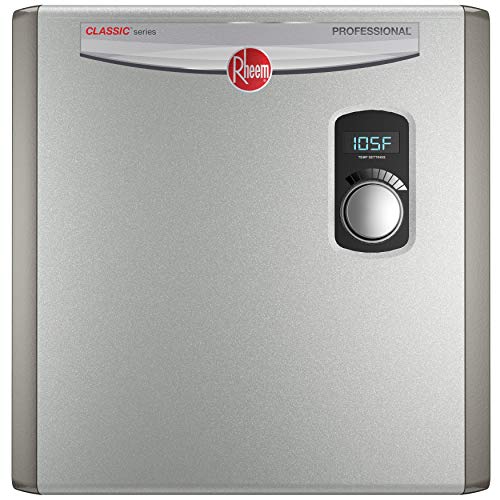
The Rheem RTEX-13 is the entry point for whole-home tankless heating if you're in a warm-climate state or running a small apartment. At 13kW, it's not going to power a four-bathroom colonial in Minnesota — but for a studio, a one-bedroom, or a single-bathroom home in the Southeast or Southwest, it handles the job cleanly. The LED display with its ±1 degree accuracy is legitimately useful: you set it, it holds it, and the self-modulating power control adjusts consumption to match exactly how much hot water you're actually drawing.
Installation is genuinely straightforward by tankless standards. The included ½-inch NPT adapters and side compression water connections mean a plumber can have this unit up in a couple of hours. The copper immersion heating elements are field-serviceable, which is a meaningful long-term advantage — when something eventually wears out, you're replacing a component, not the whole unit. Rheem backs this up with solid warranty support and a parts ecosystem that's widely available.
The honest limitation here is wattage. If you live in a cold-climate state — New England, the Midwest, the Pacific Northwest — your incoming water is cold enough that 13kW simply won't get you to a comfortable shower temperature at meaningful flow rates. Check your groundwater temperature before purchasing. If you're north of the Mason-Dixon line, look at the 24kW or 36kW options below.
Pros:
Cons:
The Stiebel Eltron Tempra 36 Plus is the best electric tankless water heater you can buy in 2026 if you want a whole-home solution without compromise. Made in Germany with the kind of engineering precision that word implies, the Tempra 36 Plus delivers 36kW of on-demand heating with a feature called Advanced Flow Control — and that feature alone separates it from every competitor at this power level.
Here's why Advanced Flow Control matters: most tankless heaters, when they can't heat water fast enough to meet demand, deliver lukewarm water. The Tempra 36 Plus instead slightly restricts flow to maintain your set temperature. You get less water — but it's the right temperature. This is the correct trade-off. A brief flow reduction is barely noticeable. A tepid shower mid-rinse is miserable. Stiebel's solution is smarter than the competition's.
Auto-modulation means the unit only draws the power it actually needs. If you're running one shower, it's not burning full 36kW. This translates to real energy savings over the unit's lifetime. The build quality reflects the German manufacturing standard — this unit is built to last decades, not years. It's the most expensive option in this roundup, but over a 15–20 year lifespan, the premium is entirely justified. If your electrical panel can handle 36kW (150A at 240V), buy this one.
Pros:
Cons:
The EcoSmart ECO 27 hits a sweet spot that makes it the most practical choice for a wide range of households. At 27kW, it's capable enough to handle whole-home hot water demands in moderate climates — and it's priced significantly below the Stiebel Eltron units. If you're in the mid-Atlantic, the Southeast, or the Southwest, this unit can realistically serve a two-to-three bathroom home without issue.
What sets the ECO 27 apart from budget tankless heaters is its configuration for low incoming water temperatures — down to 37°F. That's a key spec because most undersized units struggle when groundwater drops in winter months even in relatively warm states. The 1-degree digital temperature increment control gives you precision that matters for household comfort, and the unit's 27kW output can push nearly 3 gallons per minute through the heater at a meaningful temperature rise.
Build quality is solid for the price point. EcoSmart units are American-assembled and carry a lifetime warranty on the heating element and a limited warranty on parts. The compact footprint — 17 x 17 x 3.5 inches — is genuinely small. Installation requires a 3-pole breaker configuration, so plan your electrical setup before ordering. This is the unit to buy when you want real whole-home performance without the Stiebel Eltron price tag.
Pros:
Cons:
If you need the EcoSmart platform but want maximum output, the ECO 36 steps up to 36kW and covers the gap between the ECO 27 and the premium German units. At 99.8% energy efficiency — EcoSmart's headline spec — it loses almost nothing to waste heat. This isn't marketing fluff; tankless electric heating genuinely is more efficient than tank-style heating because you're only heating water you use, not maintaining a stored volume around the clock.
The digital output temperature display is a quality-of-life feature that gets underappreciated until you've lived without it. You can see exactly what temperature water is leaving the unit at any given moment. The sleek, compact design makes this one of the better-looking units in this category — not that aesthetics drive a water heater purchase, but a unit that doesn't look like an industrial eyesore is genuinely nice when it's mounted in a visible utility area.
Manufactured in the United States, the ECO 36 carries the same EcoSmart lifetime warranty on heating elements. For a three-plus bathroom home in a moderate to cold climate, or a high-demand household in a warm climate, this is the EcoSmart model to spec. It sits just below the Stiebel Tempra 36 in our rankings primarily because it lacks the Advanced Flow Control feature — but it's a strong unit at a meaningfully lower price.
Pros:
Cons:
The Rheem RTEX-36 brings Rheem's proven tankless engineering up to 36kW with a few features that make it particularly appealing for homeowners who want straightforward reliability. The external adjustable temperature control is accessible without opening the unit — a practical advantage during initial setup and ongoing adjustments. Bottom ¾-inch NPT connections are the standard configuration for most residential plumbing runs, which simplifies installation compared to units with side connections.
Rheem has been making water heaters for over a century, and that institutional knowledge shows in the RTEX-36's build design. The heating chambers are engineered for longevity, and Rheem's service network is one of the broadest in the industry. If something goes wrong five years from now, you won't be hunting for obscure parts or calling a specialty plumber who's never seen your unit.
Where the RTEX-36 lands in our ranking comes down to features. It's an excellent, reliable heavy-duty unit — but it doesn't offer the Stiebel's Advanced Flow Control or the EcoSmart's sub-penny-per-watt efficiency headline. For someone who values brand reliability and Rheem's service infrastructure above all else at the 36kW tier, this is a completely defensible choice. For a pure performance and features comparison, the Stiebel edges it out.
Pros:
Cons:
Point-of-use tankless heaters solve a different problem than whole-home units: long wait times for hot water at a specific fixture. If your master bathroom is 60 feet from your central water heater, you're wasting water and time every morning while the pipes clear. The Stiebel Eltron DHC-E 12/15-2 Plus is the best solution for that problem — installed under the sink or in a closet near the fixture, it delivers instant hot water exactly where you need it.
The switchable kW output is the key differentiator here. A single unit can be configured at either 12kW or 15kW, which means it covers more installation scenarios without needing to stock different models. The Direct Coil heating system self-cleans to resist limescale buildup — a common failure point in point-of-use heaters that sit idle between uses. The backlit display showing current temperature is a nice quality-of-life touch for a unit that's often installed in an out-of-the-way location.
Stiebel Eltron's German engineering shows up even at this smaller scale. The DHC-E builds are tighter and more refined than domestic point-of-use competitors. Installation is minimal compared to whole-home units — the electrical requirements are much more manageable for a single fixture. If you're renovating a bathroom addition, finishing a basement bathroom far from your main heater, or just eliminating a long wait at a specific sink, this is the unit to install. It's not a whole-home replacement — it's a targeted solution to a specific problem, and it solves that problem better than anything else in this category.
Pros:
Cons:
The Rheem RTEX-24 fills the gap between the small RTEX-13 and the heavy-duty 36kW units with a practical 24kW output that works well for one-to-two bathroom homes in moderate climates. At 100A draw on a 240V circuit, it requires three 40-amp double-pole breakers — a realistic ask for most homes built after the 1980s with a 200-amp service panel. Rheem recommends confirming 200A household service before installation, which is straightforward advice that too many buyers skip.
The ON/OFF dial with digital temperature display is clean and intuitive. Adjustments in 1-degree increments from 80–140°F give you real precision over your comfort settings, and the dial design is more tactile and reliable long-term than touch-panel interfaces that can fail or become unresponsive. Rheem's continuous hot water delivery at this power level is reliable for most real-world household scenarios — one shower running, dishes being done, no problem.
Where you need to be careful is in cold-climate applications. At 24kW, your temperature rise capacity in cold groundwater states is limited. Check Rheem's published performance guide before purchasing — they've done the work of mapping geographic location to expected output, and it's genuinely useful. For warm to moderate climates, the RTEX-24 is an excellent, no-drama mid-range choice backed by Rheem's strong warranty and service infrastructure. Pair this water heating upgrade with a review of your kitchen's best stainless steel pressure cooker for a complete home efficiency refresh.
Pros:
Cons:
Picking the right electric tankless water heater is less about brand preference and more about matching specs to your actual situation. Here are the four things that matter most.
This is the most important decision you'll make. Kilowatt output determines how much temperature rise the unit can deliver at a given flow rate. Your groundwater temperature — which varies significantly by geography — determines how much rise you need. According to the U.S. Department of Energy, groundwater temperatures in northern states can run 20–25°F colder than southern states, which directly impacts tankless heater output requirements.
Don't size down to save money. An undersized unit delivers lukewarm water at peak demand, and you won't be happy about it.
Electric tankless heaters draw significant amperage. This is the most common installation surprise for first-time buyers. Before you order anything, check your panel:
A 200-amp service panel is essentially required for 36kW units if you're running other high-draw appliances. Factor the cost of an electrician and potential panel upgrade into your total budget.
Think about your peak usage scenario — not your average usage. If two people are showering simultaneously while the dishwasher runs, what's the total demand in gallons per minute? A standard showerhead runs about 2 GPM. A dishwasher adds another 1–2 GPM. Map your household's realistic peak demand against the unit's published output at your climate's groundwater temperature. Most manufacturers publish these tables — use them.
The control interface on a tankless heater matters more than it sounds. You'll be adjusting temperature seasonally, and the display needs to be readable and reliable years from now. Look for:
If you're evaluating other major home appliances alongside this purchase, our roundup of the best steam mops covers another high-use home cleaning upgrade worth considering.
Electric tankless heaters only draw power when you're actively using hot water — unlike tank heaters that run constantly to maintain stored water temperature. A 36kW unit running at full load consumes 36 kilowatt-hours per hour of use. But since you're typically running hot water for minutes at a time, not continuously, real-world energy consumption is dramatically lower than that number suggests. The U.S. Department of Energy estimates tankless electric heaters are 24–34% more efficient than conventional storage tank heaters for homes that use 41 gallons or less of hot water daily.
Yes — but only if you size it correctly for your climate and household demand. A 36kW unit in a warm-climate state can handle three-plus bathrooms without issue. The same 36kW unit in Minnesota will struggle at peak demand in February when groundwater temperatures drop well below 50°F. Always cross-reference the manufacturer's performance guide for your geographic region before purchasing. Under-sizing is the single most common buyer mistake in this category.
For 36kW units — which are the practical choice for most whole-home applications — you need a 200-amp service panel with sufficient available capacity. The unit itself draws approximately 150 amps at 240V, requiring multiple double-pole breakers. Many homes built before 1980 have 100-amp service panels that cannot support a 36kW unit without a panel upgrade. Have a licensed electrician assess your panel before purchasing. Budget $500–$2,000 for a panel upgrade if needed — it's a real cost to factor in.
Electric tankless water heaters typically last 15–25 years — significantly longer than the 8–12 year lifespan of conventional tank heaters. The longevity advantage comes from the absence of a storage tank that can rust, corrode, and fail. Units with field-serviceable heating elements, like the Rheem RTEX series, can last even longer because worn components can be replaced without replacing the entire unit. German-manufactured units like the Stiebel Eltron Tempra are built to the higher end of that lifespan range.
The plumbing side — connecting water lines — is within DIY reach for someone comfortable with basic plumbing. The electrical side is a different matter. Running new high-amperage circuits, installing dedicated breakers, and ensuring code compliance with 240V wiring is work that most jurisdictions require to be done by or inspected by a licensed electrician. Don't skip the electrician to save money. An improperly wired 100-amp circuit on a 36kW unit is a fire hazard, and it will void your warranty.
A whole-home unit is sized to supply hot water to every fixture in the house simultaneously. It's installed at the central water inlet and replaces a conventional tank heater. A point-of-use unit — like the Stiebel Eltron DHC-E — is a small unit installed directly at a specific fixture: under a kitchen sink, in a bathroom cabinet, at a remote bathroom. Point-of-use units solve the "long wait for hot water" problem at distant fixtures without replacing your central system. The two approaches can be combined — a whole-home unit for general supply, with a point-of-use unit at a particularly remote fixture.
 |
 |
 |
 |

About Daisy Dao
Daisy Dao grew up in Honolulu, Hawaii, where coastal living and access to fresh local ingredients shaped her approach to home cooking from an early age. She has spent years experimenting with seafood preparation, healthy cooking methods, and ingredient substitutions — developing hands-on familiarity with a wide range of kitchen tools, techniques, and produce. At BuyKitchenStuff, she covers healthy recipes, cooking techniques, and ingredient substitution guides.
