Kitchen Gadgets & Equipment Reviews ›
by Rick Goldman
According to recent market research, indoor electric grill sales jumped more than 35% between 2020 and 2025 — and that number keeps climbing in 2026. Whether you're living in an apartment with no outdoor space, dealing with a long winter, or just want a faster weeknight dinner, an indoor smokeless grill lets you get real char-grilled flavor without the propane tank, the fire restrictions, or the unpredictable weather. The problem? There are dozens of models out there, and not all of them actually deliver on the "smokeless" promise.
This guide reviews seven of the best indoor electric smokeless grills you can buy in 2026, covering everything from smart thermometers and multi-function combos to straightforward budget picks. If you're building out your kitchen setup and want more grilling options beyond a countertop appliance, our guides on the best grill pans for vegetables and the best grill pans for fish are worth a look too. And if you're curious about how grilling compares to other heat sources, the USDA safe temperature chart is a handy reference for making sure everything is cooked through safely.
We've broken down each model's cooking performance, capacity, cleanup experience, and real-world value. You'll get honest pros and cons for each one so you can make the call that fits your kitchen, your household size, and your budget. No fluff — just the details that actually matter when you're standing in front of a hot grill on a Tuesday night.

Contents


Before we get into the individual reviews, it's worth noting that you can find more appliance comparisons across all categories in our kitchen appliance reviews section. Now let's look at each model in detail.
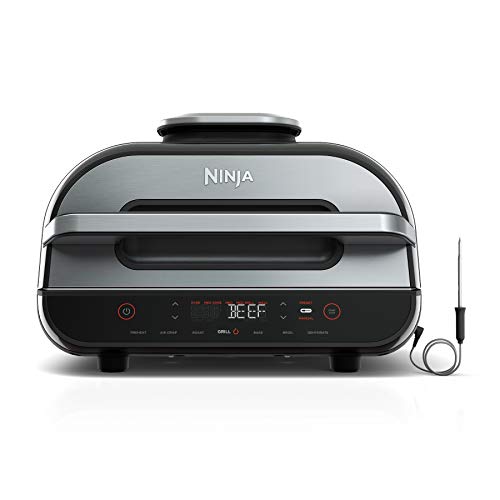
The Ninja Foodi Smart XL is one of the most capable countertop grills you can buy in 2026. It's a true 6-in-1 appliance — grill, air fryer, roast, bake, broil, and dehydrate all in one unit. The Cyclonic Grilling Technology pushes 500°F hot air around the food to create authentic char marks and that smoky edge you'd expect from an outdoor grill. It does this while keeping the smoke inside, which is a real win for apartments or open-plan kitchens.
The built-in Smart Thermometer is the standout feature here. You insert it into your protein, pick from 4 presets (beef, pork, poultry, fish) and 9 doneness levels, and the grill monitors internal temperature the whole time. No guessing, no cutting things open to check. It alerts you when your food hits the target. This takes a lot of the anxiety out of cooking thicker cuts like chicken breasts or pork chops. The XL grill grate fits up to 6 steaks or a full rack of ribs — big enough for most families.
Cleanup is straightforward. The grill grate, crisper basket, and cooking pot are all dishwasher safe. The splatter shield (the lid that sits over the grill during cooking) keeps grease from flying around your kitchen. Build quality feels solid — this is not a lightweight unit, but that heft also means it stays put on the counter.
Pros:
Cons:
George Foreman is the name most people think of when they hear "indoor grill," and the Digital Smart Select lives up to that reputation. This is a family-sized model designed to feed 4 to 6 people, and it earns its keep with a claim the brand stands behind: 3x faster cooking than a standard oven. Burgers in six minutes is not an exaggeration — the dual-element heating system gets hot fast and holds that temperature consistently through the whole cook.
The touch-sensitive digital controls are a step up from older George Foreman dials. You get precise time and temperature settings with visual indicators and audio alerts to tell you when to flip or when food is done. The interface is intuitive enough that you don't need to read the manual twice to figure it out. This is a contact grill (meaning the top plate presses down on food), which is great for burgers, sandwiches, chicken breasts, and fish fillets. It cooks from both sides simultaneously, which is what gives you that speed advantage.
The grill plate and drip tray both come out and go straight into the dishwasher. If speed, simplicity, and family-friendly capacity are your priorities, the George Foreman Digital Smart Select is a very strong choice. It's not the most glamorous grill on this list, but it consistently delivers fast, even results.
Pros:
Cons:
The T-Fal OptiGrill XL is the grill for people who don't want to babysit their food. Its precision sensor technology measures ingredient thickness when the lid closes and automatically adjusts cooking time and temperature for you. There's no manual dial to set — just pick your food type from one of nine preset programs (hamburger, poultry, fish, sandwich, pork, sausage, beef, lamb, or frozen food) and let the grill do the math. A color-coded indicator light moves through stages — rare, medium rare, medium, well done — so you know exactly where your food is at a glance.
The XL size here is genuinely XL. You can grill for 6 to 8 people in one batch, which puts it ahead of most competitors. It doubles as a panini press and a griddle, so it's pulling triple duty in your kitchen. The 1800W heating element is powerful enough to handle thick cuts without losing heat when you open the lid.
The removable nonstick plates make cleanup easy, and the stainless steel exterior keeps it looking clean on the counter. If you're the kind of cook who wants a reliable, automatic result every time without dialing in settings manually, the OptiGrill XL is in a category of its own. It's particularly good at cooking proteins from frozen — a feature most grills don't handle well at all.
Pros:
Cons:
The Breville BGR820XL is built for people who take their indoor grilling seriously. Open it flat and you get a 260 square inch open BBQ surface — large enough to grill a whole fish, a thick ribeye, or a batch of pancakes side by side. This is one of the key advantages of the Breville over contact-only grills: you can actually use it in two completely different modes. Close it for contact grilling (sandwiches, burgers), or open it flat for a full BBQ-style experience with access to the whole surface.
What sets the Breville apart technically is where the heating elements are. Instead of placing heating coils underneath the plates, Breville embeds 1800W elements directly into the plates themselves. Combined with an electronic thermostat that senses and reacts to temperature drops, this means faster heat recovery when cold food hits the surface. You get consistent, high-heat searing — the kind that actually browns a steak instead of just cooking it gray. That's a big deal if you care about crust development and Maillard reaction (the browning process that creates flavor).
The removable drip tray works in both contact and open BBQ mode, catching grease without a mess. Build quality is premium — brushed stainless steel throughout, with a solid, weighted feel. This is a grill that should last years with proper care. It's a higher investment, but for someone who grills frequently and wants versatility without sacrificing performance, the Breville earns its price.
Pros:
Cons:
If your budget is tight but you still want reliable indoor grilling results, the Hamilton Beach Electric Indoor Searing Grill is one of the most straightforward picks in 2026. It heats up to 450°F — high enough to create genuine sear marks and lock in juices on steaks, burgers, pork chops, and fish. That's not a given on budget grills, where many max out at temperatures too low for a proper sear. The lid-closed cooking method traps heat around your food for more even cooking and classic grill marks on both contact surfaces.
The grill grate is nonstick and PFAS-free — that's an important detail for anyone avoiding those chemicals in their cookware. It's also removable and dishwasher safe, which keeps cleanup simple. The 118 square inch surface comfortably handles up to 6 servings, making it a solid choice for households that don't need an XL-sized unit. If you're interested in other electric cooking options that work well with a budget setup, check out our guide on the best gas grills under $200 for outdoor comparisons.
There's no digital display here — just a dial with adjustable temperature control. That's actually fine for most cooks who know their preferences. You set the temperature, preheat, and grill. It doesn't try to do too much, and that simplicity is part of its appeal. You know exactly what you're getting: a grill that heats up fast, cooks food well, and cleans up in minutes.
Pros:
Cons:
The NutriChef Indoor Smokeless Grill is the most versatile option on this list when you factor in the price. It offers seven cooking functions — grill, air fry, roast, bake, broil, BBQ, and dehydrate — with a 6-liter capacity that's generous enough for family-sized meals. A built-in smart thermometer gives you internal temperature readings so you never accidentally undercook poultry or overcook fish. The temperature range runs from 100°F all the way up to 450°F, giving you fine control whether you're slow-roasting or hot-searing.
The smokeless performance here deserves credit. The advanced smoke control system combined with hot air circulation keeps visible smoke to a minimum — which matters if you're cooking in a small apartment or a kitchen without great ventilation. This is a newer model in 2026, and it shows in the design: cleaner controls, better build materials, and a more thoughtful layout than older budget multi-function grills. The non-stick removable grill plates make cleanup manageable, and the 6L interior gives you room to cook a whole chicken or a large batch of vegetables.
If you want the functionality of the Ninja Foodi at a lower price point, the NutriChef is worth a serious look. It's not quite as polished, and the thermometer isn't as deeply integrated into the cooking system, but the overall value proposition is strong. Seven functions, smart thermometer, strong smokeless performance — that's a lot to offer at its price.
Pros:
Cons:
The Techwood 1500W Smokeless Electric Grill is built for people who live in smaller spaces and want solid grilling performance without a large appliance footprint. At 1500W with a six-level temperature control dial and LED indicator, it heats precisely from 220°F to 450°F and holds that temperature throughout the entire cook — no hot spots, no cold zones. The result is that char-grilled texture and BBQ grill marks that make indoor grilling worth the effort in the first place.
The smokeless technology here relies on an advanced airflow system with a hidden internal fan. It draws smoke away from the cooking surface before it can billow out into your kitchen. This is the kind of feature that matters most when you're grilling bacon or fatty sausages in a studio apartment. The tempered glass lid lets you watch your food without releasing heat, which is a small but genuinely useful touch. The nonstick cooking surface drains excess grease into a removable drip tray, keeping meals leaner without sacrificing flavor.
Cleanup is easy — all removable parts are dishwasher safe. This is an open-surface grill only (no contact mode), which means it's better suited for steaks, burgers, chicken pieces, and skewers than for sandwiches or paninis. If compact size, low smoke output, and straightforward controls are your top priorities, the Techwood delivers strong value at an accessible price point.
Pros:
Cons:
Picking the right indoor grill comes down to a few key factors. Here's what to think about before you buy in 2026.

This is the first and most important decision. A contact grill (like the George Foreman or T-Fal OptiGrill) has a hinged top plate that presses down on food. It cooks from both sides at once, which is why these are so fast. Great for burgers, chicken breasts, fish fillets, and sandwiches. An open flat grill (like the Techwood) functions more like a traditional outdoor grill — food sits on the grate with heat coming from below, and you flip it manually. Some grills (like the Breville BGR820XL) do both, opening flat for a full BBQ surface or closing for contact mode. Think about how you cook most often before you decide.
For real searing, you want a grill that can hit at least 400°F to 450°F. That's the minimum for producing actual grill marks and locking in juices on red meat. Most of the grills in this guide reach 450°F; the Ninja Foodi hits 500°F with its cyclonic system. Wattage matters here too — 1800W units (Breville, T-Fal) recover heat faster after cold food is added compared to 1500W units. If you're grilling thick steaks or large batches, the extra wattage makes a noticeable difference. For smaller portions or lighter proteins, 1500W is plenty.
Think realistically about how many people you cook for. The T-Fal OptiGrill XL and Hamilton Beach both claim 6-serving capacity. The Ninja Foodi XL fits up to 6 steaks at once. If you're cooking for two most nights, a compact unit like the Techwood is perfectly sized. If you host family dinners or meal prep for the week, you'll appreciate an XL surface. Don't buy more capacity than you need — bigger grills take up more counter space and cost more to heat.
Not all "smokeless" grills are equally smokeless. The best ones use either an advanced airflow system with an internal fan (Techwood, Ninja) or a splatter shield design that traps particles before they reach the air. In real-world use, fatty foods like bacon, sausage, and skin-on chicken will always produce more smoke than lean proteins. Set your expectations accordingly — no electric grill is 100% smoke-free with every food, but the good ones keep it manageable.

For cleanup, prioritize grills with fully removable, dishwasher-safe plates. Cleaning a grill with fixed non-removable plates is a genuine chore — you're wiping down a hot surface with grease stuck in ridges. Every model on this list has removable plates, but double-check before buying any grill that isn't on this list. Also look at the drip tray design — a wide, shallow drip tray is easier to empty and clean than a deep, narrow one.
No indoor grill is 100% smoke-free with every food — that's worth being honest about. Fatty proteins like bacon, skin-on chicken, and sausages will produce some smoke regardless of the grill's technology. The best indoor grills use internal fans, splatter shields, or airflow management systems to minimize smoke significantly compared to cooking on a stovetop grill pan. For lean proteins like fish fillets, chicken breasts, or vegetables, the smoke output on a quality indoor electric grill is genuinely minimal. Proper ventilation in your kitchen always helps.
A contact grill has a hinged lid that presses down on food, cooking from both sides simultaneously. This is faster and great for burgers, sandwiches, and chicken. An open flat grill sits food on a single heated grate with no top plate pressing down — you cook one side at a time and flip manually, more like a traditional outdoor grill. Some models (like the Breville BGR820XL) do both: you can open the grill flat for a full BBQ surface or close it for contact grilling. Your choice depends on what you cook most often.
Yes, absolutely — provided your grill reaches high enough temperatures. You want at least 400°F to 450°F for a proper sear. Grills like the Breville BGR820XL and the Ninja Foodi Smart XL are particularly well-suited for steaks because of their high-heat elements and even heat distribution. For best results, pat your steak dry before grilling, let the grill preheat fully, and don't move the steak until it releases naturally from the grate. If you're using a contact grill, thinner steaks (under 1 inch) work better than very thick cuts.
The easiest approach is to act quickly while the grill is still warm (not hot). Remove the grill plates and drip tray and place them in the dishwasher if they're dishwasher safe — all the grills in this guide are. For hand washing, hot soapy water and a soft brush or sponge handle most residue. Avoid abrasive scrubbers that damage nonstick coating. Wipe down the grill body with a damp cloth — never submerge the electrical unit. Cleaning the drip tray after every use prevents grease buildup that can cause smoke in future cooks.
In most cases, yes. Indoor grills are designed so fat and grease drain away from food as it cooks, rather than sitting in the pan and re-absorbing into the food. This typically reduces the fat content of grilled meats compared to pan frying in oil or butter. Additionally, indoor grilling usually requires little to no added oil. The nonstick surfaces on these grills prevent sticking without needing a greased pan. If you're focused on reducing dietary fat, a grill with a good drip tray system — like the George Foreman or Hamilton Beach — is a solid choice.
Match the grill size to your household. For one or two people, a compact unit like the Techwood 1500W is more than enough. For families of four to six, look for a family-sized model like the George Foreman Digital Smart Select or the Hamilton Beach with its 118 square inch surface. If you regularly cook for six to eight people or do weekly meal prep in large batches, an XL-capacity model like the T-Fal OptiGrill XL or the Ninja Foodi Smart XL is the right call. Bigger isn't always better — a large grill takes longer to preheat and takes up more counter space than you might want.
The best indoor grill isn't the one with the most features — it's the one you'll actually use every week because it fits your kitchen, your cooking habits, and your life.
 |
 |
 |
 |

About Rick Goldman
Rick Goldman grew up traveling the Pacific Coast and developed an early appreciation for regional and international cuisines through exposure to diverse food cultures from a young age. That culinary curiosity shaped his approach to kitchen gear — he evaluates tools based on how well they perform across different cooking styles, ingredient types, and meal occasions. At BuyKitchenStuff, he covers kitchen equipment reviews, recipe guides, and food-focused buying advice.
