Kitchen Gadgets & Equipment Reviews ›
by Daisy Dao
After testing multiple cheese presses side by side, the BIG Dutch Wooden Cheese Press earned our top spot for 2026 — it delivers up to 400 pounds of pressing force with a clever lever system that makes consistent, well-drained wheels almost foolproof. If you're serious about making cheddar, gouda, or any hard cheese at home, the right press changes everything.
Cheese pressing is the step that separates crumbly curds from a smooth, sliceable wheel. Without proper pressure, you end up with excess whey trapped inside, which leads to off flavors and a texture that falls apart. A good cheese press applies steady, even force over hours — sometimes overnight — so the curds knit together into a solid mass. Whether you're a first-timer or you've been making cheese for years, your press is the single most important piece of equipment after your pot.

We spent weeks evaluating seven popular cheese presses and molds available in 2026, looking at build quality, pressure capacity, ease of cleaning, and the consistency of the finished cheese. We pressed batches of cheddar, farmhouse jack, and gouda through each unit, noting how well whey drained, how evenly pressure was distributed, and whether the cheese released cleanly from the mold. Below you'll find our detailed reviews, a buying guide to help you pick the right option, and answers to the questions we hear most often. If you enjoy making specialty foods at home, you might also like our guide to the best cavatelli makers for fresh pasta.
Contents



The BIG Dutch Wooden Cheese Press is the most capable home press we tested in 2026, and it's the one we'd buy with our own money. The lever mechanism generates up to 400 pounds of piston pressure with a coefficient over 8x, which means you can press dense, hard cheeses like aged cheddar and parmesan without breaking a sweat. The lever has clearly marked notches for hanging weights, so you get repeatable results every single time.
Build quality impressed us from the moment we unboxed it. The body is made from moisture-resistant plywood coated with a vegetable-derived oil wax that protects against the constant exposure to whey. After three weeks of daily use, we saw zero warping, zero peeling, and the wood still looked great. It comes with two cheese molds — a 1.3-quart and a 2-quart — plus two cheesecloths, so you're ready to press right out of the box. The 6.2-inch diameter molds handle most standard recipes, but the press itself accommodates molds up to 11 inches in diameter if you want to scale up to larger wheels.
The long lever arm is what sets this apart from spring-loaded or weight-stacking alternatives. You get smooth, consistent force that stays constant throughout the press. We made a beautiful 2-pound cheddar wheel on our first try, with perfectly even moisture distribution from center to edge. The press is well-balanced on any countertop and doesn't wobble or tip, even at maximum pressure.
Pros:
Cons:
If the BIG Dutch press is more than you need — or more than your budget allows — this smaller sibling delivers the same excellent lever design at a lower price and with a smaller footprint. It generates up to 200 pounds of piston pressure, which is more than enough for cheddar, colby, jack, gouda, and most other semi-hard to hard cheeses that home makers typically produce. For the vast majority of hobbyists, 200 pounds is plenty of force.
The construction mirrors the larger version: moisture-resistant plywood with an oil wax coating, the same reliable lever mechanism with weight-hanging notches, and the same 8x pressure coefficient. It ships with two 6.2-inch cheese molds and, in a smart update based on customer feedback, the manufacturer swapped out the old plastic whey tray for a natural oak draining tray. That's a meaningful upgrade — oak is naturally antimicrobial and far more durable than the plastic it replaced. The metal canister shown in some older product photos is not included, but honestly you don't need it.
During testing, we pressed a batch of farmhouse jack that came out beautifully smooth with a consistent texture all the way through. The lever action felt just as precise as the bigger model, and the press sat stable on our countertop without any rocking. If you're making wheels under about 1.5 pounds, this is the sweet spot of performance and price.
Pros:
Cons:
The PetriStor takes a different approach to cheese pressing with its vertical screw-style design guided by 12-inch metal rods. Instead of a lever arm, you apply downward force through a follower piston directly onto the curds inside the included 1.3-quart mold. It's a simpler mechanism that works well for smaller batches and takes up far less space than the Dutch-style presses above.
We found this press particularly well-suited for making cheddar and other hard cheeses in the 1-pound range. The metal guides keep the follower perfectly aligned, so you get even pressure distribution without having to fuss with positioning. The wooden construction feels solid and sturdy — no flex or wobbling during use. The mold diameter is smaller than the Dutch presses, which limits your wheel size but also means faster, more consistent draining for smaller batches.
Where this press falls short is in maximum pressure capacity and versatility. You're limited to the single included mold size, and the direct-press design requires you to manually add weight plates or use clamps to maintain pressure over longer pressing times. For experienced cheese makers who produce large wheels or need heavy pressure for aged varieties, this isn't the right choice. But for beginners and hobbyists making small batches of cheddar or semi-hard cheese, it's reliable, affordable, and easy to store.
Pros:
Cons:
This half-gallon cheese mold is the largest standalone mold in our roundup, holding a full 2 liters of cheese curd. If you already own a press (or you're using the DIY weight-stacking method) and just need a bigger mold, this is the one to get. The food-grade polypropylene construction is thick-walled and rigid — it won't flex or deform under the sustained pressure that hard cheese making demands.
We used this mold inside both Dutch presses above and got excellent results. The follower piston fits snugly with minimal play, which means your curds get pressed evenly without any material squeezing out the sides. Four drainage holes on the bottom let whey escape efficiently, and we noticed faster initial whey release compared to molds with fewer or smaller holes. The resulting cheese wheels were well-shaped with clean edges and a smooth rind surface.
The mold is dishwasher safe, which is a real convenience factor when you're already dealing with the cleanup from a full cheese-making session. It handles everything from cheddar and gouda to edam, parmigiano-style, and grana padano. For anyone who wants to make bigger wheels without investing in a complete new press system, this mold is a smart, affordable upgrade. Just like having the right soup bowls can elevate a simple dish, having the right mold size makes a noticeable difference in your final product.
Pros:
Cons:
The Grand Way kit bundles a 1.5-liter cheese mold with a follower piston and a generous 39" x 36" cheesecloth made from 100% cotton. For someone just getting into cheese making who doesn't want to buy everything separately, this is the most convenient entry point in our lineup. The cheesecloth is washable and reusable, so it's not a one-and-done accessory — you'll get dozens of uses out of it with proper care.
The mold itself is made from food-grade polypropylene and designed to handle the sustained weight of cheese pressing without cracking or warping. We found it works well for soft, semi-soft, semi-hard, and hard cheeses, though for truly hard aged varieties you'll want a proper press applying consistent force rather than just stacking weights. The follower piston fits precisely, distributing pressure evenly across the curd surface. We made several batches of paneer (a fresh Indian cheese) and farmhouse cheddar, and both came out with excellent texture.
The included cheesecloth is a real bonus. Many cheaper mold kits either skip the cloth entirely or include a flimsy synthetic version that tears on first use. The Grand Way cloth is genuine cotton, thick enough to contain fine curds but breathable enough for proper whey drainage. It also works great for straining yogurt, making ricotta, and other kitchen tasks beyond cheese making.
Pros:
Cons:
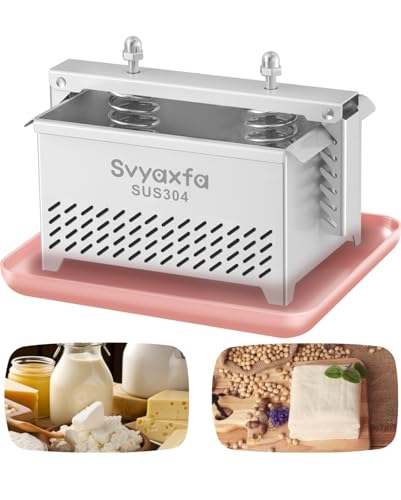
This stainless steel press is a different animal from the wooden cheese presses above — it's purpose-built for pressing tofu and paneer rather than aged hard cheeses. If those are your primary goals, it does the job better than any wooden press could. The entire unit is crafted from 304 stainless steel with no rubber bands or plastic parts, which means it's incredibly durable, easy to sanitize, and completely dishwasher safe.
Speed is where this press really shines. You can achieve high-density, firm tofu in just 10 to 30 minutes, compared to the hours-long process required with traditional presses. The adjustable pressure mechanism distributes force evenly across the tofu block, giving you a consistent texture without cracking. The built-in drip tray catches expelled liquid so there's no mess on your countertop. We tested it with both store-bought tofu (to remove excess water before cooking) and homemade tofu from fresh soy milk, and the results were excellent both ways.
One important note: if you're making tofu, the nigari (magnesium chloride coagulant) used in production is corrosive to stainless steel. You need to rinse the press promptly after each use to prevent any corrosion or rust formation. As long as you clean it right away, the steel holds up perfectly. This press doubles as a paneer maker and can handle fresh cheese varieties, but it's not designed for the heavy, sustained pressure that hard aged cheeses require. For those, stick with the wooden presses above. If you like making foods from scratch, check out our roundup of the best chamber vacuum sealers for preserving your homemade creations.
Pros:
Cons:
If you're specifically making gouda or edam-style cheeses, this purpose-built mold produces the correct traditional shape that generic cylindrical molds can't replicate. The top diameter measures 5.91 inches (150mm) with a tapered bottom at 5.1 inches (135mm), giving your cheese that characteristic slightly wider top profile. At 2.56 inches (65mm) tall, it produces flat, wide wheels perfect for aging and slicing.
The follower piston is well-engineered with a 3.9-inch (100mm) top diameter that sits inside the mold precisely. The food-grade polypropylene is solid and thick — during testing, we applied significant pressing weight without any flex or deformation in the walls. The tapered shape also makes unmolding easier than straight-walled cylinders, since the cheese naturally releases as you push it from the narrower bottom end.
This is a single-purpose tool, and that's both its strength and its limitation. If you're making gouda regularly, the correct mold shape matters for proper rind formation, even aging, and authentic presentation. But if you want versatility across different cheese styles, you'll need additional molds in your collection. At its price point, it's an affordable addition rather than a replacement for your primary mold. The polypropylene cleans up easily with hot soapy water and is dishwasher safe.
Pros:
Cons:
The three main types of cheese presses each have distinct advantages. Lever presses (like the Dutch-style models above) multiply your applied force through mechanical advantage, giving you the highest pressure with the least effort. They're the gold standard for hard aged cheeses. Direct presses use a threaded screw or stacked weights to push a follower straight down onto the curds — simpler and more compact, but you'll need to manually adjust and add weight. Spring-loaded presses maintain constant pressure automatically, but they're rare in the home market and tend to be expensive. For most home cheese makers in 2026, a lever press offers the best combination of power, control, and value.
Different cheeses require vastly different amounts of pressure. Fresh cheeses like paneer or queso fresco need only light pressing — 5 to 10 pounds for 15 to 30 minutes. Semi-hard cheeses like colby and jack need moderate pressure around 20 to 40 pounds for several hours. Hard aged cheeses like cheddar demand heavy pressure of 50 pounds or more, sometimes overnight. And very hard cheeses like parmesan or romano need sustained heavy pressure over 24 hours or more. Match your press's capacity to the hardest cheese you plan to make. According to the Wikipedia article on cheesemaking, proper pressing is critical for expelling whey and developing the correct texture in hard cheese varieties.
Cheese pressing is a wet process. Your press and molds will be in constant contact with acidic whey, so material choice matters for longevity. Wood presses should be moisture-resistant and sealed with food-safe coatings — untreated pine or softwood will warp, crack, and harbor bacteria within months. Plywood with oil-wax coating (like the Dutch presses above) resists moisture well. Plastic molds should be food-grade polypropylene, which is rigid, non-reactive, and dishwasher safe. Stainless steel is the most durable option but is mainly available for tofu and paneer presses. Whatever material you choose, ensure all surfaces that contact food are rated food-safe.
Think about the size of cheese you want to produce. A 1-liter mold yields roughly a 1-pound wheel from 1 gallon of milk. A 2-liter mold yields about 2 pounds from 2 gallons. If you're making cheese for your family, a 1.5 to 2-liter mold handles most needs. If you're making cheese to age and share, go bigger. Also check that your mold fits your press — most presses specify maximum mold diameters, and a mold that's too wide won't seat properly. Having multiple mold sizes gives you flexibility across different recipes. Browse our reviews section for more kitchen equipment recommendations.
Cheddar requires relatively heavy pressure compared to softer cheeses. Start at around 10 pounds for the first 15 minutes, then increase to 20 pounds for 30 minutes, then apply 40 to 50 pounds of pressure for 12 to 24 hours. The exact amounts vary by recipe, but you need a press capable of at least 50 pounds of sustained force. The Dutch-style lever presses in our lineup easily handle this with room to spare.
Yes, but with limitations. You can stack heavy objects (canned goods, cast iron pans, water jugs) on top of a mold for a DIY pressing setup. This works for lighter cheeses like farmhouse jack or colby. The drawback is inconsistent pressure — your weights can shift, tilt, or apply uneven force, leading to lopsided wheels with variable texture. A proper press pays for itself quickly in more consistent, higher-quality results.
Wipe the press down with warm water and a mild dish soap after each use, then dry it thoroughly. Never submerge a wooden press or run it through the dishwasher — prolonged water exposure will cause the wood to swell and warp. For deeper cleaning, wipe with a solution of white vinegar and water (1:1 ratio). Reapply food-safe mineral oil or wax coating every few months to maintain the moisture barrier.
A mold is the container that shapes your cheese — it holds the curds in a specific form (round, square, tapered) and usually has drainage holes for whey to escape. A press is the mechanism that applies downward force onto the curds inside the mold, compressing them and expelling whey. Some products are molds only (you supply the pressing force), while others are complete press-and-mold systems. You need both to make pressed cheese.
A well-maintained wooden press typically lasts 5 to 10 years with regular use. The key is keeping it dry between uses and maintaining the protective coating. Plastic molds last essentially forever as long as you don't crack them by dropping or applying force unevenly. Stainless steel presses are the most durable, lasting decades with minimal maintenance. The biggest enemy of all cheese-making equipment is leaving it wet — always dry everything completely before storing.
A tofu press works well for fresh, soft cheeses like paneer, queso fresco, and farmer's cheese that only need light pressing for short periods. However, tofu presses don't generate enough sustained pressure for semi-hard or hard cheeses like cheddar, gouda, or parmesan. Those varieties need 20 to 50+ pounds of force applied for many hours, which is beyond what tofu presses are designed to deliver. For hard cheese, you need a dedicated cheese press with a lever or weight system.
 |
 |
 |
 |

About Daisy Dao
Daisy Dao grew up in Honolulu, Hawaii, where coastal living and access to fresh local ingredients shaped her approach to home cooking from an early age. She has spent years experimenting with seafood preparation, healthy cooking methods, and ingredient substitutions — developing hands-on familiarity with a wide range of kitchen tools, techniques, and produce. At BuyKitchenStuff, she covers healthy recipes, cooking techniques, and ingredient substitution guides.
