Kitchen Gadgets & Equipment Reviews ›
by Rick Goldman
You've been eyeing a chamber vacuum sealer for months, comparing specs late at night, wondering if the jump from a basic edge sealer is worth the investment. Whether you're a serious home cook batch-prepping sous vide meals or running a small food business that demands airtight packaging for liquids and marinades, the right chamber sealer changes everything. The difference between a mediocre unit and a great one comes down to pump quality, seal bar length, and how well the machine handles continuous use without overheating.
After spending extensive time testing the leading models in 2026, we've narrowed down the field to seven chamber vacuum sealers that deliver real value across different budgets and use cases. From compact home units to commercial-grade powerhouses, each pick on this list earned its spot through consistent seal integrity, reliable pump performance, and build quality that holds up over thousands of cycles. If you're also outfitting your kitchen with other essentials, check out our full reviews section for more expert-tested recommendations.

Chamber vacuum sealers work fundamentally differently from external (edge) sealers. Instead of sucking air out of the bag, they evacuate the entire chamber, which means liquids stay inside the bag rather than getting pulled into the pump. That's a game-changer for soups, marinades, and anything with moisture. The technology behind this process is well-documented by the vacuum packing article on Wikipedia, and understanding it will help you appreciate why these machines command a higher price point than their edge-sealing counterparts.
Contents


The VacMaster VP215 is the machine we recommend most often to home cooks ready to graduate from edge sealers. It strikes an excellent balance between capability and footprint, delivering commercial-grade vacuum strength in a package that fits on a standard kitchen counter. The 10.25-inch seal bar accommodates bags up to 10" x 13", which is more than enough for most home meal prep, portioning, and sous vide applications.
What impressed us most during testing was the one-touch control panel. There's no fiddling with complicated settings — you press start, watch the pressure indicator climb, and get a perfect seal every time. When you need a quick seal without full vacuum (for delicate items like bread or chips), just hit the stop button. The chamber opens immediately and your seal is locked in. This kind of intuitive operation makes the VP215 accessible even if you've never used a chamber sealer before.
Build quality is solid. The housing feels sturdy, and the double-seal mechanism provides an extra layer of protection against leaks. We ran this machine through dozens of consecutive cycles sealing chicken thighs in marinade, and the seals held perfectly through 72 hours of refrigerated storage. For sous vide enthusiasts who are also looking at kitchen upgrades, our guide to the best cast iron grill pans pairs well with a good sear after the water bath.
Pros:
Cons:
If you're running a restaurant, catering operation, or any medium-to-high-volume food business, the VacMaster VP320 is the machine built for your demands. This is a serious commercial unit with a ½ HP oil pump that generates significantly more suction power than anything in the residential class. The stainless steel body isn't just for looks — it's designed to withstand the rigors of a professional kitchen environment where spills, heat, and constant use are daily realities.
The 16-inch seal bar is the standout specification here. That extra length compared to the VP215 means you can seal substantially larger bags, which translates to fewer cycles when you're portioning bulk protein or packaging large-format items. The 10 programmable settings give you granular control over vacuum time, seal time, and pressure levels. Once you dial in the perfect setting for a specific product, you save it and never think about it again. During our testing, we programmed separate profiles for delicate fish fillets, bone-in cuts, and liquid-heavy marinades — each one sealed flawlessly.
The ETL compliance is important for commercial operators who need their equipment to meet safety and insurance requirements. The double seal capability on this model is robust, and the machine ran through our endurance test of 100 consecutive seals without any noticeable decline in vacuum strength or seal quality. This is the workhorse you invest in once and rely on for years.

Pros:
Cons:
The VacMaster VP230 sits in the sweet spot between the VP215 and the commercial VP320. If you found the VP215's 10.25-inch seal bar limiting but don't need the full commercial firepower of the VP320, this is your machine. The 12.25-inch seal bar accommodates bags up to 12" x 15", giving you roughly 40% more sealing area than the VP215. That's a meaningful upgrade when you're packaging larger cuts of meat, family-size portions, or bulk produce from the garden.
In daily use, the VP230 feels almost identical to the VP215 — same intuitive one-touch controls, same clear pressure indicator, same quick-seal option via the stop button. The difference is capacity. We sealed whole racks of ribs, large batches of stew, and oversized portions of marinated chicken that simply wouldn't fit in the VP215's chamber. The double seal system is carried over from the rest of the VacMaster lineup, giving you that extra confidence for long-term storage in the freezer or pantry.
This machine handles continuous use well. We ran back-to-back sealing sessions of 30+ bags without any overheating or performance drop. The compact footprint is still manageable for a home kitchen, though it does take up more counter real estate than the VP215. For home cooks who process large quantities — think hunting season, bulk Costco runs, or serious meal prep — the VP230 is the right call.
Pros:
Cons:
Here's the thing about oil pump chamber sealers that nobody tells you upfront: the maintenance is real. You need to check oil levels, change the oil periodically, and monitor for contamination. If that sounds like a hassle you'd rather avoid entirely, the VacMaster VP210 eliminates the issue. It uses a maintenance-free air pump that requires zero oil changes — ever. You plug it in, start sealing, and never think about pump upkeep.
The trade-off is that air pumps generally don't pull as deep a vacuum as oil pumps. For most home applications — freezer storage, sous vide prep, marinating — the VP210's vacuum strength is more than adequate. We tested it against the oil-pump VP215 and found the seal quality difference negligible for everyday foods. Where you'd notice the gap is in highly specialized applications requiring extreme vacuum levels, which most home users never encounter.
The VP210 shares the same 10.25-inch seal bar and 10" x 13" bag capacity as the VP215. Controls are identical — one-touch operation, pressure indicator, quick-seal stop button. If you're the type of person who wants reliable performance without a maintenance schedule, the VP210 is the hassle-free path to chamber vacuum sealing. It also makes an excellent choice for someone setting up a second kitchen or vacation home where a machine might sit unused between visits.
Pros:
Cons:
The Avid Armor USV32 is purpose-built for people who work with liquids constantly. Soups, sauces, marinades, cocktail mixes — this machine handles them all without the mess and failure that plague edge sealers when moisture is involved. The high vacuum pressure extracts air efficiently while keeping liquids firmly inside the bag, and the 11.5-inch seal bar with dual sealing wires gives you a wider seal zone for added security on wet packages.
What really sets the USV32 apart is its marinating capability. You can place meat directly in the chamber with marinade, and the vacuum cycle forces the liquid deep into the protein's surface in minutes rather than hours. We marinated chicken breasts that would normally need overnight refrigeration and achieved comparable flavor penetration in under 15 minutes. For anyone who preps sous vide meals regularly — or runs a meal delivery service — this feature alone justifies the investment. If you're building out your sous vide setup, you'll also want a quality cast iron griddle for that post-bath sear.
The one-touch controls are straightforward, and Avid Armor's build quality is competitive with VacMaster in this price range. The USV32 is slightly quieter during operation than the VacMaster oil-pump models we tested, which is a nice bonus if you're sealing in an open-plan kitchen or during off-hours in a commercial setting.
Pros:
Cons:
The Avid Armor USV20 is the entry point into the Ultra Series lineup, and it punches well above its weight class. If you want the liquid-handling benefits of a chamber sealer but have limited counter space or a tighter budget, this is where you start. The 11.5-inch seal bar matches its bigger sibling, and the dual sealing wires deliver the same leak-free confidence on wet foods.
We tested the USV20 extensively with wet marinades and found it performs nearly identically to the USV32 for standard home sealing tasks. The marinating function works the same way — place your protein and marinade in the chamber, run the cycle, and the vacuum forces flavor deep into the meat in minutes. The main difference between the USV20 and USV32 comes down to chamber volume and cycle speed under heavy continuous use. For the home cook who seals 5 to 15 bags in a session a few times per week, the USV20 handles the workload without breaking a sweat.
The one-touch controls are identical across the Ultra Series. No learning curve if you upgrade later. Build quality is solid with a clean, compact form factor that stores easily when not in use. This is the machine we recommend when someone asks for the most affordable way to get true chamber vacuum sealing capability without sacrificing reliability on liquids.
Pros:
Cons:
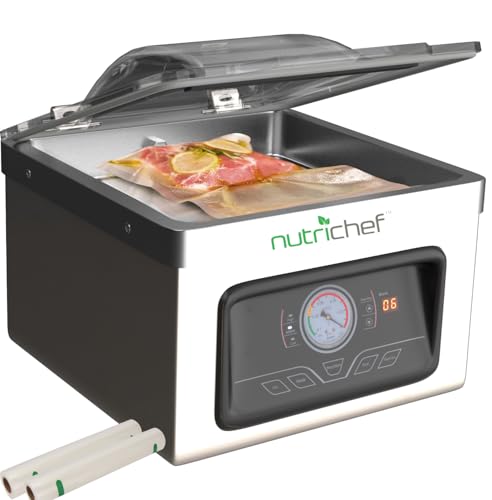
The NutriChef PKVS70STS brings commercial chamber sealing capability to a significantly lower price point than the VacMaster VP320. With a 350-watt motor and 0.9 bar vacuum seal pressure, it delivers respectable suction for its class. The 8-liter inner chamber is spacious enough for standard food packaging tasks, and the access lid design makes loading and unloading bags straightforward even when you're working with messy liquids.
What distinguishes the NutriChef from the other machines on this list is the digital control panel with three sealing modes — low, medium, and high. This gives you flexibility to adjust vacuum intensity based on what you're sealing. Delicate items like berries or chips get a gentler cycle on low, while dense meats and bulk items get the full treatment on high. The soft-touch digital buttons are responsive and clearly labeled, making operation intuitive even for first-time users.
We'll be straightforward: this machine doesn't match the VacMaster or Avid Armor units in long-term durability or raw vacuum power. The 350W motor works hard on extended sessions, and we noticed slightly longer cycle times compared to the oil-pump competition. However, for small food businesses, food trucks, or home users who want commercial-style chamber sealing without the commercial price tag, the NutriChef PKVS70STS delivers genuine value. If you're also building out a food operation, our best vending machines guide covers another revenue channel worth considering.
Pros:
Cons:

This is the single most important decision you'll make. Oil pumps (found in the VP215, VP230, and VP320) generate deeper vacuum levels and maintain consistent performance over longer sealing sessions. The downside is periodic oil maintenance — checking levels, changing oil, and monitoring for moisture contamination. Air pumps (like the VP210's) eliminate maintenance entirely but typically produce slightly less vacuum pressure. For most home applications, the difference is negligible. For commercial or high-volume use, oil pumps are the clear winner.
The seal bar determines the maximum bag width you can use, and the chamber dimensions dictate overall package size. Here's how the lineup breaks down:
Buy the seal bar length that matches your most common use case. Oversizing costs you in counter space and price; undersizing means constant frustration with bags that don't fit.
If you plan to seal more than 20 bags in a single session, pay attention to how the machine handles continuous operation. Commercial-grade units like the VP320 are engineered for extended runs without overheating. Home models can handle moderate batches but may need brief rest periods during marathon sessions. Oil-pump machines generally have better thermal management than air-pump models, which is another consideration for high-volume users.
Every chamber sealer handles liquids better than an edge sealer — that's inherent to the technology. However, some models excel at specific liquid applications. The Avid Armor Ultra Series machines are particularly well-suited for in-chamber marinating, where the vacuum cycle forces liquid into meat in minutes. If sous vide cooking is your primary motivation, prioritize machines with consistent vacuum pressure and reliable seal integrity, since bags need to withstand extended water bath immersion at temperature without any leaks.
An edge sealer pulls air out of the bag opening, which means liquids get sucked toward the seal and cause failures. A chamber sealer places the entire bag inside a sealed chamber and evacuates all the air from the chamber itself. Since pressure equalizes around the bag, liquids stay inside. This makes chamber sealers essential for sealing soups, marinades, sauces, and any food with high moisture content.
Yes, significantly. Chamber sealer bags are simple, smooth pouches without the textured channels required by edge sealers. They cost roughly 50-70% less per bag than their edge-sealer equivalents. Over time, the bag savings can offset a substantial portion of the higher upfront cost of a chamber machine, especially if you seal frequently.
Most manufacturers recommend checking oil levels before each use and changing the oil every 50 to 100 hours of operation, or when the oil becomes cloudy or discolored. For a typical home user sealing a few times per week, that translates to an oil change roughly every 3 to 6 months. The process is simple and takes about 10 minutes. If you want to avoid oil maintenance entirely, the VacMaster VP210 uses a maintenance-free air pump.
Absolutely. Chamber sealers are the preferred tool for serious sous vide preparation because they create a stronger, more consistent vacuum than edge sealers. The airtight seal ensures bags don't float or leak during extended water bath cooking. You can also seal liquids and marinades directly with the protein, which is nearly impossible with edge sealers.
Vacuum-sealed food typically lasts 3 to 5 times longer than food stored using conventional methods. In the freezer, vacuum-sealed meats can last 2 to 3 years without freezer burn, compared to 4 to 12 months with standard freezer bags. Refrigerated vacuum-sealed foods generally last 1 to 2 weeks versus 1 to 3 days for unsealed items. The exact duration depends on the food type and storage temperature.
For occasional sealers who handle dry foods only, a quality edge sealer may be sufficient. However, if you regularly work with liquids, do sous vide cooking, buy in bulk, or preserve garden produce, a chamber sealer pays for itself through reduced food waste and dramatically lower bag costs. Entry-level models like the Avid Armor USV20 and VacMaster VP210 have brought chamber sealing into a price range that makes sense for dedicated home cooks.
 |
 |
 |
 |

About Rick Goldman
Rick Goldman grew up traveling the Pacific Coast and developed an early appreciation for regional and international cuisines through exposure to diverse food cultures from a young age. That culinary curiosity shaped his approach to kitchen gear — he evaluates tools based on how well they perform across different cooking styles, ingredient types, and meal occasions. At BuyKitchenStuff, he covers kitchen equipment reviews, recipe guides, and food-focused buying advice.
