Kitchen Gadgets & Equipment Reviews ›
by Christopher Jones
You're standing in the middle of a restaurant supply store, staring at a wall of aprons that all look roughly the same. Black fabric, a few pockets, maybe some ties. But after a twelve-hour shift, you'll know exactly which one was worth the investment and which one left you with a sore neck and stained clothes. The difference between a mediocre apron and a great one comes down to details that aren't obvious on the hanger.
Whether you're running a professional kitchen, managing a catering team, or outfitting a culinary school class, your chef apron needs to handle heat, splashes, constant movement, and repeated washing without falling apart. In 2026, the market has matured considerably — you'll find everything from budget workhorses to premium crossback designs that distribute weight like a well-fitted backpack. We've tested and researched the top options across price points to help you find the right match for your kitchen.
This guide covers seven of the strongest chef aprons for restaurant use available right now. We'll break down material quality, pocket design, strap systems, and durability so you can make an informed decision. If you're also upgrading other parts of your kitchen setup, check out our guide to the best cast iron grill pans — because a well-equipped cook deserves quality tools from head to stovetop.

Contents
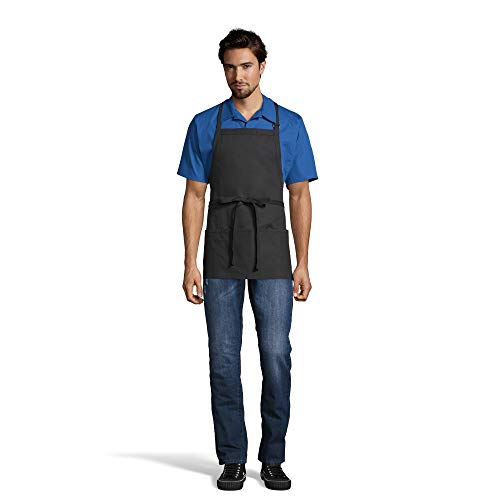




If you've ever worn a standard-length apron and found it barely covering your thighs, the Uncommon Threads 40-inch bib apron solves that problem immediately. That extra length isn't just about coverage — it protects more of your clothing from splatter, which matters when you're working a busy line with sauces reducing and oil popping. The three-pocket configuration gives you a logical place for your thermometer, notepad, and phone without creating awkward bulges.
Reinforced bar tacking at stress points is the standout construction detail here. Bar tacking is the same technique used on jeans pockets and military gear — it creates a concentrated block of stitching that resists tearing under repeated load. You'll appreciate this most at the neck strap connection and pocket corners, which are the first failure points on cheaper aprons. The adjustable neck means you can fine-tune the hang length even beyond what the 40-inch body provides.
The fabric is a mid-weight poly-cotton blend that balances durability with breathability. It won't feel like a canvas tarp in a hot kitchen, but it's substantial enough to block most liquid splashes. After dozens of industrial washes, the color holds reasonably well, though you may notice slight fading around the fold lines after six months of daily use.
Pros:
Cons:
Mercer Culinary has been a trusted name in professional kitchen gear for years, and the Genesis bib apron reflects that institutional knowledge. The 65/35 poly-cotton twill blend strikes an effective balance — the polyester component resists staining and speeds up drying, while the cotton provides breathability during those brutal dinner rushes. At 33 inches long by 23 inches wide, it offers standard professional coverage without excess bulk.
The 40-inch self ties deserve special mention. Unlike fixed-length ties that force you into one configuration, the generous length here lets you wrap around front, tie at the back, or double-knot for security. This is particularly useful in larger kitchen teams where aprons might get shared between shifts. The single spacious front pocket is a deliberate design choice — rather than splitting into multiple small compartments, it gives you one large space that accommodates a folded order pad, a couple of pens, and a thermometer simultaneously.
Reinforced stitching runs along all seams, and the adjustable neck strap uses a simple slide mechanism that stays put once set. The lightweight feel makes this apron disappear during wear — you won't feel weighed down after hour eight. For culinary students or restaurants outfitting large teams on a budget, the Genesis delivers professional-grade performance without the premium price tag.
Pros:
Cons:
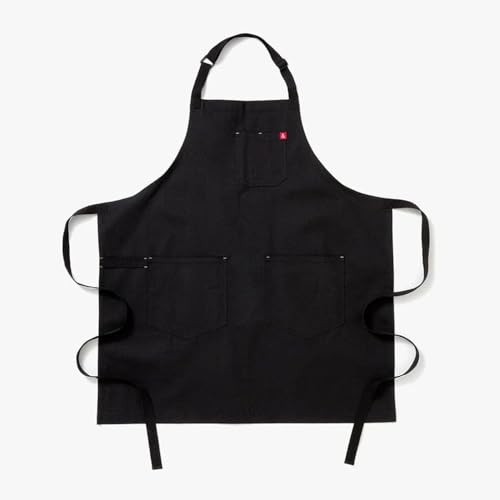
hedley & bennett built their reputation in professional kitchens, and the Essential Apron in Caviar black represents their core philosophy: functional design executed with premium materials. The 8oz cotton canvas hits a sweet spot — heavy enough to block splashes and resist wear, light enough that you won't overheat during service. This fabric develops character over time, softening with each wash while maintaining its structural integrity.
The pocket system on this apron is genuinely thoughtful. Two deep front pockets handle bulkier items like folded towels or a phone, while the dual pen chest pocket keeps writing instruments accessible without you bending over or digging around. The integrated towel loop is one of those features you don't think you need until you have it — suddenly your side towel has a dedicated home instead of getting stuffed into your waistband and falling on the floor during plating.
The adjustable bib strap and long waist ties allow for precise customization. Whether you prefer the apron riding high for maximum coverage or sitting lower for a more relaxed fit, you can dial it in exactly. The construction quality is immediately apparent when you handle the apron — clean finishing on all edges, reinforced corners on every pocket, and hardware that feels like it'll outlast the fabric itself. It's a premium investment, but one that pays dividends over years of daily use.
Pros:
Cons:
The Berkeley stands apart from everything else on this list because of its tailored, cropped fit combined with contrast suspenders. The desert sand suspenders against the black apron body create an aesthetic that works beautifully in open kitchens, farm-to-table restaurants, and upscale casual dining where the kitchen staff is part of the visual experience. This isn't just about looking good — the suspender system distributes weight differently than a traditional neck strap, reducing neck fatigue during long services.
From a functional standpoint, you get a right chest pocket plus two hip pockets. The placement is deliberate — the chest pocket keeps pens and thermometers visible and accessible, while the hip pockets sit at a natural hand-drop position for quick access to order pads or ticket holders. The cropped length means less fabric to bunch up when you bend or reach, which experienced line cooks will appreciate.
One consideration: the included suspenders are the only pair you get with the apron. Chef Works sells additional suspenders separately in different colors, which lets you rotate looks or match seasonal menu themes. The fabric itself is a professional-grade blend that handles commercial laundering well. If your restaurant's brand identity matters to you — and in 2026's competitive dining scene, it should — the Berkeley gives your team a cohesive, polished look without sacrificing function. For other kitchen essentials that balance form and function, take a look at our best French onion soup bowls guide.
Pros:
Cons:
The Bronx is Chef Works' answer to the question: what happens when you build an apron for the hardest-working kitchens? The answer involves riveted pocket ends, an adjustable metal neck buckle, and reverse fabric pockets that add visual interest while hiding stains better than standard pocket construction. This apron was designed for environments where things get rough — high-volume restaurants, catering operations, food trucks where you're constantly moving.
Riveted pocket ends are a significant durability upgrade over standard stitched corners. Rivets create a mechanical bond that doesn't rely on thread integrity, meaning your pockets won't develop corner tears even when you're constantly jamming tools in and pulling them out hundreds of times per shift. The metal neck buckle allows tool-free adjustment — a quick slide and you've changed the hang point, useful when passing aprons between team members of different heights.
The fabric ties with belt loops offer versatility in how you secure the apron at the waist. You can thread the ties through the loops for a locked-in fit that won't shift during fast movement, or simply tie them normally for quick on-and-off. The overall construction feels robust without being stiff — it's clearly built to survive years of commercial laundering while maintaining its shape. For kitchens that prioritize durability over aesthetics, the Bronx delivers serious longevity.
Pros:
Cons:
If neck pain from traditional apron straps has ever been an issue for you, the hedley & bennett Crossback design eliminates that problem entirely. The 36-inch crossback straps create an X pattern across your upper back, distributing the apron's weight evenly across both shoulders instead of concentrating it on your cervical spine. After wearing this for a full double shift, the difference is remarkable — no more end-of-day neck tension or that familiar strap groove in your skin.
The generous dimensions — 33 inches tall by 30 inches wide — provide coverage that rivals full-length bib aprons while the crossback design means no ties digging into your waist. The 100% cotton twill at 8oz weight breathes naturally and absorbs light moisture without letting it soak through to your clothes. It's the kind of fabric that improves with age, developing a lived-in softness that newer synthetic blends can't replicate.
Storage is well thought out: two large lap pockets give you room for towels, tools, or your phone; the chest pen slot keeps your Sharpie or thermometer at the ready; and the reinforced utility loop handles a towel or tongs. The Midnight Blue colorway is a smart choice for kitchens that want something beyond standard black — it hides stains nearly as well while looking distinctive. According to the Wikipedia page on personal protective equipment, proper workplace garments should prioritize ergonomic design alongside protection — and the Crossback exemplifies that principle.
Pros:
Cons:
The Rockford brings something different to the table with its enzyme-washed canvas construction. Enzyme washing breaks down surface fibers before the apron ever reaches you, resulting in a pre-softened fabric that feels broken in from day one. You skip that stiff, cardboard-like break-in period that raw canvas aprons demand. The Steel Grey colorway adds to the lived-in aesthetic — it looks intentionally worn without actually being worn out.
Underneath the artisanal look, this is a seriously functional kitchen apron. The adjustable neck buckle uses a metal mechanism similar to the Bronx model, allowing quick height changes without untying anything. Reinforced stress points mean the areas that typically fail first — where straps meet the body, pocket corners, tie attachment points — have been given extra attention during construction. The towel loop is a practical addition that keeps your side towel secure and accessible during plating.
The canvas material performs admirably against kitchen hazards. It blocks liquid splashes effectively, resists minor abrasion, and holds up well through commercial wash cycles. The enzyme treatment doesn't compromise the fabric's protective qualities — it simply makes it more comfortable from the start. For chefs who want the durability of canvas without waiting weeks for it to soften, or for restaurants that want a slightly rustic, artisanal visual identity for their kitchen team, the Rockford delivers on both fronts. If you're also looking to upgrade your food prep tools, our best flat griddle pan roundup covers similar quality-first options.
Pros:
Cons:
This is arguably the single most important factor for professional use, and it's the one most people overlook when shopping online. A traditional neck loop concentrates the full weight of the apron — plus whatever's in the pockets — on your cervical vertebrae. Over an eight to twelve hour shift, that adds up. You have three main options: standard neck loops (cheapest, most common), adjustable neck straps with buckles (better, allows height adjustment), and crossback designs (best for comfort, highest price).
If you're buying for a team where aprons get shared between shifts, adjustable mechanisms save time and prevent the awkward tied-too-long or choking-tight scenarios. If you personally wear an apron for extended periods and have experienced neck or upper back pain, a crossback design is worth the premium — it's not a luxury, it's an ergonomic necessity.
Chef aprons typically range from 4oz (lightweight poly-cotton) to 10oz (heavy canvas). Here's how to think about weight:
The poly-to-cotton ratio matters too. Higher polyester content means faster drying and better stain resistance. Higher cotton content means better breathability and a more natural hand feel. The 65/35 poly-cotton blend found in many professional aprons exists precisely because it balances these properties effectively.
Think about what you actually carry during service before choosing a pocket layout. A line cook might need a thermometer pocket, a Sharpie slot, and a place for tickets. A pastry chef might want deep pockets for piping tips and timers. A chef-owner bouncing between kitchen and floor might need phone access. The wrong pocket layout creates friction you'll feel hundreds of times per shift.
Key pocket features to evaluate:
A restaurant apron that looks great on day one but falls apart after thirty washes is a poor investment. Look for these durability indicators: bar-tacked stress points, riveted pocket corners, double-stitched seams, and metal (not plastic) adjustment hardware. These details add to the unit cost but dramatically extend service life.
Consider your laundry situation. If you're using commercial laundry services with high-temperature washes and industrial detergents, you need fabrics rated for that punishment. Poly-cotton blends handle commercial laundering better than pure cotton initially, though quality cotton canvas catches up once it's been pre-shrunk through the first few cycles. Color retention varies by dye quality — darker colors generally hide fading better, which is why black remains the industry standard. For more insights on maintaining kitchen equipment and choosing durable products, our reviews section covers a wide range of professional kitchen gear.
For hot kitchen environments, a lightweight 65/35 poly-cotton twill blend in the 4-6oz range offers the best breathability without sacrificing durability. The polyester component wicks moisture and dries quickly, while the cotton provides airflow. If you prefer natural fibers, look for enzyme-washed cotton canvas — the pre-treatment creates a softer, more breathable feel than untreated canvas of the same weight.
With daily use and commercial laundering, a quality chef apron typically lasts 12 to 18 months before it needs replacing. Signs it's time for a new one include fraying at stress points, pockets losing their shape or developing tears, strap hardware becoming unreliable, and fabric thinning to the point where it no longer blocks splashes effectively. Budget aprons may need replacement every 6 to 9 months, while premium options can stretch beyond two years.
If you wear an apron for more than six hours per shift, crossback designs offer a measurable comfort advantage. By distributing weight across both shoulders instead of concentrating it on your neck, they reduce fatigue and eliminate the cervical strain that traditional neck-loop aprons cause over time. For short shifts or light-duty use, the difference is less noticeable, and a standard adjustable neck strap will serve you well at a lower price point.
Yes, but you'll want aprons with quick-adjust mechanisms like metal neck buckles or generous self-ties that accommodate different body types. Avoid aprons with fixed-length straps for shared use. From a hygiene standpoint, most health codes require clean aprons at the start of each shift regardless of sharing, so ensure you have enough inventory for your full rotation — typically 2 to 3 aprons per staff member to account for laundry cycles.
A bib apron covers from chest to knee, providing full torso protection — it's ideal for back-of-house cooks dealing with splashes, steam, and spills. A bistro apron (also called a waist apron) covers only from the waist down and is typically used by front-of-house staff, bartenders, or servers who need pocket access without full-body coverage. For serious cooking where protection matters, a bib apron is the standard choice.
Three approaches work well: First, switch to a crossback design that eliminates neck loading entirely. Second, if keeping a traditional neck strap, empty your pockets of heavy items that add weight the strap must support. Third, ensure your strap length is adjusted so the apron hangs at the right height — too long forces you to lean forward to compensate, straining your neck. A properly adjusted apron should let you stand straight with the top edge sitting just below your collarbone.
The best chef apron isn't the most expensive one — it's the one whose strap design, fabric weight, and pocket layout match the specific demands of your kitchen and your body.
 |
 |
 |
 |

About Christopher Jones
Christopher Jones holds an MBA from the University of San Francisco and brings a business-minded approach to kitchen gear evaluation — assessing products not just for performance but for long-term value, build quality, and real-world usability in everyday home cooking. He has spent years testing appliances, cookware, and kitchen gadgets with the same analytical rigor he developed in business school. At BuyKitchenStuff, he covers kitchen appliance reviews, buying guides, and practical cooking tips.
