Kitchen Gadgets & Equipment Reviews ›
by Christopher Jones
Standing in the cookware aisle, staring at a wall of cast iron grill pans that all look roughly the same, is one of the more frustrating shopping experiences in the kitchen world. Every brand promises restaurant-quality grill marks, even heat, and a lifetime of durability, but the differences between a mediocre pan and a genuinely excellent one only reveal themselves after months of use. Our team has spent considerable time cooking steaks, vegetables, panini, and everything in between on cast iron grill pans to sort the contenders from the pretenders.
Cast iron grill pans occupy a unique space in the cookware hierarchy — they deliver much of the flavor and char associated with outdoor grilling while working on any stovetop, inside any oven, and during any season. The raised ridges sear grill marks into proteins and vegetables while channeling rendered fat into the valleys below, producing results that a flat skillet simply cannot replicate. For anyone who wants grilled flavor without firing up charcoal or propane, a quality cast iron grill pan is the most direct path to that goal. We've also covered the best cast iron griddles for those who prefer a flat cooking surface, and the best flat griddle pans for lighter-duty tasks.
After evaluating build quality, heat distribution, ridge design, handle ergonomics, weight, and long-term seasoning performance, we narrowed the field to seven standout cast iron grill pans worth recommending in 2026. This guide covers each model in detail, followed by a buying guide and answers to the most common questions buyers have about this category. Whether the goal is searing thick ribeyes or charring summer squash, one of these pans will fit the bill. For more kitchen gear recommendations, browse our full reviews section.

Contents


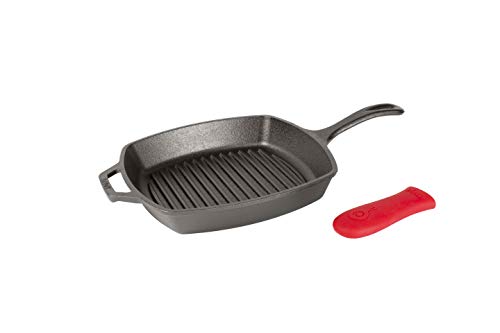

The Lodge Square Cast Iron Grill Pan has earned its reputation as the default recommendation in this category for good reason, and our testing confirmed that its dominance is well deserved. At 10.5 inches, this pan provides ample cooking surface for two large steaks or a generous batch of vegetables without feeling unwieldy on a standard burner. The pre-seasoned surface arrives ready to cook straight out of the box, and Lodge's factory seasoning has improved noticeably over the years — it's smoother and more consistent than what we saw from the brand a decade ago. The ridges are tall enough to create pronounced grill marks while keeping food elevated above rendered fat, which is exactly what separates a grill pan from a regular skillet.
Heat distribution across the cooking surface is remarkably uniform for a pan at this price point, with only minimal temperature variation between the center and corners during our infrared thermometer tests. The single assist handle opposite the main handle makes lifting and pouring manageable, though the pan does weigh in at a substantial five pounds. Lodge markets this pan as PFAS-free, which matters increasingly to health-conscious buyers in 2026 who want to avoid synthetic coatings entirely. The pan works beautifully on gas, electric, induction, and ceramic cooktops, and transitions seamlessly from stovetop to oven to campfire grill grate without any concerns about thermal shock or coating degradation.
Where the Lodge truly shines is in its long-term value proposition — this pan will outlast most buyers if maintained with basic cast iron care, and the seasoning only improves with regular use. Our team has seen Lodge grill pans that are twenty years old and still performing flawlessly, which makes the modest purchase price almost absurdly economical on a per-year basis. The drain spouts on two corners allow controlled pouring of accumulated drippings, which is a small but genuinely useful design touch that several competitors omit.
Pros:
Cons:
Le Creuset's Signature Square Skillet Grill represents the pinnacle of enameled cast iron grill pan design, and our team considers it the clear winner for anyone willing to invest in a premium piece of cookware. The 10.25-inch cooking surface in the iconic Cerise red finish is as beautiful as it is functional, and the enameled interior eliminates the seasoning maintenance that bare cast iron demands. This is a significant advantage for buyers who want cast iron performance without the ongoing care routine, and the enamel coating resists staining, chipping, and odor absorption impressively well over extended use periods.
The heat distribution is genuinely superior to nearly every competitor we tested, which shouldn't surprise anyone familiar with Le Creuset's engineering standards. The pan heats slowly and evenly, then holds that temperature with remarkable stability — perfect for achieving consistent grill marks across an entire steak rather than just the center portion. The ridges are well-proportioned, tall enough to create clear sear lines without being so aggressive that food sticks in the valleys. One practical benefit of the enameled surface is that acidic foods like tomatoes and citrus marinades pose no risk of stripping seasoning or imparting metallic flavors, which gives this pan a versatility edge over bare cast iron alternatives.
The primary consideration with Le Creuset is always the price, which sits substantially above the competition. Our position is that the investment is justified for serious home cooks who will use the pan multiple times per week for years, but casual cooks who grill indoors only occasionally may find better value elsewhere in this list. The pan's weight is considerable, and the single handle design means that lifting it when fully loaded requires some confidence and grip strength. Le Creuset's lifetime warranty does add meaningful peace of mind, and the resale value of these pans remains strong even after years of use.
Pros:
Cons:
Victoria brings a compelling combination of ethical manufacturing and genuine cooking performance to the cast iron grill pan market, and our team was impressed by how well this Colombian-made pan competed against more established American and French brands. The 10-inch pan arrives pre-seasoned with non-GMO, Kosher-certified flaxseed oil, and both the PTFE-free and PFOA-free construction make it an excellent choice for environmentally and health-conscious buyers. The textured engineered surface is a thoughtful design element that helps maintain seasoning better than the smooth-milled interiors found on some boutique cast iron brands, giving the oil something to grip and build upon over time.
The double loop handles are noticeably larger than what most competitors offer, and this seemingly minor design choice makes a meaningful difference when moving a heavy, hot pan while wearing bulky oven mitts. Our team found the grip stability genuinely superior to single-handle designs, especially when transferring the pan from stovetop to oven. Victoria's invisible curvature engineering prevents the warping that plagues thinner cast iron pans, and even after repeated high-heat sessions, the pan sat perfectly flat on our glass-top test stove without any rocking or wobbling. Heat retention is excellent, though the initial heat-up time is slightly longer than the Lodge models we tested.
The sloped sides deserve mention because they make this pan more versatile than the straight-walled competition — flipping food with a spatula is easier, and the pan doubles as a serviceable skillet for tasks beyond grilling. Victoria's commitment to sustainable manufacturing in Colombia, where the company has operated for over a century, adds an ethical dimension that resonates with many buyers in 2026. The price sits comfortably in the mid-range, offering substantially better build quality than budget options without approaching Le Creuset territory.
Pros:
Cons:
Cuisinart's Chef's Classic line delivers enameled cast iron performance at a fraction of Le Creuset's asking price, and our team found the 9.25-inch Cardinal Red grill pan to be a genuinely capable performer that punches above its weight class. The porcelain enameled interior shares the same fundamental advantage as Le Creuset — no seasoning required, no flavor absorption, and easy cleanup — while costing significantly less. The enamel quality is good though not quite as refined as premium competitors, with a slightly rougher texture that becomes less noticeable after several uses as cooking oils smooth out the surface.
The wide cast iron handles provide a secure and comfortable grip that our team appreciated during extended cooking sessions, and the overall ergonomics feel well-considered for a pan in this price bracket. The porcelain enamel interior won't absorb odors or impact flavors, which means grilling fish one evening and searing steak the next produces no carryover taste whatsoever. Heat distribution is respectable, with only slight edge-to-center variation that won't meaningfully affect cooking results for most home applications. The pan is oven-safe with a durable knob that handles high temperatures without degradation, making it suitable for recipes that start on the stovetop and finish under the broiler.
The 9.25-inch size is the main limitation here — it's noticeably smaller than the 10-to-10.5-inch standard in this category, and the reduced cooking surface means that large cuts of meat may not fit comfortably without hanging over the ridged area. For buyers cooking for one or two people, this isn't a problem, but families or anyone regularly grilling larger portions should consider stepping up to a bigger pan. The Cardinal Red exterior is attractive and holds up well against discoloration, though the color options are more limited than what Le Creuset offers.
Pros:
Cons:
This second Lodge entry in our roundup represents a slightly different configuration of the brand's proven cast iron grill pan formula, featuring the same 10.5-inch square cooking surface with two assist handles instead of one primary handle and one assist. The dual-handle design is a meaningful ergonomic improvement for anyone who regularly moves a loaded grill pan between the stovetop and oven, and our team found the balanced weight distribution noticeably more comfortable during handling. The pre-seasoned surface performs identically to our top-ranked Lodge, arriving ready to cook and improving steadily with each use over time.
Superior heat retention is the hallmark of Lodge's cast iron, and this pan delivers exactly that — once it reaches the target temperature, it holds steady without the temperature swings that plague thinner cookware. The even cooking performance across the entire surface area means consistent grill marks from center to edge, which is particularly important when grilling multiple pieces of food simultaneously. The pan works across all heat sources and transitions to the oven without hesitation, making it suitable for reverse-searing thick steaks or finishing vegetables under the broiler after getting initial char marks on the stovetop.
The main reason this pan ranks below our top Lodge pick is that the two assist handles, while excellent for lifting, make it slightly less convenient for one-handed pouring of drippings compared to a design with a longer primary handle. This is a minor ergonomic tradeoff that won't matter to everyone, but for buyers who frequently pour off rendered fat during cooking, the original Lodge design offers a small but real advantage. Both Lodge pans share the same exceptional value proposition — built to last decades at a price that makes the cost-per-use calculation almost laughable after a few years of regular service.
Pros:
Cons:
Bruntmor offers an aggressively priced entry into the cast iron grill pan market, and our team was pleasantly surprised by how well this budget-friendly 10-inch pan performed against more established names. The pre-seasoned surface heats evenly across the cooking area, and the large loop handles provide a secure grip that feels more premium than the price suggests. The easy grease drain spout is a practical addition that makes pouring off excess fat clean and controlled, reducing the mess that can accumulate during high-fat cooking sessions with items like bacon or heavily marbled steaks.
Cooking performance is genuinely solid for a pan at this price point, with sufficient heat retention to produce clear grill marks on steaks, crisp char lines on vegetables, and even respectable results on grilled sandwiches and panini. The versatility of the Bruntmor extends beyond grilling — our team successfully used it as a general-purpose skillet for everything from searing fish to making stovetop pizza with perfectly crisped bottoms. The pan works on all cooktop types and handles oven temperatures well, though the seasoning is noticeably less polished than what Lodge or Victoria provide out of the box and benefits from a few rounds of stovetop seasoning before first use.
The tradeoffs at this price point are predictable but manageable — the casting quality shows slightly more surface roughness than premium competitors, and the seasoning needs more initial attention to build up to a truly nonstick state. The pan is also slightly lighter than the Lodge models, which means marginally less heat retention during extended cooking sessions, though the difference is modest enough that most home cooks won't notice it in practice. For anyone entering the cast iron world for the first time or shopping on a tight budget, the Bruntmor delivers genuine cast iron cooking performance without demanding a significant financial commitment.
Pros:
Cons:
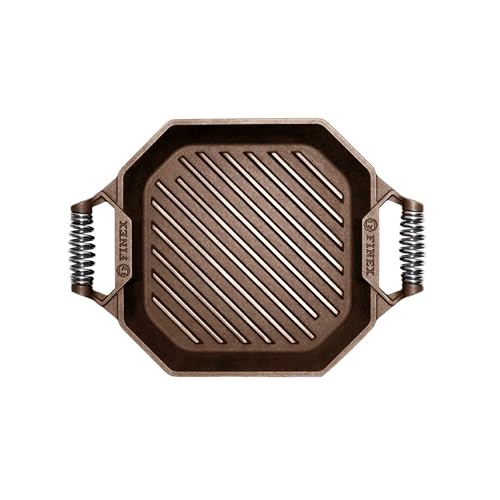
FINEX occupies the ultra-premium tier of the cast iron market, and the 12-inch grill pan exemplifies everything the Portland-based company does differently from mass-market competitors. Handcrafted in the USA and pre-seasoned with organic flaxseed oil, this pan is designed to be a modern heirloom — a piece of cookware meant to be passed down through generations while performing at the highest level throughout its lifetime. The octagonal shape is immediately distinctive and serves a functional purpose, providing eight pour points for draining liquids from any angle without awkward tilting or spilling.
The wide grill ribs are engineered specifically for radiant heat transfer from below, producing genuinely superior grill lines on steaks, burgers, chops, seafood, and vegetables compared to the narrower ridges found on most competitors. Our team noticed that food cooked on the FINEX developed more pronounced Maillard browning between the grill marks thanks to this radiant heat design, which mimics the effect of real grill grates more closely than any other pan in this roundup. The 12-inch size provides generous cooking real estate that comfortably handles large cuts of meat or multiple portions simultaneously, making it the most practical choice for buyers who regularly cook for families or entertain guests.
The twin speed-cool handles are wound from 300-series stainless steel and hand-polished to a high luster, drawing inspiration from vintage wood stove door handles. They stay cooler longer and dissipate heat faster than traditional cast iron handles, which is a genuine functional improvement that our team appreciated during extended stovetop sessions. The handles also look absolutely stunning, elevating the pan from a utilitarian cooking tool to a statement piece that most owners will happily leave on display. The FINEX works on all cooktops including induction, handles oven temperatures with ease, and transitions to open-flame outdoor cooking without any concerns. As noted by the Wikipedia article on cast iron cookware, the material's thermal properties make it ideal for high-heat searing applications. The price is substantial and will exceed what most casual cooks are willing to spend, but for dedicated home chefs who view cookware as a lifetime investment, the FINEX delivers a cooking experience and build quality that justifies every dollar.
Pros:
Cons:
The single most important decision when shopping for a cast iron grill pan is whether to choose bare or enameled cast iron, as this choice affects maintenance requirements, cooking versatility, and long-term performance in fundamentally different ways. Bare cast iron pans like the Lodge and Victoria models require periodic seasoning — a thin layer of oil baked onto the surface that creates a natural nonstick coating — which improves with every use but demands some attention to prevent rust. Enameled options like the Le Creuset and Cuisinart eliminate seasoning entirely, clean up more easily, and handle acidic foods without any risk of stripping the cooking surface, but they cost more and lack the character-building patina that bare cast iron develops over years of use. Our recommendation for most buyers in 2026 is bare cast iron, because the seasoning process is simpler than many people assume and the long-term performance ceiling is higher, but enameled pans are the better choice for anyone who prioritizes convenience and low maintenance above all else.
Cast iron grill pans in this category range from 9.25 inches to 12 inches, and the size difference has a surprisingly large impact on practical cooking utility. A 10-to-10.5-inch pan hits the sweet spot for most households, providing enough surface area to grill two steaks or a generous batch of vegetables while fitting comfortably on a standard burner without excessive overhang. The Cuisinart's 9.25-inch pan works well for individuals or couples but feels cramped when cooking for a family, while the FINEX's 12-inch surface is luxurious for entertaining but demands a larger burner and more storage space. Home cooks should also consider that cast iron grill pans are heavy, and every additional inch of diameter adds meaningful weight that affects handling comfort during cooking and cleanup.
The ridges on a grill pan serve two critical functions — creating sear marks on food and elevating it above rendered fat — and the height and spacing of those ridges varies significantly between manufacturers. Taller ridges produce more pronounced grill marks and better fat separation but can make cleaning more difficult, as food debris tends to accumulate in deeper valleys. Wider ridge spacing, as seen on the FINEX, allows more radiant heat to reach the food surface between the marks, producing more authentic grill-like results. Narrower ridges create more frequent but shallower marks and are generally easier to maintain. Our team found that medium-height ridges with moderate spacing, like those on the Lodge and Victoria models, offer the best balance of grilling performance and practical maintenance for everyday home use.
Handle design might seem like a minor consideration, but given that a loaded cast iron grill pan can weigh eight pounds or more, the ergonomics of lifting, tilting, and transferring the pan matter enormously in daily use. Single primary handles like those on the Le Creuset and Cuisinart provide leverage for one-handed pouring but create an unbalanced weight distribution when the pan is full. Dual assist handles like those on the Lodge Black model distribute weight evenly for two-handed lifting but sacrifice the pouring convenience. The FINEX's stainless steel speed-cool handles represent the most innovative approach, staying cooler to the touch and cooling faster after removal from heat, which reduces the risk of burns during handling. Most buyers should prioritize a handle design that feels secure and comfortable while wearing oven mitts, as bare-handed handling of cast iron is rarely practical during active cooking. Those who also enjoy preparing soups and stews might appreciate our guide to the best French onion soup bowls, another kitchen essential where handle design plays a critical role.
Wash the pan with warm soapy water to remove any factory residue, dry it completely, then apply a thin layer of high-smoke-point oil like flaxseed, grapeseed, or vegetable oil to the entire surface including the ridges. Place the pan upside down in a 450°F oven for one hour with a sheet of foil on the rack below to catch drips, then let it cool completely inside the oven. Most pre-seasoned pans from brands like Lodge and Victoria arrive ready to cook, but performing one additional seasoning round before first use creates a noticeably smoother and more nonstick surface that accelerates the long-term seasoning buildup.
A cast iron grill pan replicates many aspects of outdoor grilling — sear marks, fat separation, and high-heat cooking — but it cannot fully replace an outdoor grill due to the absence of smoke flavor, open-flame char, and the convective heat that surrounds food on a grill grate. The grill pan excels at producing visually similar results and solid Maillard browning, and it works year-round regardless of weather, which makes it an excellent complement to an outdoor grill rather than a true replacement. For buyers who live in apartments or climates where outdoor grilling is impractical for much of the year, a cast iron grill pan is the closest indoor alternative available in 2026.
Our team recommends preheating a cast iron grill pan over medium to medium-high heat for five to seven minutes before adding food, targeting a surface temperature between 400°F and 500°F for optimal searing. Placing food on an insufficiently preheated grill pan produces weak grill marks, excess moisture, and steamed rather than seared results. Dropping a small amount of water onto the heated surface provides a reliable readiness test — if the water immediately sizzles and evaporates, the pan is ready for cooking. Avoid the common mistake of cranking the heat to maximum, as cast iron's excellent heat retention means it can easily overshoot the ideal temperature range and burn food on contact.
The most effective method is to clean the pan while it's still warm using hot water and a stiff brush or chain-mail scrubber to dislodge food particles from between the ridges. A small amount of mild dish soap is perfectly safe on seasoned cast iron despite the persistent myth that soap destroys seasoning — modern dish soaps are far gentler than the lye-based soaps that originated that advice decades ago. After washing, dry the pan thoroughly with a towel, then place it on a low burner for two minutes to evaporate any residual moisture before applying a thin wipe of cooking oil to maintain the seasoning layer. Never soak a cast iron pan or put it in a dishwasher, as prolonged water exposure will cause rust.
Neither is objectively better — they serve different priorities and cooking styles. Enameled cast iron eliminates the seasoning maintenance requirement, resists rust, handles acidic foods safely, and cleans up more easily, making it ideal for low-maintenance cooks and those who frequently use citrus or tomato-based marinades. Regular bare cast iron develops a superior natural nonstick surface over time, costs significantly less, tolerates rough handling without chipping concerns, and builds a patina that many cooking enthusiasts genuinely enjoy cultivating. Our recommendation depends on the buyer's priorities: choose enameled for convenience and versatility with acids, or choose bare cast iron for long-term performance, value, and the satisfaction of a well-maintained seasoning.
A well-maintained cast iron grill pan will last essentially forever — multiple generations of use is entirely realistic with basic care, and many families cook on cast iron pieces that are fifty or a hundred years old. The only real threats to a cast iron pan's lifespan are sustained neglect leading to deep pitting rust, thermal shock from extreme temperature changes like plunging a hot pan into cold water, and physical damage from dropping. Enameled cast iron has a slightly shorter practical lifespan because the enamel coating can chip or crack over decades of heavy use, though the underlying iron remains functional even with cosmetic enamel damage. The durability of cast iron makes it one of the most sustainable cookware choices available, as a single pan can eliminate the need to replace coated nonstick pans every three to five years.
 |
 |
 |
 |

About Christopher Jones
Christopher Jones holds an MBA from the University of San Francisco and brings a business-minded approach to kitchen gear evaluation — assessing products not just for performance but for long-term value, build quality, and real-world usability in everyday home cooking. He has spent years testing appliances, cookware, and kitchen gadgets with the same analytical rigor he developed in business school. At BuyKitchenStuff, he covers kitchen appliance reviews, buying guides, and practical cooking tips.
