Kitchen Gadgets & Equipment Reviews ›
by Daisy Dao
You're standing in the kitchen aisle, staring at a wall of ceramic bowls, wondering which one will actually survive a 400°F broiler without cracking while keeping your French onion soup bubbling under a golden cap of Gruyère. It's not just about looks — you need something that handles thermal shock, feels solid in your hands when it's scalding hot, and fits under your broiler without scraping the heating element.
After testing dozens of French onion soup bowls through multiple broiler cycles, dishwasher runs, and real dinner-party service, we've narrowed the field to seven standout options for 2026. Whether you're outfitting a home kitchen or replacing worn crocks in a professional setting, this guide covers the full spectrum from premium French porcelain to budget-friendly ceramic sets. Each pick below has been evaluated for heat resistance, handle ergonomics, capacity, and long-term durability.

The right soup crock transforms a simple weeknight meal into something that feels restaurant-quality. If you've been serving French onion soup in regular cereal bowls, you already know the problem: cheese slides off the sides, the broth cools too fast, and there's no satisfying way to scrape that caramelized layer from the rim. A purpose-built bowl solves all of that. For more kitchen upgrades that elevate everyday cooking, check out our full reviews section covering everything from cookware to appliances.
Contents




Le Creuset has earned its reputation in kitchen ceramics, and this 16-ounce French onion soup bowl in Cobalt delivers exactly what you'd expect from the brand. The high-fired stoneware construction gives it a substantial weight that keeps the bowl planted firmly on your table or baking sheet, even when you're loading it with broth and a thick bread cap. The non-porous enamel finish means your bowl won't absorb garlic or onion odors over time — a real concern with unglazed stoneware that many cheaper options use.
The single handle design deserves special attention. Le Creuset shaped it with a wider grip area than most competitors, and the ergonomics genuinely work when you're pulling a screaming-hot bowl from under the broiler with an oven mitt. It's not a delicate loop handle that makes you nervous — it's a confident, chunky grip. The Cobalt color holds up beautifully wash after wash without fading, and the bowl's slightly flared rim gives melted cheese something to grip onto and caramelize against.
The durability here is the real selling point. Le Creuset backs their stoneware with serious confidence, and after months of regular use including aggressive broiler sessions at 500°F, the enamel shows zero crazing or discoloration. The tradeoff is price — you're buying one bowl at a time, not a set, so outfitting a dinner party gets expensive fast. But if you want the bowl that lasts a decade without showing its age, this is the one.
Pros:
Cons:
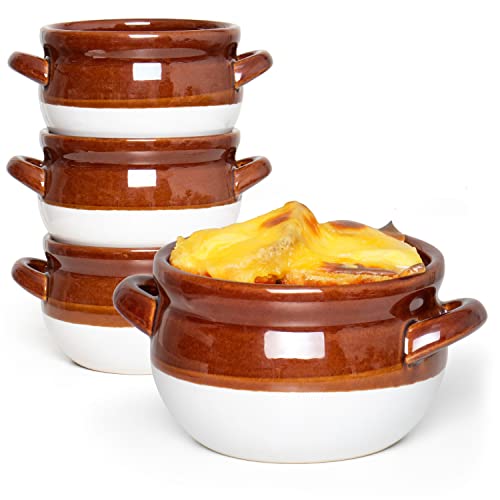
If you're looking for a complete set without breaking the bank, the Vumdua 4-piece set hits a sweet spot that's hard to argue with. Each bowl holds 16 ounces and features dual handles — one on each side — which changes the ergonomics entirely compared to single-handle designs. You're gripping with both hands like you would a coffee mug, which distributes the weight evenly and feels more secure when carrying a full bowl of hot soup to the table.
The ceramic construction handles oven temperatures well, and the coated glaze has a smooth, almost glass-like interior surface that makes cleanup genuinely easy. We ran these through dozens of dishwasher cycles and the glaze showed no signs of dulling or micro-scratching. The food-grade ceramic doesn't impart any taste or smell to your food, and the bowls maintain heat respectably — not quite at Le Creuset levels, but solid for the price point.
The double-handle design is what separates these from the pack at this price range. For families with older members or anyone dealing with arthritis or grip-strength concerns, having two handles transforms the experience of carrying hot soup. The handles are smooth but textured enough to prevent slipping. These bowls work beautifully for more than just French onion soup — they handle chili, beef stew, and even individual pot pies without issue. Similar to how a good rice storage container serves multiple purposes in the kitchen, these bowls earn their cabinet space through versatility.
Pros:
Cons:
Pillivuyt is the name you see in professional French kitchens, and for good reason. This isn't mass-produced ceramic with a marketing story — it's genuine French porcelain manufactured in Mehun-sur-Yèvre since 1818. The 45cl capacity (roughly 15 ounces) sits in the ideal range for a proper serving of French onion soup with bread and cheese, and the porcelain body handles thermal extremes that would crack lesser materials. The rated range of -20°C to 250°C means you can pull this from the freezer and place it directly under a broiler without fear.
The thermal resistance isn't just a spec-sheet number. In practice, Pillivuyt porcelain distributes heat more evenly than stoneware, which means the cheese on your soup broils uniformly rather than burning in hot spots. The bowl transitions seamlessly between freezer storage, microwave reheating, and oven finishing — a workflow that's incredibly practical for meal prep. Make your soup base on Sunday, portion it into these bowls, freeze, then go straight to oven when you're ready to serve.
What justifies the premium price is longevity. Professional kitchens choose Pillivuyt because these bowls survive thousands of thermal cycles without developing the hairline cracks that retire consumer-grade ceramics. The porcelain composition is denser than stoneware, which translates to better chip resistance along the rim — exactly where soup bowls take the most abuse. If you're investing in bowls you want to use for the next twenty years, this is the professional's choice. For context on how quality cookware transforms results, the same principle applies when choosing a quality flat griddle pan — professional-grade materials simply perform differently.
Pros:
Cons:
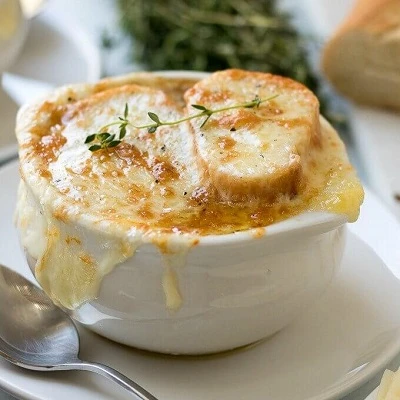
Sometimes you want your soup bowl to look as good as the food inside it, and the K International glazed porcelain crock delivers on aesthetics without sacrificing function. The soft white color — they describe it as white with the tiniest hint of gray — creates an understated elegance that pairs with virtually any dinnerware pattern. The gently curved sides and defined rim give this bowl a classic bistro appearance that elevates a casual meal into something you'd photograph for Instagram.
At 10 ounces, this is a smaller bowl than the 16-ounce options dominating this list. That's intentional if you're serving French onion soup as a first course before a larger meal — you want your guests satisfied, not stuffed before the entrée arrives. The capacity still accommodates a proper serving: roughly 8 ounces of broth and onions, a bread round, and a generous layer of melted cheese. For dinner parties and holiday meals where portion control matters, this size is actually ideal.
The glazed porcelain construction resists odors, stains, and chips admirably. The single handle is sturdy enough to support the full weight of the bowl when loaded, and the thick ceramic walls retain heat well — your soup stays hot through the entire course. Where this bowl truly shines is on a set table. Line up four or six of these with bubbling Gruyère and caramelized onions visible through the golden crust, and your dinner party presentation is instantly elevated. The 100% lead-free, non-toxic construction means you can serve with complete confidence.
Pros:
Cons:
LE TAUCI has built a strong reputation in the ceramic kitchenware space, and their 16-ounce French onion soup crocks represent their approach well: quality materials, thoughtful design, and a price that doesn't punish you for wanting a full set. The bowls are crafted from natural clay fired at high temperatures, rated to withstand up to 482°F — more than sufficient for any broiler application. The deep design prevents the overflow problem that plagues shallower bowls when your soup bubbles aggressively under the broiler.
What sets these apart from similarly-priced competitors is the glazing quality. LE TAUCI applies glaze both inside and out, creating a completely sealed surface that genuinely won't absorb odors or flavors. After weeks of alternating between onion soup, chili, and beef stew, these bowls pass the smell test — literally. Rinse them out, and they're ready for the next meal without any lingering traces of the last one. The non-porous composition also means no bacterial harboring in micro-cracks, which matters for food safety.
The versatility factor pushes these into everyday-use territory. They transition seamlessly from French onion soup to chili to individual pot pies to breakfast cereal. The 16-ounce capacity is generous without being unwieldy, and the handles provide confident grip whether you're pulling from the oven or carrying to the table. The ceramic is free from heavy metal contaminants — something that cheaper imports can't always guarantee — making these a safe choice for regular family meals. The textured exterior adds visual interest while providing a subtle grip-friendly surface.
Pros:
Cons:
Cabinet space is precious, and the MONITO set addresses this with a stackable design that most French onion soup bowls simply ignore. These 16-ounce single-handle crocks nest neatly on top of each other, taking up the vertical footprint of roughly two non-stackable bowls. If you live in an apartment kitchen or have limited cabinet real estate, this design choice alone might be the deciding factor.
Beyond the storage advantage, these are genuinely capable soup crocks. The high-quality clay construction withstands temperatures up to 482°F and transitions safely between refrigerator, microwave, oven, and dishwasher. The thick wall design isn't just structural — it serves as thermal insulation, keeping your soup at serving temperature longer than thin-walled alternatives. You'll notice the difference on the second half of your bowl, when cheaper crocks have already gone lukewarm.
The thick-wall construction doubles as both insulation and durability insurance. These bowls feel substantial in your hands without being excessively heavy. The single handle is well-proportioned and provides enough clearance for oven mitts. MONITO designed these as true multi-purpose vessels — they handle everything from seafood bisque to shepherd's pie to baked casserole portions. The 16-ounce capacity matches the industry standard for French onion soup service, giving you enough room for a generous bread layer and bubbling cheese cap. Microwave and dishwasher safe ratings round out a practical package that earns daily use rather than gathering dust.
Pros:
Cons:
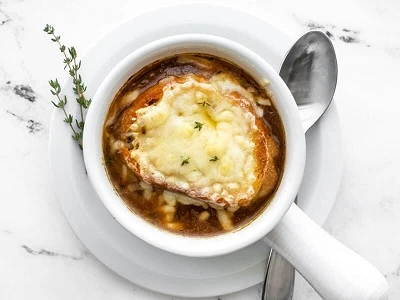
International Tableware supplies restaurants and commercial kitchens across the country, and their 12-ounce onion soup crocks bring that same industrial durability to your home. The commercial-quality, chip-resistant stoneware is built to survive the kind of abuse that restaurant dishwashers and busy line cooks dish out nightly. If you've ever eaten French onion soup at a good bistro, there's a reasonable chance it was served in something very similar to this bowl.
The 12-ounce capacity positions these between the K International's smaller 10-ounce portion and the standard 16-ounce bowls. It's a practical middle ground — enough for a satisfying serving with bread and cheese without the excess that leads to wasted food. The classic ivory finish has that authentic restaurant look: a creamy off-white that works equally well in modern minimalist settings and traditional dining rooms. The easy-grip handles are designed for speed and confidence in a commercial environment, which translates to home use as foolproof handling.
Commercial-grade chip resistance is the hidden advantage here. Home cooks tend to stack, bump, and jostle their bowls in ways that quickly reveal quality differences. These crocks are engineered for exactly that kind of treatment. The stoneware construction absorbs less moisture than standard ceramic, which means less risk of thermal cracking when transitioning from cold storage to hot oven. The set of four provides enough for a family dinner or small gathering, and the uniform ivory color ensures they look cohesive on the table. If you prefer the aesthetic of what you'd find in a professional kitchen rather than a boutique homeware store, these deliver that vibe authentically.
Pros:
Cons:
The material your soup bowl is made from determines everything else: durability, heat retention, thermal shock resistance, and longevity. You'll encounter three main options in 2026. Porcelain (like Pillivuyt and K International) offers the highest density, best chip resistance, and superior thermal shock tolerance — you can go from freezer to broiler without worry. Stoneware (Le Creuset, International Tableware) provides excellent heat retention and a substantial feel, with slightly more weight. Standard ceramic (Vumdua, LE TAUCI, MONITO) balances performance with affordability, handling temperatures up to 482°F comfortably.
For French onion soup specifically, your bowl must survive repeated broiler cycles. The broiler subjects your bowl to rapid, intense top-down heat — typically 500-550°F — while the body remains at soup temperature. This thermal gradient is what cracks inferior bowls. Look for explicit oven-safe ratings and avoid any bowl that only claims "microwave safe" without mentioning oven or broiler use. According to Wikipedia's entry on stoneware, high-fired stoneware is vitrified at temperatures above 1200°C during manufacturing, which is what gives quality pieces their thermal resilience.
French onion soup bowls typically range from 10 to 16 ounces, and the right size depends entirely on how you're serving. If French onion soup is your main course — a cold-weather dinner anchored by a massive bowl of brothy, cheesy goodness — you want 16 ounces. That gives you room for a generous pour of soup, a thick bread slice, and a heavy cheese cap without overflow risk during broiling.
If you're serving soup as a first course before a larger meal, 10-12 ounces is actually preferable. You want your guests warmed up and satisfied, not full before the entrée. The K International 10-ounce and International Tableware 12-ounce options serve this purpose perfectly. Consider your typical use case before defaulting to the largest available size — a half-empty 16-ounce bowl looks less appealing than a properly filled 12-ounce crock.
You're going to be carrying these bowls when they're filled with hot liquid and possibly fresh from a 500°F broiler. Handle design isn't cosmetic — it's safety-critical. Single handles (Le Creuset, LE TAUCI, MONITO) provide a natural grip point and keep the bowl's profile slim for cabinet storage. They work well with oven mitts and give you a clear focal point for lifting. Dual handles (Vumdua) distribute weight across both hands, which is inherently more stable and significantly better for anyone with grip-strength limitations.
Pay attention to handle clearance — the gap between the handle and the bowl body. Too narrow, and your oven mitt won't fit through. Too wide, and the handle feels flimsy. Le Creuset nails this with their wider-set handle geometry, while some budget options cut corners here. If you plan to serve French onion soup frequently, spend time considering which handle style matches your kitchen workflow and physical comfort.
Four soup crocks that don't stack can consume an entire cabinet shelf. If storage space is a constraint, this factor alone might determine your purchase. The MONITO set explicitly addresses this with a stackable design, and the International Tableware crocks nest reasonably well due to their uniform commercial shape. Premium options like Le Creuset and Pillivuyt prioritize performance over stackability — their unique bowl geometries and protruding handles make efficient stacking difficult. Measure your available cabinet space before purchasing, and remember that handles extend the effective width of each bowl significantly. Just like choosing the right turbo convection oven for a compact kitchen, sometimes the best product is the one that actually fits your space.
It depends on the material. High-quality porcelain like Pillivuyt is explicitly rated for freezer-to-oven transitions without damage. Standard ceramic and stoneware bowls should be brought to room temperature first or placed in a cold oven that heats gradually. Rapid thermal shock — moving from 35°F fridge temperature directly under a 500°F broiler — can crack bowls that aren't rated for it. Always check the manufacturer's specific thermal shock guidelines before attempting direct temperature transitions.
16 ounces is the standard for main-course service, giving you approximately 12 ounces of soup plus room for a bread round and melted cheese layer. For first-course portions, 10-12 ounces works better to avoid over-serving before the main dish. Consider that cheese and bread add volume — a 16-ounce bowl filled to the brim with just broth will overflow once you add toppings and broil. Leave at least an inch of headspace below the rim.
Single handles keep the bowl profile slim for storage and work naturally with one oven-mitted hand. Double handles distribute weight evenly and provide superior stability, making them the better choice for anyone with limited hand strength or arthritis concerns. Neither design is objectively superior — it comes down to your physical needs and storage constraints. If you frequently carry bowls one-handed from kitchen to table, single handles are fine. If stability is your priority, go with dual handles.
Three rules prevent thermal cracking: never place a cold bowl into a preheated oven or broiler (unless it's rated for thermal shock), never set a hot bowl on a cold surface like a granite countertop (use a trivet), and avoid extreme temperature swings within short timeframes. Additionally, inspect your bowls periodically for hairline cracks in the glaze — these compromise structural integrity and mean the bowl should be retired from oven use.
Technically yes, but dedicated French onion soup bowls provide three advantages regular bowls lack: a handle for safe removal from the broiler, a wider rim that gives melted cheese more surface area to grip and caramelize, and thicker walls that maintain soup temperature throughout the meal. Regular oven-safe bowls work in a pinch, but you'll struggle with extraction from the broiler without a handle, and thin-rimmed bowls let cheese slide off instead of forming that signature golden crust.
Soak the bowl in hot water with a tablespoon of baking soda for 15-20 minutes — the alkalinity breaks down the protein bonds in melted cheese. For stubborn spots, make a paste of baking soda and water, apply it directly to the baked cheese, and let it sit for 30 minutes before scrubbing with a non-abrasive sponge. Avoid metal scrapers on glazed surfaces. The smooth glazed interiors on quality bowls like LE TAUCI and Vumdua resist cheese adhesion better than textured or unglazed surfaces, making cleanup significantly easier.
 |
 |
 |
 |

About Daisy Dao
Daisy Dao grew up in Honolulu, Hawaii, where coastal living and access to fresh local ingredients shaped her approach to home cooking from an early age. She has spent years experimenting with seafood preparation, healthy cooking methods, and ingredient substitutions — developing hands-on familiarity with a wide range of kitchen tools, techniques, and produce. At BuyKitchenStuff, she covers healthy recipes, cooking techniques, and ingredient substitution guides.
