by Daisy Dao
Last winter, I was halfway through a braised short rib recipe when I realized I'd grabbed the wrong can off the shelf — beef broth instead of consomme. With guests arriving in two hours, I had no time for a grocery run. That scramble turned into my most productive kitchen education: a deep dive into beef consomme substitutes that I wish I'd done years earlier. Whether you're stuck mid-recipe or planning ahead, this guide covers everything — the real difference between broth and consomme, the three substitutes that actually perform, and exactly how to apply them. Find more practical cooking guides in our cooking section.
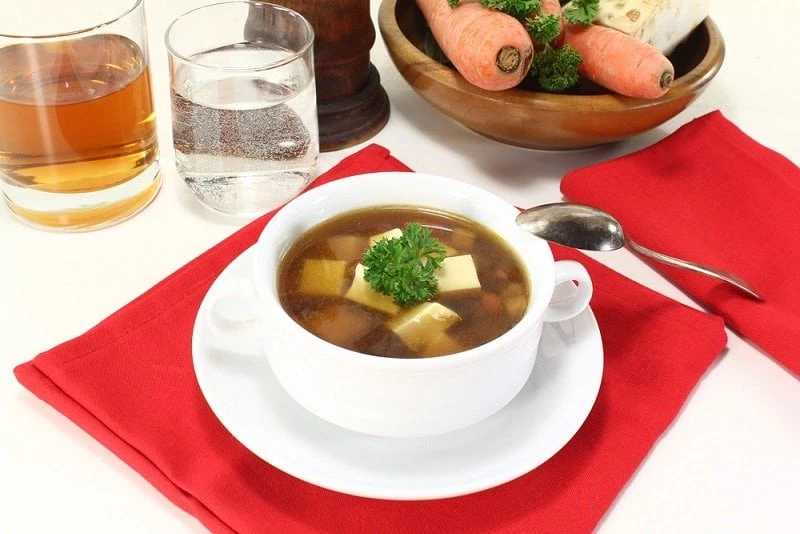
Beef consomme is not simply "fancy broth." It's a distinct product built through a precise French culinary technique — clarified, concentrated, and purposefully crafted to deliver intense flavor and visual clarity. Understanding this distinction separates cooks who get consistent results from those who wonder why a dish fell flat. The same principle applies whenever you swap out key ingredients: knowing whether a substitution actually matters in your specific dish is what counts. Just as you'd approach finding a Gruyere substitute with context in mind, the same thinking applies to consomme.
The practical reality: most recipes that call for consomme don't strictly require it. A well-chosen substitute, used with the right adjustments, delivers results close enough that most diners won't notice. But the wrong substitute — or the right one used carelessly — can throw off salt levels, muddy the flavor, or compromise the visual presentation. Here's how to make the right call every time.
Contents
Beef broth is made by simmering beef bones, meat, and aromatics — onion, carrot, celery, peppercorns, fresh herbs — in water for two to three hours. Strain out the solids and you're left with a lightly flavored, slightly cloudy liquid. Beef stock follows essentially the same process but uses more collagen-rich bones — knuckles, marrow bones — and a longer simmer, producing a thicker, richer result that gels when refrigerated.
Beef consomme is built on a foundation of strong beef stock, then put through classical French raft clarification. Ground beef, egg whites, and aromatics are combined and stirred into cold stock. As the mixture heats, the proteins coagulate and rise to the surface, forming a "raft" that traps fat and impurities. The liquid underneath becomes a crystal-clear, amber broth with concentrated beef flavor — typically twice as intense as regular broth.

The differences extend well beyond appearance. Here's how all three stack up across the properties that matter most in cooking:
| Property | Beef Broth | Beef Stock | Beef Consomme |
|---|---|---|---|
| Clarity | Cloudy | Semi-clear | Crystal clear |
| Flavor intensity | Mild to moderate | Rich, full-bodied | Very intense |
| Salt content | Low to moderate | Low | Moderate |
| Body / gelatin | Light | Medium to high | Medium |
| Best use | Soups, cooking liquid | Braises, sauces | Clear soups, elegant sauces |
| Substitute ratio | 1:1, or reduce by half | 1:1 | — |
Two specific scenarios genuinely benefit from real consomme rather than a substitute:
For everyday braised dishes, stews, gravies, and rice preparations, a well-chosen substitute performs just as well. This mirrors the logic behind understanding when ingredient distinctions actually change the outcome — a concept we explore in our chili powder vs cayenne pepper comparison, where context determines whether the swap matters or is nearly irrelevant.

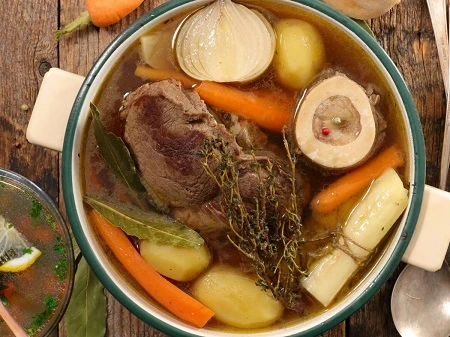
These three beef consomme substitutes cover every scenario — from quick weeknight fixes to more deliberate recipe substitutions. Each has specific strengths, and which one you reach for depends entirely on your dish.
This is your most reliable option and the one that gets closest to consomme's flavor profile. By reducing regular beef broth by half, you concentrate both the flavor compounds and natural gelatin, bringing you significantly closer to consomme's intensity without any special technique.
How to reduce beef broth properly:
Reduced broth won't achieve crystal clarity, but in braises, stews, and sauces that doesn't matter. For dishes where clarity is important, strain the finished reduction through a fine mesh strainer lined with a double layer of cheesecloth before using.
Commercial beef stock is richer and more gelatinous than standard broth, making it a strong stand-in — particularly in dishes that need body and mouthfeel. It won't match consomme's clarity or intensity, but it outperforms plain broth in nearly every other relevant quality.
Use beef stock as a consomme substitute in:
Use it at a 1:1 ratio. If the recipe specifically calls for consomme's intensity, reduce the stock by 25% first. Always start with low-sodium stock — commercial varieties vary widely in sodium content, and you need that control.

When you need a beef-free option or want to layer in earthy, complex flavor, mushroom broth made from dried porcini or shiitake mushrooms delivers powerful umami that mirrors consomme's savory intensity. This works remarkably well in many beef dishes — especially those with mushrooms already in the ingredient list.
To make a concentrated mushroom broth:
This substitute works best in:
The substitute you choose should match the demands of your specific dish. Not every application prioritizes the same qualities — flavor intensity, visual clarity, and body all matter differently depending on what you're making.
If your recipe depends on visual clarity — classic French onion soup, elegant consomme-based starters, refined appetizer soups — no broth naturally matches consomme's transparency without additional processing. You need to take extra steps regardless of which substitute you choose.
Steps for achieving maximum clarity with a substitute:
In braised short ribs, pot roast, or hearty beef stews, flavor intensity matters far more than clarity. You have full license to use reduced broth or beef stock at a 1:1 ratio without any additional filtering or processing. Our complete guide on how to cook and serve beef stroganoff shows practically how broth and broth substitutes perform in long-cooked beef dishes — the principles apply across all similar preparations.

Key adjustments for braises and stews:
Gravies and pan sauces need body, deep flavor, and the ability to reduce properly. Beef stock is your best option here, particularly when combined with pan drippings from roasted or seared meat.
Practical tips for substitute-based gravies:
Making consomme at home is a deliberate technique — precise rather than difficult. If you want access to the real thing on demand rather than always working with substitutes, here's the classical method:
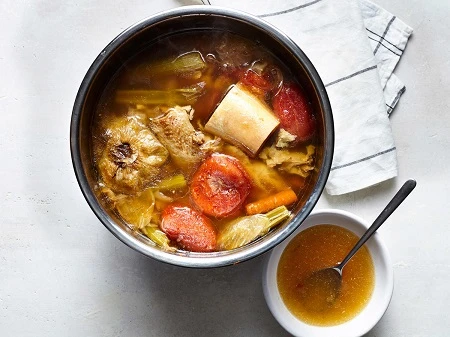
Having the right tools on hand makes the process cleaner and more reliable:
When making stock on the stovetop over extended periods, keep residue from building on the pot bottom. Our guide on removing burnt food from non-stick pans covers techniques that apply across all cookware — avoiding any burned residue on the pot bottom is especially critical during the long, low simmer needed for quality stock and consomme.
Homemade consomme is worth making in larger batches — it freezes well and makes future recipes far less labor-intensive.
Smart consomme storage is part of a broader mindset around reducing food waste at home — making large batches and freezing in usable portions means you always have high-quality liquid on hand and nothing goes to waste between uses.
Even experienced cooks run into issues when substituting consomme. Here's how to diagnose and correct the most common problems before they reach the table.
This is the most frequent problem with reduced commercial broth — sodium concentrates right along with flavor. Fix it with one of these approaches:
If the dish lacks depth despite using a substitute, the issue is typically insufficient umami. Quick corrections:
Hearty stews and braised beef dishes made with consomme-based sauces pair naturally with cornbread and other Southern-style sides. Our guide on what goes well with cornbread covers these pairings in detail, including the role broth-based gravies and stews play in making those combinations work.
If you're serving a dish where clear broth matters for presentation, cloudiness needs to be addressed before it reaches the bowl:
When using consomme or broth-based dishes for meal prep, proper reheating matters as much as the initial cooking. The same gentle-heat principles that protect broth clarity also protect proteins — as detailed in our guide on how to reheat chicken breast without drying it out or degrading the texture.
No. Beef broth is a basic simmered liquid, while beef consomme is a clarified, concentrated product made through French raft clarification. Consomme is crystal clear, significantly more intense in flavor, and built on a stronger stock base. They are not interchangeable without adjustment.
Yes — with adjustments. The key step is reducing the broth by half to concentrate flavor before using it cup-for-cup in place of consomme. Plain, unreduced broth used directly produces a noticeably weaker result, especially in sauces and reductions.
Reduced beef broth strained through cheesecloth is the best available option. It won't match consomme's perfect clarity, but it comes closer than any other substitute. Filter it after chilling and skimming fat, and avoid any boiling once you've achieved the clarity you need.
Reduce it by half over medium heat, then add a teaspoon of Worcestershire sauce and a teaspoon of tomato paste per two cups. Finish with a pinch of black pepper and a small amount of soy sauce if you want more depth. This combination closes the flavor gap significantly.
You can, but it produces a noticeably different flavor profile. Mushroom broth made from dried porcini mushrooms is a far better vegetarian option — it delivers umami intensity that plain vegetable broth lacks entirely. Use the concentrated porcini broth method outlined in the substitutes section above.
Up to 5 days in a sealed, airtight container. For longer storage, freeze it — either in ice cube trays for small-portion use or in flat quart-sized bags for bulk storage. Properly frozen consomme keeps its quality for 3–6 months.
 |
 |
 |
 |

About Daisy Dao
Daisy Dao grew up in Honolulu, Hawaii, where coastal living and access to fresh local ingredients shaped her approach to home cooking from an early age. She has spent years experimenting with seafood preparation, healthy cooking methods, and ingredient substitutions — developing hands-on familiarity with a wide range of kitchen tools, techniques, and produce. At BuyKitchenStuff, she covers healthy recipes, cooking techniques, and ingredient substitution guides.
Check for FREE Gifts. Or get our Free Cookbooks right now.
Disable the Ad Block to reveal all the recipes. Once done that, click on any button below
|
|
|
|
