Kitchen Gadgets & Equipment Reviews ›
by Christopher Jones
You stand in your kitchen, staring at a batch of fried chicken that came out soggy and unevenly cooked, and you wonder if there is a better way to get that crispy, juicy result you remember from your favorite restaurant. The secret behind that perfect crunch is pressure frying, a technique that seals in moisture while delivering a golden exterior every single time. Finding the right fryer for your home kitchen in 2026, however, means sorting through commercial-grade machines, compact countertop models, and everything in between.
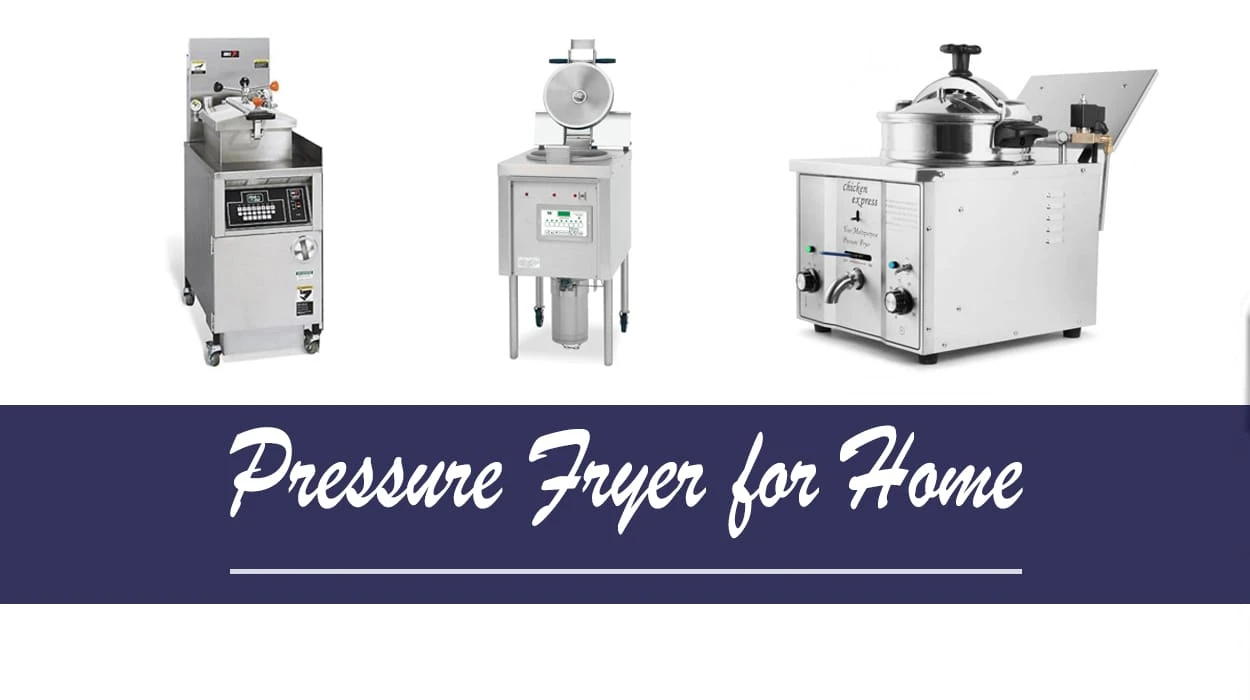
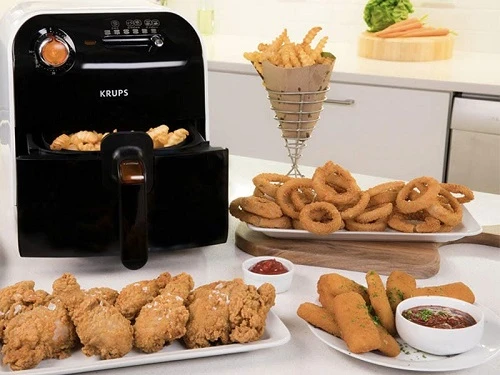
Pressure frying works by sealing the cooking chamber and raising the internal pressure, which allows oil temperatures to stay consistent while locking moisture inside the food. The result is food that cooks faster, absorbs less oil, and develops a crispier coating than what you get from a standard open fryer. While true commercial pressure fryers carry hefty price tags, several home-friendly options — including high-quality deep fryers that deliver similar results — make it possible to recreate that restaurant-quality taste without a commercial kitchen. If you enjoy cooking methods like air frying with a stainless steel basket, you will appreciate the step up in flavor and texture that deep frying under controlled conditions provides.
We spent weeks evaluating seven of the best fryers available for home use in 2026, testing them across chicken, french fries, seafood, and vegetables. Below you will find our honest assessments, a detailed buying guide, and answers to the most common questions home cooks ask about pressure frying and deep frying at home.
Contents






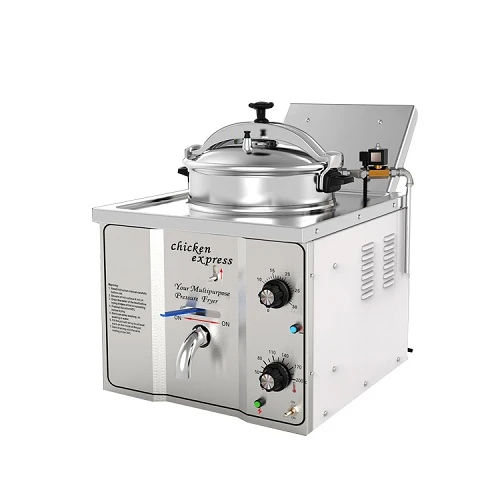
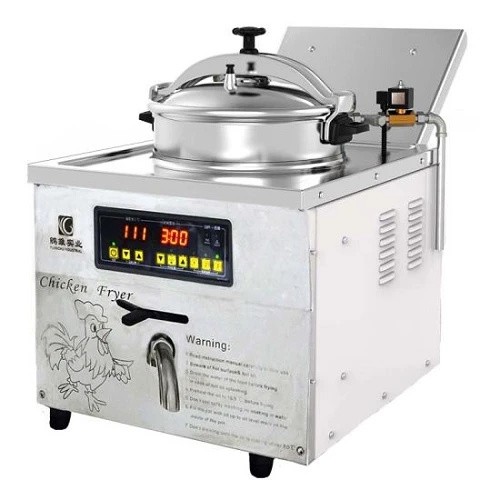
The PreAsion 16L is the only genuine pressure fryer on this list, and it delivers the closest experience to commercial fried chicken you will find for home use. With a generous 16-liter oil capacity and an operating temperature range from 0 to 200°C, this machine gives you the sealed, high-pressure environment that locks juices inside while creating an incredibly crispy exterior. The round basket is large enough to handle three to five whole chickens in a single batch, making it ideal if you cook for a crowd or want to meal prep for the entire week.
Build quality is solid across the board, with 304 stainless steel construction that resists corrosion and cleans up easily after heavy use. The safety features stand out as well — an elastic beam support device automatically releases excess pressure if the valve is overloaded, which prevents the dangerous blowouts that cheaper pressure cookers sometimes suffer from. The thermal overload protection and precise thermostat work together to maintain consistent oil temperatures throughout the cooking cycle, so you get even browning on every piece.
This is a commercial-grade unit adapted for home use, which means it takes up significant counter space and requires a dedicated 110V outlet that can handle the power draw. The learning curve is steeper than a standard deep fryer, but once you master the timing and temperature settings, the results are unmatched by anything else on this list.
Pros:
Cons:
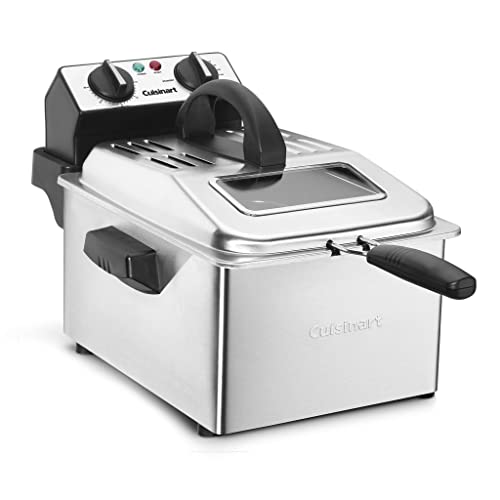
Cuisinart's CDF-200P1 strikes an excellent balance between capacity and countertop footprint, offering a 4-quart oil reservoir that handles up to 2.3 pounds of food per batch. The 1800-watt immersion-style heating element is the real star here, delivering rapid heat-up times and fast oil temperature recovery between batches. When you drop a basket of cold frozen fries into hot oil, the temperature dips momentarily, and cheaper fryers struggle to bounce back; the CDF-200P1 recovers in seconds, which means consistently crispy results.
Versatility is another strong point — this fryer handles everything from potatoes and onion rings to battered seafood, chicken pieces, and even donuts with equal confidence. The stainless steel housing looks sharp on any countertop and wipes down easily after cooking. The removable oil container and dishwasher-safe parts make cleanup far less painful than you might expect from a deep fryer, and the adjustable thermostat gives you precise control over your cooking temperature.
The one area where this fryer falls short is the lack of an integrated oil filtration system, which means you will need to strain and store your oil manually between uses. For most home cooks who fry once or twice a week, that is a minor inconvenience rather than a dealbreaker.
Pros:
Cons:
If the biggest thing keeping you from deep frying at home is the messy cleanup afterward, T-fal designed the EZ Clean specifically to solve that problem. The patented automatic oil filtration system filters used oil and stores it in a sealed box for future use, eliminating the awkward process of straining hot oil through cheesecloth into a container. This feature alone saves you money on oil costs over time and keeps your kitchen smelling fresh thanks to the built-in odor filter.
The temperature control dial adjusts from 300°F to 375°F, which covers the optimal range for most home frying tasks from delicate fish fillets to hearty chicken pieces. With a 1.8-liter oil capacity and room for up to 1.7 pounds of food, this fryer is sized perfectly for a family of four. The compact footprint fits comfortably on standard countertops without dominating the space, and the 1200-watt heating element, while not as powerful as some competitors, maintains steady temperatures for consistent frying results.
The trade-off for that compact size is a smaller batch capacity, so if you regularly cook for large groups, you will find yourself running multiple batches. For everyday family cooking, though, the convenience and cleanup savings make this a top pick.
Pros:
Cons:
The Presto ProFry delivers professional-style deep frying in a package that feels built to last through years of regular use. Its big 8-cup food capacity is one of the largest in this roundup, letting you fry family-sized batches of chicken tenders, fish sticks, or french fries without needing to run multiple rounds. The 1800-watt immersion heating element preheats the oil quickly and recovers temperature fast after you add cold food, which is crucial for achieving that crispy, non-greasy texture you want.
The stainless steel exterior gives the ProFry a clean, professional look that holds up well to the splashes and grease that come with regular frying. The oblong basket shape accommodates larger pieces of food — think whole chicken legs or long fish fillets — better than the round baskets found on many competitors. Presto has kept the controls simple and intuitive: set your temperature, wait for the indicator light, and start frying.
What you will not find here are premium convenience features like oil filtration or digital temperature displays. Presto focused on doing the core job well — heating oil fast, maintaining temperature, and fitting lots of food — and it succeeds at all three. If you want a no-nonsense workhorse fryer that handles big batches, this is the one to get.
Pros:
Cons:
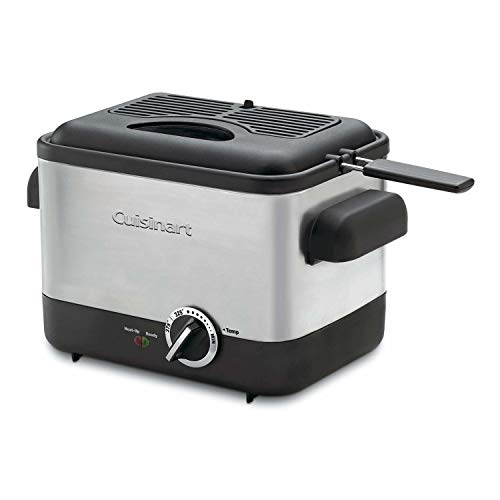
Not everyone needs a full-sized deep fryer, and Cuisinart's CDF-100 proves that great frying results can come from a truly compact package. This little fryer uses just 1.1 liters of oil and holds up to three-quarters of a pound of food in its basket, making it the perfect choice for singles, couples, or quick snack batches. The small footprint means it tucks into a cabinet easily when not in use, and the nonstick die-cast bowl with a pouring spout makes draining and cleaning oil remarkably simple.
Despite its small size, the CDF-100 heats up fast and maintains temperature well enough to produce crispy fries, mozzarella sticks, and small batches of chicken nuggets without any sogginess. The anti-odor charcoal filter in the lid helps control cooking smells, which is a thoughtful touch for apartment dwellers or anyone with an open-concept kitchen. Cuisinart also includes a detachable power cord for safe storage and a recipe book to get you started with ideas beyond basic fries.
The obvious limitation is capacity — you simply cannot cook for a family of four with this fryer in a single batch. But if your frying needs lean toward quick personal servings or appetizer portions for two, the CDF-100 delivers excellent quality at a budget-friendly price.
Pros:
Cons:
The Presto GranPappy has been a staple in home kitchens for decades, and the 2026 version keeps the same simple, reliable formula that made it a classic in the first place. Using just six cups of oil, this fryer produces six servings of french fries and handles chicken, shrimp, onion rings, and other favorites with zero fuss. The automatic temperature maintenance eliminates the guesswork entirely — plug it in, add your oil, wait for it to heat, and start cooking.
There is something refreshing about the GranPappy's simplicity in a market filled with digital displays and smart features that you probably do not need. It does one thing — fry food at the right temperature — and it does it consistently batch after batch. The aluminum body heats evenly and the snap-on lid doubles as a serving tray, which is a clever touch for casual meals. If you have ever enjoyed the surprising benefits of eating fried chicken, this is the fryer that lets you enjoy them at home without a big investment.
The lack of an adjustable thermostat means you cannot fine-tune temperatures for different foods, which experienced cooks may find limiting. The non-stick interior surface can also wear down over time with heavy use and requires careful cleaning with soft utensils to preserve the coating.
Pros:
Cons:
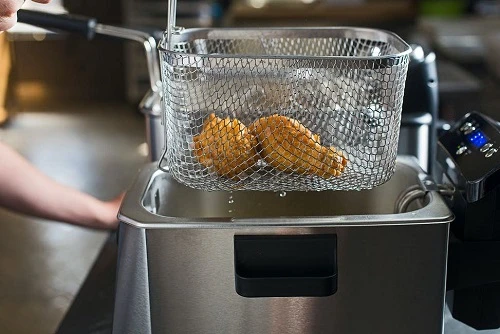
When you are hosting a game day party or a family gathering and need to fry multiple foods simultaneously, the Hamilton Beach 35034 is purpose-built for that exact scenario. The 4.5-liter oil capacity and three-basket system give you the flexibility to cook one large batch using the 12-cup basket or run two separate 6-cup baskets side by side for different foods at the same time. Imagine dropping fries in one basket and chicken tenders in the other — both coming out perfectly crispy at the same moment.
The 1800-watt heating element provides the muscle needed to keep oil temperatures stable even when you are frying large quantities, and the adjustable thermostat lets you dial in the perfect temperature for whatever you are cooking. The vented lid with a viewing window is a practical feature that prevents messy oil splatter across your countertop while letting you monitor your food without lifting the lid and losing heat. After frying, the chrome-plated baskets hook over the oil pot so excess oil drains back in, reducing waste and mess.
The stainless steel construction looks professional and cleans up well, though the size of this unit means it needs a dedicated spot on your counter or a roomy cabinet for storage. For anyone who fries regularly for groups of four or more, the dual-basket flexibility and large capacity make this the most versatile option in our 2026 roundup.
Pros:
Cons:
The first question to answer is how many people you typically cook for. A single person or couple can get by perfectly well with a compact 1-quart fryer like the Cuisinart CDF-100, while a family of four should look at models in the 4-quart range. If you regularly host gatherings or like to meal prep large batches of fried chicken, you need something in the 4.5-liter or higher range, like the Hamilton Beach 35034 or the PreAsion 16L. Buying too small means frustrating multiple batches; buying too large means wasting oil every time you fry a small portion.
Wattage directly affects how quickly your oil reaches frying temperature and how fast it recovers after you add cold food. Models with 1800-watt immersion elements — like the Cuisinart CDF-200P1 and Presto ProFry — bounce back almost immediately, which is critical for achieving crispy rather than soggy results. Lower-wattage fryers around 1200 watts still work well for smaller batches but may struggle to maintain consistent temperatures when you load them up with frozen food. According to the USDA's food safety guidelines, maintaining proper oil temperature during frying is essential not just for taste but for food safety as well.
Deep frying creates mess, and how a fryer handles that mess varies wildly between models. The T-fal EZ Clean leads the pack with its automatic oil filtration system that strains and stores oil for reuse, saving you both time and money over the life of the appliance. Other models require you to manually pour out, strain, and store used oil, which gets tedious if you fry frequently. Look for dishwasher-safe baskets and removable oil containers as minimum convenience features. If you are curious about related kitchen storage and organization, our guide to the best rice storage containers covers similar principles of keeping your kitchen efficient and tidy.
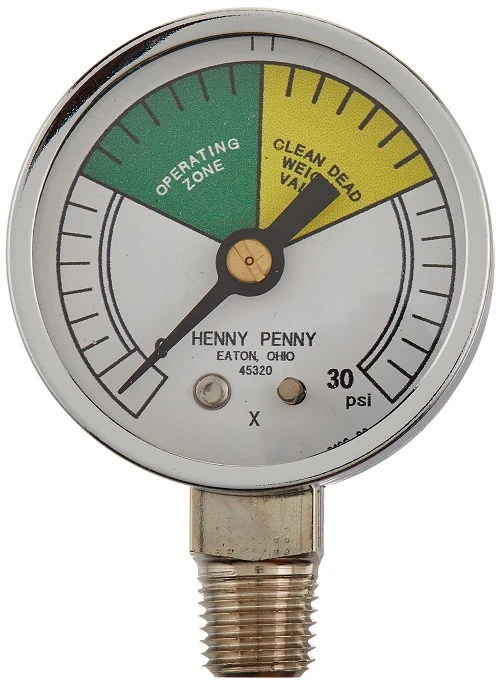
Any appliance that heats oil to 375°F deserves serious attention to safety features. At minimum, you want a fryer with a secure lid, cool-touch handles, and an indicator light that tells you when the oil has reached frying temperature. Pressure fryers like the PreAsion add another layer of concern because of the sealed, pressurized chamber, so look for automatic pressure release valves and thermal overload protection. Breakaway power cords are another smart safety feature — if someone trips over the cord, it detaches from the fryer instead of pulling a pot of hot oil off the counter. Models from Cuisinart and Presto include this feature on most of their home fryers, and it is worth prioritizing, especially in households with children or pets.
A pressure fryer seals the cooking chamber and builds internal pressure during frying, which allows moisture to stay locked inside the food while the exterior crisps up. A regular deep fryer uses an open or vented design where food cooks in hot oil at atmospheric pressure. Pressure frying produces juicier results with less oil absorption, which is why fast-food chains like KFC use commercial pressure fryers for their signature chicken. The PreAsion 16L is the only true pressure fryer in our roundup designed for home use.
Oil requirements vary by model, ranging from about 1 liter for compact fryers like the Cuisinart CDF-100 up to 16 liters for the PreAsion pressure fryer. Most mid-size home fryers use between 3 and 5 liters of oil. You want enough oil to fully submerge your food without overflowing when the food displaces the oil level upward, so always follow the minimum and maximum fill lines marked on your specific fryer.
You can typically reuse frying oil three to four times if you strain it properly after each use and store it in a cool, dark place. Oil is ready to discard when it darkens significantly, smells rancid, foams excessively during heating, or smokes at temperatures below your usual frying point. The T-fal EZ Clean makes oil reuse especially convenient with its built-in filtration system that strains and stores oil automatically after each frying session.
Peanut oil is the top choice for deep frying because of its high smoke point (around 450°F), neutral flavor, and excellent stability during extended heating. Canola oil and vegetable oil are solid budget-friendly alternatives with smoke points around 400°F. Avoid olive oil and butter for deep frying, as their lower smoke points cause them to break down and produce off flavors at typical frying temperatures of 350°F to 375°F.
Modern home pressure fryers like the PreAsion 16L include multiple safety mechanisms — elastic beam pressure release, thermal overload protection, and reinforced seals — that make them significantly safer than older designs. You should always follow the manufacturer's instructions carefully, never exceed the maximum fill line, and make sure the lid is fully sealed and locked before starting a pressure frying cycle. Never attempt to open a pressure fryer while it is still pressurized; always allow the pressure to release completely before lifting the lid.
Never pour used frying oil down your kitchen drain or toilet, as it solidifies in pipes and causes expensive plumbing blockages. Instead, let the oil cool completely, pour it into a sealed container like an old milk jug or the original oil bottle, and dispose of it in your regular trash. Many communities also accept used cooking oil at recycling centers, where it can be converted into biodiesel fuel. Check your local waste management website for drop-off locations near you.
Match your fryer to your batch size first, your counter space second, and your budget last — the right capacity saves you more time and oil than any premium feature ever will.
 |
 |
 |
 |

About Christopher Jones
Christopher Jones holds an MBA from the University of San Francisco and brings a business-minded approach to kitchen gear evaluation — assessing products not just for performance but for long-term value, build quality, and real-world usability in everyday home cooking. He has spent years testing appliances, cookware, and kitchen gadgets with the same analytical rigor he developed in business school. At BuyKitchenStuff, he covers kitchen appliance reviews, buying guides, and practical cooking tips.
