by Christopher Jones
What would you do if a fire broke out in your kitchen right now? If that question caught you off guard, you're not alone — and that's precisely why home fire safety prevention tips deserve more attention than they usually get. The kitchen is the leading location for residential fires in the United States, and the habits you build today can protect everything you care about. At BuyKitchenStuff, fire safety is part of the same conversation as appliance reviews and cooking guides. Start with our dedicated fire safety resource hub for a broader look at home protection.

Most kitchen fires start in familiar ways. Unattended cooking is the leading cause, followed by grease buildup and overloaded electrical outlets. The encouraging part is that nearly all of these incidents are preventable. You don't need to overhaul your entire routine overnight — consistent, small habits deliver meaningful protection over time.
This guide covers four core areas: quick steps you can put in place right now, a longer-term safety plan worth building deliberately, proven kitchen-specific techniques for reducing risk, and a practical guide to knowing when to fight a small fire versus when to get out immediately. Whether you're setting up your first kitchen or tightening habits in a home you've lived in for years, there's something here worth applying.
Contents
The single most impactful thing you can do right now is check your smoke alarms. According to the U.S. Fire Administration, working smoke alarms cut the risk of dying in a home fire nearly in half. Press the test button on every alarm in your home today and listen for a clear, loud beep. If the battery is low or the unit is more than ten years old, replace it without delay.
Place smoke alarms on every level of your home, inside every bedroom, and outside each sleeping area. In the kitchen specifically, use a heat alarm rather than a standard smoke detector — it reduces false trips from cooking steam while still alerting you to dangerous heat buildup. Pair your setup with a carbon monoxide detector, especially if you cook on gas.
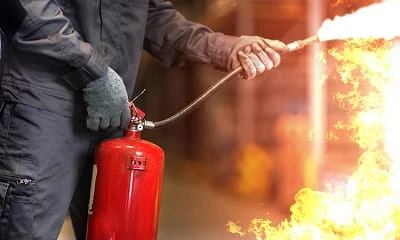
A fire extinguisher mounted near your kitchen exit is one of the most practical tools you can own. The emphasis is on "near the exit" — you want to grab it on your way toward a fire, not find yourself cut off from it. Choose a multi-purpose ABC-rated extinguisher, which handles ordinary combustibles, flammable liquids, and electrical fires equally well.
Learn how to use it before you need it. The PASS method covers the basics: Pull the pin, Aim at the base of the fire, Squeeze the handle, and Sweep side to side. Practice the motions without discharging the unit so the steps feel natural under pressure. Knowing the technique in advance removes hesitation at the worst possible moment.
A home escape plan sounds like something only households with young children need. In reality, every household benefits from one. Fires move fast — you may have as little as two minutes to get out safely once a smoke alarm sounds. Knowing exactly where you're going removes dangerous hesitation.
Sketch a simple floor plan of your home and mark at least two exits from every room. Designate a clear meeting spot outside — a specific tree, a neighbor's driveway, or a street corner — so everyone can be accounted for without anyone going back inside. Practice the plan at least twice a year. Include a nighttime drill, when disorientation and low visibility make evacuation meaningfully harder.

Fire safety equipment doesn't maintain itself. Test smoke alarms monthly, replace batteries annually (or invest in sealed 10-year units), and have your fire extinguisher professionally inspected each year. Many local fire departments offer free inspection events — worth taking advantage of if yours does.
Your kitchen appliances need regular attention too. Grease accumulates inside range hoods, along stovetop burners, and in oven interiors, and it becomes fuel. Our guide on how to clean grease from your stove walks through the process in detail. Pair those cleaning habits with smart food storage practices to reduce clutter on and around the stove — fewer flammable items near heat sources means lower overall risk.
| Equipment | Check Frequency | Replace When |
|---|---|---|
| Smoke Alarms | Monthly (test button) | Over 10 years old or fails test |
| CO Detectors | Monthly (test button) | Every 5–7 years |
| Fire Extinguisher | Annually (professional) | After any use or visible damage |
| Range Hood Filter | Every 1–3 months | When clogged or structurally damaged |
| Oven Interior | Every 3 months | N/A — clean regularly, no replacement |

The stovetop is where home fire safety prevention tips become most immediately relevant. Never leave a hot burner unattended. If you need to step out of the kitchen, even briefly, turn it off. It takes only seconds for an unwatched pan to ignite. Keep dish towels, paper bags, and plastic packaging away from all cooking surfaces — they're far more flammable than most people assume.
Small appliances deserve the same care. Your toaster, air fryer, and food dehydrator all generate significant heat. Understanding how to use a food dehydrator safely includes never blocking its vents and never running it overnight unattended. A breakfast sandwich maker or similar countertop device should always be unplugged when not in use and stored away from the stove.
If you smell burning but see no visible flames, unplug the nearest appliance immediately and ventilate the room — electrical fires often start hidden inside appliance housings or inside walls.
Grease fires behave differently from other kitchen fires, and handling them wrong makes things dramatically worse. Water is never the answer — it causes hot grease to splatter and expand the fire instantly. The right response is to slide a metal lid over the pan, turn off the burner, and leave the lid in place until the pan has fully cooled. If the fire has grown beyond the pan, use your extinguisher or evacuate.
Good ventilation reduces the risk before a fire even starts. Run your range hood every time you cook, especially during frying or high-heat sautéing. An air purifier positioned in adjacent areas can help manage smoke and particulates during everyday cooking, which over time reduces residue accumulation on surfaces. A cleaner, better-ventilated kitchen is a measurably safer one.

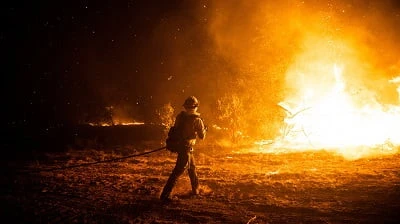
Not every small fire requires evacuation, and not every fire is worth fighting. A fire is reasonable to attempt to extinguish only if it is small and contained (roughly no larger than a wastebasket), you have a clear exit path behind you, you have the correct extinguisher type for the fire, and you feel confident operating it. If any one of those conditions is absent, leave. The fire is not worth your safety.
Close doors behind you as you exit — this measurably slows fire and smoke spread, giving firefighters more to work with and potentially protecting adjacent rooms. Once you're outside, call emergency services and stay out. Re-entering a burning building is almost never the right decision, even for belongings that feel irreplaceable.

If your household includes elderly family members, young children, or anyone with limited mobility, your escape plan needs a layer of specificity that a generic template won't provide. Identify who will assist whom, and practice that part of the plan explicitly. Consider placing anyone who moves slowly in a ground-floor bedroom with direct exterior access. Hearing-impaired individuals may need visual or vibrating smoke alarms to ensure a signal actually wakes them.
During gatherings and events, fire risk increases — more burners running, more distraction, more people moving through the kitchen. Keep non-cooking guests out of the cooking area, designate someone to monitor the stove, and make sure anyone in your home knows where at least one exit is. A little coordination before the cooking starts goes a long way.

Unattended cooking is the leading cause of kitchen fires by a wide margin. Leaving a burner or oven running without supervision — even for a few minutes — gives a small flare-up time to become a serious fire. The simplest preventive habit is turning off the heat anytime you leave the kitchen.
You need at least one smoke alarm on every level of your home, one inside each bedroom, and one outside each sleeping area. For a typical two-story home with three bedrooms, that usually means a minimum of six alarms. More coverage is always better, especially in larger or multi-story homes.
An ABC-rated multi-purpose dry chemical extinguisher handles the three most common fire types in a kitchen: ordinary combustibles like wood and paper, flammable liquids like cooking oil, and electrical fires. Mount it near an exit so it's accessible without reaching past a fire to grab it.
No — never use water on a grease fire. Water causes hot grease to vaporize and expand explosively, spreading flames rather than extinguishing them. Smother a grease fire by covering the pan with a metal lid and turning off the burner. Leave the lid on until the pan has fully cooled.
Test your smoke alarms once a month by pressing the test button and confirming a loud, clear beep. Replace batteries at least once a year, or switch to sealed 10-year battery units to reduce maintenance. Any alarm older than ten years should be replaced entirely regardless of whether it still seems functional.
Unplug the appliance or device closest to the smell immediately, then ventilate the room by opening windows. Electrical fires can start inside appliance housings or inside walls before any visible flame appears. If the smell persists or you hear crackling sounds, evacuate and call emergency services rather than investigating further.
Attempt to fight a fire only if it is very small and contained, you have a clear exit behind you, you have the right type of extinguisher, and you know how to use it. If the fire is growing, producing heavy smoke, or blocking any exit, leave immediately and call 911. Your safety is always the priority over property.
 |
 |
 |
 |

About Christopher Jones
Christopher Jones holds an MBA from the University of San Francisco and brings a business-minded approach to kitchen gear evaluation — assessing products not just for performance but for long-term value, build quality, and real-world usability in everyday home cooking. He has spent years testing appliances, cookware, and kitchen gadgets with the same analytical rigor he developed in business school. At BuyKitchenStuff, he covers kitchen appliance reviews, buying guides, and practical cooking tips.
Check for FREE Gifts. Or get our Free Cookbooks right now.
Disable the Ad Block to reveal all the recipes. Once done that, click on any button below
|
|
|
|
