Kitchen Gadgets & Equipment Reviews ›
by Daisy Dao
Standing in the kitchen appliance aisle — or scrolling through page after page of options online — trying to find the right electric vegetable chopper can feel genuinely overwhelming. There are compact one-touch choppers, full-size food processors, dual-bowl powerhouses, and everything in between. Our team spent weeks testing, comparing, and chopping everything from onions to frozen fruit to narrow down the best options available in 2026.
Electric vegetable choppers (also called food choppers or mini food processors) are motorized kitchen appliances that use rotating blades to chop, mince, dice, shred, or puree ingredients in seconds. They range from tiny 1.5-cup mini choppers designed for garlic and herbs all the way up to 14-cup full-size processors that can handle a week's worth of meal prep in one session. Picking the right size and power level makes all the difference between a tool that gets used daily and one that collects dust on a shelf.
We've tested models from the most trusted brands — Cuisinart, KitchenAid, Hamilton Beach, BLACK+DECKER, and more — and we're ready to give straightforward, honest takes on each one. Whether most buyers are outfitting a tiny apartment kitchen or a busy family home, there's a solid pick on this list. For more helpful kitchen picks, check out our full reviews section. Now let's get into it.
Contents
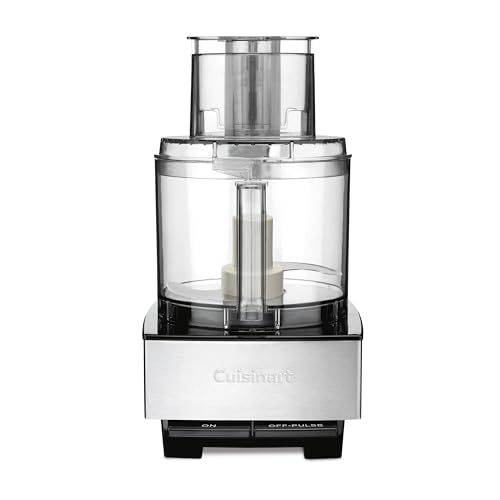




The Cuisinart DFP-14BCNY is our top pick for 2026, and it's not even close. This machine is built around a 720-watt motor that handles virtually anything — from kneading pizza dough to pureeing silky-smooth soups to shredding a block of cheddar in under a minute. We've run it through heavy meal-prep sessions repeatedly, and it doesn't slow down or overheat the way cheaper units do. The stainless steel construction gives it a premium feel that matches its performance.
The 14-cup capacity is the big selling point for households that cook in volume. That extra-large feed tube (the opening at the top where food goes in) means whole vegetables, large chunks of meat, and long stalks can go in without pre-cutting. It ships with three essential attachments: a standard slicing disc (4mm), a medium shredding disc, and a stainless steel chopping blade. All of them are dishwasher safe, which matters a lot for everyday use. The detachable disc stem design also makes cleaning the inside of the bowl faster than competing models we tested.
It's not the cheapest option on this list, and the footprint is substantial — this isn't a machine for a cramped counter. But for anyone doing serious cooking, the Cuisinart 14-cup is the one appliance that genuinely replaces several others. We use it as a blender, a chopper, a shredder, and a dough maker, and it excels at all four roles. If most buyers can only have one food prep appliance, this is the one to get.
Pros:
Cons:
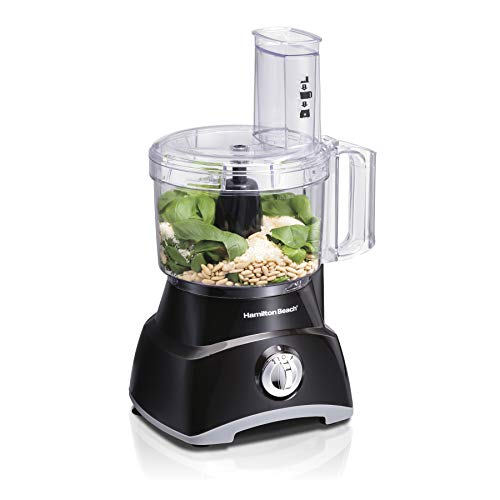
The Hamilton Beach 8-cup sits in a sweet spot that a lot of buyers don't realize exists: big enough to handle meaningful meal prep, small enough to actually store in a normal kitchen cabinet. Our team found this to be the most practical mid-size chopper we tested in 2026. It handles shredding cheese, slicing vegetables, mincing herbs, and pureeing dips without any drama. The motor is quieter than the full-size Cuisinart, and the whole unit feels well-balanced during operation.
The large feed chute is a standout feature at this price. Most buyers won't need to quarter their vegetables before dropping them in — full blocks of cheese, whole carrots, and large celery stalks all fit without pre-cutting. That alone shaves a few minutes off every meal prep session, and those minutes add up fast. The 8-cup bowl is the right size for most weeknight cooking tasks — sauces, pestos, dips, sliced salad vegetables — without leaving half-empty space the way a 14-cup model sometimes does for small batches.
Build quality is honest and functional, not flashy. The plastic construction feels durable rather than cheap, and the bowl locks in securely. We've seen cheaper Hamilton Beach models feel flimsy, but this one has the kind of solid click when assembled that signals reliability. For most home users who don't need the full professional horsepower of the Cuisinart, this is genuinely the smarter buy.
Pros:
Cons:
KitchenAid makes a strong case that small appliances don't have to feel small. The 3.5-cup KFC3516CU is one of the most satisfying compact food choppers we've tested — it has the kind of fit and finish that makes it feel like a premium tool rather than an afterthought. The Contour Silver colorway looks sharp on a countertop, and the build quality is noticeably better than budget compact models. The locking blade, handle, and pour spout on the work bowl are thoughtful details that make it genuinely easier to use.
Two speeds plus pulse gives more control than the single-pulse design used by most mini choppers. For chunky pico de gallo — where texture matters — we could dial back the processing and get uneven, rustic chunks. For smooth hummus or creamy dressings, we ran it longer at the higher speed setting. That flexibility is rare in this size category. The cord wrap feature is a small thing that makes a real difference for drawer or cabinet storage, keeping the unit tidy when not in use.
The 3.5-cup capacity is the honest limitation here. It's not the right tool for batch cooking or processing large quantities of vegetables in one go — for that, most buyers should look at the Hamilton Beach or Cuisinart instead. But for daily tasks like mincing garlic, chopping a small onion, or blending a single serving of salsa, the KitchenAid compact is our favorite in this size class. It pairs well with other prep tools like a quality tomato slicer for fast fresh meals.
Pros:
Cons:
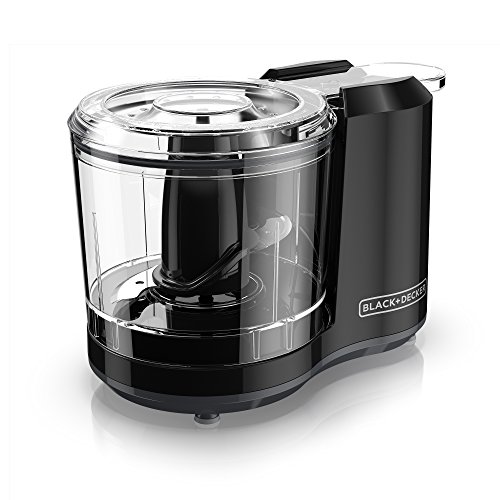
For buyers who just need something to handle the quick stuff — chopping half an onion, mincing a few garlic cloves, or blitzing fresh herbs — the BLACK+DECKER 1.5-cup chopper is the no-fuss answer at a price that's hard to argue with. The one-touch pulse operation keeps things dead simple: press down, it chops, release, it stops. There's no learning curve, no settings to figure out, and no parts to assemble beyond dropping in the bowl. It's genuinely the easiest chopper on this entire list to operate.
The bi-level stainless steel blades (two blades stacked at different heights to catch ingredients at multiple levels) are designed to stay sharp over time, and in our testing they held up well through repeated use without the dulling that plagues single-level budget choppers. The 150-watt motor is modest but sufficient for the 1.5-cup size — it's not going to strain trying to process two cloves of garlic. All removable parts are dishwasher safe, which is the correct design choice for a product used this frequently.
The honest limitation is capacity. It holds 1.5 cups. That's a small onion, a handful of herbs, a few tablespoons of nuts — nothing more. Anyone who needs to chop vegetables for a family meal in one go will find themselves running multiple batches, which defeats the purpose. But as a dedicated mini chopper for small daily tasks, BLACK+DECKER built something that just works without asking anything complicated from the people using it.
Pros:
Cons:
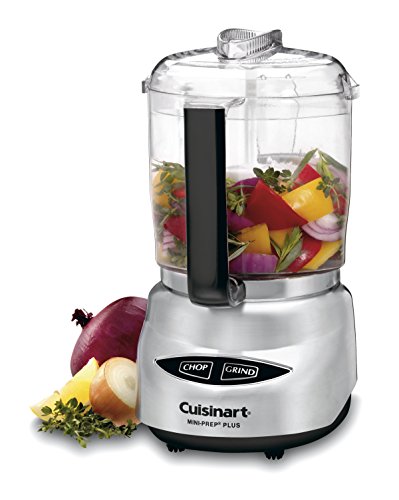
The Cuisinart Mini Prep Plus sits in a unique position: it's bigger than a mini chopper but smaller than a full food processor, and its reversible blade design makes it the best compact option for anyone who grinds spices, nuts, or coffee beans alongside regular chopping tasks. The patented reversible stainless-steel blade works in two directions — one side optimized for chopping soft foods, the other for grinding harder ingredients like nuts, dried spices, or coffee. That dual function in a 4-cup body is genuinely useful.
The Auto-reversing SmartPower feature is what Cuisinart calls the system that automatically switches blade direction based on the button pressed — Chop or Grind — without the user needing to manually flip the blade. Our team found this works exactly as advertised. For herbs and soft vegetables, the chopping direction produces clean, even results. For nuts and dried ingredients, the grinding direction breaks things down to a coarser powder. The 250-watt motor is appropriately sized for this bowl capacity and doesn't feel underpowered.
The bowl and lid are dishwasher safe, and the brushed stainless finish looks considerably more upscale than the price suggests. The motor base just needs a damp cloth wipe — no submerging, which is standard for any motorized kitchen appliance. One note: this unit is rated for 220V, so buyers outside North America should verify compatibility. For most home users who want a versatile compact processor that handles both chopping and grinding without switching tools, the Cuisinart Mini Prep Plus earns its spot on the counter.
Pros:
Cons:
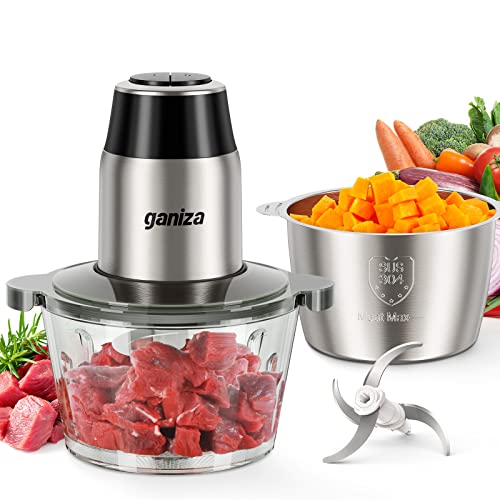
The GANIZA dual-bowl setup is the most unusual product on this list, and also the most practical for households that regularly process both meat and vegetables in the same cooking session. The kit includes two 8-cup bowls — one glass, one stainless steel — each with its own set of bi-level blades. The idea is simple and smart: use one bowl for raw meat and the other for produce, avoiding cross-contamination without needing to wash between tasks. Our team found this workflow genuinely faster for meal prep that involves both proteins and vegetables.
The 450-watt copper motor (copper windings run cooler and last longer than aluminum alternatives) drives both bowls with consistent power. GANIZA's patented automatic stopping design is a real safety feature — blades stop rotating instantly the moment the motor is disengaged from the bowl, which matters when handling sharp stainless steel blades. The overheating protection system adds another layer of reliability; it pauses operation if the motor gets too hot, which protects the machine during extended processing sessions rather than burning out.
BPA-free construction across both bowls earns points for anyone conscious about food safety. The glass bowl option is a particularly nice touch — glass doesn't absorb odors or stains the way plastic can over time. This is a more specialized machine than a standard single-bowl processor, and the dual-bowl concept won't appeal to everyone. But for serious home cooks who prep proteins and vegetables in volume, GANIZA's dual-bowl design is a genuinely clever solution that eliminates a real workflow bottleneck. It complements other kitchen tools well — we often use it alongside a spiral slicer for vegetable-heavy meal prep sessions.
Pros:
Cons:
The Proctor Silex mini chopper is the most affordable option on this list and it doesn't pretend otherwise. What it does is execute its single job — chopping small quantities of soft vegetables, herbs, garlic, and nuts — reliably and without fuss. Our team has seen a lot of ultra-budget choppers fall apart after a few months, but the Proctor Silex has a reputation for durability that's held up in our testing. The stainless steel blades cut cleanly, the pulse control is responsive, and the machine doesn't vibrate across the counter the way cheaper units sometimes do.
The 1.5-cup capacity is identical to the BLACK+DECKER on this list, and the honest comparison is straightforward: the Proctor Silex is typically cheaper, but the BLACK+DECKER has the stay-sharp bi-level blade advantage. For most buyers who just need a budget mini chopper for onions, garlic, and small herb batches, the difference is minimal. The Proctor Silex earns its place for anyone who wants a reliable workhorse at the lowest possible price point.
Pulse speed control lets home users customize texture — hold it down for a smooth puree, pulse briefly for coarse chunks. This is standard for the category but executed cleanly here. It's also capable of pureeing baby food (a common use case for this size), making salsas, and emulsifying (blending oil and water-based ingredients into a stable mixture) small-batch dressings and sauces. For a household looking to spend as little as possible on a kitchen chopper without sacrificing basic functionality, this is our pick. According to Wikipedia's overview of food processors, mini choppers in this class are among the most widely used small appliances in home kitchens worldwide — and the Proctor Silex represents exactly what makes them popular.
Pros:
Cons:

Shopping for an electric vegetable chopper in 2026 means navigating a crowded market with a lot of similar-looking products at very different quality levels. These are the factors our team weighs when making recommendations — and the ones most buyers should think through before pulling the trigger.
Bowl capacity — measured in cups — is the single most important spec to get right before buying. A 1.5-cup mini chopper is perfect for single-person households or quick daily tasks like mincing garlic and chopping a small onion. Bump up to a 3.5 or 4-cup model for two-person households that cook from scratch several times a week. For families or anyone doing weekly meal prep, an 8-cup or larger model is worth the extra counter space. Buying too small means running multiple batches every time, which cancels out the time-saving benefit entirely. Match capacity to how most buyers actually cook, not to some idealized minimal version of their kitchen habits.
Motor wattage (how much electrical power the motor draws) is a rough indicator of how hard a chopper can work. For soft vegetables, herbs, and light chopping, 150-250 watts is plenty. For harder ingredients — nuts, dense root vegetables, meat grinding, dough kneading — aim for 400 watts or higher. The Cuisinart's 720-watt motor is overkill for garlic but exactly right for kneading bread dough. It's also worth noting that copper-wound motors (like the one in the GANIZA) run cooler and last longer than comparable aluminum-wound motors, making them worth seeking out in mid-range models. Pairing a good food chopper with quality prep tools like the ones featured in our stand mixer buying guide can build a genuinely efficient kitchen setup.
Cleaning friction is the main reason kitchen appliances stop getting used. Every product on this list has dishwasher-safe bowls and blades, but the details matter. Models with fewer parts and simpler disassembly get cleaned faster and more thoroughly. The detachable disc stem on the Cuisinart 14-cup is a smart design choice that makes inner-bowl cleaning much easier than the fixed-stem designs used by competitors. Glass bowls (like the one included with the GANIZA) don't absorb odors or stain over time the way plastic does — worth factoring in for buyers who process strong-smelling ingredients like onions or garlic regularly.
A food chopper running at speed is a real safety consideration. Look for bowl-interlock designs that prevent the motor from running unless the bowl is properly seated and locked — this is standard on all quality modern choppers. The GANIZA's automatic blade-stop feature (blades halt the instant the motor disengages) takes safety a step further. Overheating protection, which pauses operation if the motor temperature gets too high, protects both the user and the appliance during long processing sessions. For households with children, features like covered blade storage and stable non-slip bases are worth prioritizing. BPA-free materials on all food-contact surfaces should be considered a baseline, not a premium feature, in 2026.
The terms are often used interchangeably, but there's a functional distinction. Food choppers are typically smaller — 1.5 to 4 cups — with simpler controls, usually just a pulse button. They're designed for quick tasks like mincing garlic or chopping onions. Food processors are larger (8-plus cups), include multiple blade and disc attachments, and handle a wider range of tasks including slicing, shredding, kneading dough, and pureeing larger batches. The Cuisinart DFP-14BCNY and Hamilton Beach 8-cup on this list are true food processors; the BLACK+DECKER and Proctor Silex are choppers. Most home cooks benefit more from a mid-size food processor than from a mini chopper alone.
The safest approach is to put dishwasher-safe blade assemblies directly into the dishwasher blade-side up in the utensil basket, never loose in the rack where they can shift and cut hands during unloading. For hand washing, use a long-handled bottle brush rather than reaching in with a cloth or bare hand. Never leave blades soaking in a soapy sink where they're invisible and dangerous. Rinse immediately after use to prevent food from drying onto the blade surface — dried-on food makes cleaning harder and can dull blades over time.
Several models on this list handle meat well, but not all. The GANIZA 450-watt dual-bowl model is specifically designed for meat grinding alongside vegetable chopping, and it includes dedicated bowls for each. The Cuisinart 14-cup with its powerful 720-watt motor can handle raw meat in small-to-medium quantities. The mini choppers — BLACK+DECKER, Proctor Silex, KitchenAid compact — are not suitable for meat processing; their motors aren't sized for the resistance and their bowls are too small for practical meat prep. When processing meat in any food chopper, cut it into smaller cubes first and work in short pulses rather than continuous runs.
For a single person or couple who cooks casually, a 4-cup model like the Cuisinart Mini Prep Plus handles most daily tasks without taking up much space. For a family of three or four that does regular meal prep, an 8-cup model like the Hamilton Beach hits the practical sweet spot. Households that batch-cook, entertain frequently, or do heavy vegetable prep several times a week will find a 14-cup model like the Cuisinart DFP-14BCNY saves significant time. Our team recommends the Hamilton Beach 8-cup as the safest middle-ground choice for most buyers who aren't sure which direction to go.
Quality matters a lot here. Budget mini choppers in the $15-25 range often last 2-3 years with regular use before the motor weakens or the bowl develops cracks. Mid-range models from established brands like Hamilton Beach and KitchenAid typically run 5-7 years with proper care. High-end units like the Cuisinart 14-cup are built to last a decade or more — we've seen well-maintained Cuisinart food processors stay in service for 15 years. The key maintenance habits that extend lifespan are: never running the motor continuously for more than the manufacturer's recommended cycle time, cleaning blades properly after every use, and storing the unit with the bowl properly seated rather than loose.
Not always — it depends entirely on what most buyers need it for. A Proctor Silex at its price point does everything a single-person household needs for quick daily chopping tasks, and spending five times more on a Cuisinart 14-cup for those same tasks would be wasteful. Where price genuinely predicts performance is in motor longevity, blade quality, bowl capacity, and attachment versatility. The jump from a $20 mini chopper to a $60 mid-size processor is almost always worth it for households cooking from scratch daily. The jump from $60 to $200+ only pays off when the extra capacity and power are genuinely needed. Our recommendation: buy for actual cooking habits, not aspirational ones.
Our top pick remains the Cuisinart DFP-14BCNY for most serious home cooks, but the right chopper depends entirely on kitchen habits and cooking volume — the Hamilton Beach 8-cup is the smarter buy for everyday family cooking, and the BLACK+DECKER or Proctor Silex mini choppers are genuinely excellent for simple daily tasks at minimal cost. Browse the full lineup, match the capacity to real cooking needs, and check current pricing on Amazon to find the best deal available right now in 2026.
 |
 |
 |
 |

About Daisy Dao
Daisy Dao grew up in Honolulu, Hawaii, where coastal living and access to fresh local ingredients shaped her approach to home cooking from an early age. She has spent years experimenting with seafood preparation, healthy cooking methods, and ingredient substitutions — developing hands-on familiarity with a wide range of kitchen tools, techniques, and produce. At BuyKitchenStuff, she covers healthy recipes, cooking techniques, and ingredient substitution guides.
