Kitchen Gadgets & Equipment Reviews ›
by Rick Goldman
Japan sends an estimated 10 million bento lunches to work and school every single day — a number that reflects not just a meal habit but a cultural institution stretching back more than a thousand years. According to Wikipedia's history of bento, portable packed rice meals have been part of Japanese life since at least the Kamakura period (1185–1333). Fast-forward to 2026, and the global appetite for Japanese lunch boxes has never been stronger, with demand from meal-preppers, eco-conscious buyers, and design enthusiasts all pushing the market upward.
The variety available today can be genuinely overwhelming. Vacuum-insulated stainless steel jars keep soup piping hot for six hours without a microwave. Hand-bent cedar Magewappa boxes absorb excess moisture so rice stays perfectly textured. Character-themed boxes turn school lunches into something kids look forward to. Each design solves a different problem, and picking the wrong one means lukewarm food or a container that leaks in a bag. This guide cuts through the noise with seven of the best Japanese lunch boxes on Amazon in 2026, chosen for build quality, real-world usability, and value at their price point.
For buyers who want to pack the ideal bento, the contents matter as much as the container. A reliable microwave rice cooker makes batch-cooking Japanese short-grain rice fast and consistent — exactly the kind of meal these boxes are built for. All seven picks are reviewed in full detail below, followed by a focused buying guide and FAQ. Buyers looking to round out their kitchen setup can also explore the full kitchen product reviews library for complementary gear recommendations.
Contents




The Zojirushi Mr. Bento is the benchmark against which every other insulated lunch jar gets measured. The outer jar uses double-wall vacuum insulation to hold soup and main course bowls at safe serving temperatures for hours, making it the go-to choice for construction workers, office staff without kitchen access, and anyone who genuinely wants a hot meal mid-day without hunting for a microwave. The system comes with four inner bowls sized at 9 oz, 15 oz, 10 oz, and 7 oz — a range that lets buyers pack a full meal with distinct courses, keeping rice, a main dish, a side, and soup all neatly separated and contained.
Build quality on the Mr. Bento is exactly what buyers expect from Zojirushi. The stainless steel outer jar feels solid and well-balanced in hand, and the clip-on lid on the 15 oz bowl keeps everything snug during transport. All four inner bowls are microwaveable, so reheating individual items is simple at lunch. The included carrying bag fits the jar cleanly and comes with a forked spoon cover that tucks in neatly. After years in the market, this model continues to earn top marks for reliability and zero-compromise heat retention — and in 2026 it remains one of the most recommended thermal lunch jars at any price.
One honest trade-off: the Mr. Bento is not a compact option. Fully loaded, it is noticeably heavier than a standard plastic bento box, and the cylindrical form takes up real bag space. Buyers with smaller bags or those who prioritize lightweight portability may want to consider the smaller alternatives below. But for anyone who needs genuinely hot food delivered intact after a long commute, this is the definitive choice.
Pros:
Cons:
Magewappa is not just a lunch box — it is a piece of living Japanese craft history. These oval wooden boxes have been made for roughly 400 years in Odate City, Akita Prefecture, a region celebrated across Japan for producing some of the finest cedar. Each box is shaped from a single piece of cedar or cypress wood, bent and formed into an elegant oval with a snug-fitting lid. The result is something that feels unmistakably handmade, with a natural grain pattern that is unique to every piece. At 600 ml, the medium size easily holds a full adult lunch of rice and sides without feeling wasteful.
The functional case for cedar goes beyond aesthetics. Cedar naturally absorbs excess moisture from rice, which means the grains stay properly textured — not gummy or dried out — even hours after packing. The wood also imparts a very subtle, pleasant fragrance that users consistently mention in reviews. What makes this particular IPPINKA version remarkable is that it carries a dishwasher-safe rating, which is genuinely unusual for traditional Magewappa. That single feature removes the biggest hesitation most buyers have about wooden lunch boxes for daily use. A belt is included for securing the lid during transport.
The premium price is the main barrier, and it is real. This is not a budget purchase. Buyers who treat it well — avoiding soaking, drying promptly after washing — will find it holds up for years. Those who want beautiful, culturally authentic kitchenware paired with practical daily use will find this is one of the most rewarding lunch box purchases available. Pair it with a Japanese glass teapot for a complete traditional meal experience at the office.
Pros:
Cons:
For buyers who need serious capacity alongside serious heat retention, the Zojirushi SL-XE20AD is the clear answer. This model steps up to 50 oz total across three bowls — a 27 oz main bowl, a 14 oz side dish bowl, and a 9 oz soup bowl — making it the right choice for high-appetite adults, outdoor workers, and anyone who has opened the smaller Mr. Bento and wished for more. The Navy colorway is clean and professional, and the overall construction matches Zojirushi's reputation for well-engineered stainless steel products that last for years of daily use.
Heat retention is where this jar earns its keep. Independent testing consistently confirms that the SL-XE20AD holds contents at 160°F or higher after six full hours — a number that means genuinely hot soup and rice at a noon lunch, even when the jar was packed at 6 a.m. All three inner bowls are microwaveable, so any item that needs a quick top-up of heat can be popped into the microwave individually without any issue. This makes it especially well-suited for workplaces and job sites where a microwave exists but a refrigerator does not, and where cold storage is simply not available.
The size advantage is also the primary limitation. This is a substantial piece of kit, and buyers with limited bag space or those who commute by bicycle or on foot may find the weight uncomfortable over long distances. The three-bowl configuration offers slightly less variety than the four-bowl Mr. Bento, but each individual bowl is larger, which most users find more practical for actual portion sizes. For anyone who has ever finished the smaller Zojirushi and still felt hungry, this is the upgrade to make.
Pros:
Cons:
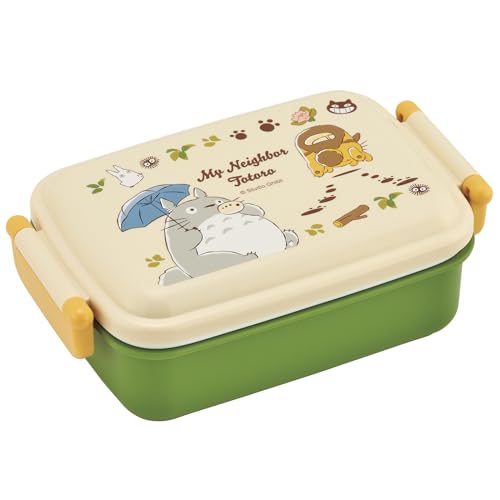
Skater is one of Japan's most recognized manufacturers of character-themed kitchenware, and this My Neighbor Totoro Cat Bus bento box is a standout piece from their Studio Ghibli collaboration line. The authentic Japanese character design covers the entire exterior of the box with the iconic Cat Bus from the beloved 1988 Miyazaki film, making it immediately recognizable to fans of any age. At 15.22 oz, the capacity is sized for a portioned lunch or snack — appropriately sized for older children, teenagers, or adults who prefer a lighter mid-day meal rather than a full spread.
Functionally, this box delivers on the basics without cutting corners. The two-point locking lid system keeps the contents sealed firmly during transport, which solves the single biggest complaint about character-themed boxes: lids that pop open in a bag. Both microwave and dishwasher safe ratings mean reheating and cleanup require no special handling. The construction is durable enough for daily use, and Skater's quality control on their licensed products is consistently reliable. Buyers who have gifted this to Ghibli fans consistently report it being among the most appreciated kitchen items they have given.
Realism about the capacity is important. Fifteen ounces is not a heavy lunch for an active adult. This box works best for lighter eaters, for children's school lunches, or as a gift where the design and charm matter as much as the practical volume. Those who need a full, filling meal should look at one of the Zojirushi options above. But as a gift for a Studio Ghibli fan or a charming daily box for a younger user, this Skater bento punches well above its price point.
Pros:
Cons:
The Jubako is a different category of lunch box entirely. Traditional Japanese lacquerware stacked boxes like this one are used for serving osechi ryori (New Year's ceremonial food) and for presenting holiday spreads at family celebrations — not for Tuesday's desk lunch. This three-tier box measures 6.50 inches wide and 6.25 inches high when fully stacked, with each tier offering enough space to arrange a curated selection of small dishes, sweets, or snacks in a visually striking presentation. The classic flower lacquer design gives it an unmistakably traditional Japanese aesthetic that photographs beautifully and makes a strong impression at any gathering.
The construction uses durable food-safe plastic finished to resemble traditional lacquerware, which makes it more practical for regular handling and gifting than genuine lacquer pieces that require careful maintenance. Each tier stacks cleanly and securely, and the entire set comes apart easily for washing. Beyond food use, buyers consistently repurpose these boxes as display and gift containers for jewelry, small keepsakes, or decorative items — a dual functionality that adds real value for buyers who want something versatile. At the price point, this is one of the more decorative and culturally authentic items available in the Japanese bento category on Amazon.
The honest caveat: this is not a practical daily carry lunch container. There is no seal on the individual tiers to prevent spills, and the overall form is wide and flat rather than compact and portable. Buyers who understand its purpose — as a serving and presentation box for special meals and celebrations — will find it delivers exactly what it promises. Those expecting an everyday packed lunch solution should look elsewhere on this list.
Pros:
Cons:
For buyers who want to start packing Japanese-style lunches without hunting separately for a bag, chopsticks, and the right box, the OSK Rabbit Moon set removes all of that friction in one purchase. This renewal version of the classic PW-4+KB-1 model bundles the bento box itself with matching chopsticks and a bento carrying bag, all coordinated around a charming traditional rabbit and moon motif in a vivid red colorway. The design is rooted in classic Japanese aesthetic sensibility — the kind of clean, illustrated pattern that has appeared on Japanese lacquerware and pottery for centuries.
From a practical standpoint, the OSK box covers the daily essentials cleanly. Both the microwave-safe and dishwasher-safe certifications mean buyers do not need to hand-wash or use a separate container for reheating. The included chopsticks are properly sized and sit neatly in the bag alongside the box, making this a grab-and-go solution from day one. Everything in the set is coordinated and functional, which makes it one of the most thoughtful gift-ready bento options at its price. It is also a strong choice for buyers new to the bento format who want to try the lifestyle without a large upfront investment.
The main limitation is capacity — the box errs on the compact side, which suits lighter eaters and children well but may leave larger adults wanting more volume. The chopsticks are practical rather than heirloom-quality, and the bag, while functional, is basic. Those details aside, the OSK set punches above its price as a complete, culturally authentic daily bento solution. Anyone curious about Japanese food culture who also wants a practical daily lunch carrier — rather than just a novelty item — will find real value here. Packing this box with Japanese-inspired dishes is part of the appeal, and having a go-to guide for the best instant noodles makes a useful complement for quick lunch ideas.
Pros:
Cons:
TAKENAKA has built a loyal following among buyers who want sustainability and Japanese quality in the same package. The Bento Bite Dual is made entirely from 100% recycled plastic bottles — an environmental credential that is independently verified and not just a marketing claim — and it is manufactured in Japan to the quality standards that entails. The peppermint colorway is clean and modern, and the dual-compartment design naturally separates dry foods from sauced or wet items, which is the most common pain point users encounter with single-compartment boxes. The result is a box where rice stays dry and a side dish with sauce stays contained on its own side.
The leakproof credentials are solid. An airtight seal runs the full perimeter of both compartments, and the included orange elastic band adds a secondary layer of security during transport. BPA-free and lead-free materials mean buyers with health-conscious households do not need to compromise. Microwave and dishwasher safe ratings round out the practical features. For a daily lunch box that buyers can use without guilt about plastic waste, wash quickly in the dishwasher, and carry in any bag without worrying about leaks, the TAKENAKA Bite Dual checks every box.
The single functional limitation is the absence of insulation. Food packed in this box will cool to room temperature over time, so buyers who need piping-hot soup or rice at lunchtime should pair it with a separate insulated container or look at the Zojirushi options above. For cold lunches, salads, snacks, and room-temperature Japanese-style meals, this is the most environmentally responsible and well-constructed option in the roundup. Made in Japan quality at a price that reflects honest craftsmanship rather than premium branding.
Pros:
Cons:
With so many options across different materials, capacities, and purposes, narrowing down the right Japanese lunch box comes down to four practical questions. Answer these honestly and the choice becomes straightforward.
This is the single most important question in the buying decision. If the answer is yes — particularly for workers who pack hot rice, soup, or stew in the morning and eat hours later without microwave access — then a vacuum-insulated stainless steel jar is the only real option. The Zojirushi models on this list dominate this category for good reason. Double-wall vacuum insulation (a sealed vacuum between two stainless walls, similar to a thermos) is the technology that makes this possible, and it is distinctly different from the simple insulated bags that come with some plastic boxes. Those bags slow cooling slightly; vacuum insulation actually holds temperature for six or more hours.
If hot food is not the priority — if meals will be eaten cold, at room temperature, or the destination has a microwave — then buyers have far more material and design options. Wooden Magewappa boxes, eco-friendly plastic options, and character-themed boxes all become viable, and the choice shifts to capacity, aesthetics, and sustainability instead.
Capacity matters more than most buyers realize until they have the wrong-sized box in hand. Japanese bento culture traditionally values compact, portioned meals, which means many boxes are sized for lighter eating habits than the average North American adult lunch. The Skater Totoro box at 15 oz holds a snack-sized portion. The IPPINKA Magewappa at 600 ml (roughly 20 oz) fits a reasonable adult meal. The Zojirushi jars at 41 oz and 50 oz are serious, filling lunch containers for people who eat well at midday. Buyers should measure their actual hunger, not just guess — under-buying capacity is the most common regret in this category.
Each material on this list comes with genuine trade-offs. Stainless steel offers the best thermal performance and long-term durability, but adds weight. Cedar wood (Magewappa) delivers the most authentic Japanese experience and genuinely improves rice texture, but requires thoughtful care and is not suitable for very wet dishes. Food-safe plastic covers most modern boxes and offers the widest range of microwave and dishwasher compatibility at the lightest weight. Buyers who commute on foot or by bike will feel the difference between a fully loaded Zojirushi jar and a TAKENAKA plastic box within the first week. Consider the daily carry weight honestly before deciding.
The Jubako lacquer box on this list is a genuinely beautiful object — and the wrong tool for a Tuesday desk lunch. Special-occasion boxes like the three-tier Jubako are designed for presentation and celebration, not sealed portability. Daily use boxes need leakproof lids, dishwasher compatibility, and durable construction that holds up to hundreds of uses without cracking or warping. Every other box on this list qualifies for daily use. The Jubako does not, and buying it for daily packed lunches will result in frustration within a week. Match the purpose to the product and there are no bad choices here.
The Zojirushi stainless insulated lunch jars — specifically the SL-JBE14XA (41 oz) and SL-XE20AD (50 oz) — are the top-rated options for hot food. Both use double-wall vacuum insulation that holds contents at 160°F or higher for six hours. These are the right choice for workers who pack hot meals in the morning and eat without microwave access. No other material type on the market matches vacuum-insulated stainless steel for sustained heat retention.
It depends on the material. Most plastic bento boxes on this list — including the Skater Totoro, OSK Rabbit Moon, and TAKENAKA Bento Bite Dual — are fully dishwasher safe. The IPPINKA Magewappa cedar box is also rated dishwasher safe, which is unusual for a wooden product and a major practical advantage. The inner bowls of Zojirushi stainless jars are dishwasher safe; the outer stainless jar should be hand-washed to protect the vacuum insulation seal over time.
Most adults eating a full lunch need between 600 ml and 900 ml (approximately 20 to 30 oz) of total capacity. Lighter eaters and those packing snacks rather than full meals can work with 400–600 ml options. The Zojirushi 41 oz (roughly 1,200 ml) and 50 oz (roughly 1,475 ml) options are on the generous side and work well for high-appetite adults or those who like variety across multiple bowls. The 15 oz Totoro box is specifically sized for children or very light adult portions.
Magewappa is a traditional Japanese woodcraft (曲げわっぱ) that originated approximately 400 years ago in Odate City, Akita Prefecture. The technique involves bending a single thin piece of cedar or cypress wood into an oval shape, then fitting a flat base to form a box. Cedar is prized for its natural moisture-absorbing properties, which keep rice from becoming gummy or dry after packing. Magewappa boxes are considered both functional kitchenware and cultural craft objects, and authentic versions command a premium price that reflects the skilled handwork involved.
Vacuum-insulated stainless steel bento jars keep food cold just as effectively as they keep it hot — the insulation works in both directions. For summer use, packing chilled items in a Zojirushi jar keeps them at safe temperatures for hours without ice packs. Standard plastic and wooden bento boxes do not provide meaningful insulation in either direction; food in those boxes will gradually reach ambient temperature. For cold storage needs without a refrigerator, a vacuum-insulated jar is the appropriate choice.
Jubako (重箱) are traditional Japanese stacked lacquerware boxes most closely associated with osechi ryori — the elaborate ceremonial foods prepared for Japanese New Year celebrations. Each tier of the box traditionally holds specific types of food with symbolic meaning: seafood dishes, sweet items, vegetables, and rice-based preparations are arranged carefully in each layer. In 2026, Jubako boxes are also widely used for holiday entertaining, gift presentation, and as decorative display pieces. They are not designed for everyday portable packed lunches and lack the sealed lids that daily-use bento boxes require.
 |
 |
 |
 |

About Rick Goldman
Rick Goldman grew up traveling the Pacific Coast and developed an early appreciation for regional and international cuisines through exposure to diverse food cultures from a young age. That culinary curiosity shaped his approach to kitchen gear — he evaluates tools based on how well they perform across different cooking styles, ingredient types, and meal occasions. At BuyKitchenStuff, he covers kitchen equipment reviews, recipe guides, and food-focused buying advice.
