Kitchen Gadgets & Equipment Reviews ›
by Daisy Dao
Which microwave rice cooker is actually worth buying in 2026 — and which ones are just glorified plastic bowls? If you've ever pulled a pot of mushy, undercooked, or boiled-over rice off the stovetop and thought "there has to be a better way," you're in the right place. The good news: a quality microwave rice cooker can deliver fluffy, perfectly cooked rice with almost zero hands-on effort. Our top pick after testing and research is the Prep Solutions by Progressive 17-Piece Set — but every option on this list has its own strengths depending on your kitchen setup and cooking habits.
Microwave rice cookers work by trapping steam inside a sealed or vented container, letting the rice absorb moisture evenly — similar to how a dedicated electric rice cooker functions, but without taking up counter space or requiring a separate appliance. They're affordable, easy to store, and surprisingly capable. Whether you're cooking for one or feeding a small family, there's a model on this list that fits your needs. You can also browse our full microwave rice cooker reviews for even more options.
In this guide, we've rounded up six of the best microwave rice cookers available on Amazon right now. We'll walk you through each product in detail, break down what to look for when buying, and answer the most common questions people have before making a purchase. If you also cook pasta in the microwave, check out our guide to the best microwave pasta cookers — many of these units handle both. Let's dig in.
Contents




The Pampered Chef Micro Cooker Plus has earned a loyal following, and it's easy to see why. This 3-quart plastic cooker is built for family-sized batches — you can cook up to six cups of cooked rice in a single go, which is more than most competing models at this price point. The design is straightforward: add your rice and water, snap on the lid, and microwave. The lid is engineered to vent steam safely so you don't end up with a pressure buildup situation, and the wide handles make it comfortable to carry even when the container is hot.
Build quality is solid for a plastic cooker. The plastic feels thick and durable rather than flimsy, and it's BPA-free, which matters if you're cooking food directly in it regularly. The cooker is also dishwasher-safe, which is a huge plus for busy households. Performance-wise, most users report consistently fluffy rice without the scorched-bottom issues you sometimes get with stovetop cooking. It also handles steamed vegetables, oatmeal, and pasta surprisingly well — versatility you'll appreciate on busy weeknights.
The main limitation is that it only comes in one size, so if you're cooking for one or two people, you might find yourself with more cooker than you need. It's also not the most compact option if cabinet space is tight. But if you're feeding a household regularly and want a no-fuss, reliable cooker that'll last for years, this is a strong choice.
Pros:
Cons:
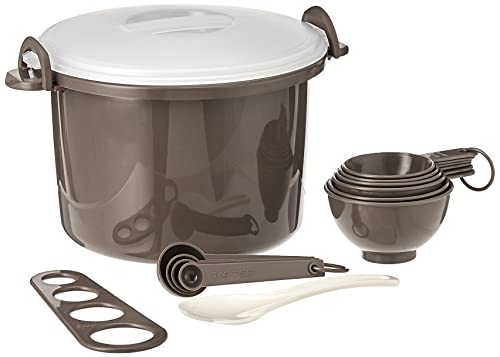
If you want a microwave rice cooker that comes with everything you need right out of the box, the Prep Solutions by Progressive 17-Piece Set is hard to beat. The 12-cup capacity cooker is the centerpiece, but the real value here is the full accessory kit: measuring spoons, measuring cups, a rice paddle, a steaming insert, and even a pasta measurer. That's a lot of included gear for the price. The locking lid is a standout feature — it seals tightly enough to prevent spills during cooking, which is especially useful if your microwave has a turntable that might jostle the container.
The BPA-free gray plastic feels sturdy, and the 12-cup capacity (that's cooked volume) means you can prep a substantial amount of rice for a gathering or meal-prep session. The steaming insert adds real versatility — you can steam broccoli, green beans, or fish over the cooking rice, turning one microwave session into a complete side dish. Cooking performance is consistent, and the locking lid means you can tilt the cooker to drain pasta without burning your hands. It doubles nicely as a pasta cooker too — if you already own this and want to compare pasta-specific tools, see our microwave pasta cooker roundup for context.
The downside is that 17 pieces means 17 things to keep track of and wash. The smaller accessories like measuring spoons are easy to misplace. Still, for the price and the sheer number of included tools, this set represents excellent value for anyone setting up a kitchen or wanting an all-in-one microwave cooking solution in 2026.
Pros:
Cons:
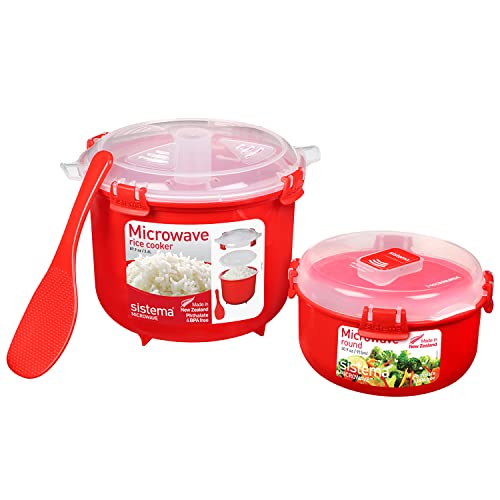
The Sistema set gives you two useful items for one purchase: a 2.6-liter rice cooker with a pressure chamber plate and a 915ml round microwave container with a steam-release vent. The pressure chamber plate is the key feature of the rice cooker — it distributes heat evenly and keeps moisture locked in, which translates to rice that comes out moist and fluffy rather than dried out on top and soggy on the bottom. The easy-locking clips on the cooker hold the lid firmly in place during cooking, and the steam-release vent on the smaller container means splatter-free reheating.
Sistema is a New Zealand-based brand known for quality food storage and microwave products, and this set reflects that reputation. The plastic is BPA-free, the construction feels solid, and the locking mechanism works reliably even after repeated use. The 2.6L cooker is a good size for two to four servings, making it well-suited for small families or couples. The included 915ml container is a genuine bonus — use it for reheating leftovers, storing prepped ingredients, or cooking smaller portions separately.
Where does it fall short? The pressure chamber plate adds a step to assembly that some people find fiddly at first. And if you need to cook very large batches, the 2.6L capacity might feel limiting compared to the Pampered Chef or Progressive options. But for most people cooking two to four servings at a time, this is a well-designed, practical set that punches above its weight.
Pros:
Cons:
Nordic Ware is a trusted American kitchenware brand with decades of manufacturing experience, and the Microwave Multi-Boiler reflects that pedigree. This compact 5.5-cup cooker is sized for one to two servings, making it a smart pick for solo cooks, dorm rooms, or office kitchens. The standout design feature is the specially engineered lid that prevents boil-overs — a common frustration with microwave cooking where liquids bubble up and make a mess. The lid also doubles as a strainer, so you can drain pasta or rinse cooked grains without hunting for a separate colander.
The bright red color makes it easy to spot in a cabinet, and the compact footprint means it won't hog shelf space. Beyond rice, it handles pasta, oatmeal, and steamed vegetables well — the multi-boiler name is accurate. The construction is solid plastic, and while it doesn't have locking clips or a pressure chamber, the boil-over-resistant lid design compensates by keeping your microwave interior clean. Cleanup is easy since the container and lid are both dishwasher-safe.
The trade-off is capacity. At 5.5 cups, this isn't the right tool if you're cooking for three or more people regularly. But if you're cooking for yourself and want something that's compact, reliable, and genuinely mess-free, the Nordic Ware Multi-Boiler earns its spot on this list. The strainer-lid functionality alone is a clever time-saver that you'll appreciate every time you use it.
Pros:
Cons:

Tupperware has been a household name in food storage and microwave cooking for generations, and the Stack Cooker is one of the brand's most clever microwave solutions. The stackable design is the key differentiator here: you can cook multiple components at once in your microwave, stacking containers vertically so steam circulates through all levels. That means you can cook rice in one tier and vegetables or a protein in another, finishing a complete meal in one microwave session. For busy weeknight cooking, that kind of efficiency is genuinely useful.
Tupperware's build quality is characteristically excellent — thick, durable plastic that feels like it'll hold up for years of regular use. The pieces fit together snugly when stacked, and the design minimizes steam escape to keep cooking efficient. The brand's reputation for longevity is well-deserved, and the Stack Cooker lives up to it. Because this is a Tupperware product, you also get the benefit of a strong warranty and customer support if anything goes wrong.
The main consideration is that Tupperware products tend to sit at a slightly higher price point than generic or lesser-known brands. You're paying for the brand quality, the multi-tier functionality, and the durability. If you just need a simple single-container rice cooker, there are more affordable options here. But if you want a premium microwave cooker that can handle an entire meal and will last for many years, the Stack Cooker is worth the investment.
Pros:
Cons:
Joseph Joseph is a British brand known for smart, design-forward kitchen tools, and the M-Cuisine Rice Cooker lives up to that reputation. The stone and orange color scheme looks sharp on a countertop, and the thoughtful design carries through to functionality. The set includes a 2-liter cooking pot, a colander insert, a measuring cup, and a multi-purpose rice paddle that doubles as a lid lock — you clip the paddle across the pot to hold the lid down during cooking, then flip it around to serve. It's an elegant solution that keeps your kitchen drawers cleaner.
The colander insert is a genuine standout feature. It sits inside the pot, so when you cook rice you can lift the colander to drain excess water without pouring scalding liquid past your hands. For pasta, it works equally well — which is one reason this cooker appeals to people who want one tool for both rice and pasta. If you're also considering pasta-specific tools, our best microwave cover guide has tips on protecting your microwave during any kind of stovetop-free cooking. The 2-liter capacity is suitable for two to three servings, and cooking performance is consistent with what you'd expect from a quality microwave cooker.
The main limitation is that the colander-inside-pot design means the pot itself is shallower than its stated capacity might suggest. Some users find the colander slightly awkward to seat properly at first. But if you care about good design, smart accessories, and a product that looks as good as it performs, the Joseph Joseph M-Cuisine is a standout choice in 2026.
Pros:
Cons:
With six solid options on the market, picking the right microwave rice cooker comes down to a few practical questions about how you cook and what you need from your tools. Here's what to think about before you buy.
Capacity is probably the most important factor, and it's worth thinking through carefully. Microwave rice cookers are usually measured in cups or liters — and it's important to know whether that figure refers to raw rice or cooked rice, since cooked rice roughly doubles in volume. A 12-cup cooked capacity (like the Progressive set) is generous enough for meal prep or feeding four to six people. A 5.5-cup cooker like the Nordic Ware is perfect for one to two servings. A 2–2.6 liter cooker (Sistema, Joseph Joseph) sits in the middle, handling two to four servings comfortably. Think about how many people you typically cook for in a single session, and choose accordingly. Buying too large means wasted energy and storage space; buying too small means multiple trips to the microwave.
The lid is arguably the most important engineering element of a microwave rice cooker. Steam needs somewhere to go — but you don't want it to cause a boil-over that coats your microwave interior with starchy water. The best lids balance venting with splash containment. Locking lid designs (like those on the Progressive and Sistema sets) add a layer of security and let you transport or tilt the cooker without spills. The Nordic Ware lid's anti-boil-over feature is a different but effective solution. If you've ever had rice bubble over in a standard microwave-safe bowl, you'll appreciate what a good lid design does for you. Pair your new cooker with a quality microwave cover for extra splash protection when reheating other foods.
All the cookers on this list are made from plastic, and you'll want to confirm that any microwave-safe container you're buying is BPA-free (bisphenol A — a chemical that can leach from certain plastics when heated). Fortunately, all six products here meet that standard. Beyond BPA, look for containers that are rated specifically for microwave use rather than just "microwave-safe storage" — the former is designed to handle higher heat during active cooking, not just reheating. Dishwasher-safe construction is also worth looking for; hand-washing a lidded container with multiple components gets old fast.
If you're going to dedicate cabinet space to one more kitchen gadget, it's worth thinking about how many things it can do. The best microwave rice cookers double as pasta cookers, steamers, oatmeal makers, and general boiling vessels. The Progressive set's steaming insert, the Nordic Ware's strainer lid, and the Joseph Joseph's colander all add meaningful versatility. If you primarily cook rice but occasionally want to steam vegetables or cook grains like quinoa or couscous, look for a model with a vented or perforated insert. The Tupperware Stack Cooker takes this furthest with its multi-tier simultaneous cooking, which is a genuine time-saver if you use it regularly. Think about whether you want a dedicated rice tool or an all-purpose microwave cooking solution — the right answer shapes which model makes the most sense for your kitchen in 2026.
Cook times vary depending on your microwave's wattage and the type of rice. White rice typically takes 10–15 minutes total in a 1000-watt microwave — usually a short high-power burst followed by a longer medium-power cooking phase. Brown rice takes longer, often 25–30 minutes, because the outer bran layer is harder to penetrate with steam. Always follow the specific instructions included with your cooker, since each design vents and pressurizes differently. After cooking, let the rice rest with the lid on for 5 minutes to finish steaming — this step is key to fluffy results.
Yes — most microwave rice cookers handle a range of grains well. Quinoa, couscous, bulgur wheat, and oatmeal all work in these cookers with minor adjustments to water ratios and cook times. Couscous is especially quick, often needing just a few minutes. The key is using the correct water-to-grain ratio for each grain type and adjusting your microwave time accordingly. The Nordic Ware and Joseph Joseph models are particularly noted for multi-grain versatility. Check the instruction booklet that comes with your cooker — most include a chart for common grains.
That depends on what you're optimizing for. Stovetop rice cooked correctly in a heavy-bottomed pot can produce excellent results, but it requires attention — you need to monitor heat, watch for boil-overs, and time it precisely. A microwave rice cooker is more hands-off: add rice and water, set the microwave, walk away. For people who struggle with stovetop rice or just want a simpler method, the microwave cooker is genuinely better in practice. Results are comparable to a dedicated electric rice cooker for most everyday rice types. If you also own an air fryer combo unit, check out our Instant Pot Air Fryer Combo guide for another multi-purpose cooking option.
Absolutely, and this is one of the best uses for these containers. Add a small splash of water (about a tablespoon per cup of rice) before reheating to restore moisture, then microwave on medium power for 1–2 minutes. The steam created by the water refreshes the rice without drying it out. Containers like the Sistema round container that comes with the Sistema set are designed specifically for this kind of reheating, with steam-release vents in the lid that prevent pressure buildup while keeping moisture inside.
All six cookers on this list are dishwasher-safe, which is one of the main reasons to choose a purpose-built microwave rice cooker over a generic microwave-safe bowl. That said, it's generally a good idea to place plastic items on the top rack of your dishwasher to avoid warping from the heating element at the bottom. Lids with complex locking mechanisms or rubber seals should also go on the top rack. Over time, repeated dishwasher cycles can cause some slight discoloration in clear plastic containers, but this is cosmetic and doesn't affect performance.
The standard ratio for white rice is 1 cup of dry rice to 2 cups of water, but this can vary slightly depending on the rice variety and your microwave's power. Long-grain white rice (like basmati or jasmine) often works well at a 1:1.75 ratio for a firmer texture. Short-grain and sushi rice typically need closer to 1:1.5. Brown rice generally requires more water — around 1:2.5 — and a longer cook time. Start with the ratios recommended in your cooker's instruction guide and adjust from there based on your preference for softer or firmer rice. Small adjustments of a tablespoon or two of water make a noticeable difference.
 |
 |
 |
 |

About Daisy Dao
Daisy Dao grew up in Honolulu, Hawaii, where coastal living and access to fresh local ingredients shaped her approach to home cooking from an early age. She has spent years experimenting with seafood preparation, healthy cooking methods, and ingredient substitutions — developing hands-on familiarity with a wide range of kitchen tools, techniques, and produce. At BuyKitchenStuff, she covers healthy recipes, cooking techniques, and ingredient substitution guides.
