Kitchen Gadgets & Equipment Reviews ›
by Christopher Jones
According to a 2024 industry report, the global instant noodle market topped 121 billion servings consumed in a single year — a number that underscores just how deeply this humble pantry staple has woven itself into daily life across the globe. Whether you are a college student pulling late-night study sessions, a busy parent scrambling to feed a hungry household, or simply someone who craves a warm, savory bowl without spending an hour in the kitchen, instant noodles deliver in ways that almost no other food can match. The problem, of course, is that walking down the Asian grocery aisle or scrolling through our reviews reveals dozens of options, each promising a restaurant-quality experience at a fraction of the cost and effort.
We spent time in 2026 testing and evaluating the most popular instant noodle brands available on Amazon, paying attention to broth depth, noodle texture, heat level, and overall value per serving. The results surprised us in several places — some old favorites held up beautifully, while a couple of rising contenders earned their spot at the top. Instant noodles have evolved far beyond the bland, salty bricks of the past, and the seven products on this list prove that point convincingly. From Korea's iconic Shin Ramyun to Indonesia's beloved Mi Goreng, there is something here for every palate and every occasion.
Before you commit to a bulk order, it helps to understand what separates a genuinely great instant noodle from a mediocre one. Broth concentration, noodle drying method, spice quality, and the number of seasoning packets all play a role. If you enjoy warming up with a good bowl and want to explore related cooking gear, check out our guide to the best electric hot pots — pairing the right appliance with premium noodles takes the experience to a completely different level. Now, let us get into the picks.

Contents




If there is one instant noodle that has earned near-universal respect across continents and decades, it is Nongshim Shin Ramyun. The bright red packaging is iconic for good reason — inside, you get firm, wavy noodles and a seasoning packet that builds a bold, beefy broth with a heat level that sits right at the edge of comfortable. You can dial back the spice by using two-thirds of the soup base, which the brand actually recommends, giving you precise control over intensity without sacrificing the signature depth of flavor.
What keeps Shin Ramyun at the top of so many lists is its versatility. The noodles hold up well whether you cook them on the stovetop or in the microwave, and the broth acts as a solid base for whatever you want to add — kimchi, a soft-boiled egg, sliced mushrooms, a slice of American cheese, or a handful of frozen dumplings all integrate naturally. At 4.23 oz per pack and sold in a 20-pack, you are getting serious value per serving, especially when you consider how customizable each bowl can be. For anyone new to Korean instant noodles, this is the definitive starting point, and for veterans, it remains the benchmark everything else is measured against.
The one limitation worth acknowledging is the sodium content, which is high — as it is with most instant noodles in this category. If you are watching your salt intake, use less of the seasoning packet or supplement with low-sodium additions. Still, on pure flavor, texture, and consistency across the entire 20-pack, nothing on this list beats Shin Ramyun for everyday use in 2026.
Pros:
Cons:
Think of Shin Ramyun Black as the upgraded, premium sibling of the original — same family, but with noticeably more complexity and richness in every spoonful. The key difference is the beef bone broth base, which produces a deeper, more rounded flavor compared to the standard Shin Ramyun seasoning packet. You get that same signature spice, but it is layered over a savory, almost creamy broth that feels substantially more filling and satisfying than the entry-level version.
At 4.58 oz per pack — slightly heavier than the original — Shin Ramyun Black delivers a larger serving that keeps you full longer. The noodles are the same firm, chewy style that Nongshim is known for, and they absorb the richer broth beautifully during the cooking process. The microwaveable preparation makes this perfectly suited for office lunches or late-night meals when you want something that feels more substantial than typical instant fare. The 16-pack format is slightly smaller than the original's 20-pack, which reflects the higher price point per serving, but for occasions when you want to elevate the bowl without reaching for restaurant delivery, Black earns its premium positioning.
The heat level on Shin Ramyun Black is comparable to the original — bold and noticeable without crossing into pain territory. If you already love original Shin Ramyun and you are ready to step up to something with greater depth and body, this is a natural and rewarding progression. Pair it with an egg and some green onion and you will barely believe it came from a packet.
Pros:
Cons:
Samyang's Buldak Hot Chicken Ramen 2X Spicy is not for the faint of heart, and the brand makes absolutely no effort to hide that fact. This is a dry, stir-fried noodle rather than a soup-style ramen, which fundamentally changes the experience — you drain the water after boiling, then coat the thick, chewy noodles in a devastatingly spicy liquid sauce and a dry topping packet before eating. The result is a sticky, intensely flavorful coating that hits you with a brief flash of sweetness before the heat builds into something that will test even experienced spice lovers.
Preparation takes under five minutes from boiling water to table, which is genuinely impressive for something this flavorful. The noodles themselves are premium quality — thick, springy, and chewy in a way that standard instant noodles rarely achieve. They hold the sauce without becoming soggy, and the texture contrast between the chewy noodle and the sticky, fiery sauce is part of what makes this product so addictive, even when your eyes are watering. The 5-pack format is smaller than other bulk options on this list, which is intentional — a little goes a long way, and most people cannot finish a full pack in one sitting without pausing.
If you have ever seen the viral challenge videos online, you already know the reputation. What the internet does not always convey is that beyond the heat, there is genuine depth of flavor — a savory chicken base with a roasted, almost smoky quality that makes the experience more than just a pain endurance exercise. For anyone who has maxed out on regular Buldak and wants the next level, the 2X version is the definitive choice in 2026.
Pros:
Cons:
Indomie Mi Goreng holds a special place in the global instant noodle conversation — it is consistently ranked among the world's most popular instant noodle products, and the 30-pack format available on Amazon makes it one of the best bulk-value options on this list. Mi Goreng is a dry stir-fry noodle, not a soup, and its five separate seasoning packets — including sweet soy sauce (kecap manis), chili sauce, seasoning powder, fried shallots, and oil — combine to create a flavor that is sweet, savory, and mildly spicy in equal measure. You drain the noodles, mix in the packets, and eat, which takes about three minutes total once the water boils.
The flavor profile here is completely different from the Korean noodles elsewhere on this list. Where Shin Ramyun hits you with deep, beefy heat, Mi Goreng offers something sweeter, lighter, and more aromatic — the kecap manis (a thick, molasses-like Indonesian sweet soy sauce) is the dominant note, balanced by the savory powder and the mild chili kick. The fried shallot topping adds a delicate crunch that elevates the whole bowl in a way that feels almost restaurant-quality for what is essentially a 30-cent-per-serving pantry staple. Halal certified, it is also accessible to a wider range of dietary preferences than many competitors on this list.
At 30 individually wrapped packets per order, this is the best value-per-serving option on our list for families or households that go through instant noodles quickly. The noodles are thinner and softer than Korean-style chewy ramen, which some people prefer and others do not — if you are used to firm, springy noodles, the texture here will feel noticeably lighter. Either way, if you have never tried Mi Goreng and you are comparing it to other stir-fry options like Samyang, this one is the friendlier, more approachable, and more universally liked choice.
Pros:
Cons:
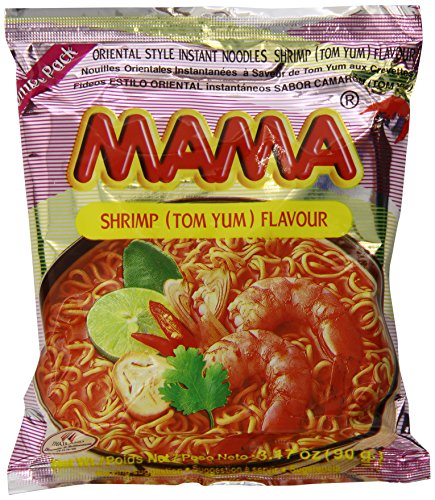
Mama's Tom Yum Shrimp instant noodle does something that most other products on this list do not attempt — it faithfully replicates a specific, well-known Thai restaurant dish rather than inventing its own identity. Tom yum (a hot-and-sour Thai soup traditionally made with lemongrass, kaffir lime leaves, galangal, and chili) is one of the most distinctive and beloved flavor profiles in Southeast Asian cooking, and Mama's instant version captures the core of that experience with impressive accuracy for a packaged product. The broth is sour, fragrant, and moderately spicy with a clear shrimp background note that reads as genuinely seafood-forward rather than artificially flavored.
If you enjoy dishes like hot pot, where bright, aromatic broths form the foundation of the meal, you will feel right at home with this. The noodle itself is thinner and springier than Korean-style ramen, which suits the lighter, more herb-forward broth well. At 3.17 oz per pack and a 20-pack format, it is slightly smaller per serving than the Korean competitors, but the flavor is punchy enough that a single pack still feels satisfying. The soup base authentically reflects the restaurant version — there is real lemongrass aromatic quality in the broth that you do not always find in instant noodle interpretations of complex regional dishes.
One thing to set your expectations around: Tom Yum Mama is a product of Thailand, and the ingredient list reflects that regional character — you will notice sourness and herbal notes upfront before the heat arrives, which is the opposite of what you experience with Korean spicy noodles. For anyone bored of the standard spicy beef or chicken profile, this is the most interesting, most distinctly different option on our list, and it belongs in any rotating pantry of quality instant noodles.
Pros:
Cons:
Nissin is the company that invented instant noodles back in 1958 — a fact well documented in culinary history — so it is fitting that their RAOH line represents the brand's most ambitious attempt at a premium, restaurant-quality instant ramen experience. RAOH Soy Sauce uses a triple-layer noodle production process where the noodles are air-dried and steam-cooked rather than fried, which eliminates the residual oil flavor that defines most conventional instant noodles and produces a cleaner, firmer, more authentic texture that genuinely resembles what you would find at a Japanese ramen shop.
The soy sauce broth (shoyu, in Japanese ramen terminology) is balanced and savory without being overwhelmingly salty — it has a clear, light golden color and a clean umami depth that allows the noodle quality to take center stage. At 3.77 oz per pack and sold in a 6-pack, RAOH is positioned as an occasional treat rather than an everyday pantry staple, which is consistent with its slightly higher price point. You prepare it with 2 cups of water and the broth packet in just 4 minutes, and the result is genuinely impressive for an instant product. You might want to add a soft egg, bamboo shoots, or nori to complete the experience.
If you have ever browsed our list of the best cup noodles looking for something that goes beyond the standard foam cup experience, RAOH represents the natural step up for instant noodle enthusiasts who want more without cooking from scratch. The non-fried noodle distinction is not just marketing — you can taste and feel the difference clearly, and for those who have always found conventional instant noodles too oily or too soft, RAOH solves both problems definitively.
Pros:
Cons:
Yakisoba — Japan's version of stir-fried noodles — is a different category from ramen entirely, and Myojo Ippeichan Yakisoba is the gold standard representation of that style in instant form. These come in individual tub packaging, which doubles as your cooking vessel — you add boiling water, wait, drain through a built-in strainer lid, then mix in the spicy soy sauce and squeeze on the signature mustard mayonnaise topping. The result is a sweet-savory, slightly tangy noodle dish with dried vegetables and a flavor profile that is distinctly Japanese rather than Korean or Southeast Asian.
What makes Ippeichan stand out from other yakisoba options is the quality and balance of the sauce — it has the right level of sweetness without becoming cloying, and the mustard mayo adds a creamy, tangy element that cuts through the richness in a way that feels genuinely inspired. The dried vegetable mix is more generous than you typically find in this format, and the tub design means you are not hovering over a pot — you pour, wait, drain, and eat, with virtually zero cleanup required. The 12-pack format makes this a strong pantry staple, particularly for workplaces or dorm rooms where stovetop access is limited.
Ippeichan is Japan's best-selling instant yakisoba product, and that popularity is earned rather than inherited. The noodles have good body and a satisfying chew even after sitting in boiling water, the sauce packet quantity is well-calibrated for the noodle volume, and the overall experience feels more curated than most instant offerings. If you want something different from standard ramen soup, and you enjoy the savory-sweet Japanese stir-fry tradition, this 12-pack delivers consistent, crowd-pleasing results every time.
Pros:
Cons:
The single biggest distinction in instant noodles is whether you are buying a soup-based product or a dry stir-fry product. Soup noodles like Shin Ramyun and RAOH give you a broth-forward experience where the liquid is as important as the noodles themselves — these are satisfying, warming, and filling in a way that is closer to a traditional meal. Stir-fry products like Mi Goreng, Buldak, and Ippeichan eliminate the broth entirely, coating the noodles in concentrated sauce instead, which produces a more intensely flavored, denser dish. Neither style is objectively better — your preference depends entirely on what kind of eating experience you are after. If you eat noodles primarily as comfort food on cold nights, lean toward soup. If you want something that packs more flavor per bite and travels well, stir-fry is the answer.
Spice level is one of the most important variables to match to your own tolerance before committing to a bulk purchase. On this list, the spectrum runs from very mild (Indomie Mi Goreng, which has gentle heat) through moderate (Mama Tom Yum, Shin Ramyun with reduced seasoning) to intense (standard Shin Ramyun) to genuinely extreme (Samyang Buldak 2X Spicy, which should be approached with real caution if you are spice-sensitive). Most Korean instant noodles let you control heat by using less of the soup base packet, which gives you flexibility even with products marketed as spicy. If you are buying for a household with mixed heat preferences, start with a single pack before committing to a 20-pack order.
Instant noodles are produced using two primary methods: frying (most common, produces a faster-cooking noodle with a slightly oily quality) and air-drying or steam-drying (less common, produces a cleaner, firmer texture without residual oil). Nissin RAOH is the clearest example of the non-fried premium approach on this list. For most people, fried noodles are perfectly fine — the texture difference is subtle unless you eat instant noodles very frequently and have developed a specific preference. However, if you have noticed that conventional instant noodles feel greasy or too soft, a non-fried option will be a significant and welcome upgrade.
Amazon is one of the best places to buy instant noodles precisely because of the bulk packaging options available. A 30-pack of Indomie Mi Goreng delivers extraordinary per-serving value, while a 6-pack of Nissin RAOH sits at the premium end of the spectrum. The right answer depends on how frequently you eat instant noodles and whether you are buying for one person or stocking a kitchen used by multiple people. For everyday use, the 20-pack or 30-pack formats offer the best combination of variety and cost efficiency. For occasional premium meals, the smaller packs of higher-end products make more economic sense. Consider your consumption rate honestly before ordering — instant noodles do have a shelf life, typically one to two years, but buying more than you will realistically eat is still wasted money.
These are three distinct styles of Asian instant noodles. Ramen (like Shin Ramyun and RAOH) is a Japanese-origin soup noodle served in a seasoned broth. Yakisoba (like Myojo Ippeichan) is a Japanese dry stir-fry noodle coated in sweet-savory sauce, traditionally without broth. Mi Goreng (like Indomie) is an Indonesian dry stir-fry noodle with multiple seasoning packets including sweet soy sauce and chili. Each has a distinct flavor profile and preparation method, so they are not interchangeable even though they all fall under the broad category of instant noodles.
Instant noodles are safe to eat as part of a varied diet, but they are not a nutritionally complete meal on their own. Most are high in sodium and refined carbohydrates, with minimal protein, fiber, or vitamins. Eating them occasionally as a convenient meal or snack is perfectly fine for most healthy adults. If you eat them frequently, nutritionists recommend adding vegetables, eggs, lean protein, or other nutrient-dense toppings to balance the bowl and reduce the impact of the high sodium content.
Indomie Mi Goreng is the best choice for low spice tolerance — it has a mild, sweet-savory flavor with only gentle heat that most people find very approachable. Nissin RAOH Soy Sauce is another excellent option, with a clean, balanced broth and no meaningful heat at all. If you want to try Korean noodles like Shin Ramyun, use only half the seasoning packet to dramatically reduce the spice level while keeping the savory beef flavor.
Boil the noodles in water for about four minutes, then drain almost all the water — leave about 8 tablespoons of water in the pot. Add the liquid sauce packet and stir-fry over medium heat for about 30 seconds until the sauce coats the noodles evenly. Add the dry flake topping and mix well. The key mistake most people make is draining too much or too little water — leaving exactly the right small amount helps the sauce emulsify properly and coat every strand of noodle.
Most instant noodles have a shelf life of 12 to 24 months from the manufacturing date. When you buy in bulk on Amazon, the products are typically fresh with substantial shelf life remaining, but it is worth checking the best-by date on arrival, particularly for large 20-pack or 30-pack orders. Store them in a cool, dry location away from direct sunlight to preserve quality and prevent the packaging from degrading. Fried noodles can develop an off-flavor closer to their expiration date due to oil oxidation, so consume them within the printed window.
Absolutely — and this is one of the best ways to upgrade your instant noodle experience quickly. A soft-boiled or poached egg adds protein and richness. Thinly sliced vegetables like bok choy, spinach, mushrooms, or bean sprouts add fiber and micronutrients and cook in the hot broth in about two minutes. A slice of processed cheese melted into Korean broth creates a creamy, crowd-pleasing variation. Frozen dumplings, tofu cubes, or leftover rotisserie chicken all integrate well. Even small additions dramatically improve the nutritional profile and make a single pack feel like a genuine meal.
Whether you go with the universally beloved Nongshim Shin Ramyun as your everyday staple, stock up on Indomie Mi Goreng for maximum value, or treat yourself to the premium non-fried experience of Nissin RAOH, every product on this list earns its place in a well-stocked pantry in 2026 — click through to Amazon, check the current price on the one that fits your taste and budget, and start building the instant noodle collection your kitchen deserves.
 |
 |
 |
 |

About Christopher Jones
Christopher Jones holds an MBA from the University of San Francisco and brings a business-minded approach to kitchen gear evaluation — assessing products not just for performance but for long-term value, build quality, and real-world usability in everyday home cooking. He has spent years testing appliances, cookware, and kitchen gadgets with the same analytical rigor he developed in business school. At BuyKitchenStuff, he covers kitchen appliance reviews, buying guides, and practical cooking tips.
