Kitchen Gadgets & Equipment Reviews ›
by Rick Goldman
Americans consume over 4.6 billion servings of instant noodles every year, and cup noodles account for the fastest-growing segment of that market. Whether you're a college student pulling late-night study sessions, a busy professional who needs lunch in three minutes flat, or someone who simply loves the comfort of a warm, savory bowl of ramen, there's a cup noodle out there that fits your taste perfectly.
The cup noodle landscape has changed dramatically in recent years. You're no longer limited to basic chicken or beef flavors from a single brand. In 2026, options range from classic American-style instant ramen to fiery Korean spicy noodles and Indonesian stir-fry cups. Microwaveable paper cups have replaced styrofoam across most major brands, and many formulas now feature reduced sodium and no added MSG. With so many choices on the shelf, picking the right one can feel surprisingly overwhelming.
We tested dozens of cup noodles across flavor profiles, convenience, nutritional content, and overall value. Below, you'll find our picks for the 7 best cup noodles you can buy in 2026, along with a detailed buying guide and answers to common questions. If you're exploring other instant noodle options, this roundup will give you a solid starting point.

Contents




There's a reason Nissin's Chicken Cup Noodles has been a pantry staple for decades. This is the cup that started it all — the original instant ramen in a cup, and it still holds up remarkably well in 2026. The flavor is clean, savory, and comforting without being overpowering. You get dehydrated chicken pieces, carrots, corn, and peas in a light broth that tastes better than it has any right to at this price point.
The updated microwaveable paper cup is a welcome improvement. Simply add water and microwave for 2 minutes and 15 seconds. No pot, no stove, no cleanup beyond tossing the cup. For dorm rooms, office break rooms, and road trips, this is about as convenient as food gets. The noodles themselves have a satisfying chew when you follow the timing instructions — go too long and they turn mushy.
Nissin has also reformulated with reduced sodium and no added MSG, which addresses one of the biggest historical criticisms of instant ramen. It's still not health food, but it's a noticeable step in the right direction. At roughly a dollar per serving in the 12-pack, the value here is hard to beat.
Pros:
Cons:
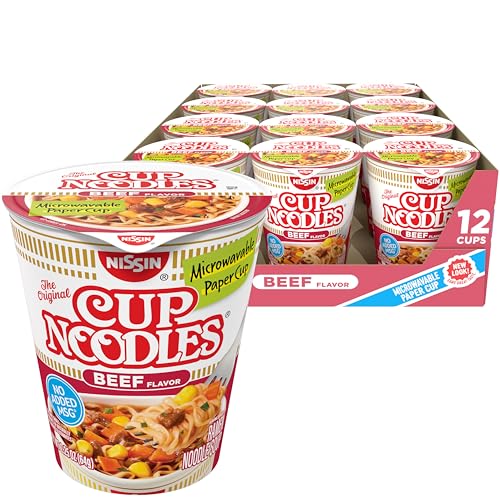
If chicken feels too mild for you, Nissin's Beef Cup Noodles delivers a deeper, more robust broth experience. The beef seasoning is noticeably richer than the chicken variant, with a warm, slightly peppery backbone that fills the room the moment you peel back the lid. It's the kind of aroma that makes coworkers in the break room suddenly hungry.
Like its chicken counterpart, this version comes in microwaveable paper cups with the same 2:15 cook time. The noodle texture is identical — thin, springy, and best eaten promptly. Where it diverges is in the depth of the broth flavor. Nissin describes it as "a symphony of spices," which is marketing language, but there's truth behind it. You'll pick up notes of onion and garlic alongside the beef base. It pairs well with a dash of hot sauce or a squeeze of sriracha if you want to dress it up.
The 12-pack pricing keeps this firmly in budget territory. One thing to note: while the broth is heartier than chicken, the actual beef content is minimal. You're getting beef-flavored broth, not chunks of meat. For what it is, though, it's one of the most satisfying quick meals under two dollars.
Pros:
Cons:
Shrimp is where Nissin's Cup Noodles lineup gets interesting. This flavor has a dedicated fanbase, and for good reason — the shrimp seasoning adds a briny, slightly sweet dimension that the chicken and beef versions simply can't replicate. You'll find small dehydrated shrimp pieces in the mix, which rehydrate into surprisingly recognizable bites of seafood.
The broth lands somewhere between light and medium in terms of body. It's not as rich as the beef, but it has more character than the chicken. If you've ever had a basic shrimp wonton soup at a casual Asian restaurant, the flavor profile is in that neighborhood. The reduced sodium formula helps keep the saltiness in check, which is especially important in seafood-flavored products where too much sodium can overpower the delicate shrimp notes.
Preparation is identical to the rest of the Nissin lineup — add water, microwave for 2:15, and you're eating. One minor gripe: the shrimp pieces are tiny and few. You'll taste shrimp in every sip of broth, but you won't be fishing out generous chunks. For a quick seafood fix, though, this delivers well above its price point. If you're watching your overall diet, you might want to pair this with something more substantial, like a vegetable salad to round out the meal.
Pros:
Cons:
Nongshim Shin Ramyun is one of the most iconic Korean instant noodles on the planet, and the cup version delivers that signature spicy beef flavor in a portable format. This is a significant step up in heat and complexity from anything in the Nissin lineup. The broth is deep, rich, and carries a genuine chili kick that builds with each sip. If you find standard American cup noodles bland, Shin Ramyun is your gateway into Korean ramyun.
At 2.64 ounces per cup, these are slightly larger than Nissin's 2.25-ounce cups, and you can feel the difference. The noodles are thicker and chewier, with a more satisfying bite. The soup base includes a separate seasoning packet that you can adjust to control the heat level — use the full packet for authentic spiciness, or hold back a third if you're heat-sensitive. The broth also works beautifully as a base for add-ins. Crack an egg in, toss in some kimchi, or drop a slice of American cheese on top (a popular Korean hack that sounds strange but works surprisingly well).
The 6-pack format means you're paying more per cup than Nissin's 12-packs, but the quality justifies the premium. Nongshim's noodle texture and broth depth are in a different league. According to the World Instant Noodles Association, South Korea leads the world in per-capita instant noodle consumption, and products like Shin Ramyun are a big reason why.
Pros:
Cons:
If Shin Ramyun is the gateway, Samyang Buldak is the destination. These are the noodles behind the viral "fire noodle challenge" that has generated millions of YouTube videos worldwide. Make no mistake — these are genuinely, intensely hot. The Scoville level sits well above anything else on this list, and casual spice fans should approach with caution. But for true heat enthusiasts, this is one of the most thrilling cup noodle experiences you can have.
Unlike the other products here, Buldak is a stir-fried noodle, not a soup. You drain the water after cooking, then toss the noodles in the spicy chicken sauce. The result is a sticky, saucy, chewy noodle that coats your mouth with fire and a subtle sweetness underneath. The flavor is more complex than pure heat — there's roasted chicken, garlic, and a hint of soy in the sauce base. The cup format means no bowl needed; you cook and eat right from the container.
The 6-pack is priced similarly to the Nongshim. Be warned: your first time eating Buldak, have milk or yogurt nearby. Water won't help. These noodles are addictive once you build up your tolerance, and they're perfect for camping, travel, or whenever you need a quick meal that packs a serious punch.
Pros:
Cons:
Indomie Mi Goreng is a household name across Southeast Asia, Africa, and increasingly in the West. The cup version brings Indonesia's most beloved instant noodle into a portable, no-bowl-needed format. Like the Samyang Buldak, this is a dry stir-fry noodle — you drain the water and mix in the seasoning. But where Buldak goes for pure fire, Mi Goreng focuses on layered, savory complexity.
What sets Indomie apart is the multi-packet seasoning system. You get separate packets of seasoning oil, sweet soy sauce, chili powder, and fried onion flakes. The combination creates an umami-rich, slightly sweet, lightly spicy flavor that's unlike anything else on this list. The fried onion flakes add a textural crunch that elevates the entire experience. The noodles themselves are thinner and softer than Korean varieties, with a pleasant slippery quality that absorbs the seasoning beautifully.
The 12-pack offers strong value, and the halal certification makes it accessible to a broader audience. Preparation takes about 3 minutes — slightly longer than the Nissin cups — because you need to boil, drain, and then stir-fry briefly. It's a couple of extra steps, but the payoff in flavor is substantial. If you enjoy exploring global noodle varieties, pair your noodle adventures with a quality rice cooker for complete Asian-inspired meals at home.
Pros:
Cons:
The Nissin Top Ramen Bowl is for those moments when a standard 2.25-ounce cup just isn't enough. At 3.42 ounces, this bowl gives you roughly 50% more noodles and broth than a regular Cup Noodle. If you're using cup noodles as an actual meal rather than a snack, this is the one that will actually leave you satisfied. The wider bowl format also makes it easier to add extras like a soft-boiled egg, sliced scallions, or leftover vegetables.
The flavor is classic Top Ramen chicken — familiar, comforting, and straightforward. Nissin keeps it simple here with no added MSG, which keeps the taste clean. The noodles in the bowl format are slightly wider than the cup version, giving them a bit more chew and substance. Preparation takes just a few minutes, and the bowl shape makes eating more comfortable than hunching over a narrow cup.
The 6-pack pricing puts this at a higher per-serving cost than the standard Cup Noodles, but you're getting significantly more food. For office lunches or quick dinners when you need something more filling, this bowl format strikes a good balance between convenience and portion size. It's also a great option for pairing with sides — consider adding some sauteed vegetables for a more complete meal.
Pros:
Cons:
This is the most personal decision you'll make. Cup noodles range from mild, comforting broths (Nissin Chicken) to face-melting spicy challenges (Samyang Buldak). Think about when and where you'll be eating them. A mild chicken cup is great for a quick work lunch, but you probably don't want to be sweating through a Buldak during a meeting. If you're new to Asian instant noodles, start with Nissin and work your way up to Nongshim before attempting Samyang.
Also consider whether you prefer soup-based or stir-fried. Soup noodles (Nissin, Nongshim) give you a warm broth to sip. Stir-fried options (Indomie, Samyang) are saucier and more intensely flavored, but you won't have that broth comfort. Both styles have devoted fans — it comes down to personal preference.
Cup noodle portions vary more than you might expect. Standard cups like Nissin run 2.25 ounces, while the Top Ramen Bowl jumps to 3.42 ounces. That difference matters if you're relying on cup noodles as a meal rather than a snack. Key nutritional factors to watch include:
Most modern cup noodles use microwaveable paper cups — add water, microwave for 2-3 minutes, done. But some require additional steps. Stir-fry cups (Indomie, Samyang) need you to drain the water before adding seasoning. This takes an extra minute and requires access to a sink. If you're buying cup noodles specifically for maximum convenience — eating at your desk, on a road trip, or camping — soup-based cups with built-in microwave readiness are the simplest option.
Buying in bulk is the most economical approach. Nissin's 12-packs bring the per-cup cost well under a dollar, while Korean and specialty brands in 6-packs run slightly higher. Consider variety packs if you're new to the category — trying several flavors before committing to a bulk purchase saves you from being stuck with 12 cups of something you don't love. Storage is straightforward: keep them in a cool, dry place, and they'll last 6-12 months easily.
Cup noodles are fine as an occasional meal, but eating them daily isn't advisable. The primary concern is sodium — even reduced-sodium versions contain 800mg or more per serving. They're also low in protein, fiber, and essential vitamins. If you eat them frequently, boost the nutritional value by adding vegetables, eggs, or lean protein. Used as a quick convenience meal a few times a week alongside a balanced diet, they're perfectly acceptable.
The easiest upgrades are a soft-boiled or poached egg, a handful of fresh scallions, and a few drops of sesame oil. Sriracha or chili flakes add heat to milder varieties. Leftover vegetables — spinach, corn, mushrooms — rehydrate nicely in the hot broth. For Korean-style cups, a slice of American cheese melted into the broth adds a creamy richness. Lime juice and fresh cilantro work well with shrimp flavors. The key is treating the cup noodle as a base, not a finished product.
The core noodle product is similar, but cup noodles come in a self-contained, microwave-safe cup that eliminates the need for a separate bowl or pot. Packet ramen is typically cheaper per serving and available in larger portions, but requires cookware. Cup noodles prioritize convenience — you add water and eat from the same container. Packet ramen generally offers slightly better noodle texture since you boil them in a pot with more water.
Yes. Most cup noodles can be prepared with just boiling water. Boil water in a kettle, pour it into the cup to the fill line, cover with the lid, and wait 3-4 minutes (slightly longer than the microwave method). This is actually the original preparation method before microwaveable cups became standard. The results are nearly identical, though microwave preparation tends to produce a slightly hotter, more evenly cooked result.
Most cup noodles have a shelf life of 6 to 12 months from the manufacturing date. Store them in a cool, dry place away from direct sunlight. Avoid storing them near strong-smelling items, as the packaging can absorb odors over time. Check the expiration date on the bottom of each cup. While eating them slightly past the date is generally safe, the flavor and texture of the noodles will degrade, and the oils in the seasoning can go rancid over extended periods.
Generally, yes. Korean brands like Nongshim and Samyang are formulated for a market that enjoys significant heat. Samyang Buldak in particular is among the spiciest instant noodles available anywhere. Japanese brands like Nissin tend to focus on milder, more approachable flavors designed for broad international appeal. That said, both countries produce a wide range of heat levels — you can find mild Korean options and spicy Japanese ones. The products on this list reflect the general trend, with Nongshim and Samyang delivering noticeably more heat than any of the Nissin offerings.
The best cup noodle isn't the most expensive or the spiciest — it's the one that matches your taste, your schedule, and the amount of heat you can actually handle.
 |
 |
 |
 |

About Rick Goldman
Rick Goldman grew up traveling the Pacific Coast and developed an early appreciation for regional and international cuisines through exposure to diverse food cultures from a young age. That culinary curiosity shaped his approach to kitchen gear — he evaluates tools based on how well they perform across different cooking styles, ingredient types, and meal occasions. At BuyKitchenStuff, he covers kitchen equipment reviews, recipe guides, and food-focused buying advice.
