Kitchen Gadgets & Equipment Reviews ›
by Rick Goldman
Only 9 percent of all plastic ever produced has been recycled, according to a landmark study published in Science Advances, and the average American still throws away 4.4 pounds of trash every single day. Those numbers hit differently once you realize your trash bag is part of the problem — or part of the solution. In 2026, the market for eco-friendly trash bags has matured enough that you no longer have to sacrifice strength or convenience to make a greener choice, and the seven options in this guide prove exactly that.
Eco-friendly trash bags generally fall into two categories. Compostable bags are made from plant-based materials like corn starch that fully break down in a composting system (a controlled environment where organic material decomposes into nutrient-rich soil). Biodegradable bags degrade faster than conventional plastic but may still leave behind small residue under certain conditions. The certifications on the label are your most reliable guide: ASTM D6400 (the American Society for Testing and Materials standard for compostable plastics) and BPI (Biodegradable Products Institute) certification both confirm that a bag will break down reliably in an industrial composting facility. OK compost HOME certification, issued by TÜV Austria, means a bag can also break down in your backyard compost pile — a higher bar that fewer products clear.
We researched and evaluated seven of the best eco-friendly trash bags available right now, covering sizes from a compact 3-gallon food scrap liner all the way up to a 39-gallon large-load bag. Whether you're lining a kitchen compost pail, a tall kitchen bin, or an outdoor yard waste container, you'll find a strong match here. If you're already working to reduce your kitchen's overall footprint, our guide to the best water filters for 2026 covers another high-impact upgrade worth considering. You can also browse all of our kitchen product reviews to find eco-conscious picks across every category.
Contents




Seventh Generation has been a trusted name in sustainable household products for decades, and their Extra Strong Tall Kitchen Trash Bags carry that reputation into a practical, everyday package. Each bag is built using Gencore 3-layer technology, a proprietary three-ply construction that stacks layers of recycled content for durability you can actually feel when you pick up a heavy bag. The 13-gallon capacity fits the most common tall kitchen bins perfectly, and the flap tie closure is the kind of no-fuss design that works every single time — no drawstrings to jam, no flimsy grips to tear off under load.
What sets this bag apart from many eco-friendly options is that it doesn't ask you to compromise on strength in the name of sustainability. The extra-strength construction handles wet food waste, packaging scraps, and everything else a busy kitchen generates without puncturing or leaking. You get 30 bags per roll across the pack of 6, which is a generous supply that keeps costs reasonable over time. These bags are made with a percentage of recycled plastic content, which reduces the demand for virgin petroleum-based materials even if they aren't fully compostable — an important trade-off to understand before buying.
If you're transitioning away from conventional plastic bags for the first time, this is a smart starting point because the performance gap between this and a standard bag is essentially zero. You'll notice the slightly thicker feel of the three-layer construction when you open a bag, and that reassurance carries through into daily use. The pack of 6 is also convenient for households that go through bags quickly, since you buy in bulk rather than scrambling for a single roll.
Pros:
Cons:
UNNI's 13-gallon compostable drawstring bags represent the gold standard for certification in this category, carrying approvals from BPI (ASTM D6400 industrial composting), OK compost HOME from TÜV Austria (backyard composting), and CMA (Compost Manufacturing Alliance, which verifies real-world decomposition in actual composting facilities, not just lab conditions). That triple certification stack is genuinely rare and tells you these bags have been rigorously verified across multiple independent testing bodies. If you participate in a municipal curbside composting program or maintain your own backyard pile, UNNI gives you the most flexibility of any 13-gallon bag on this list.
At 1 mil (one thousandth of an inch, the standard measurement for bag thickness) and measuring just under 24 inches by 25 inches, the UNNI bag is thick enough for heavy mixed kitchen waste while still being flexible enough to line a standard tall kitchen bin cleanly. The drawstring closure is a genuine upgrade over flap ties when you're dealing with smelly food scraps, since you can pull the strings, knot the bag, and get it to the bin without opening the top. The 30-count roll is on the smaller side compared to some competitors, but because these bags meet home composting standards, you can literally throw the empty rolls into your compost bin at the end — zero waste from packaging to disposal.
UNNI's San Francisco roots show in the product's design philosophy, which prioritizes real-world composting performance over marketing claims. The bags do perform best when used within 9 months of purchase, as the plant-based materials can begin breaking down with extended exposure to heat and moisture before you even use them — store them in a cool, dry cabinet and you'll have no issues. For households that want the most comprehensive certification coverage available in 2026, UNNI is the clear choice at this size.
Pros:
Cons:
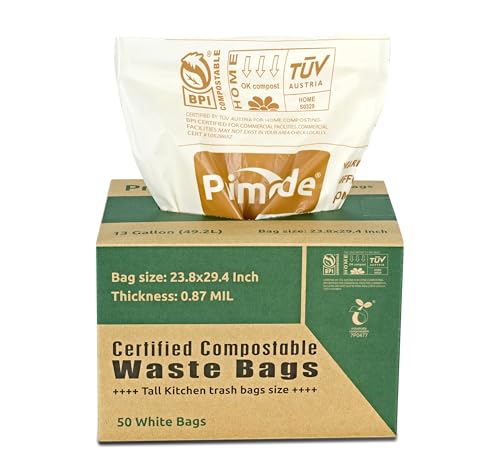
Primode delivers a compelling combination of volume and verified eco credentials that makes this the strongest value pick in the 13-gallon compostable category. You get 50 bags per pack at 0.87 mil thickness, which is slightly thinner than the UNNI at 1 mil but still substantial enough for most kitchen waste loads, and the generous count per package brings the price per bag down considerably compared to the premium options. Both BPI (ASTM D6400) certification and TÜV Austria certification are on board here, confirming compliance with US industrial composting standards and European backyard composting standards respectively.
At 23.8 by 29.4 inches, the Primode bag is one of the larger 13-gallon options in terms of dimensions, which means it folds over the rim of most tall kitchen bins with plenty of excess to grip — no frustrating slippage during the bag change. The natural green color is a simple visual cue that helps distinguish compostable bags from regular trash bags if you're running two bins side by side for sorting. The BPI certification in particular means these bags are accepted by many municipal composting programs that require certified compostables, so check your local program's requirements before you buy any bag on this list.
For households that go through 13-gallon bags quickly or who want to stock up without spending heavily per bag, Primode is the practical answer. The slightly thinner construction means you'll want to avoid overloading with sharp-edged items like glass fragments, but for standard food scraps, coffee grounds, and vegetable peelings it performs cleanly. Keeping the kitchen clean and organized is easier when your cleanup tools actually work — if you're interested in other kitchen hygiene products, our roundup of the best degreasers for range hoods covers complementary cleaning essentials that pair well with a zero-waste kitchen setup.
Pros:
Cons:
AYOTEE's compostable bags take a different technical approach than most of the competition, using PSM (Plastarch Material, a blend of natural plant starch extract and other biodegradable components) as the primary raw material rather than the PLA (polylactic acid, a corn-starch-derived plastic) used in most certified compostable bags. The ASTM D6866 certificate on these bags (which verifies that the carbon content comes from biological sources rather than petroleum) is meaningful proof that the material is genuinely plant-derived. At 1.18 mil thickness, these are the thickest bags on this list, and at 23.6 by 31.5 inches, they're also among the tallest — fitting bins in the 13 to 15-gallon range cleanly.
The 60-count pack across four rolls of 15 makes AYOTEE one of the most generous options available for buyers who want a large supply on hand, and the extra-thick 1.18 mil construction is a genuine differentiator for households dealing with heavier loads including baby diapers, cat litter, or food waste with sharp packaging mixed in. The increased thickness adds noticeable resistance to puncture and tear compared to standard compostable bags, and the size flexibility of the 13-to-15-gallon range means these work in a broader variety of bin sizes than most competitors will.
One important caveat to understand before purchasing: AYOTEE bags are PSM-based and degrade under industrial conditions, but they are not rated for backyard composting. You shouldn't toss these into your home compost pile expecting them to disappear over a season the way a BPI+OK compost HOME certified bag would. For households that set out municipal organic waste bins for industrial composting pickup, or who simply want a plant-based bag that won't go into a composting stream at all, AYOTEE delivers exceptional strength at a competitive count per pack. Think of it as a thick, durable, plant-derived liner rather than a bag you'll be composting directly.
Pros:
Cons:
BioBag is one of the most recognized names in compostable packaging, and their 3-gallon food scrap bags are a staple product for households that maintain a dedicated countertop compost pail next to the sink. At 16.9 by 17.7 inches and 0.64 mil thickness, these bags are designed specifically to line small kitchen composting pails cleanly and snugly, keeping the inside of the bin free of debris and odor between emptying cycles. The 100-count pack is excellent value for a bag you'll be swapping out every few days, and the frustration-free certified packaging aligns with the zero-waste philosophy that these bags are built to support.
BioBag meets BPI certification and ASTM D6400 standards, which means these bags are accepted by most municipal curbside composting programs across the United States that require certified compostables. More unusually for this category, BioBag's 3-gallon bags are also home compostable and compatible with backyard compost systems — you can deposit the whole bag and its contents directly into your backyard pile, and both will break down without leaving plastic residue. That's the most complete and convenient composting experience available, and it removes any sorting anxiety entirely from the process.
The manufacturing is another genuine differentiator: these bags are manufactured in the USA using imported Italian resin, which is a more traceable and accountable supply chain than many overseas alternatives. For buyers who prioritize American manufacturing alongside their eco credentials, BioBag is the only option on this list that delivers both. The 0.64 mil thickness is intentionally lighter than kitchen-bin bags because 3-gallon loads of food scraps are manageable without the heavier gauge, and the reduced material keeps decomposition faster once the bag hits the compost pile.
Pros:
Cons:
Full Circle's 4-gallon compostable bags address the single biggest complaint about compostable liners in their size range: premature failure when wet food scraps sit against the bag wall for more than a day. The sealed bottom construction is engineered to distribute weight evenly across the entire base seam rather than concentrating stress at a single point, and Full Circle states that the reinforced design provides three to five days of reliable performance before replacement is needed — a meaningful window compared to thinner bags that start softening within 24 hours in humid conditions.
At 21.6 by 17.7 inches, this 4-gallon bag is sized for kitchen compost bins, bathroom trash cans, and office bins, making it one of the more versatile small-bin options available. The BPI and TUV Home dual certification confirms these bags meet both US industrial composting standards and European home composting standards, so you have the same flexibility you get with UNNI but in a smaller size. The unscented formula is a deliberate choice — artificial fragrances in compost bags mask odors rather than eliminating them, and they can disrupt the microbial activity in your compost pile, so Full Circle's no-fragrance approach is actually the smarter design for serious composters.
The 25-count pack is modest compared to some options, which will matter to households that swap bags every couple of days, but the premium sealed-bottom construction justifies a slightly higher per-bag spend if you've been frustrated by bags that fail before the bin is full. Full Circle is also explicit that microplastics are absent from these bags, which is worth noting since some biodegradable bags that rely on oxo-degradable (additive-assisted fragmentation) chemistry can leave microplastic particles behind during breakdown. These bags produce none of that residue, breaking down cleanly into organic matter.
Pros:
Cons:
Stout by Envision fills a gap that the other bags on this list don't address at all: large-capacity waste management for high-volume household or commercial use. At 39 gallons and 33 by 44 inches, these are the biggest bags in this guide, and the "controlled life-cycle" designation means the plastic is engineered to degrade faster than conventional trash bags under the specific conditions found in a landfill — exposure to oxygen, heat, and moisture — rather than requiring an industrial composting facility. That makes these bags a practical eco option for households or businesses that generate substantial waste in categories that can't be composted, like mixed dry goods or commercial refuse.
The 40-bag case (two rolls of 20) is a cost-effective format for anyone who goes through large bags frequently, and the brown color signals eco intent visually in communal settings like offices or apartment common areas. Envision produces these bags through a social enterprise model that provides employment and services to people who are blind or visually impaired, so your purchase contributes to that mission directly — a social dimension that most eco bag competitors don't offer alongside the environmental angle.
It's important to be clear about what "controlled life-cycle" means and doesn't mean: these bags are not certified compostable, they won't break down in your backyard, and they shouldn't go into industrial composting streams. What they do is degrade more completely over time in landfill conditions compared to standard polyethylene bags that can persist essentially unchanged for hundreds of years. For large-scale waste that has nowhere to go but the landfill, this is a meaningful improvement over doing nothing, even if it's a different category of eco benefit from the certified compostable bags reviewed above. Made in America, the bags also carry the domestic manufacturing advantage for buyers who prioritize US-made products.
Pros:
Cons:
The most important thing you can do before buying any eco-friendly trash bag is understand what its certifications actually guarantee, because the marketing language around "biodegradable" and "eco-friendly" is almost entirely unregulated. BPI certification (Biodegradable Products Institute) paired with ASTM D6400 compliance is the most widely recognized US standard, and it confirms that a bag will break down in an industrial composting facility within a specific timeframe, typically 180 days. OK compost HOME certification from TÜV Austria is the stricter standard — it certifies backyard composting compatibility, meaning the bag breaks down in the lower-temperature, less-controlled conditions of a home pile. If your municipality offers curbside organic pickup, check their accepted materials list against the specific certification on the bag before you buy. Most programs specify BPI or ASTM D6400 as their minimum requirement in 2026.
Buying a bag that doesn't fit your bin is the fastest way to get frustrated with any product in this category, and that frustration leads most people to abandon eco-friendly options and go back to standard bags. Measure your bin before you order: most tall kitchen bins are in the 10-to-13-gallon range, small compost pails are typically in the 1-to-4-gallon range, and outdoor yard waste containers run from 30 to 45 gallons. Pay attention to the bag's listed dimensions (width × height) as well as its gallon rating, because bags cut tall and narrow or short and wide can fit very differently in bins that are technically the same nominal capacity. When in doubt, the slightly larger size is always the safer choice.
Compostable bag thickness is measured in mils, where one mil equals one thousandth of an inch. For light food scraps and vegetable peelings, a bag in the 0.64-to-0.87 mil range performs adequately and breaks down more quickly in the compost pile. For heavier mixed kitchen waste that includes packaging, coffee grounds, and the occasional sharp item, you want at least 1 mil — ideally 1.18 mil if you're buying the AYOTEE-style heavy-duty option. Matching bag thickness to your actual waste type prevents the most common failure mode for eco-friendly bags, which is tearing mid-transfer on the way to the outdoor bin. You can also see this principle in action when you're choosing kitchen tools that need to handle specific loads, similar to how you match a tool's specs to its task when buying something like a quality electric can opener — specs translate directly into real-world performance.
Drawstring closures are the most convenient for compostable bags because you can close and knot the bag one-handed, and the tied closure keeps odors contained during the trip to the outdoor bin. Flap ties are the second-best option for the same reason — they work every time without any drawstring mechanism that can tangle or tear under a heavy load. Open-top bags with no closure require you to knot the bag manually, which works fine but takes slightly longer and can be awkward with a very full bag. If odor control matters to you — and it usually does with food scraps in warm weather — prioritize bags with drawstring or flap tie closures over open-top designs when comparing otherwise similar options.
Compostable bags are certified to break down into non-toxic organic matter within a specific timeframe in a composting environment, either industrial or home, depending on the certification. Biodegradable bags will eventually break down, but the timeline is unspecified and they may leave residue or microplastic fragments behind during breakdown. In 2026, "biodegradable" on a label without a supporting certification like BPI or ASTM D6400 carries no regulatory guarantee, so always look for the specific certification, not just the word.
Most curbside municipal composting programs in the US accept BPI-certified bags that meet ASTM D6400 standards, including UNNI, Primode, BioBag, and Full Circle from this list. However, programs vary by city and county, and some accept only specific brands or require unbagged organic material. Check your local program's accepted materials list before committing to a bulk purchase, as program requirements are the deciding factor rather than the certification alone.
Most compostable bags are rated for 9 to 12 months from manufacture when stored in a cool, dry environment away from direct sunlight and excess humidity. UNNI, for example, explicitly recommends use within 9 months for best performance. Buying in quantities you can realistically use within that window is smarter than bulk-buying a year's worth at once, since bags stored in warm or humid conditions like under-sink cabinets can begin softening before use.
The best compostable bags in the 1-mil-and-above range, including UNNI at 1 mil and AYOTEE at 1.18 mil, handle standard heavy kitchen trash including food scraps, wet paper, and mixed household waste without tearing under normal conditions. The key is matching the thickness to your actual load — lighter bags rated at 0.64 to 0.87 mil are designed for food scrap collection, not full-weight general kitchen trash. Overfilling any compostable bag beyond 80 percent of its rated capacity increases tear risk near the closure significantly.
ASTM D6400 is the standard published by the American Society for Testing and Materials that specifies the requirements for labeling plastics as compostable in municipal and industrial aerobic composting facilities. To earn this certification, a plastic must disintegrate, biodegrade, and leave no toxic residue within the timeframe specified in the standard, which is typically 180 days in a commercial composting environment. A bag displaying ASTM D6400 compliance has been independently tested and confirmed to meet these requirements, not just self-claimed by the manufacturer.
Seventh Generation's Extra Strong bags are made with a percentage of recycled plastic content, which reduces demand for newly extracted petroleum and diverts existing plastic from waste streams. They are not compostable and will not break down in a composting environment, but incorporating recycled content into the manufacturing process carries a genuine environmental benefit separate from end-of-life compostability. For buyers who want to reduce plastic production without switching fully to compostable bags — especially those without access to a municipal composting program — recycled-content bags are a meaningful step in the right direction.
 |
 |
 |
 |

About Rick Goldman
Rick Goldman grew up traveling the Pacific Coast and developed an early appreciation for regional and international cuisines through exposure to diverse food cultures from a young age. That culinary curiosity shaped his approach to kitchen gear — he evaluates tools based on how well they perform across different cooking styles, ingredient types, and meal occasions. At BuyKitchenStuff, he covers kitchen equipment reviews, recipe guides, and food-focused buying advice.
