Kitchen Gadgets & Equipment Reviews ›
by Daisy Dao
You're standing in the kitchen aisle, staring at a shelf of electric can openers that all look vaguely similar, and you're wondering which one will actually last more than six months without jamming or leaving jagged metal edges on every lid. Maybe your hands aren't as strong as they used to be, or you're just tired of wrestling with a manual opener after a long day. Whatever brought you here, the right electric can opener can quietly become one of those small kitchen upgrades you wish you'd made years ago.
We've spent considerable time evaluating the top electric can openers available in 2026, looking at everything from cutting mechanisms and build quality to ease of cleaning and counter space requirements. Whether you need a compact cordless model for outdoor use, an under-cabinet unit that frees up workspace, or a reliable countertop opener with extra features like a knife sharpener, this guide covers the full range of options worth considering. If you're also upgrading other small appliances, our reviews section covers dozens of kitchen tools that make daily cooking easier.
Below you'll find detailed reviews of seven standout electric can openers, followed by a buying guide that breaks down the features that actually matter and a FAQ section addressing the most common questions buyers have. Each product has been assessed on reliability, safety features, ease of use, and overall value for the price.
Contents


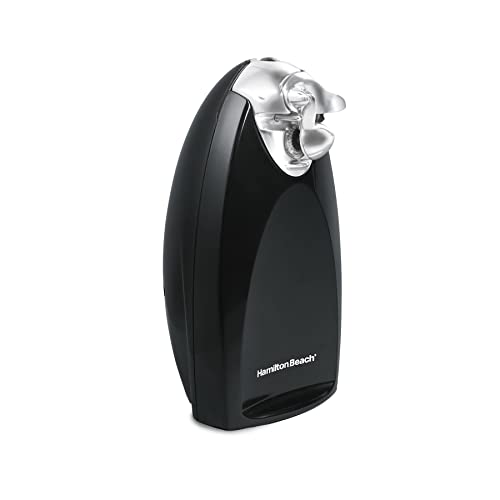

The Hamilton Beach Smooth Touch takes a fundamentally different approach to can opening by cutting along the side of the can rather than the top, which means the lid comes off without any of those razor-sharp edges that have been causing kitchen injuries for decades. This side-cutting mechanism also means you can actually reuse the lid to cover leftover food in the refrigerator, which is a small but genuinely useful convenience that traditional openers simply cannot offer. The black and chrome design looks clean on a countertop and the extra-tall profile accommodates larger cans without any fuss.
What sets this model apart from many competitors is its easy push-down lever that requires minimal force to operate, making it practical for users with arthritis or limited hand strength. You simply align the can under the cutting mechanism and press down lightly with one hand — no twisting, gripping, or complex positioning required. The opener handles both standard cans and pop-top cans equally well, which eliminates the need to keep a separate manual opener around for those occasional pop-top cans that never seem to open cleanly by hand.
Build quality is solid for the price point, with a stable base that doesn't wobble during operation and a cutting mechanism that maintains sharpness over time. The chrome accents add a touch of style that helps it blend with stainless steel appliances, though the plastic body does feel lighter than some premium alternatives. For anyone who prioritizes safety and ease of use over extra features like knife sharpeners or bottle openers, this is a compelling choice.
Pros:
Cons:
If your kitchen counter space is at a premium — and whose isn't these days — the Black+Decker Spacemaker solves a problem that countertop models never can. This unit mounts directly underneath your upper cabinets, keeping your workspace completely clear while remaining easily accessible whenever you need it. The installation is straightforward with included mounting hardware, and once it's up, you'll wonder why every kitchen appliance isn't designed to tuck away like this. It's a particularly smart solution for apartment kitchens, RVs, or any space where every square inch of counter matters.
The hands-free operation is genuinely convenient: you position the can, engage the opener, and it does the rest with automatic shut-off once the lid is fully separated. This means you can start opening a can and turn your attention to stirring something on the stove without worrying about the opener running past the cut. It handles both large and small cans reliably, though extremely tall cans may require some clearance consideration depending on how much space exists between your counter and upper cabinets.
The trade-off with under-cabinet mounting is that you do sacrifice some flexibility in terms of placement and portability, and the unit requires a power outlet nearby. The design itself is utilitarian rather than stylish, but since it's mounted out of your direct line of sight, aesthetics matter less than function here. If you're the kind of cook who values a clean, organized countertop for food prep, the Spacemaker delivers on its promise.
Pros:
Cons:
The Proctor Silex cordless can opener represents a newer category of portable electric openers that combine the convenience of battery power with genuinely hands-free operation. You place it on top of any standard can, press a single button, and the device automatically attaches itself, travels around the full circumference of the lid, and stops when the cut is complete. There's no alignment required, no lever to hold down, and no cord restricting where you can use it. This makes it ideal for cookouts, camping trips, picnics, or simply keeping in a kitchen drawer rather than taking up counter space.
The USB-rechargeable battery opens approximately 60 cans on a single charge, which is impressive enough that most households will only need to recharge it every few weeks at most. A battery indicator light lets you know when power is running low, and a full charge takes just two hours via USB. Like the Hamilton Beach Smooth Touch above, this model cuts along the side of the can to eliminate sharp edges, keeping the blade away from food contact and producing lids that are smooth enough to handle safely.
The compact form factor means it stores easily in a drawer or takes almost no space in a camping kit, and the self-aligning mechanism removes the frustration of trying to position the can perfectly before cutting. The main consideration is that cordless models generally have slightly less cutting power than their corded counterparts, so particularly thick or industrial-grade cans may require a second pass on rare occasions. For everyday home cans and outdoor use, however, this is one of the most versatile options available in 2026.
Pros:
Cons:

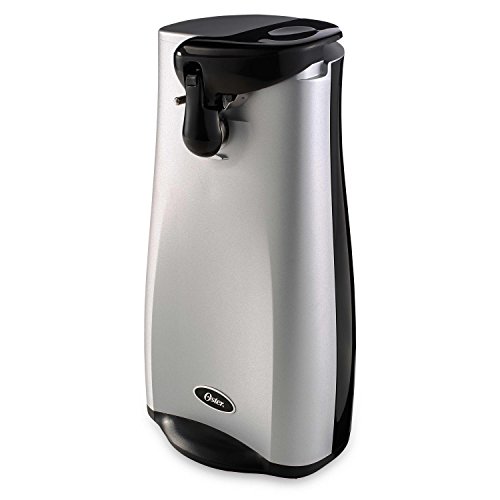
Oster has been manufacturing kitchen appliances for decades, and their electric can opener with built-in knife sharpener reflects that accumulated design experience. The stainless steel construction gives it a more premium feel and appearance than many plastic competitors, and the contemporary styling means it won't look out of place next to your other kitchen appliances. The patented power pierce cutting mechanism is engineered to bite into the can lid cleanly on the first attempt, reducing the common frustration of misaligned cuts or incomplete openings that plague cheaper models.
The integrated knife sharpener on the back of the unit is a genuinely useful addition that justifies a small amount of extra counter space. Rather than keeping a separate sharpening stone or pull-through sharpener in a drawer, you have one always accessible right where you do most of your cooking prep. It won't replace a professional whetstone setup, but for quick touch-ups on kitchen knives between more thorough sharpenings, it works well enough to keep your blades functional. The tall design accommodates larger cans without any positioning gymnastics, and operation is smooth and relatively quiet.
One area where this model shows its age slightly is the traditional top-cutting mechanism, which leaves standard sharp edges on the can lid — a contrast to newer side-cutting designs from Hamilton Beach and Proctor Silex. If smooth, safe edges are a priority for your household, you'll want to look at those alternatives instead. But if you value proven reliability, stainless steel build quality, and multi-function convenience, the Oster remains a strong contender that has earned its long-standing popularity.
Pros:
Cons:
Few things are more annoying than a can opener that slips, misaligns, or requires multiple attempts to get through a single can — especially when you're trying to get dinner on the table quickly. Hamilton Beach designed the SureCut technology specifically to solve this problem, with a patented alignment system that ensures cans open cleanly on the very first attempt, every single time. You position the can, the mechanism grabs it in the optimal cutting position, and you're done in seconds without any of the repositioning dance that plagues lesser openers.
The removable cutting unit is dishwasher safe, which addresses one of the most common hygiene complaints about electric can openers. Over time, cutting mechanisms accumulate food residue and develop odors if they can't be properly cleaned, but this detachable design makes maintenance as simple as popping it off and dropping it in with your next load of dishes. The extra-tall body accommodates cans of all sizes, from small tomato paste tins up to oversized institutional cans, and the built-in knife sharpener adds an extra utility function. Cord storage in the base keeps things tidy when not in use.
The auto shutoff feature is a nice quality-of-life addition that means you don't need to stand over the opener watching for the cut to complete — it stops automatically when the lid is free. The black finish is understated and pairs well with most kitchen decor, though it does show fingerprints more readily than stainless alternatives. If you've been burned by can openers that work great for three months and then start slipping, the SureCut's reliable alignment system makes this a worthwhile upgrade. Similar to how a good vacuum sealer works flawlessly every time you use it, reliability is what you're really paying for here.
Pros:
Cons:
The Farberware battery-operated can opener is designed with accessibility as a core priority, requiring minimal physical effort or dexterity to operate. You line up the guide with the edge of the can, press a single button, and the device handles everything else — no squeezing, no turning, no holding anything in place. This makes it an excellent choice for elderly users, anyone recovering from hand surgery, people with arthritis or carpal tunnel syndrome, or really anyone who simply wants opening a can to require as little effort as possible.
The built-in magnet is a thoughtful safety feature that lifts the lid away from the can automatically once the cut is complete, preventing your fingers from ever needing to touch potentially sharp edges. The cutting technology is designed to produce smoother openings with reduced jagged edges compared to traditional cutting wheels, though it's worth noting this isn't quite the same smooth-edge finish you get from dedicated side-cutting models. The compact gray design is understated and stores easily in a drawer when not in use, running on standard batteries that are readily available anywhere.
Because this is a battery-powered unit rather than rechargeable, you will need to replace batteries periodically depending on how frequently you use it. For households that open one or two cans per week, a set of batteries will last several months without issue. The compact size works on all standard can sizes, and the overall simplicity of operation — truly just one button press — makes it the most user-friendly option on this list for people who want zero complexity in their kitchen tools.
Pros:
Cons:
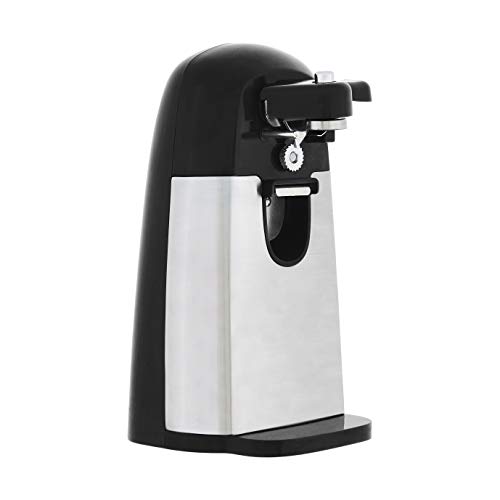
Amazon Basics has built a reputation for offering functional, no-frills versions of everyday products at competitive prices, and their 3-in-1 electric can opener follows that formula well. You get a can opener, a bottle opener, and a knife sharpener all in one compact 50-watt unit that costs less than most single-function premium openers. The stainless steel cutting blade delivers smooth, safe cuts through standard-sized cans, and the automatic stop feature means you can walk away once the can is engaged without worrying about over-cutting or the mechanism running continuously.
The wide, non-slip base provides genuine stability during operation — a detail that cheaper can openers often overlook, leading to units that skid across the counter or wobble when cutting through thicker can materials. The magnetic lid holder catches the severed lid so it doesn't fall into the food below, and the on/off mechanism with release and locking features gives you confident control over the entire process. The sleek black design is intentionally minimal, which helps it blend into any kitchen aesthetic without drawing attention.
As with most budget-oriented products, there are some trade-offs here compared to premium alternatives. The knife sharpener is functional but basic, the bottle opener handles standard caps but nothing more complex, and the overall build quality — while adequate — doesn't have the same reassuring heft as the Oster or Hamilton Beach units. However, if your priority is getting a reliable electric can opener that does its primary job well without spending more than necessary, the Amazon Basics model represents excellent value for money in 2026. It's a solid starter choice, much like how an affordable sous vide setup can deliver great results without the premium price tag.
Pros:
Cons:
The single most important decision you'll make when choosing an electric can opener is whether you want a traditional top-cutting model or a newer side-cutting design. Top-cut openers slice through the lid from above, which is fast and effective but leaves sharp metal edges on both the lid and the can rim. Side-cut models cut along the outer edge of the can below the rim, producing smooth edges that are safe to touch and allowing you to reuse the lid as a cover. According to the U.S. Consumer Product Safety Commission, cuts from sharp can lids remain one of the most common kitchen injuries, making side-cut models a worthwhile consideration for households with children or anyone concerned about safety.
Side-cutting does come with a minor trade-off: the lid sits slightly inside the can rather than lifting cleanly off the top, which means you occasionally need to fish it out if it drops in. Most side-cut models include a magnetic lid holder to prevent this, but it's worth being aware of. Top-cut models, meanwhile, have the advantage of decades of refinement and generally offer more affordable options with additional features like knife sharpeners built in.
Your choice of power source should match how and where you plan to use the opener. Corded models offer unlimited, consistent power and never need charging or battery replacement, making them ideal for fixed kitchen installations where the opener stays in one spot near an outlet. They're typically the most powerful option and handle thick cans without any hesitation. Rechargeable cordless models like the Proctor Silex offer excellent portability for outdoor cooking, camping, and travel while still providing strong cutting performance for dozens of cans between charges. Battery-operated units are the most portable of all and never need a charging cable, but they may lose cutting force as batteries deplete and require ongoing replacement costs.
Kitchen counter space is precious, and electric can openers range from compact drawer-friendly units to tall countertop models that claim permanent real estate. If you open cans daily and want your opener always at the ready, a countertop model with a stable base makes sense — the extra-tall designs from Hamilton Beach and Oster accommodate even large institutional cans. If counter space is limited, you have two excellent alternatives: under-cabinet mounted units like the Black+Decker Spacemaker that stay completely out of the way, or compact handheld models from Farberware and Proctor Silex that live in a drawer until needed. Consider measuring the clearance under your cabinets if you're interested in the mounted option.
Several secondary features can tip the scales between otherwise similar models. A built-in knife sharpener is genuinely useful if you don't already have a dedicated sharpening solution — it won't produce a professional edge, but it keeps kitchen knives functional for everyday tasks. Automatic shut-off is a convenience feature that lets you walk away once the can is engaged, which matters more than you might think when you're juggling multiple cooking tasks simultaneously. Magnetic lid holders prevent the cut lid from dropping into food, and removable cutting assemblies that are dishwasher safe make long-term hygiene maintenance dramatically easier. Finally, cord storage is a small but appreciated detail that keeps your counter tidy when the opener isn't in use.
A well-maintained electric can opener from a reputable brand should last between three and seven years with regular household use. The cutting blade is usually the first component to degrade, becoming dull and requiring more pressure or multiple passes to complete a cut. Models with removable cutting units tend to last longer because proper cleaning prevents food residue buildup that can corrode the mechanism over time. Keeping the blade clean and dry after each use is the single best thing you can do to extend the lifespan of any electric can opener.
Yes, side-cut can openers produce measurably smoother edges on both the lid and the can rim because they cut below the crimped edge rather than through the thin lid material itself. The resulting edges are typically smooth enough to run your finger along without risk of a cut, whereas traditional top-cut lids have edges that can easily slice skin. This makes side-cut models particularly worth considering for households with children, elderly family members, or anyone who has experienced a can-lid cut before.
Most electric can openers handle standard can sizes without issue, but extra-tall or wide cans may require specific models designed with additional clearance. Models marketed as "extra-tall" from Hamilton Beach and Oster can accommodate larger cans including number ten institutional cans, while compact handheld models typically work best with standard consumer-sized cans. Under-cabinet mounted units may have clearance limitations depending on the distance between your counter and cabinets, so measuring before purchasing is advisable.
For models with removable cutting assemblies, detach the cutting unit after each use and wash it with warm soapy water or place it in the dishwasher if it's rated as dishwasher safe. For non-removable models, wipe the cutting wheel and surrounding area with a damp cloth after each use, and periodically use a small brush dipped in soapy water to clean around the blade mechanism. Never submerge the main body of a corded electric can opener in water, as this will damage the motor and create an electrical safety hazard.
Modern cordless rechargeable can openers have improved significantly and are now powerful enough to handle everyday consumer cans without any noticeable difference in performance compared to corded models. The Proctor Silex model reviewed above opens approximately 60 cans per charge, which exceeds what most households use in an entire month. The only scenario where corded models maintain a clear advantage is with extremely thick or industrial-grade cans that require sustained cutting force over a longer period.
Side-cutting electric can openers work well with pop-top cans because they cut below the rim regardless of whether there's a pull tab on the lid. This actually provides a cleaner opening than using the pull tab itself, which often leaves sharp edges or requires significant finger strength. Traditional top-cutting electric openers may have difficulty with pop-top cans because the pull tab mechanism can interfere with blade alignment. If you frequently use pop-top cans, a side-cutting model is the better choice for consistent results across all can types.
Every kitchen deserves a can opener that works reliably without making you think twice about sharp edges or frustrating misalignment. Whether you prioritize the smooth safety of a side-cutting model, the space-saving elegance of an under-cabinet mount, or the grab-and-go freedom of a cordless rechargeable unit, the right choice depends on your kitchen layout, physical needs, and how often you reach for canned ingredients. Pick the model that matches your daily routine, and you'll have one less small frustration standing between you and a great meal.
 |
 |
 |
 |

About Daisy Dao
Daisy Dao grew up in Honolulu, Hawaii, where coastal living and access to fresh local ingredients shaped her approach to home cooking from an early age. She has spent years experimenting with seafood preparation, healthy cooking methods, and ingredient substitutions — developing hands-on familiarity with a wide range of kitchen tools, techniques, and produce. At BuyKitchenStuff, she covers healthy recipes, cooking techniques, and ingredient substitution guides.
