Kitchen Gadgets & Equipment Reviews ›
by Daisy Dao
After testing and comparing dozens of models, the Vitamix 5200 stands out as the best countertop blender for most kitchens in 2026 — its variable speed control and 64-ounce capacity handle everything from silky smoothies to hot soups without breaking a sweat. But it's not the only solid option worth your money.
A good countertop blender does more than crush ice. It replaces your food processor, soup maker, and even your ice cream machine if you pick the right one. The problem is that the market is flooded with options at every price point, and specs alone won't tell you which blender actually performs in a real kitchen. Motor wattage, blade design, jar capacity, noise level, and ease of cleaning all matter — and they matter differently depending on how you cook.
We dug into seven of the best countertop blenders available right now, ranging from budget-friendly workhorses to premium machines built for daily abuse. Whether you're blending oat smoothies for weight loss every morning or running a small café that needs commercial-grade reliability, this guide breaks down exactly what each blender does well, where it falls short, and which one deserves your counter space. If you're shopping across our full kitchen product reviews, you'll find this guide follows the same hands-on approach.

Contents
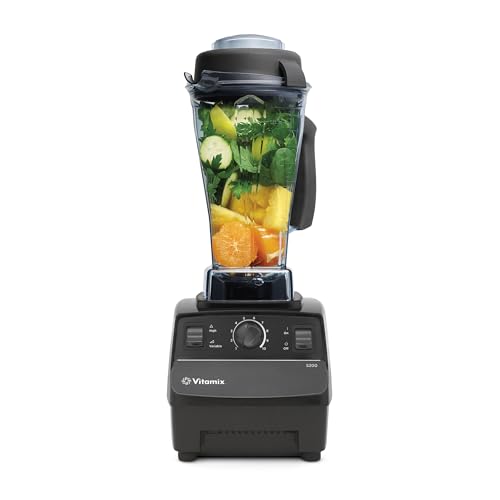




The Vitamix 5200 has been a kitchen staple for years, and there's a reason it keeps showing up at the top of best-of lists heading into 2026. This blender runs on a powerful motor paired with hardened stainless-steel blades that spin fast enough to generate friction heat. That means you can take cold vegetables, blend them on high for about six minutes, and end up with steaming hot soup — no stovetop needed. It sounds almost too simple, but it works reliably every single time.
The 64-ounce container is tall and narrow, which creates a strong vortex that pulls ingredients down into the blades. You won't need to stop and scrape the sides nearly as often as you would with wider jars. The variable speed dial gives you ten speeds plus a pulse function, so you can go from a rough chop to a silky purée without switching machines. Making chunky salsa? Keep it on speed 3. Blending a green smoothie? Crank it to 10. That range of control is what separates the 5200 from most competitors.
Build quality is excellent. The base is heavy and stable, and the container is made from BPA-free Tritan copolyester that resists cracking even after years of daily use. Cleaning is straightforward — add warm water and a drop of dish soap, run it on high for 30 seconds, and rinse. The main drawback is the tall container, which won't fit under standard kitchen cabinets. You'll need to store it on the counter or remove the container for storage. It's also louder than some newer models, though that's the trade-off for raw blending power.
Pros:
Cons:
If you want the Vitamix blending performance but prefer a hands-off approach, the Ascent X5 is the upgrade worth considering. This machine comes with 10 automatic blending programs covering everything from smoothies and frozen desserts to nut butters and non-dairy milks. Select the program, press start, and walk away. The blender adjusts speed and timing automatically for consistent results every time. It removes the guesswork that can trip up new blender owners.
The 48-ounce container is smaller than the 5200's 64-ounce jar, but the low-profile design means it actually fits under standard kitchen cabinets. For most households, 48 ounces is plenty for two to four servings. The brushed stainless finish gives the base a more modern look compared to the classic Vitamix styling, and the build quality matches what you'd expect from the brand. The included S2 low-profile tamper helps push thick ingredients like frozen acai or nut butter into the blades without stopping the machine.
The self-cleaning program is genuinely useful. Add warm water and a drop of dish soap, run the program, and the jar is clean in under 60 seconds. This alone makes the Ascent X5 more practical for daily use. The Ascent line also supports Vitamix's wireless connectivity and container recognition — the base detects which container is attached and automatically adjusts blending settings. The downside is the price. You're paying a significant premium over the 5200 for convenience features. If you're comfortable adjusting speed manually, the 5200 gives you comparable blending results for less money.
Pros:
Cons:
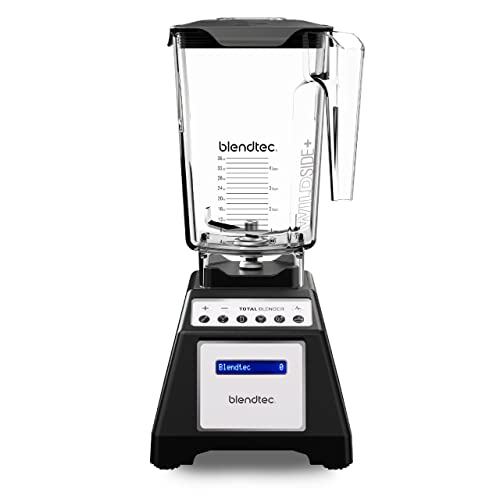
Blendtec built its reputation on raw power and the Total Classic lives up to that legacy. The WildSide+ jar holds a massive 90 ounces, making it the largest container in this roundup by a wide margin. If you regularly make big batches of soup, smoothies for the whole family, or party-sized frozen drinks, the sheer volume here is hard to beat. The jar's unique five-sided design creates a better blending vortex than standard round containers, pulling ingredients into the blade more efficiently.
The control panel features six pre-programmed blend cycles plus 10 manual speed settings and a pulse option. The presets cover smoothies, soups, whole juice, ice cream, hot soup, and a clean cycle. They work well — select the cycle and walk away. The blender ramps through different speeds automatically and shuts off when done. For daily smoothie makers who want zero fuss, this is one of the most user-friendly interfaces on the market.
One thing Blendtec does differently is the blade design. Instead of sharp blades, they use a thick, blunt-forged steel design that pulverizes ingredients through impact rather than cutting. This makes the blades safer to handle during cleaning and surprisingly durable over time. The trade-off is that Blendtec blenders tend to run louder than Vitamix models. The 90-ounce jar is also quite wide, so check your cabinet clearance before buying. Overall, the Total Classic delivers excellent performance at a price that often undercuts Vitamix, making it a strong value pick for 2026.
Pros:
Cons:
You don't have to spend premium prices to get a blender that actually performs. The Ninja Professional Plus BN701 punches well above its price point with 1400 peak watts of power and a 72-ounce Total Crushing pitcher. That's enough muscle to pulverize frozen fruit, crush ice into snow, and handle leafy greens without leaving chunks behind. For the money, no other blender in this roundup comes close to matching the Ninja's raw performance-to-price ratio.
The BN701 features three Auto-iQ preset programs for smoothies, frozen drinks, and ice cream. Auto-iQ is Ninja's intelligent blending technology — it uses timed pulsing and blending patterns to process ingredients more efficiently than just running at a constant speed. The smoothie program, for example, alternates between high-speed blending and pauses to pull ingredients down, giving you a smoother result with less manual intervention. It works well for everyday use.
Ninja's stacked blade assembly is the secret to its crushing power. Instead of a single blade at the bottom, the Total Crushing blades extend partway up the pitcher, cutting through ingredients at multiple levels simultaneously. This means less time blending and fewer air pockets. The modern dark grey design looks clean on the counter, and the pitcher is dishwasher safe for easy cleanup. The main downside is durability — the Ninja won't last as long as a Vitamix or Blendtec under heavy daily use. The plastic components feel lighter, and the motor can struggle with very thick mixtures like nut butter if you push it hard. But for smoothies, frozen drinks, and general kitchen blending, it's an outstanding value. If you're also blending ingredients for recipes like tomato juice or fruit-based drinks, the Ninja handles those tasks without hesitation.
Pros:
Cons:
KitchenAid designed the K400 as a complete blending system rather than just a motor with a jar bolted on top. The three-part blending system combines a ribbed jar design, an asymmetric blade, and Intelli-Speed Motor Control that automatically senses what's inside and adjusts speed to maintain optimal performance. Drop in a load of frozen berries and the motor compensates. Add liquid and it backs off. This adaptive approach produces more consistent results than manually adjusting a speed dial.
The asymmetric blade is an interesting design choice. Unlike the symmetrical four-blade setups on most blenders, KitchenAid's blade has an uneven shape that creates turbulence inside the jar. This turbulence pulls ingredients into the blade from different angles, which is particularly effective with tough items like kale stems and whole almonds. The ribbed jar interior works with this turbulence to keep the vortex going even with thick mixtures. You get a smooth blend without needing a tamper for most recipes, though one is included for the thickest jobs.
The Contour Silver finish matches KitchenAid's broader appliance line, so if you already have their stand mixer or other countertop appliances, the K400 fits right in visually. The self-clean cycle works well — water and soap, run the cycle, rinse. Where the K400 falls short compared to Vitamix is raw power. It handles everyday blending beautifully, but it can't match the 5200's ability to heat soup through friction or process extremely thick batters. It also lacks the preset programs found on the Blendtec or Ascent X5. Think of the K400 as the best all-around kitchen blender for someone who values design integration and smart engineering over brute force.
Pros:
Cons:
The Explorian E310 is Vitamix's answer to the question every shopper asks: can I get Vitamix quality without the Vitamix price? The answer is mostly yes. This blender uses the same laser-cut stainless-steel blades and powerful 2 HP motor found in more expensive Vitamix models. It blends smoothies to a silky consistency, crushes ice without hesitation, and handles fibrous produce like celery and ginger that trip up weaker blenders. The core blending performance is genuinely on par with the 5200.
The E310 comes with a 48-ounce container, which is smaller than the 5200's 64-ounce jar but has a low-profile design that fits under standard cabinets. You get 10 variable speeds and a pulse function, giving you full manual control over texture. The included mini tamper helps push thick ingredients toward the blades when making nut butters, frozen desserts, or thick smoothie bowls. The slate color option gives it a more contemporary look than the traditional black Vitamix base.
Where does Vitamix cut corners to hit a lower price? The Explorian line has a shorter warranty than the Ascent series, and you don't get wireless connectivity or container recognition features. The motor base feels slightly less substantial, though it's still solidly built. For most home cooks, these differences won't matter day to day. If you want the legendary Vitamix blend quality and don't care about preset programs or smart features, the E310 is the smart buy. It's also a natural companion if you're into commercial-grade juicing — many owners pair a Vitamix with a juicer for complete kitchen coverage.
Pros:
Cons:
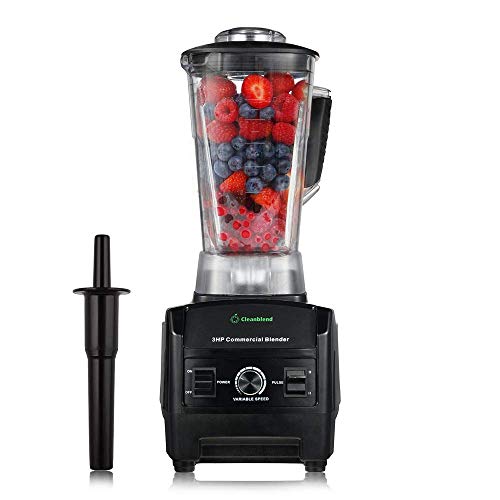
The Cleanblend Commercial is the dark horse of this roundup. It packs a 3 HP, 1800-watt motor into a full-size commercial-style body and backs it with a 5-year full warranty — one of the longest in the industry. The 64-ounce BPA-free container handles large batches with ease, and the variable speed control gives you the same fine-tuning ability you'd expect from blenders twice the price. If raw power per dollar is your priority, the Cleanblend delivers more of it than anything else on this list.
Cleanblend markets this as a replacement for up to nine appliances, and while that's ambitious marketing, the blender does handle an impressive range of tasks. Crushing ice, making hot soup, grinding coffee beans, processing nut butter, pureeing baby food, mixing batters — the 1800-watt motor chews through all of it. The stainless-steel blades are sharp and well-balanced, producing smooth results even with tough ingredients. For small café owners or home cooks who blend large quantities daily, the commercial-grade construction makes this a practical workhorse.
The trade-offs are real, though. Fit and finish can't match Vitamix or KitchenAid — the base feels more utilitarian and the controls are basic. The speed dial works but lacks the precision of the Vitamix dial. Noise is significant at high speeds, which is standard for this power class. Customer support and parts availability also don't match the major brands. But the 5-year warranty provides peace of mind, and the price-to-performance ratio is genuinely hard to argue with. If you need heavy-duty blending without the premium brand markup, the Cleanblend is a serious contender.
Pros:
Cons:
Motor power is measured in watts (operating power) or horsepower (HP), and it directly determines what your blender can handle. For basic smoothies and soft ingredients, anything above 700 watts works fine. But if you plan to crush ice regularly, blend frozen fruit, or make nut butter, you want at least 1000 watts. The blenders in this roundup range from around 1200 to 1800 watts, which puts them all in the high-performance category. Don't just look at "peak watts" in marketing claims — that's a momentary surge, not sustained power. Operating wattage tells you what the motor actually delivers during blending. A higher-wattage motor also tends to blend faster, which means less oxidation (exposure to air) and better nutrient retention in your smoothies and juices.
Container size ranges from 48 ounces on the smaller Vitamix models to 90 ounces on the Blendtec Total Classic. Think about your typical use case. If you're making single-serve smoothies or small batches of sauce, a 48-ounce container is more than enough — and smaller containers tend to be easier to handle and clean. For families, meal preppers, or anyone making large batches, 64 ounces or more gives you breathing room. Container shape matters too. Narrow, tall containers (like the Vitamix 5200) create a strong downward vortex that's great for thick blends. Wider containers give you easier access to scrape sides but may need more liquid to blend effectively. Also check the height — tall containers won't fit under standard 18-inch cabinets, which forces you to move the blender every time you use it.
You have two schools of thought here: manual control and preset programs. Manual variable speed (like the Vitamix 5200 and E310) gives you complete control over texture. You learn to dial in exactly the consistency you want. It takes a bit of practice, but the flexibility is unmatched. Preset programs (like those on the Blendtec, Vitamix Ascent X5, and Ninja) do the work for you — select "smoothie" or "soup" and the machine runs through an optimized speed sequence. Presets are ideal if you make the same types of blends daily and want consistent one-button results. If you enjoy experimenting with different textures and recipes, manual control gives you more creative freedom. The best machines, like the Ascent X5 and Blendtec, offer both.
A good blender is a long-term investment. According to Wikipedia's overview of blender technology, modern countertop blenders with quality motors can last 6 to 10 years or more with proper use. Warranty length is a strong indicator of manufacturer confidence. Vitamix offers some of the best warranties in the industry, and the Cleanblend's 5-year full warranty is notable at its price point. Beyond the warranty, consider replacement part availability. Can you buy a new container or blade assembly in three years? Vitamix and KitchenAid have extensive parts networks. Smaller brands may not. Also factor in daily usability — a blender that's hard to clean or awkward to assemble will end up in the back of your cabinet. The self-cleaning features on the Vitamix Ascent X5 and KitchenAid K400 genuinely increase how often you'll reach for the blender.
For most serious home cooks, yes. Vitamix blenders consistently outperform cheaper alternatives in blending quality, durability, and long-term reliability. The 5200 and E310 have motors and blade assemblies built to last a decade of daily use. You'll also get smoother results with tough ingredients like kale, frozen fruit, and nuts. If you blend daily, the cost per use over five to ten years makes a Vitamix very reasonable. If you only blend occasionally, a Ninja at a lower price point delivers solid performance without the investment.
Peak watts measures the maximum power a motor can produce in a brief surge, usually at startup. Operating watts (sometimes called rated watts) measures the sustained power during actual blending. Operating watts is the more useful number because it tells you what the blender delivers consistently. A blender rated at 1400 peak watts might only sustain 700 operating watts. Always compare operating wattage when evaluating motors. Manufacturers that only list peak watts are often inflating their specs.
For many tasks, yes. High-powered blenders handle smoothies, soups, sauces, nut butters, and purees better than most food processors. They also crush ice and make frozen desserts, which food processors can't do. However, food processors are still better for tasks that require consistent chopping without liquifying — like dicing onions, slicing vegetables, or making pie dough. If you mainly blend liquids and semi-liquids, a good blender can absolutely replace a food processor. If you do a lot of dry chopping and slicing, you'll want both.
It depends entirely on how you blend. A single person making one smoothie at a time does fine with 48 ounces. A family of four making smoothies plus the occasional soup batch benefits from 64 ounces or more. Keep in mind that most blenders work best when the container is at least one-quarter full — too little liquid and the blades can't create a proper vortex. If you frequently make small portions in a large container, you may get inconsistent results. Some brands sell additional smaller containers separately for single-serve blending.
The easiest method is self-cleaning: fill the container halfway with warm water, add a drop of dish soap, and run the blender on high for 30 to 60 seconds. Rinse thoroughly and air dry. Most blenders in this roundup support this method. For deeper cleaning, you can remove the blade assembly on some models and wash parts individually. Avoid putting blender containers in the dishwasher unless the manufacturer specifically says it's safe — high heat can warp Tritan plastic over time. Never submerge the motor base in water. Wipe it with a damp cloth.
In most cases, no. High-quality stainless-steel blades like those in Vitamix and Blendtec blenders are designed to last the lifetime of the machine without sharpening. Blendtec actually uses intentionally blunt blades that rely on speed and impact rather than sharpness. If you notice your blender struggling to blend ingredients it used to handle easily, the issue is usually the motor losing power rather than dull blades. Replacement blade assemblies are available for most major brands and cost between $30 and $80 depending on the model.
 |
 |
 |
 |

About Daisy Dao
Daisy Dao grew up in Honolulu, Hawaii, where coastal living and access to fresh local ingredients shaped her approach to home cooking from an early age. She has spent years experimenting with seafood preparation, healthy cooking methods, and ingredient substitutions — developing hands-on familiarity with a wide range of kitchen tools, techniques, and produce. At BuyKitchenStuff, she covers healthy recipes, cooking techniques, and ingredient substitution guides.
