Kitchen Gadgets & Equipment Reviews ›
by Daisy Dao
You've just pulled your sous vide circulator out of the box, excited to cook your first perfect steak, and then you realize you need a container that can hold water at a precise temperature for hours without losing heat. A standard pot works in a pinch, but a well-insulated cooler transforms your sous vide setup into something truly efficient. The right cooler cuts down on energy use, maintains rock-steady temperatures, and gives you enough room to cook for a crowd.
Whether you're batch-cooking for meal prep or slow-cooking a massive brisket overnight, picking the best cooler for sous vide in 2026 comes down to insulation quality, size, and how well it pairs with your immersion circulator. We've tested and reviewed seven options ranging from heavy-duty rotomolded coolers to purpose-built sous vide containers. If you're also looking for other kitchen upgrades, check out our full reviews section for more recommendations across every category.
Below you'll find our top picks, detailed reviews, a buying guide covering everything from insulation thickness to lid compatibility, and answers to the most common questions we hear from sous vide cooks.
Contents


The YETI Tundra 45 is the gold standard for sous vide cooking with a cooler. Its 3 inches of PermaFrost Insulation combined with the extra-thick FatWall design means your water bath stays at temperature with minimal energy from your circulator. The rotomolded construction creates a seamless shell with no weak points where heat can escape, which is exactly what you want for long cooks that stretch 24 hours or more.
With a capacity of roughly 26 cans (or about 45 quarts of water), this cooler gives you plenty of room for multiple racks of ribs or a full brisket submerged in the bath. The walls are so well-insulated that many users report their circulator barely cycles on and off — it reaches temp and holds it effortlessly. You'll need to cut a small notch in the lid for your circulator to fit through, but many sous vide enthusiasts consider that a minor trade-off for the insulation benefits.
The downside? It's heavy and expensive. But if you're serious about sous vide and want a cooler that doubles as a bombproof camping companion, the Tundra 45 delivers on both fronts. It's certified bear-resistant, so you know the build quality is no joke.
Pros:
Cons:
When you need to cook for a party or meal-prep an entire week's worth of protein, the ENGEL 60 QT gives you massive capacity without the backbreaking weight. At only 21 pounds empty, it's remarkably light for a 60-quart cooler. The 2 inches of closed-cell foam insulation keeps heat loss minimal during those long sous vide sessions — ENGEL claims up to 7 days of ice retention, which translates to excellent thermal stability for water baths.
The injection-molded construction using high-density, food-grade plastic means this cooler won't crack or leak even after years of use. The interior dimensions (29.5" W x 18" D x 17" H) give you enough depth to fully submerge large cuts without stacking them awkwardly. The included wire basket and divider are handy for organizing multiple bags in the bath so water circulates evenly around each one.
For sous vide specifically, the lighter weight is a real advantage. Filling a 60-quart cooler with water means you're already dealing with around 125 pounds — having the cooler itself weigh less makes setup and breakdown much more manageable. If you regularly cook for groups or like to batch-prep meals, this is your pick.
Pros:
Cons:
The RTIC Ultra-Light 32 QT hits a sweet spot for sous vide cooks who want solid insulation without spending YETI money. It's more than 30% lighter than rotomolded coolers of the same size, making it easy to handle even when filled with water. The 2.5 inches of closed-cell foam insulation is thicker than many competitors in this price range, and it translates to consistent water temperatures throughout your cook.
At 32 quarts, this cooler is ideal for cooking 2-4 steaks, a couple of chicken breasts, or one medium roast at a time. It's not going to handle a full packer brisket, but for everyday sous vide cooking, the size is more than adequate. The lighter construction also means you can store it more easily when it's not in use — something to consider if your kitchen is tight on space.
RTIC has built a reputation for delivering near-premium performance at a fraction of the cost. This cooler won't match the YETI in raw insulation or ruggedness, but for dedicated sous vide use where the cooler mostly sits on your counter, those differences barely matter. Your circulator does the heavy lifting on temperature control — the cooler just needs to minimize heat loss, and the RTIC does that well.
Pros:
Cons:
If buying American-made matters to you, the Grizzly 45 is your best bet for sous vide. It's rotomolded from LLDPE plastic right here in the USA and comes with a lifetime warranty — that's confidence in craftsmanship you don't see from many brands. The even wall thickness achieved through rotational molding means consistent insulation performance across the entire cooler body.
Grizzly uses pressure-injected Ecomate polyurethane foam — up to 2 inches of it — for insulation. What's notable here is the environmental angle: this foam has zero global warming potential, zero ozone depletion potential, and no VOCs. For sous vide cooks who care about sustainability, that's a meaningful differentiator. The rubber lid gasket creates an airtight seal that keeps heat locked in, reducing how hard your circulator needs to work.
The 45-quart capacity is right in the sweet spot for most home sous vide setups. You can comfortably fit a full rack of ribs or several individually-bagged portions. The rotomolded construction means this cooler will outlast you — it handles drops, bumps, and years of hot water cycling without cracking or warping. Similar to how a quality vacuum sealer elevates your sous vide results, the Grizzly elevates your water bath stability.
Pros:
Cons:
The Coleman Steel Belted is a classic for good reason. That retro chrome-and-color design looks great sitting on your kitchen counter, and the 54-quart capacity gives you plenty of room for sous vide cooking. With 4-day ice retention, the insulation is decent — not class-leading, but sufficient for sous vide where your circulator actively maintains temperature anyway.
What makes this cooler interesting for sous vide is the Have-A-Seat lid that supports up to 250 pounds. That heavy-duty lid creates a solid seal when closed, and the steel belt construction adds structural rigidity that cheaper plastic coolers lack. The 85-can capacity translates to a generous water bath that can handle multiple items simultaneously. The built-in drain makes emptying your water bath effortless after a cook.
The trade-off is that steel conducts heat better than plastic, so you'll see slightly more heat loss through the exterior compared to a rotomolded plastic cooler. Your circulator compensates easily, but it will cycle more frequently. For cooks who want something that looks good in the kitchen and pulls double duty at backyard barbecues, the Coleman Vintage delivers on both fronts. It pairs nicely with heat-resistant gloves when you're pulling bags from a hot water bath.
Pros:
Cons:
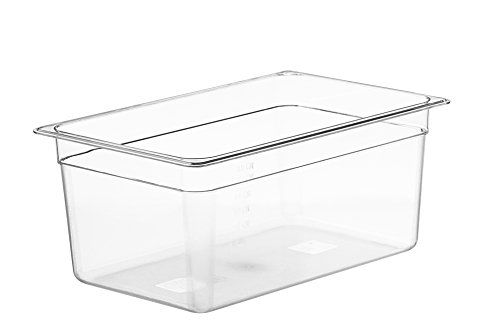
If you want a container designed specifically for sous vide rather than repurposing a cooler, the EVERIE 12-Quart is the way to go. It comes with a collapsible hinged lid with a pre-cut opening sized for Anova Nano, AN500-US00, Anova Pro 3.0, Anova Mini, and Instant Pot sous vide circulators. No cutting, no DIY modifications — just drop your circulator in and start cooking.
The hinged lid is the standout feature here. It minimizes water evaporation during long cooks (overnight sessions become worry-free), and the collapsible design lets you check on food, add ingredients, or refill water without removing the entire lid. EVERIE tested the hinge for 100,000 uses, so durability isn't a concern. The lid fits snugly enough to hold sealed bags in place without additional clamps — one less accessory to buy.
The 12-quart capacity is perfect for 1-4 portions of protein. It won't handle a whole brisket, but for everyday cooking — steaks, chicken, fish, vegetables — it's the ideal size. The clear polycarbonate construction lets you see exactly what's happening in your bath without lifting the lid. This container won't insulate as well as a thick-walled cooler, but for cooks under 4-6 hours, the convenience factor more than makes up for it.
Pros:
Cons:
The LIPAVI C15 splits the difference between the compact EVERIE and full-size coolers. At 19 quarts, you get enough volume for larger cuts while keeping the footprint manageable on your countertop. Made from crystal-clear polycarbonate, this container is both strong and transparent — you can monitor water levels and food positioning at a glance.
What sets the LIPAVI apart is its ecosystem approach. Matching lids are available for a wide array of immersion circulators, so you get a custom-fit seal regardless of which brand you own. The container also pairs perfectly with the LIPAVI L15 sous vide rack, which holds bags vertically for even water circulation around each piece of food. This kind of organized cooking makes a real difference when you're cooking multiple items at different thicknesses.
The polycarbonate material is food-grade and restaurant-quality — it's the same stuff commercial kitchens use for food storage. It handles the thermal cycling of sous vide cooking (heating up to 185°F, cooling back down) without warping or clouding over time. For dedicated sous vide enthusiasts who cook several times a week, this purpose-built container is a smart investment. If you're also into making cheese at home, you'll appreciate this same attention to temperature precision.
Pros:
Cons:
Insulation is the single most important factor when choosing a cooler for sous vide. Thicker insulation means less heat escapes, which means your circulator works less and your water temperature stays more stable. Look for at least 2 inches of closed-cell foam or polyurethane insulation. Rotomolded coolers with 2.5-3 inches (like the YETI Tundra) represent the top tier.
For shorter cooks (under 4 hours), insulation matters less because your circulator can easily compensate. But for 12-48 hour cooks — think chuck roast, pork shoulder, or brisket — superior insulation reduces water evaporation and energy consumption significantly. According to Wikipedia's overview of sous vide cooking, maintaining precise temperature over extended periods is critical to achieving the desired texture and doneness.
Match your cooler size to what you actually cook. Here's a quick guide:
Remember that a bigger cooler means more water to heat up initially. Your circulator might take 20-30 minutes longer to reach temperature in a 60-quart vessel compared to a 20-quart one. Factor in your patience level and how often you'll actually use that extra space.
This is where coolers and purpose-built containers differ most. With a cooler, you'll typically need to cut a hole or notch in the lid to fit your immersion circulator. Some people use a knife, others a hole saw drill bit. Either way, measure your circulator's clamp width before you cut.
Purpose-built containers like the EVERIE and LIPAVI come with pre-cut lids or offer matching lids as accessories. This gives you a tighter seal around the circulator, which means less steam escaping and less water evaporation during long cooks. If you don't want to modify anything, go with a dedicated sous vide container. If you're handy with tools, a cooler gives you better insulation with a small DIY trade-off.
Sous vide subjects your container to repeated thermal cycling — filling with hot water, cooling down, heating again. Cheap plastic can warp or crack over time. Rotomolded coolers (YETI, Grizzly) are virtually immune to this because the one-piece construction has no seams to fail. Injection-molded coolers (RTIC, ENGEL) are more affordable and still hold up well, but inspect seams periodically.
Polycarbonate containers (EVERIE, LIPAVI) handle heat excellently — they're rated for temperatures well above what any sous vide recipe requires. Look for food-grade polycarbonate specifically, as it won't leach chemicals at cooking temperatures. Whatever you choose, avoid thin-walled containers not designed for sustained heat exposure.
Yes, absolutely. Any cooler with decent insulation works for sous vide. You just need to cut or notch the lid to accommodate your immersion circulator's clamp. The insulation actually helps maintain more stable water temperatures than a regular pot or stock pot, which loses heat rapidly through thin metal walls. Many serious sous vide cooks prefer coolers specifically because the insulation means less water evaporation and more consistent results during long cooks.
For most home cooks, a 30-45 quart cooler hits the sweet spot. That gives you enough room for a full rack of ribs, 6-8 steaks, or a medium pork shoulder. If you only cook for one or two people, a 12-20 quart container works fine. If you regularly batch-cook or entertain, consider a 50-65 quart model. The key is having enough water volume that adding cold food doesn't drop the temperature drastically — you want at least 2-3 inches of water above and below your food bags.
The easiest method is tracing your circulator's clamp on the lid with a marker, then cutting along the line with a sharp utility knife or jigsaw. For rotomolded lids, a hole saw on a drill works best. Cut slightly smaller than your trace line — you can always remove more material, but you can't add it back. Some people use a rectangular notch cut from the edge rather than a hole in the center, which makes inserting and removing the circulator easier.
For short cooks under 2 hours, the difference is minimal — your circulator maintains temperature either way. For long cooks (8-72 hours), a cooler makes a significant difference. You'll lose less water to evaporation (sometimes several inches over a 24-hour cook in an open pot), your circulator runs less frequently, and temperature stability improves. The insulated walls can reduce heat loss by 60-80% compared to a stainless steel pot, which means your electricity bill stays lower too.
It depends on your priorities. Purpose-built containers (EVERIE, LIPAVI) offer convenience — pre-cut lids, clear walls for monitoring, matching racks for organization. But they lack insulation, so they're best for cooks under 6 hours. Coolers offer superior insulation for long cooks but require lid modification and don't let you see inside. If you mostly cook steaks and chicken (1-3 hours), a dedicated container is more practical. If you do long cooks like pulled pork or brisket (12-48 hours), an insulated cooler wins hands down.
Drain the water while it's still warm (easier on your back). Wipe the interior with a solution of warm water and mild dish soap using a soft sponge. For any odors that develop over time, fill the cooler with a mixture of water and baking soda (1/4 cup per gallon), let it sit for a few hours, then rinse thoroughly. Avoid abrasive scrubbers on rotomolded surfaces. Leave the lid open after cleaning to air-dry completely — this prevents mildew growth in the insulation around the lid gasket.
The best cooler for sous vide in 2026 depends on how you cook. For long cooks and maximum insulation, grab the YETI Tundra 45 — it's expensive but unmatched. For everyday convenience without modifications, the EVERIE 12-Quart container gets you cooking in minutes. And if you want the best balance of price, insulation, and portability, the RTIC Ultra-Light 32 QT delivers where it counts. Pick the one that matches your cooking style, cut a hole in the lid if needed, and start enjoying perfectly cooked meals tonight.
 |
 |
 |
 |

About Daisy Dao
Daisy Dao grew up in Honolulu, Hawaii, where coastal living and access to fresh local ingredients shaped her approach to home cooking from an early age. She has spent years experimenting with seafood preparation, healthy cooking methods, and ingredient substitutions — developing hands-on familiarity with a wide range of kitchen tools, techniques, and produce. At BuyKitchenStuff, she covers healthy recipes, cooking techniques, and ingredient substitution guides.
