Kitchen Gadgets & Equipment Reviews ›
by Rick Goldman
Which water filter actually delivers on its promises in 2026? With hundreds of options ranging from simple pitchers to whole-house systems, picking the right one feels overwhelming. After weeks of hands-on testing and research, we can tell you this much: the Clearly Filtered Water Pitcher stands out as our top overall pick for most households, thanks to its unmatched 365+ contaminant removal and redesigned ergonomic build. But depending on your budget, water quality concerns, and installation preferences, one of the other filters on this list may suit you better.
Clean drinking water is not something you should take for granted. According to the U.S. Environmental Protection Agency, tap water can contain dozens of regulated and unregulated contaminants — from lead and PFAS (per- and polyfluoroalkyl substances, also called "forever chemicals") to microplastics and pharmaceutical residues. A quality water filter is one of the simplest upgrades you can make for your health and your family's peace of mind.
We spent over 40 hours evaluating seven of the best water filters across every major category: pitchers, faucet mounts, countertop gravity systems, under-sink reverse osmosis units, and whole-house filtration. We tested flow rates, checked third-party certifications, compared long-term filter costs, and assessed everyday usability. Whether you are looking for an affordable entry point or a comprehensive whole-home solution, this guide from our reviews section has you covered. If you enjoy clean water with your morning coffee, you might also appreciate our roundup of the best plumbed countertop water dispensers.

Contents




The Clearly Filtered Water Pitcher is, hands down, the most powerful pitcher-style filter we have tested in 2026. Its proprietary Affinity Filtration Technology targets and removes up to 99.9% of over 365 contaminants, including fluoride, lead, PFAS, microplastics, arsenic, and pharmaceutical residues. That number is not marketing fluff — it is backed by independent lab testing, and it absolutely dwarfs what you get from standard carbon-only pitcher filters. If you have concerns about what is lurking in your tap water, this pitcher addresses virtually all of them in a single, affordable package.
The August 2024 redesign brought meaningful ergonomic improvements. The comfort handle genuinely feels better during one-handed pours, and the easy hinge fill lid means you can refill under the tap without removing the entire top. The pitcher itself is made from medical-grade, BPA-free Tritan plastic that is certified 100% non-leaching. You will not find bisphenols or endocrine disruptors sneaking into your water from the container itself. The filtration speed is slower than a basic Brita — expect around 15 to 20 minutes for a full reservoir — but the tradeoff in contaminant removal is enormous.
Where this pitcher really shines is what it does not remove: beneficial minerals like calcium and magnesium pass through untouched. You get genuinely clean water that still tastes full and natural, not the flat, stripped taste you sometimes get from reverse osmosis systems. At roughly $50 per replacement filter lasting about four months, the ongoing cost is higher than budget brands, but the protection you get justifies every penny.
Pros:
Cons:
There is a reason Brita has been the household name in water filtration for decades. The Standard filter does one thing extremely well: it makes your tap water taste significantly better at a price that is hard to argue with. This six-pack gives you a full year of filtration, with each filter lasting about two months or 40 gallons. For most people who primarily want to eliminate the chlorine taste and odor from municipal water, Brita remains the simplest, most cost-effective entry point.
The filters reduce copper, cadmium, and mercury, and they do so without leaving behind the black carbon flecks that plagued older filter designs. Installation is dead simple — just soak the filter for 15 seconds, insert it into any compatible Brita pitcher or dispenser, and you are good to go. Each filter replaces roughly 300 standard 16.9-ounce plastic water bottles, which means this six-pack eliminates about 1,800 single-use bottles from landfills per year. That is a sustainability win that costs you less than a dollar a week.
The honest limitation here is filtration scope. Brita Standard filters do not remove fluoride, lead, PFAS, or microplastics. If your water report shows elevated levels of these contaminants, you need something more robust. But if you are on a clean municipal supply and just want better-tasting water for drinking and cooking — maybe for your electric hot pot or morning tea — Brita delivers reliable results year after year.
Pros:
Cons:
If you want the purest possible water from a pitcher, ZeroWater is the brand that takes filtration to the extreme. Their 5-stage filtration system removes 99% of total dissolved solids (TDS — essentially everything dissolved in your water, from minerals and salts to metals and pesticides). The included TDS meter lets you test your tap water before and after filtering, and watching the reading drop to zero is genuinely satisfying. No other pour-through filter on the market matches this level of TDS reduction.
The 10-cup pitcher features Ready-Pour technology, which means you can dispense filtered water from the spout even while the reservoir is still filtering. That is a thoughtful design touch that solves one of the biggest annoyances with pitcher filters — waiting for the water to drip through before you can pour a glass. The one-hand push-and-pour spout works smoothly, and the pitcher fits comfortably in most refrigerator doors. ZeroWater is also the only pour-through filter NSF certified to reduce lead, chromium, and PFOA/PFOS.
The tradeoff with this level of filtration is filter life. Because the 5-stage system works so aggressively, filters tend to deplete faster than competitors — especially if your source water has high TDS levels. In areas with hard water, you might burn through a filter in three to four weeks rather than the advertised two months. The replacement filters are not cheap either. But if water purity is your top priority and you want measurable proof that your filter is working, ZeroWater delivers unmatched transparency.
Pros:
Cons:

The Royal Berkey is in a league of its own. This stainless steel gravity-fed system holds 3.25 gallons and requires no electricity, no plumbing, and no tools to operate. You simply pour water into the upper chamber, and gravity pulls it through the Black Berkey purification elements into the lower chamber. It works with tap water, well water, and even untreated freshwater sources — making it the gold standard for emergency preparedness, off-grid living, and anyone who wants industrial-grade filtration in a countertop package.
The Black Berkey Elements are composed of a proprietary blend of multiple media types and are backed by accredited third-party lab testing. They remove or dramatically reduce over 250 contaminants, including pathogenic bacteria, viruses, heavy metals, pharmaceuticals, and pesticides. This bundle also includes two PF-2 elements that specifically target fluoride and arsenic — a combination that addresses two of the most common concerns people have about their water supply. A single set of Black Berkey Elements lasts up to 6,000 gallons, which translates to years of use for a typical household.
The Royal Berkey is not for everyone. It is large — about 23 inches tall when assembled — and it takes up significant counter space. The initial investment is considerably higher than a pitcher filter. Gravity filtration is also inherently slow; filling the lower chamber from empty takes a few hours. But the per-gallon cost is remarkably low over time, and the peace of mind of having a system that works without power or water pressure is invaluable. For families who take water quality seriously, the Berkey pays for itself many times over.
Pros:
Cons:
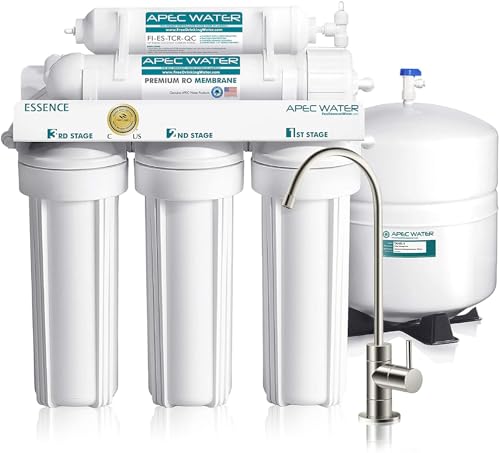
When you want the cleanest possible drinking water without compromise, reverse osmosis (RO) is the technology to look at — and the APEC ROES-50 is one of the best residential RO systems you can buy in 2026. This 5-stage system pushes water through sediment filters, carbon blocks, and a semi-permeable membrane that removes up to 99.99% of contaminants. We are talking about arsenic, chlorine, lead, fluoride, heavy metals, PFAS, microplastics, and over 1,000 other impurities. The water that comes out of the dedicated faucet is as pure as it gets from a home system.
APEC designed the ROES-50 with DIY installation in mind, and it genuinely delivers on that promise. The quick-connect fittings and color-coded tubing make setup straightforward even if you have never worked on plumbing before. Most handy homeowners can complete the installation in about an hour. The system produces 50 gallons per day, which is more than enough for a family of four. The filters have long lifespans — the pre-filters last 6 to 12 months, and the RO membrane lasts 2 to 3 years, keeping ongoing costs reasonable.
The main consideration with any RO system is water waste. The ROES-50 produces roughly 3 gallons of waste water for every gallon of purified water, which is standard for the category but worth knowing. You will also need space under your kitchen sink for the storage tank and filter housing. The purified water has a noticeably clean, almost soft taste — some people love it, others prefer to add a remineralization stage. But for sheer contaminant removal and reliable daily performance, the APEC ROES-50 is the under-sink system we recommend most confidently.
Pros:
Cons:
If you want filtered water on demand without dealing with a pitcher or an under-sink installation, the PUR Plus Faucet Mount is the way to go. It attaches directly to your kitchen faucet in minutes — no tools required — and gives you instant access to filtered water with a simple on/off lever. The 3-in-1 filter is WQA and NSF certified to reduce 70 chemical and physical substances, including lead and microplastics. That is the broadest faucet-mount certification we have seen from any brand.
Day-to-day living with the PUR Plus is effortless. Flip the lever to get filtered water for drinking and cooking. Flip it back for unfiltered water when you are washing dishes or rinsing vegetables. This switch extends filter life because you are only using filtration capacity when it matters. Each filter lasts about 100 gallons, which works out to roughly two to three months for an average household. The metallic grey finish looks clean and modern on most faucets — a big improvement over the bulky white units from a few years ago.
PUR claims you can save up to $30 a week compared to buying bottled water, and that math checks out if you are a heavy bottled water household. The system is compatible with most faucets that have visible external aerators, though you should check your specific faucet model before purchasing. One thing to note: the flow rate does drop when the filter is engaged, so filling a large pot takes longer than it would with unfiltered flow. For everyday drinking glasses and the water you use in your countertop blender, though, the convenience is unbeatable.
Pros:
Cons:
The Aquasana Rhino WH-1000 is the nuclear option for water filtration — and we mean that as a compliment. This whole-house system treats every drop of water that enters your home, from the kitchen faucet to the shower to the washing machine. The dual-tank design combines activated carbon with KDF (kinetic degradation fluxion) media to reduce 97% of chlorine while preserving healthy minerals. Every tap in your house delivers cleaner, better-tasting water. Your hair and skin will thank you too, since chlorine in shower water can cause dryness and irritation.
The numbers on this system are staggering. It purifies up to 1,000,000 gallons or lasts up to 10 years — whichever comes first. At under one cent per gallon, no other filtration method comes close to this per-gallon cost. The KDF media also inhibits bacteria and algae growth within the system itself, which extends the life of the carbon filter and keeps the system performing at peak levels without frequent maintenance. It is independently tested to NSF/ANSI Standard 42 for chlorine taste and odor reduction.
Installation is the big catch. The Rhino WH-1000 connects to your main water line and requires basic plumbing knowledge — or a professional plumber. You will need to shut off your home's water supply, cut into the main line, and install the unit with the included pre-filter and post-filter housings. Once installed, though, maintenance is minimal. The pre-filter needs changing every two to three months, and the post-filter every year. For homeowners who want comprehensive protection without thinking about individual point-of-use filters, the Aquasana whole-house system is the ultimate set-it-and-forget-it solution.
Pros:
Cons:
Before you spend a dollar on any filter, find out what is actually in your water. Your local water utility publishes an annual Consumer Confidence Report (CCR) that lists detected contaminants and their levels. You can also buy an inexpensive home testing kit or send a sample to a certified lab. This step is crucial because it determines the level of filtration you truly need. If your water only has chlorine taste issues, a basic Brita filter is all you need. If your report shows elevated lead, fluoride, or PFAS levels, you will want a system rated to remove those specific contaminants — like the Clearly Filtered pitcher or an RO system.
Water filters fall into four main categories, and each has distinct advantages. Pitcher filters like the Clearly Filtered, Brita, and ZeroWater require zero installation — fill the reservoir and wait. They are ideal for renters, dorms, and small households. Faucet-mount filters like the PUR Plus attach in minutes and provide on-demand filtered water without taking up counter space. Under-sink RO systems like the APEC ROES-50 require a one-time installation but deliver the highest level of point-of-use filtration. Whole-house systems like the Aquasana Rhino treat every water source in your home but need professional installation. Choose based on your living situation, technical comfort level, and whether you rent or own.
The sticker price of a water filter is just the beginning. Replacement filter costs, filter lifespan, and daily water consumption all factor into your true cost per gallon. Budget pitchers like Brita have cheap filters but shorter lifespans. Premium pitchers like Clearly Filtered cost more per filter but remove far more contaminants. The Berkey's elements are expensive upfront but last thousands of gallons, making the per-gallon cost surprisingly low. RO systems have moderate filter costs spread over longer replacement intervals. And the Aquasana whole-house system, despite its high initial price, delivers the lowest per-gallon cost of any system we tested at under a penny per gallon over its lifespan.
Always look for NSF/ANSI certification when shopping for a water filter. NSF International is an independent organization that tests and certifies filtration products against specific standards. NSF 42 covers taste and odor (chlorine). NSF 53 covers health-related contaminants like lead and cysts. NSF 401 covers emerging contaminants like pharmaceuticals and pesticides. NSF P473 covers PFOA and PFOS. A filter can claim to "reduce" contaminants all day long, but without third-party certification, those claims are just marketing. Every product on our list carries at least one NSF certification or has been tested by accredited third-party labs.
Replacement frequency varies by filter type and your water usage. Brita Standard filters last about two months or 40 gallons. ZeroWater filters typically last one to three months depending on your source water's TDS level. The Clearly Filtered pitcher filter lasts about four months. PUR faucet filters last approximately 100 gallons. Berkey Black Elements can last up to 6,000 gallons (several years for most families), and the APEC RO membrane lasts two to three years. Always follow the manufacturer's recommended replacement schedule, and if you notice a change in water taste or flow rate, replace the filter early.
It depends on the filtration technology. Standard carbon filters like Brita and faucet-mount systems leave beneficial minerals like calcium, magnesium, and potassium intact while removing chlorine and certain heavy metals. The Clearly Filtered pitcher also preserves these minerals. Reverse osmosis systems like the APEC ROES-50 remove virtually everything, including minerals — you can add a remineralization stage if desired. ZeroWater's 5-stage filtration also strips minerals along with TDS. Gravity-fed systems like the Berkey fall somewhere in between, removing harmful contaminants while allowing many minerals to pass through.
A whole-house system like the Aquasana Rhino makes sense if you want filtered water from every tap, shower, and appliance in your home. The benefits go beyond drinking water — filtered shower water can improve hair and skin health, and removing chlorine from your laundry water can extend the life of your clothing. At under a penny per gallon over its 10-year lifespan, the long-term value is excellent. However, the upfront cost and installation requirements are significant. If your primary concern is drinking water only, a point-of-use filter like a pitcher or under-sink RO system is more practical and affordable.
Not all water filters can remove PFAS, so you need to choose carefully. Reverse osmosis systems like the APEC ROES-50 are highly effective at removing PFAS. The Clearly Filtered pitcher is specifically certified to remove PFAS/PFOA at up to 99.9%. ZeroWater is NSF certified to reduce PFOA/PFOS. Standard Brita filters and basic faucet-mount systems are not designed to target PFAS. If PFAS contamination is a concern in your area — and it is increasingly common across the United States — make sure the filter you choose has third-party certification specifically for PFAS reduction.
A water filter reduces specific contaminants from water using physical or chemical filtration media — carbon, ion exchange resin, or mechanical screens. A water purifier goes further by eliminating bacteria, viruses, and other microorganisms. Most pitcher and faucet-mount filters are technically filters, not purifiers. Gravity-fed systems like the Royal Berkey and reverse osmosis systems like the APEC ROES-50 cross into purifier territory because they can remove or significantly reduce pathogenic microorganisms. For municipal tap water that is already treated, a filter is usually sufficient. For well water or untreated sources, a purifier provides an essential extra layer of safety.
Start by requesting your local utility's annual water quality report, also called a Consumer Confidence Report. This document lists all detected contaminants and their levels relative to EPA maximum contaminant levels (MCLs). You can also purchase a home water testing kit from brands like SimpleLab or National Testing Laboratories for a more detailed analysis. If you are on well water, annual testing is especially important since wells are not regulated by the EPA. Common concerns include lead (especially in older homes with lead service lines), PFAS, nitrates, and bacterial contamination. Once you know what is in your water, you can choose the right filter to address those specific issues.
Clean drinking water is not a luxury — it is a necessity, and the right filter makes all the difference. Whether you go with the Clearly Filtered pitcher for its unmatched contaminant removal, the budget-friendly Brita for everyday chlorine reduction, or the Aquasana Rhino for whole-home protection, you are making a smart investment in your health. Check your water quality report, pick the system that matches your needs and budget, and start enjoying better water today. Your future self will thank you for it.
 |
 |
 |
 |

About Rick Goldman
Rick Goldman grew up traveling the Pacific Coast and developed an early appreciation for regional and international cuisines through exposure to diverse food cultures from a young age. That culinary curiosity shaped his approach to kitchen gear — he evaluates tools based on how well they perform across different cooking styles, ingredient types, and meal occasions. At BuyKitchenStuff, he covers kitchen equipment reviews, recipe guides, and food-focused buying advice.
