Cooking and Baking Ingredient Substitutions ›
by Daisy Dao
You're halfway through mixing pancake batter on a Sunday morning when you discover the baking soda container is completely empty. That exact moment has happened to most home bakers at least once. Fortunately, there are reliable substitutes for baking soda that can save your recipe — and knowing which one to reach for makes all the difference. The ingredient substitutions category here on BuyKitchenStuff covers many situations like this one, and baking soda is one of the most common swaps home cooks need to make.

Baking soda — or sodium bicarbonate — is a base that reacts with acidic ingredients to produce carbon dioxide bubbles. Those bubbles are what give cakes their rise, make pancakes fluffy, and help cookies spread with the right texture. When you run out, you can't simply skip it and hope for the best. The right substitute depends on your recipe, what acids are already present, and how much leavening power you actually need.
Some swaps are nearly seamless. Others subtly shift the flavor or texture of your finished dish. This guide lays out the most practical options, shows you how to use them correctly, and helps you figure out which situations call for a substitute — and which ones are better handled with a quick trip to the store.
Contents
Most substitution failures come down to two things: the wrong amount and an overlooked acid. Understanding both variables before you start saves you from a flat cake or a strangely bitter loaf of quick bread.
The most common mistake is treating substitutes as a one-to-one swap. They rarely are. Baking powder, for example, contains baking soda — but it's diluted with cornstarch and cream of tartar, making it less concentrated. You need roughly three times the amount of baking powder to replace baking soda. Use too little and your baked goods won't rise properly. Use too much and you'll taste it — baking powder carries a faint metallic edge when used in excess.
The same logic applies to liquid substitutes like lemon juice and vinegar. Adding too much throws off the moisture balance in your batter. A teaspoon of baking soda needs about a tablespoon of acid liquid to react with — but you may need to reduce other liquids to compensate. Skipping this adjustment is where batters turn runny and baked goods lose structure.
Baking soda needs an acidic ingredient to activate. If your recipe already contains buttermilk, yogurt, brown sugar, honey, or citrus juice, then baking soda has something to react with. If your recipe has no acidic ingredient, baking soda won't leaven effectively on its own — and neither will a substitute that relies on the same acid-base reaction.
When you're choosing a substitute, check whether your recipe already provides its own acid. If it does, acid-based substitutes like lemon juice or cream of tartar may push the balance too far. In that case, baking powder — which includes its own acid — is usually the cleaner choice.
Pro tip: Always scan your ingredient list for acidic components before choosing a substitute — this single step prevents most leavening failures.
Not all substitutes work the same way, and the best option depends on your specific recipe. Here's a breakdown of the most reliable choices, along with what each one does best.

Baking powder is the most versatile substitute and the one most bakers already have in their cabinet. It's a complete leavening agent — it contains baking soda, an acid (usually cream of tartar), and a starch to absorb moisture. Because it's less concentrated, you use about three times as much. So if a recipe calls for 1 teaspoon of baking soda, you'd use 3 teaspoons (1 tablespoon) of baking powder instead.
The trade-off is a slightly more neutral flavor profile and occasionally a less dramatic rise in certain recipes. For cakes, muffins, quick breads, and pancakes, the difference is usually minor. It works especially well in thin batters — if you're making something like mini waffles, where a consistent, even lift matters more than an aggressive spring, baking powder is a solid call.
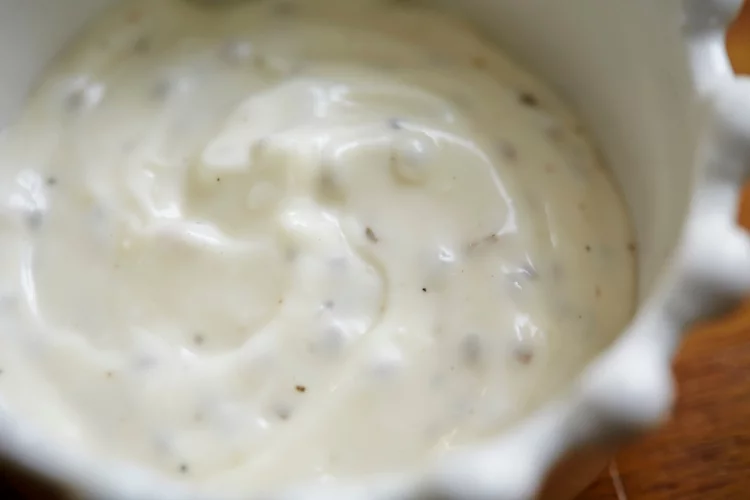
Cream of tartar is an acid salt derived from winemaking. On its own, it doesn't leaven anything — but when you combine it with a small amount of baking soda, you get a reaction comparable to baking powder. The ratio is typically ½ teaspoon cream of tartar plus ¼ teaspoon baking soda to replace 1 teaspoon of baking soda.
This combination works well in recipes that benefit from a clean, neutral flavor. It's especially useful in snickerdoodles and meringues, where cream of tartar also helps stabilize egg whites and prevent crystallization. If you have both ingredients on hand, this is often the most precise and reliable substitute.

Both lemon juice and white vinegar are acidic enough to activate baking soda — but since we're substituting baking soda itself, you'd use them to boost the reaction when you have a small amount of another leavening agent available. If your recipe has some residual baking powder, adding a splash of lemon juice can amplify the lift. Lemon juice works best in recipes where a subtle citrus note is welcome — quick breads, certain muffins, or anything lemon-forward. White vinegar is more neutral and works in nearly any recipe without affecting flavor. If you've ever made lemon bars and wondered about storage, the guide on how to store lemon bars covers that well.
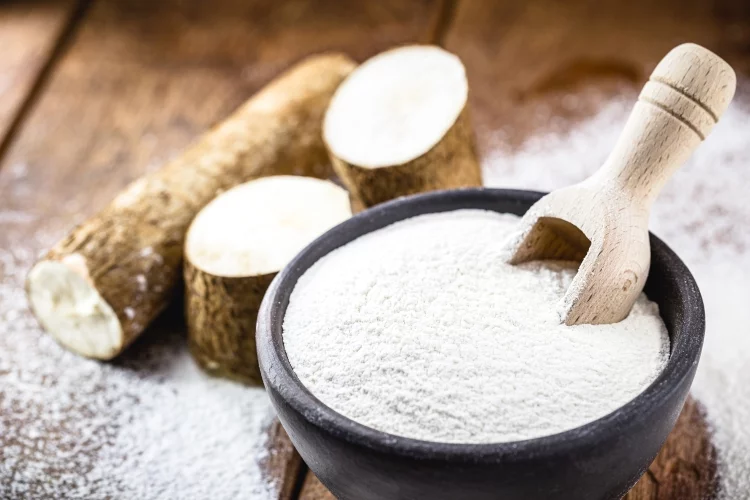
Club soda contains dissolved carbon dioxide, which offers a small amount of lift in thin batters. Replace some of the liquid in your recipe with club soda to add lightness without changing the flavor at all. It won't produce the same rise as baking soda, but in crepe batter or thin pancake batter, it's a practical option. Cornstarch plays a supporting role — it's a component in baking powder and can help stabilize wetter substitutes like vinegar or lemon juice by absorbing some of the excess moisture.
| Substitute | Ratio (per 1 tsp baking soda) | Best For | Flavor Impact |
|---|---|---|---|
| Baking Powder | 3 teaspoons (1 tablespoon) | Cakes, muffins, pancakes, waffles | Slightly metallic if overused |
| Cream of Tartar + Baking Soda | ½ tsp + ¼ tsp | Cookies, meringues, snickerdoodles | Neutral and clean |
| Lemon Juice | 1 tablespoon (reduce other liquids) | Citrus-friendly quick breads and muffins | Mild citrus note |
| White Vinegar | 1 tablespoon (reduce other liquids) | Most baked goods | Nearly undetectable |
| Club Soda | Replace liquid volume in recipe | Thin batters, pancakes, crepes | No flavor change |
Knowing which substitute to use is only half the equation. Executing the swap correctly is where most people run into trouble. Take a moment to plan before you start mixing.
Start by noting exactly how much baking soda your recipe calls for. Then apply the correct ratio from the table above. Write it down before you start measuring — it's easy to lose track mid-recipe, especially when you're also managing other adjustments. If you're using baking powder, keep in mind that 3 teaspoons equal 1 tablespoon, which simplifies the measurement. Measure by volume using proper measuring spoons, not a regular table spoon, unless you have a kitchen scale, in which case grams give you the most precision.
If your substitute includes a liquid — lemon juice or vinegar — decide upfront whether you'll reduce another liquid in the recipe to compensate. For most recipes, reducing the milk or water by about 1 tablespoon for every tablespoon of acid liquid you add keeps the batter at the right consistency.
Taste your batter before baking if it's safe to do so — egg-free batters like pancake batter or some muffin mixes can give you a rough read on whether the balance feels right. If the batter tastes overly tangy, you've added too much acid. A pinch of sugar can soften this without meaningfully changing the final result. If it tastes flat or chemical, you may have over-measured the baking powder — reduce by ½ teaspoon and reassess. Trust your palate here. It's a useful guide even when you can't be scientific about it.
The accuracy of your substitution depends heavily on the accuracy of your measurements. A few basic tools make the process much more reliable and repeatable.
When you're working with quantities as small as ¼ teaspoon, precision matters more than people expect. A set of quality measuring spoons that includes ⅛-teaspoon and ¼-teaspoon measures gives you the granularity you need for cream of tartar and baking powder adjustments. For greater precision, a digital kitchen scale lets you measure in grams and eliminates the variability of how tightly packed your spoon happens to be. A scale becomes especially valuable when you're scaling a recipe up or down and need the leavening ratios to stay accurate.
How well you incorporate your substitute matters just as much as how much you use. If you're combining cream of tartar and baking soda, whisk them together with the dry ingredients before adding any wet components — this distributes them evenly throughout the flour. A balloon whisk handles this well. For liquid substitutes like vinegar or lemon juice, add them to your wet ingredient mix first, then combine with the dry ingredients. This prevents the acid from reacting unevenly in pockets of batter and ensures a consistent rise across the entire bake.
Note: Once a leavening reaction starts, work quickly — carbon dioxide bubbles escape fast, and letting batter sit too long before baking means less lift in the finished product.
Substitutes for baking soda perform well in many situations, but not all of them. Knowing the difference helps you make a smarter call before you commit to a swap.
Quick breads, muffins, pancakes, waffles, and most drop cookies are forgiving. These recipes don't depend on a precisely engineered chemical balance to achieve their structure, and a slightly different leavening profile won't ruin the final product. Recipes that already include acidic ingredients — buttermilk pancakes, lemon poppy seed muffins, chocolate cake made with natural cocoa — also tend to handle substitutes well because the acid is already factored into the formula.
Thin batters like crepe batter can use club soda as part of the liquid component with no adjustments to dry ingredients, making that particular swap unusually simple.
Delicate layer cakes, soufflés, and highly technical recipes where rise, crumb structure, and texture are all critical are difficult to adapt. The same goes for recipes where baking soda serves a secondary function — like promoting browning in cookies or neutralizing the bitterness in natural cocoa powder. In those cases, a substitute may get you close, but the result won't be identical. If a recipe matters — a birthday cake, a celebration dessert — and you're out of baking soda, going to the store is the more reliable choice.
The best way to handle a missing ingredient is to prevent the situation in the first place. A well-stocked pantry makes last-minute substitutions the exception rather than the routine.
Beyond baking soda and baking powder, keep cream of tartar on hand. It's inexpensive, has a long shelf life, and gives you a precise, reliable substitution option when paired with whatever baking soda you have left. White vinegar is another pantry staple that doubles as a substitute and a general kitchen workhorse, so it rarely goes to waste. A sealed bottle of club soda in the back of the fridge covers you for thin batters. These three ingredients together address the majority of substitution scenarios you're likely to encounter.
Baking soda loses potency over time, even sealed. The common test is to drop a teaspoon into hot water — vigorous bubbling means it's still active; a weak reaction means it's time to replace it. Check your leavening agents every six months and swap them out as needed. Cream of tartar and baking powder have similar shelf lives and benefit from the same periodic review. Keeping a simple rotation schedule — even a recurring note on your phone — means you'll rarely be caught with ineffective leavening agents when it counts.
You can, but your baked goods will likely turn out denser and flatter than intended. For recipes where texture isn't the main event — dense brownies or some bar cookies — the result is still edible. For anything where lift and airiness are central, like cakes or muffins, omitting the leavening agent entirely will noticeably change the final product in a way most people won't find acceptable.
Baking powder is the most widely available and consistent substitute for baking soda, but it performs best in recipes that don't already carry a heavy acid load. In highly acidic batters, using too much baking powder can produce an off, slightly metallic flavor. Always apply the 3-to-1 ratio and check your recipe for existing acidic ingredients before committing to the swap.
White vinegar is the best choice because it has the most neutral flavor. Apple cider vinegar is a close second and blends naturally into recipes with warm spices or fruit. Balsamic and red wine vinegars have too strong a character to use in most baked goods without affecting the flavor noticeably, so stick with white or apple cider vinegar for the least disruptive results.
 |
 |
 |
 |

About Daisy Dao
Daisy Dao grew up in Honolulu, Hawaii, where coastal living and access to fresh local ingredients shaped her approach to home cooking from an early age. She has spent years experimenting with seafood preparation, healthy cooking methods, and ingredient substitutions — developing hands-on familiarity with a wide range of kitchen tools, techniques, and produce. At BuyKitchenStuff, she covers healthy recipes, cooking techniques, and ingredient substitution guides.
Check for FREE Gifts. Or get our Free Cookbooks right now.
Disable the Ad Block to reveal all the recipes. Once done that, click on any button below
|
|
|
|
