by Christopher Jones
Fresh pasta starts losing quality within just 2 hours of sitting at room temperature — a hard fact that catches most home cooks completely off guard. Whether you rolled it by hand or used a machine (check out our guide on how to use a pasta maker if you're just starting out), knowing how to store fresh pasta the right way is the difference between silky, restaurant-quality noodles and a sticky, gummy disaster. Done right, you can keep fresh pasta in perfect shape for days in the fridge or months in the freezer. This guide covers every method, every tool, and every mistake to avoid. For more practical kitchen guides like this one, browse our cooking blog.
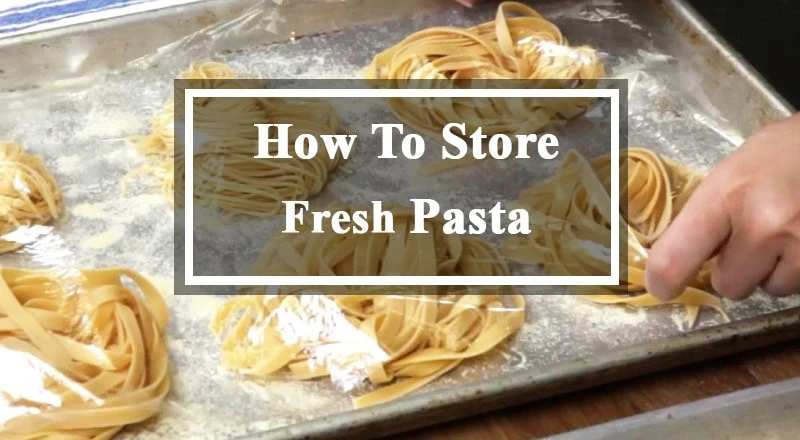
Fresh pasta is made with eggs, flour, and sometimes a touch of oil. That combination means it behaves completely differently from the dried box stuff on your pantry shelf. The moisture content is significantly higher, making it more delicate and far more prone to spoilage. If you've been experimenting with your dough recipe, knowing your substitutes for eggs can also affect how long the finished pasta stays fresh. Understanding what you're working with is step one to storing it correctly.
The good news is that the rules are simple once you know them. You don't need a commercial kitchen or expensive equipment. A few basic tools and the right technique will protect your fresh pasta every time.
Contents
Most pasta storage problems come down to a handful of avoidable errors. Here's what goes wrong — and how to stop it before it happens.
Room temperature is the enemy of fresh pasta. The FDA recommends refrigerating perishable foods within 2 hours — and fresh pasta, made with eggs and high-moisture flour, is absolutely perishable. Leave it on the counter longer than that and you're inviting bacterial growth along with a sticky, gummy texture that no amount of cooking will fix.
If you just finished rolling your dough and you're not cooking it immediately, get it into the fridge or start the drying process right away. Don't let it sit while you prep your sauce. Those 2 hours go faster than you think.
Fresh pasta noodles stick together aggressively — especially after cutting. Skipping the flour dusting step turns a beautiful, even batch into a clumped-up mess by the time you open the container. This is the number one error home cooks make.
Loosely covered bowls let moisture escape and allow pasta to dry out unevenly. Regular zip-lock bags trap too much humidity and create condensation that makes noodles slimy. The right move is an airtight container — ideally one sized close to your pasta portion so there's minimal air space inside.
For nest-style noodles like fettuccine or tagliatelle, use a wide, flat container so the noodles can sit in loose nests rather than compressed stacks. Compression squeezes out moisture and makes rehydration uneven during cooking.
You have three solid options depending on how soon you plan to cook the pasta. Pick the one that fits your timeline.
The refrigerator is your best option for pasta you plan to cook within 1–3 days. This method preserves the fresh flavor and texture better than freezing, but the window is short — don't push it past 3 days.
Always label. Fresh pasta looks the same whether it's 1 day old or 3 days old, and you don't want to guess when you're about to cook dinner.
Freezing is the best long-term option for how to store fresh pasta when you're batch cooking. Properly frozen fresh pasta keeps for up to 2 months without meaningful quality loss. The key is the flash-freeze method — it prevents individual noodles from fusing into a solid block.
The flash-freeze step takes about 10 extra minutes and saves you from pulling out a rock-solid, unusable frozen brick. Don't skip it.
Drying turns your fresh pasta into something closer to shelf-stable dried pasta. This works best for thicker, sturdier noodles like spaghetti, fettuccine, or pappardelle — not for delicate, egg-heavy doughs that crack during drying. Hang the noodles on a pasta drying rack for 12–24 hours in a cool, dry room until they're completely stiff and snap cleanly when bent. Store in an airtight container at room temperature for up to 2 weeks. Any remaining moisture will cause mold, so the snap test is essential before you seal them up.

Storage times vary based on the method you use and what's in your dough. Here's a clear breakdown so you know exactly what to expect before you commit to a storage method.
Egg-based pasta — which covers most fresh pasta recipes — lasts 1–3 days refrigerated. Pasta made with just flour and water lasts slightly longer, up to 3–4 days, because there are no eggs to turn. Beyond those windows, the texture becomes gummy and the flavor goes off. Trust your nose: if it smells sour, yeasty, or just off, toss it. A gray tint after 2–3 days is normal oxidation and doesn't automatically mean it's spoiled, but combine that gray color with an off smell and it's done.
Frozen fresh pasta holds good quality for up to 2 months. After that, it's still technically safe if stored properly, but the texture starts to degrade — it can become mushy or waterlogged when cooked. Freezer burn is the most common quality issue, showing up as white, dry patches on the noodles. It's caused entirely by air exposure, not by temperature — seal your bags tightly every single time.
Filled pastas like ravioli or tortellini should be used within 1 month, especially if the filling contains meat or dairy. The filling degrades faster than the pasta shell itself.
Home-dried fresh pasta isn't as shelf-stable as commercial dried pasta, which is processed to a precise, very low moisture level. Your home-dried version, made correctly, lasts about 2 weeks in a cool, dry pantry. A food dehydrator gives you better moisture control than air-drying alone and can extend that window — see our best food dehydrators guide for models that handle pasta well.
You don't need a lot of equipment. But having the right tools makes the whole process faster, more consistent, and far less wasteful.
Your container choice matters more than most people realize. Here's what to look for:
A pasta drying rack is also worth having if you make fresh pasta regularly. Wooden and stainless steel versions both work, they stack for easy storage, and they keep noodles completely separate during air-drying. You can improvise with a clean coat hanger draped over a chair back, but a dedicated rack is more reliable.
A food dehydrator gives you precise, low-heat drying that takes homemade pasta to a much longer shelf life than air-drying alone. Set the dehydrator to 135°F (57°C) and run your pasta for 2–4 hours depending on thickness. The result is evenly dried pasta that snaps cleanly and stores for up to 2 weeks or more. It's especially useful if you batch-make pasta on weekends and want shelf-stable portions available throughout the week without relying on freezer space.
If you're also cooking stored pasta on specialty stovetops, our guide on how to use non-induction cookware on an induction cooktop can help when you're bringing a big pot to a rolling boil.
Understanding the storage differences between fresh and dried pasta helps you plan your cooking schedule and avoid waste. These two products are not interchangeable when it comes to storage rules — treating them the same way is how batches get ruined.
| Factor | Fresh Pasta | Dried Pasta (Store-Bought) |
|---|---|---|
| Room temperature (max safe time) | 2 hours | Indefinitely (sealed packaging) |
| Refrigerator life | 1–3 days | Not recommended (absorbs moisture) |
| Freezer life | Up to 2 months | Up to 2 years (rarely needed) |
| Home-dried shelf life | Up to 2 weeks | N/A — already commercially dried |
| Cooking time from storage | 1–4 min fresh; 2–5 min frozen | 8–12 minutes boiling |
| Flavor after storage | Best within 24 hrs; good up to 2–3 days | Stable for months, year-round |
| Spoilage risk | High — eggs and moisture make it perishable | Low — minimal moisture content |
Fresh pasta demands more attention but rewards you with superior flavor and texture. Dried pasta is forgiving and convenient, but it can't replicate the silkiness of fresh. The practical takeaway: make fresh pasta when you have time to store it correctly, and keep dried pasta as your weeknight backup. Never try to store fresh pasta the same way you store dried — that's where most waste happens.
Good storage doesn't require a big investment. Here's a realistic breakdown of what you'll spend depending on your setup and how often you make fresh pasta.
If you're just getting started, you can handle fresh pasta storage with items you likely already own:
Your total startup cost for basic pasta storage comes in at under $25, and most of these items have dozens of other kitchen uses. If you're varying your pasta dough with richer fats, knowing your substitutes for butter in dough recipes doesn't change any of these storage rules — the methods apply universally.
If you make fresh pasta once a week or more, a few targeted investments pay off quickly:
A vacuum sealer is the single biggest quality upgrade for long-term pasta storage. It removes virtually all air from the bag, which means zero freezer burn and maximum shelf life at up to 2 months. If you're cooking pasta dishes that use rich, creamy sauces, our guide on substitutes for cream cheese pairs well with the pasta you've kept safely stored in the freezer.
Theory is useful. Real-world application is where things actually click. Here are two scenarios you'll likely recognize from your own kitchen.
You spend Sunday afternoon making a large batch of fettuccine — enough for four weeknight dinners. Here's exactly how to handle it:
This system gives you weeknight dinners that cook in under 5 minutes start to finish. The flash-freeze step is non-negotiable — skip it and you end up pulling a single frozen mass out of the bag and chiseling dinner apart. The extra 10 minutes on Sunday is absolutely worth it.
You're making fresh pasta for a dinner party happening in 2 days. Refrigerator storage is the right call here — no freezing needed, and the flavor stays at its best.
Make the pasta the day before the event. Dust everything well, divide into per-person portions, and store each portion in a separate airtight container. On the day of the dinner, pull the containers out about 15 minutes before cooking to let them come up slightly in temperature. Cook in well-salted, vigorously boiling water for 1–3 minutes and serve immediately. Don't leave cooked pasta sitting — it continues absorbing water and becomes soft.
One thing people consistently get wrong for group cooking: they make the pasta too far in advance, thinking the fridge will preserve it longer than it does. Two days is the safe maximum for refrigerated fresh egg pasta. If your event is more than 2 days out, freeze it instead and use the flash-freeze method. Always store plain, uncooked noodles — never store pasta that's already been tossed in sauce, since the sauce accelerates texture breakdown.
No. Fresh pasta made with eggs is perishable and should not sit at room temperature for more than 2 hours. After that, bacterial growth accelerates into unsafe territory. If you need to store it overnight, place it in an airtight container in the refrigerator or use the flash-freeze method to freeze individual portions for longer storage.
No — always freeze it raw. Cooked pasta freezes poorly because the texture becomes mushy and waterlogged when it thaws and reheats. Raw fresh pasta freezes beautifully and cooks from frozen in just 2–5 minutes in boiling salted water, which is barely longer than cooking it fresh.
Gray discoloration is usually oxidation — the eggs in the dough are reacting to air exposure over time. It's most common after 2–3 days of refrigeration. Pasta with a gray tint is typically still safe to eat if it doesn't smell sour or off, but the texture and flavor are already degrading. To prevent it, use truly airtight containers and use egg-based pasta within 2 days.
Yes, and freezing is actually the recommended storage method for filled pasta you're not using the same day. Use the flash-freeze method — spread them on a parchment-lined baking sheet, freeze until firm, then transfer to a freezer bag. Cook directly from frozen. Use within 1 month if the filling contains meat or dairy, since those fillings degrade faster than plain pasta dough.
Trust your senses. Spoiled fresh pasta smells sour, yeasty, or distinctly off. It may also develop a slimy surface texture or visible mold — typically white or green fuzzy spots. Gray color alone doesn't mean it's bad, but gray color combined with an off smell means it's done. When in doubt, throw it out. Fresh pasta is inexpensive to make again, and food poisoning is not worth the risk.
 |
 |
 |
 |

About Christopher Jones
Christopher Jones holds an MBA from the University of San Francisco and brings a business-minded approach to kitchen gear evaluation — assessing products not just for performance but for long-term value, build quality, and real-world usability in everyday home cooking. He has spent years testing appliances, cookware, and kitchen gadgets with the same analytical rigor he developed in business school. At BuyKitchenStuff, he covers kitchen appliance reviews, buying guides, and practical cooking tips.
Check for FREE Gifts. Or get our Free Cookbooks right now.
Disable the Ad Block to reveal all the recipes. Once done that, click on any button below
|
|
|
|
