by Rick Goldman
My first attempt at eating better lasted exactly four days. I'd loaded up on expensive superfoods, followed a complicated meal plan I found online, and burned out spectacularly before the weekend arrived. Sound familiar? Here's the thing: cheap easy healthy meals are not a myth, and you don't need a big budget or a fancy kitchen to pull them off. If you're serious about eating better without emptying your wallet, the nutrition section on this site is packed with practical starting points — and this guide cuts straight to what actually works.

The truth is that eating well on a budget comes down to a few repeatable habits, not a long list of exotic recipes. When you understand which ingredients deliver the most nutrition per dollar — and when you have a simple system for cooking them — healthy eating becomes something you do automatically, not something you grind through.
This guide walks you through everything: the mindset shift that makes it click, the meals you can cook tonight, how to handle the inevitable rough patches, and how to keep the momentum going long-term. No complicated techniques. No overpriced ingredients.
Contents
Most people assume healthy food costs more. That assumption is worth challenging directly. According to the USDA's MyPlate guidelines, a balanced diet built around whole grains, legumes, vegetables, and lean proteins is significantly cheaper per meal than a diet heavy in processed and fast food. The sticker shock at a specialty grocery store is real — but you don't need to shop there. You shop at any regular grocery store, buying rice, lentils, oats, eggs, and frozen vegetables.
The real cost of poor eating is hidden. You pay it later in energy crashes, sluggish afternoons, and health issues that compound over time. Cheap easy healthy meals save you money twice — once at the checkout and once down the road. When you frame it that way, the math becomes obvious.
The right frame for budget healthy eating is nutrition per dollar, not just calories per dollar. A bag of dried lentils gives you protein, fiber, and iron for roughly $1.50. A fast food combo gives you mostly fat and sodium for $9. Eggs deliver complete protein — meaning they contain all essential amino acids — for about 25 cents each. Frozen spinach holds nearly the same nutritional punch as fresh at a fraction of the price. Once you start thinking this way, the grocery store looks completely different.
| Ingredient | Avg. Cost | Key Nutrients | Servings Per Purchase |
|---|---|---|---|
| Dried lentils (1 lb) | ~$1.50 | Protein, fiber, iron | 4–6 |
| Eggs (1 dozen) | ~$3.00 | Complete protein, B12, choline | 6–12 |
| Frozen spinach (10 oz) | ~$1.80 | Iron, folate, vitamins A & C | 4 |
| Brown rice (2 lb) | ~$2.50 | Complex carbs, manganese, fiber | 8–10 |
| Canned chickpeas (15 oz) | ~$1.00 | Protein, fiber, folate | 3–4 |
| Sweet potatoes (3 lb) | ~$3.50 | Vitamin A, potassium, fiber | 6 |
You don't need to meal-prep every single dish for the week. That's the overcomplicated version that burns people out. What you actually need is a simple prep session — about 45 minutes on Sunday — where you cook a big batch of a grain, roast a tray of vegetables, and hard-boil a handful of eggs. Those three components let you build quick, balanced meals all week by mixing and matching without ever starting from scratch on a Tuesday night.
Pro tip: Cook once, eat three times — a single pot of brown rice on Sunday becomes a grain bowl Monday, a veggie stir-fry Wednesday, and a quick fried rice Friday.
Batch cooking is the single most powerful habit in budget healthy eating. It removes the "I don't know what to make" problem entirely, which is usually what drives people toward expensive takeout. When the decision is already made, the execution takes minutes.
Your staple list should never hit zero. When you always have oats, eggs, canned tomatoes, dried lentils, olive oil, garlic, and frozen vegetables in your kitchen, you can always make something nutritious and filling. Write the list down, tape it inside a cabinet, and restock automatically when something runs low — before it's gone. These ingredients aren't glamorous individually, but combined they produce dozens of solid meals without any planning drama.
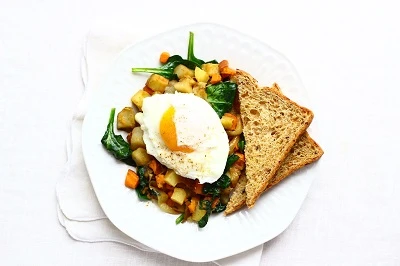
These aren't hypothetical recipes built around hard-to-find ingredients. These are real cheap easy healthy meals you can pull together with what's likely already in your kitchen.
Dice any combination of onion, bell pepper, zucchini, and potato. Sauté in a skillet over medium heat with olive oil, salt, and pepper until everything softens and starts to brown at the edges. Make two small wells in the hash and crack eggs directly into them. Cover the pan and let the eggs set — about 3 minutes for a runny yolk, 5 for fully cooked. Total cost: under $2 per serving. Total time: 15 minutes. This dish delivers protein, fiber, and complex carbs in a single pan with almost no cleanup.
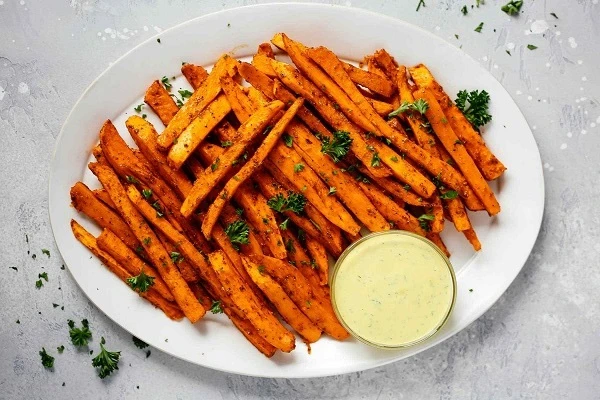
Cut sweet potatoes into wedges, toss with olive oil and a pinch of smoked paprika — or use a cayenne pepper substitute if you want real heat — then roast at 425°F for 25 minutes. While they roast, marinate chicken thighs in lemon juice, garlic, and olive oil for ten minutes, then cook in a skillet until golden. The result is a complete, balanced meal for around $3 a plate. Sweet potatoes are one of the most nutrient-dense foods per dollar available — dense in vitamin A, potassium, and fiber.


Simmer chopped carrots in vegetable broth with onion and garlic until completely soft, then blend until smooth. Stir in a spoonful of plain yogurt off the heat for creaminess and a slight tang. Season with cumin, salt, and pepper. A pot of this feeds four people for about $4 total. It's warming, filling, and loaded with beta-carotene. This soup is also a textbook batch cooking candidate — make a big pot, refrigerate it, and reheat throughout the week without any loss in quality.
If you're just starting out, pick one meal and cook it repeatedly until it stops requiring thought. A simple vegetable stir-fry over rice is the ideal first target. You need one pan, a handful of vegetables, soy sauce, garlic, and cooked rice. Once you've made it five or six times, it becomes automatic. From there, add one new recipe at a time — not a new meal plan, just one recipe.
Beginners also benefit enormously from learning a single versatile vegetable. Try this cauliflower recipe for weight loss — cauliflower is cheap, forgiving, and absorbs whatever flavors you cook it with. You can roast it, steam it, mash it, or toss it into soup. It's one of the best vegetables for building basic cooking confidence without stress.
Once batch cooking feels easy, start experimenting with flavor profiles. The same core ingredients taste completely different depending on whether you season them with cumin and coriander, soy sauce and ginger, or lemon and fresh herbs. Flavor variety is what keeps cheap easy healthy meals interesting over the long term. You're not changing the proteins and vegetables — you're rotating the seasoning approach.
At this stage, adding a batch-friendly recipe like a hearty cabbage soup is a smart move. It's inexpensive, deeply filling, scales easily for large batches, and stores well in the fridge for several days. Cabbage is one of the most underrated budget vegetables you'll find.
The "no time" problem is almost always a planning problem in disguise. When you don't know what you're making ahead of time, cooking feels slow and exhausting even for simple meals. When you've prepped your staple components on Sunday and have a loose plan for the week, cooking on a Wednesday night takes 15 minutes. The time problem dissolves when the decision is already made before you open the fridge.
Important: Don't confuse "no time to cook" with "no energy to decide what to cook" — they're two different problems, and only one of them is solved by cooking faster.
On genuinely busy nights, keep a short mental list of your fastest meals — eggs over vegetables, canned chickpeas with spinach over rice, or yogurt with oats and fruit. These take under 10 minutes and require almost no active thought. Speed in the kitchen is a skill you build, not a trait you either have or don't.
Boredom is the biggest threat to sustainable healthy eating. Not willpower. Not cost. Monotony. The fix is to rotate your seasoning profiles, your protein sources, and your vegetable combinations on a rolling basis. Introduce one new recipe per week — just one. That's over 50 new meals across a year, which is more than enough variety to stay motivated. You also don't need to finish every leftover if it's not working; moving on without guilt is part of building a sustainable habit.
A well-stocked pantry is your insurance policy against bad food decisions. When your pantry has what it needs, you never have to choose between cooking something healthy and ordering something expensive. Stock your pantry like a professional — with items that last, stretch across multiple meals, and combine easily without elaborate recipes.
Your core pantry should include:
These items cost very little per unit, last weeks or months on the shelf, and combine into dozens of different meals. That's the foundation everything else is built on.
You don't need a professional kitchen setup. But a few key tools make the whole process less friction-heavy. A sharp chef's knife cuts prep time in half — a dull knife is genuinely the number one reason people find cooking tedious. A cast iron skillet handles everything from hash to chicken to roasted vegetables with one pan. A reliable blender makes soups, smoothies, and sauces effortless in under a minute.
One tool that surprises a lot of people is a good vegetable chopper. If dicing onions and peppers feels like a chore every single night, an electric vegetable chopper cuts that prep time down to almost nothing. When the friction of cooking drops, you cook more often. And cooking more often is the entire game when it comes to cheap easy healthy meals at home.
Dried lentils, eggs, oats, frozen vegetables, brown rice, canned chickpeas, and sweet potatoes consistently offer the best nutrition per dollar. These ingredients form the backbone of most cheap easy healthy meals and are available at every grocery store regardless of where you live.
Yes. A diet built around whole grains, legumes, eggs, and frozen vegetables comes in well under $5 per person per day when you shop strategically and cook at home. Processed food and fast food consistently cost more per calorie and deliver far less nutritional value per dollar.
Start with one simple recipe — a vegetable stir-fry or scrambled eggs with vegetables — and cook it repeatedly until it feels automatic. Then add one more recipe. You don't need to overhaul everything at once. Gradual confidence-building produces far better long-term results than attempting a total reset.
A basic session — cooking a grain, roasting vegetables, and boiling eggs — takes about 45 minutes once a week. That upfront investment saves you 20 to 30 minutes every weeknight, making it one of the highest-return habits in healthy eating on a budget.
For most vegetables, yes. Frozen vegetables are typically harvested and frozen at peak ripeness, which locks in their nutritional value. In some cases, frozen spinach or peas actually retain more vitamins than fresh produce that has been sitting in a store for several days before you buy it.
Eggs cooked any way with sautéed vegetables takes under 10 minutes and delivers protein, fiber, and key micronutrients. Canned chickpeas with garlic, olive oil, and frozen spinach over pre-cooked rice is another 10-minute option that's deeply satisfying and costs very little per serving.
Rotate your seasoning profiles rather than changing your ingredients. The same chicken, rice, and vegetables taste completely different with cumin and lemon versus soy sauce and ginger versus Italian herbs. Introducing one new recipe per week builds variety gradually without overwhelming your routine.
No. A sharp knife, a cutting board, one good skillet, and a pot are enough to make the vast majority of healthy meals. Your most important investment is your pantry staples, not your equipment. Better tools help over time, but they are never prerequisites for eating well.
The simplest version of healthy eating — real ingredients, cooked simply, eaten consistently — beats every complicated diet plan ever invented.
 |
 |
 |
 |

About Rick Goldman
Rick Goldman grew up traveling the Pacific Coast and developed an early appreciation for regional and international cuisines through exposure to diverse food cultures from a young age. That culinary curiosity shaped his approach to kitchen gear — he evaluates tools based on how well they perform across different cooking styles, ingredient types, and meal occasions. At BuyKitchenStuff, he covers kitchen equipment reviews, recipe guides, and food-focused buying advice.
Check for FREE Gifts. Or get our Free Cookbooks right now.
Disable the Ad Block to reveal all the recipes. Once done that, click on any button below
|
|
|
|
