by Rick Goldman
What if the most dangerous threat lurking in a kitchen has no color, no odor, and no taste — yet accounts for hundreds of preventable deaths every year? Carbon monoxide poisoning symptoms are routinely mistaken for the flu, food poisoning, or ordinary fatigue, which is precisely what makes this hazard so consistently underestimated. For anyone who cooks with gas appliances, operates a portable propane burner, or uses combustion-based equipment near enclosed spaces, understanding CO accumulation is not optional — it is essential. This guide, part of the BuyKitchenStuff health and safety resource library, covers the warning signs, the detection tools, and the prevention strategies that every kitchen-focused household needs in place.

Carbon monoxide is a byproduct of incomplete combustion. When organic fuels — natural gas, propane, charcoal, wood — burn without adequate oxygen, CO forms instead of the harmless carbon dioxide produced by efficient combustion. The body absorbs CO through the lungs approximately 200 times more readily than oxygen, where it binds to hemoglobin and starves tissues of the oxygen they require to function. The brain and heart, being the highest oxygen consumers in the body, suffer damage first and fastest.
The kitchen is one of the most common sites of indoor CO exposure in residential settings. Gas ranges, gas ovens, and portable propane burners generate measurable CO under normal operating conditions. The risk escalates sharply when appliances malfunction, when ventilation is blocked, or when equipment designed strictly for outdoor use — charcoal grills, camp stoves, patio heaters — is brought indoors for convenience. Every household operating gas-powered cooking equipment carries some baseline CO risk, and that baseline rises significantly without proper ventilation and detection in place.
Contents
Gas ranges and ovens are the primary kitchen-based CO sources in most residential homes. Under normal conditions, a properly maintained gas appliance produces minimal CO — the combustion is efficient enough that output remains low. Problems emerge when burner ports become clogged with food debris, when the air-to-fuel ratio drifts due to regulator issues, or when flame color shifts from a clean blue to orange or yellow. A persistent orange or yellow flame is a direct indicator of incomplete combustion and elevated CO production. It warrants immediate inspection, not continued use.

Portable propane and butane burners designed for outdoor use present a substantially elevated risk when operated indoors. Their combustion chambers are calibrated for open-air environments where CO disperses freely. In an enclosed kitchen, even brief use can raise CO concentrations to symptomatic levels. Home cooks who use these for high-heat searing, wok cooking, or canning operations should understand clearly that "briefly" and "just this once" carry real risk without dedicated ventilation.
Beyond the primary range, several additional kitchen and adjacent cooking tools contribute meaningfully to CO buildup. Gas-heated warming drawers — reviewed in depth in the Best Warming Drawers guide — require adequate room ventilation just as any gas appliance does, a point often overlooked by buyers focused on temperature performance. More acutely dangerous is indoor charcoal use. Charcoal produces significantly more CO per unit of combusted fuel than natural gas; burning a standard chimney starter's worth of charcoal in an enclosed space can raise CO concentrations to lethal levels within minutes, not hours.
Gas appliances offer genuine advantages: superior heat control, higher peak temperatures, and responsive flame adjustment that experienced cooks rely on. But combustion is inherently imperfect. Even a well-maintained gas oven operating at normal temperatures emits measurable CO. The critical variable is always airflow. A kitchen with a functional range hood venting to the building exterior manages this risk effectively. A kitchen with a recirculating hood — one that filters grease and odors but does not exhaust air outside — does not remove CO at all. Recirculating hoods are widely sold and widely misunderstood on this point.
For households evaluating appliance upgrades, the comparison between gas and electric involves more than cooking performance. Reviews of options like the best wall oven and microwave combo units highlight how electric models eliminate combustion risk entirely — an underappreciated safety advantage in smaller kitchens, apartments, or any space with limited natural ventilation.
Electric ranges, induction cooktops, and electric ovens produce zero CO. They convert electrical energy directly to heat without any combustion process. Induction technology in particular has accelerated in professional kitchen adoption because it eliminates both open-flame hazards and combustion byproducts simultaneously. Electric water heating equipment — including the countertop units covered in the Best Water Boilers guide — similarly operates with no CO output whatsoever. For households with young children, elderly members, or occupants with respiratory conditions, the CO-free operating profile of electric cooking equipment is a substantive safety distinction, not a marketing abstraction.
The two dominant sensor technologies in residential CO detectors operate on different physical principles with meaningfully different performance profiles. Electrochemical sensors measure current changes produced when CO oxidizes at the sensor electrode — they respond quickly, maintain calibration reliably over their service life, and detect low-level concentrations accurately. Biomimetic sensors use a gel that changes optical properties in the presence of CO to trigger an alarm; they cost less but respond more slowly at lower concentrations and have a shorter usable lifespan. For primary kitchen placement, electrochemical sensors represent the higher-performing choice.
| Detector Type | Sensor Technology | Response Speed | Price Range | Lifespan | Best Suited For |
|---|---|---|---|---|---|
| Basic Plug-in | Electrochemical | Fast | $20–$40 | 5–7 years | Standard kitchens and bedrooms |
| Battery-Operated | Electrochemical | Fast | $25–$50 | 5–7 years | Areas without nearby outlets |
| Biomimetic | Gel-based | Moderate | $15–$30 | 2–3 years | Budget installs, secondary units |
| Combination (CO + Smoke) | Electrochemical + Photoelectric | Fast | $35–$70 | 5–7 years | Consolidated detection, rental units |
| Smart/Connected | Electrochemical | Fast | $60–$130 | 5–7 years | Remote monitoring, smart home integration |
Smart CO detectors connect to home Wi-Fi networks and push alerts to mobile devices — a meaningful advantage for vacation properties, homes with elderly occupants who may sleep through audible alarms, or landlords managing rental units remotely. Some models integrate with broader smart home platforms to trigger HVAC shutoffs or lock-system responses. The added connectivity is not a substitute for proper placement and timely replacement; it functions as a redundancy layer that extends notification range beyond the immediate building footprint.
When a CO detector activates, the correct and only acceptable response is immediate evacuation. Every occupant — including pets — should exit the building without pausing to open windows, gather belongings, or attempt to locate the source of the alarm. Residential detectors are calibrated to alarm well below acutely dangerous concentrations, specifically to provide a safe exit window. That margin exists to be used for evacuation, not investigation. Emergency services should be called from outside the building, and no one should re-enter until responders have confirmed the CO level has returned to safe baseline.
Critical warning: Never re-enter a home after a CO alarm until emergency personnel have identified the source and verified that CO concentrations have returned to safe levels — even briefly re-entering to retrieve items can expose occupants to dangerous doses.

Carbon monoxide poisoning symptoms follow a predictable concentration-dependent progression. At low exposure levels, symptoms include a dull frontal headache, mild nausea, and unusual fatigue — precisely the presentation of a dozen common, benign conditions. As concentration rises, the headache intensifies, confusion emerges, coordination deteriorates, and vision blurs. At high concentrations, victims lose consciousness rapidly and can die within minutes without intervention. The insidious nature of this progression is that by the time confusion sets in, the victim may no longer have the judgment or coordination to self-evacuate.
The most reliable diagnostic clue available without instrumentation is symptom geography. If a persistent headache resolves after leaving the premises and returns upon re-entry, CO exposure is a strong differential diagnosis. When multiple household members report the same symptoms simultaneously — particularly with a pattern of improvement outdoors — the response should be immediate evacuation and emergency services contact, not a search for ibuprofen.
Effective CO prevention is built from consistent daily behavior, not occasional vigilance. Range hoods should be activated before the first burner ignites, not after cooking is already underway. Hood filters require monthly cleaning to maintain meaningful airflow; a grease-clogged filter reduces hood extraction efficiency dramatically while appearing fully functional. Burner ports and grates should be inspected and cleared of food debris regularly, because blockages directly disrupt combustion geometry and push flame quality toward the incomplete end of the spectrum.
Outdoor grilling deserves particular attention. CO from a charcoal or gas grill positioned too close to a structure can migrate indoors through open windows, doors, and gaps around dryer vents or utility penetrations with surprising speed. Grills should be positioned a minimum of ten feet from any building opening. Cooks who frequently grill proteins outdoors and then finish or reheat indoors will find the safety-conscious techniques in the guide to reheating grilled chicken a useful companion — the transition from outdoor cooking to indoor reheating has its own best-practice considerations.
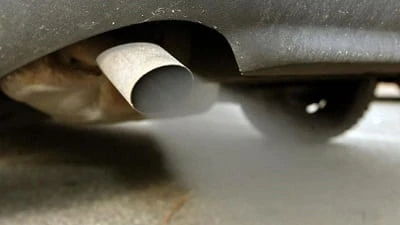
CO risk spikes in winter when homes are sealed against cold and natural ventilation drops to near zero. Furnaces and gas water heaters run longer cycles during this period, increasing cumulative CO output from systems that may have developed minor faults during warmer months without anyone noticing. Scheduling a professional inspection of all combustion appliances — not just the kitchen range — before each heating season is standard practice in any household that takes CO exposure seriously. Replacing CO detector batteries on the same schedule as smoke detector batteries, twice annually, eliminates the most common and most avoidable cause of detector failure.
A CO detector is only as effective as its placement and maintenance schedule. Detectors should be mounted at breathing height — approximately five feet from the floor — in or near sleeping areas and in every room containing a gas-burning appliance. A common installation error is placing CO detectors near the ceiling as one would a smoke detector. Smoke rises; CO does not. Carbon monoxide has nearly the same density as air and disperses evenly throughout a space rather than stratifying, making ceiling placement significantly less effective. Detector units require full replacement every five to seven years regardless of apparent function, because the electrochemical sensors degrade internally and lose accuracy before any external failure signal appears.
Annual professional servicing of gas appliances is the single highest-impact preventive measure available to homeowners. A certified technician inspects burner ports, checks heat exchangers for cracks, verifies draft and venting performance, and tests CO output — all assessments that require specialized equipment unavailable to the average homeowner. Water heaters, furnaces, and gas fireplaces adjacent to the kitchen demand identical scrutiny. A cracked heat exchanger in a furnace can flood an entire home with CO without triggering any kitchen-side alarm, because the CO enters the air distribution system directly. Treating appliance servicing as a line item in annual home maintenance, rather than a response to suspected problems, is the professional approach to long-term CO risk management.
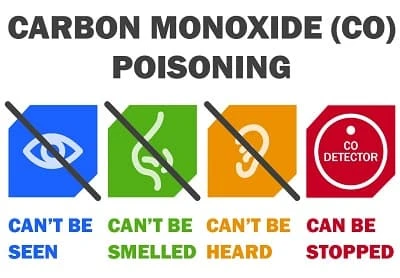
The most dangerous misconception surrounding CO is the belief that it can be detected by smell. It cannot. Carbon monoxide is completely odorless. The distinctive "gas smell" that warns occupants of a natural gas leak is actually mercaptan — a sulfur compound deliberately injected into natural gas distribution systems precisely because the gas itself, like CO, carries no odor. CO offers no olfactory warning signal under any concentration. Households relying on smell as their primary CO detection method have, in practice, no detection capability at all.

The second most widespread error is misattributing carbon monoxide poisoning symptoms to unrelated illness. Because the early presentation — headache, nausea, fatigue — mirrors influenza, food poisoning, and stress-related exhaustion, it is routinely dismissed. According to the Centers for Disease Control and Prevention, hundreds of unintentional, non-fire-related CO deaths occur in the United States annually, many preceded by symptoms that were initially attributed to other causes. The diagnostic pattern that separates CO exposure from common illness is household-wide involvement combined with symptom improvement when leaving the premises. When every person in the home feels better outdoors, the building itself is the common variable.
A persistent myth holds that modern gas appliances are CO-safe by design. Current appliances are engineered to minimize CO output under ideal operating conditions, but minimized is not zero. Even new equipment produces CO during combustion; the engineering reduces output, not eliminates it. A related myth claims that opening a single window provides adequate indoor protection against CO buildup from a malfunctioning or improperly used appliance. Natural ventilation through one window is rarely sufficient to prevent CO accumulation when a significant source is active indoors. Dilution requires substantial cross-ventilation — multiple open points on opposite sides of a space — and even then, it is not a reliable substitute for a properly functioning exhaust system and a functioning CO detector.
The earliest carbon monoxide poisoning symptoms are typically a dull frontal headache, mild nausea, and an unusual sense of fatigue or lightheadedness. These low-level symptoms correspond to the body's initial response to elevated carboxyhemoglobin in the bloodstream and are frequently dismissed as signs of dehydration, hunger, or the onset of a minor illness.
No. Electric appliances — including induction cooktops, electric ovens, and electric water boilers — produce zero carbon monoxide because they do not involve any combustion process. CO is exclusively a byproduct of burning organic fuels such as natural gas, propane, charcoal, wood, and gasoline. Switching to electric cooking equipment eliminates CO as an appliance-based risk entirely.
The rate of CO accumulation depends on the source, room volume, and ventilation. A charcoal grill or portable propane burner operated in an enclosed space without ventilation can raise CO to symptomatic concentrations within fifteen to thirty minutes and to potentially lethal levels within an hour. A malfunctioning gas range in a poorly ventilated kitchen can reach dangerous concentrations within several hours of continuous operation.
CO detectors should be mounted at approximately five feet from the floor — breathing height — in or near the kitchen, and separately near sleeping areas. Unlike smoke detectors, CO detectors should not be placed at ceiling height, because carbon monoxide disperses evenly throughout a room rather than rising. Detectors should not be placed directly above gas burners or inside cabinets, as localized heat and humidity interfere with sensor accuracy.
Anyone who suspects CO exposure should immediately move all occupants — including pets — outdoors to fresh air and call emergency services. No one should re-enter the building. If a person has lost consciousness or is unable to self-evacuate, emergency responders should be called immediately. Medical evaluation is warranted for anyone who experienced symptoms, as hyperbaric oxygen therapy may be indicated for significant exposure.
A kitchen without a range hood that exhausts to the exterior carries a higher CO risk than one with proper ventilation. Recirculating hoods filter grease and some odors but do not remove CO from indoor air. In kitchens without ventilation, CO from a gas range accumulates with each cooking session. This risk is manageable with a CO detector and open windows providing cross-ventilation, but it represents a real and ongoing hazard compared to a properly vented kitchen.
Yes. CO from an outdoor grill positioned near a home can migrate indoors through open windows, doors, dryer vents, and gaps around utility penetrations. The standard safety guideline is to position any outdoor grill — gas or charcoal — a minimum of ten feet from any building opening. Prevailing wind direction matters as well; a grill downwind of an open window represents less risk than one positioned directly upwind.
Residential CO detectors require full unit replacement every five to seven years, regardless of whether the alarm has ever sounded or the battery indicator remains green. The electrochemical sensors inside the unit degrade over time and lose accuracy without producing any visible indication of failure. The installation date should be marked on the unit or logged in a home maintenance calendar to ensure timely replacement.
 |
 |
 |
 |

About Rick Goldman
Rick Goldman grew up traveling the Pacific Coast and developed an early appreciation for regional and international cuisines through exposure to diverse food cultures from a young age. That culinary curiosity shaped his approach to kitchen gear — he evaluates tools based on how well they perform across different cooking styles, ingredient types, and meal occasions. At BuyKitchenStuff, he covers kitchen equipment reviews, recipe guides, and food-focused buying advice.
Check for FREE Gifts. Or get our Free Cookbooks right now.
Disable the Ad Block to reveal all the recipes. Once done that, click on any button below
|
|
|
|
