Kitchen Gadgets & Equipment Reviews ›
by Christopher Jones
Which reverse osmosis system actually delivers clean, great-tasting water — and which ones are all marketing hype? After testing and researching dozens of under-sink and countertop RO units, our top pick is the APEC ROES-50 for its proven filtration performance, straightforward DIY installation, and rock-solid reliability at an accessible price point.
Reverse osmosis has become the gold standard for home water purification in 2026. With growing concerns about EPA-regulated contaminants like lead, arsenic, PFAS, and fluoride showing up in municipal supplies across the country, more homeowners are taking water quality into their own hands. An RO system does what basic filters simply can't: it forces water through a semipermeable membrane at the molecular level, stripping out 99%+ of dissolved solids.
This guide covers the 7 best reverse osmosis systems of 2026, including under-sink powerhouses, alkaline mineral boosters, countertop plug-and-play units, and even a specialized RODI system for aquarium hobbyists. Whether you're upgrading your kitchen setup alongside a new modern kitchen faucet or starting fresh with purified water for cooking in your pasta pot, you'll find the right pick here. You can also browse our full product reviews catalog for more kitchen essentials. Let's get into it.

Contents
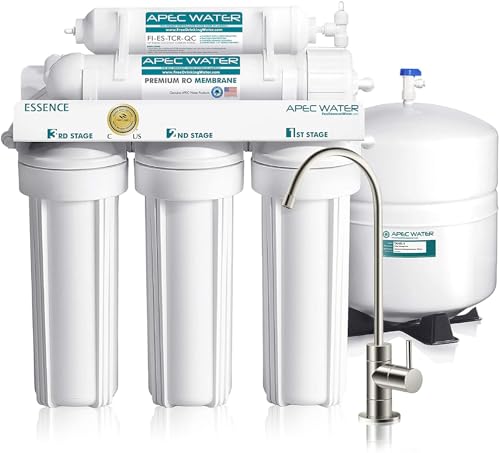




The APEC ROES-50 has held a top position in the RO market for years, and in 2026 it remains one of the best under-sink systems you can buy. Rated at 50 gallons per day, it's more than sufficient for a typical household's drinking and cooking needs. The five-stage filtration train — sediment pre-filter, two carbon blocks, a high-rejection TFC membrane, and a carbon polishing post-filter — removes up to 99.99% of over 1,000 contaminants, including lead, fluoride, chlorine, arsenic, chromium, and PFAS compounds.
APEC's WQA (Water Quality Association) certification gives you independent verification that the system performs as advertised. Installation is genuinely DIY-friendly: color-coded tubing and quick-connect fittings mean you don't need a plumber. The filters are large-capacity and typically last 6–12 months for the pre/post stages and 2–3 years for the membrane, keeping long-term costs manageable. Build quality is premium — the filter housings feel solid, the fittings don't drip, and APEC backs the system with U.S.-based customer support.
The ROES-50 doesn't add minerals back (it's a straight 5-stage system), and at 50 GPD it's on the slower side compared to 75 GPD competitors. But for most households that isn't a real-world issue — the storage tank keeps up with demand. If you want clean, neutral-tasting water without fuss, this is your system.
Pros:
Cons:
The iSpring RCC7 has been a household name in the RO category for over 15 years, and it earns that reputation every year. NSF/ANSI 58 certified and rated at 75 GPD, it delivers a higher production rate than the APEC ROES-50 at a competitive price point. The 5-stage system removes up to 99% of over 1,000 contaminants including PFAS, chlorine, fluoride, lead (up to 98%), arsenic, asbestos, calcium, and sodium — and reduces TDS by 80–90%.
iSpring's engineering shows in the details. The transparent first-stage filter housing lets you see at a glance when the sediment filter needs changing — no guessing or scheduled reminders required. The system fits under most standard kitchen sinks without modification, and the patented top-mounted faucet design simplifies installation compared to traditional through-the-counter setups. A built-in check valve prevents backflow, and the AS-material filter housing is both impact-resistant and easy to inspect. No power source needed — purely pressure-driven operation.
The brushed nickel faucet included in the package looks sharp and fits well with modern kitchen aesthetics. Filter replacement is simple and affordable; iSpring's replacement filters are widely available. If you need slightly higher production capacity and want NSF certification without paying a premium, the RCC7 is your go-to pick in 2026.
Pros:
Cons:
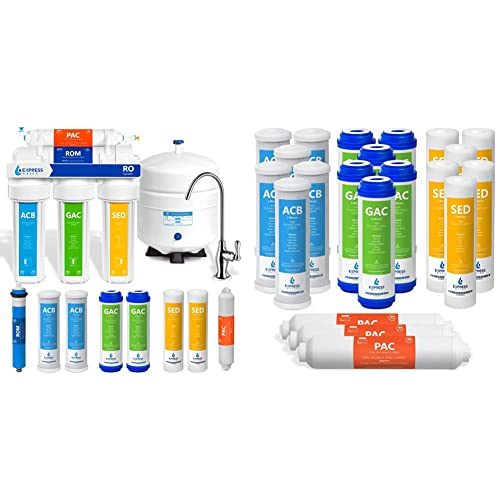
If you want to set up your RO system and not think about filter sourcing for years, the Express Water RO5DX bundle is the smart buy. This package includes the RO5DX 5-stage system plus a complete 3-year replacement filter set (21 filters total), engineered specifically to work together. That upfront investment pays off — you're not hunting down compatible filters every 6 months or buying the wrong size by accident.
The RO5DX itself reduces up to 99.99% of impurities including lead, chlorine, fluoride, and heavy metals. It operates in the 40–80 PSI range, which covers most municipal water supplies. Express Water is upfront that lower-pressure homes may need a booster pump, and higher-pressure lines may require a pressure regulator — that transparency is appreciated. The system is compact and designed for standard under-sink installation.
For budget-conscious buyers who want to avoid the hassle of ongoing filter compatibility research, the bundled approach delivers real peace of mind. It's also a solid choice if you're equipping a rental property or vacation home where you want minimal maintenance intervention over the next few years.
Pros:
Cons:
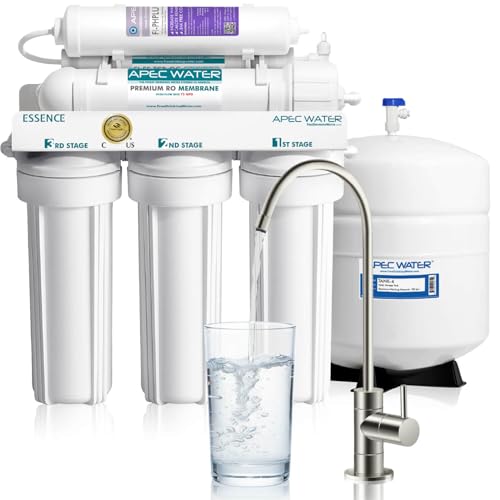
Standard reverse osmosis produces slightly acidic water — pH typically between 6 and 7 — because the membrane strips out minerals that naturally buffer pH. If that concerns you, the APEC ROES-PH75 solves the problem at the source by adding a sixth remineralization stage that infuses calcium back into the filtered water, raising pH and improving taste. The result is ultra-pure water that's also mineral-balanced and genuinely refreshing.
At 75 GPD, the ROES-PH75 has more production capacity than the entry-level ROES-50. It's certified to remove up to 99% of chlorine, VOCs, fluoride, arsenic, lead, heavy metals, and 1,000+ additional contaminants. The feed water TDS maximum is 2,000 ppm and operating pressure range is 40–85 PSI — specs that cover virtually all residential water conditions. APEC uses only premium-grade calcium from a verified source in the remineralization cartridge, which matters for both safety and consistent pH enhancement.
This system is ideal for health-conscious households, people who've switched from bottled alkaline water, or anyone who finds pure RO water tasting flat or slightly sharp. It installs in the same under-sink footprint as a standard 5-stage unit. Just note that the sixth-stage filter adds to ongoing replacement costs.
Pros:
Cons:
Low water pressure is the number one installation problem homeowners run into with RO systems. The iSpring RCC7P-AK eliminates that problem entirely by building a booster pump directly into the system. Reverse osmosis membranes require adequate pressure to function efficiently — too low and production slows to a trickle, membrane efficiency drops, and waste water ratios climb. The integrated pump ensures you hit the pressure sweet spot regardless of your home's incoming supply.
Beyond the pump, this is a full 6-stage system: sediment pre-filter, two carbon stages, the RO membrane, a remineralization/alkaline stage that adds back calcium and magnesium, and a final polishing post-filter. You get the full package — high-capacity filtration, TDS reduction, pH enhancement, and the production reliability of a boosted system. The included 2-year replacement filter supply set (F19K75) adds immediate value and takes the guesswork out of your first few years of ownership.
This system makes the most sense for homes with consistently low water pressure (under 50 PSI), well water systems, or anyone who's had frustrating experiences with sluggish RO performance in the past. The added motor does require an electrical outlet under the sink, which is worth checking before you order.
Pros:
Cons:
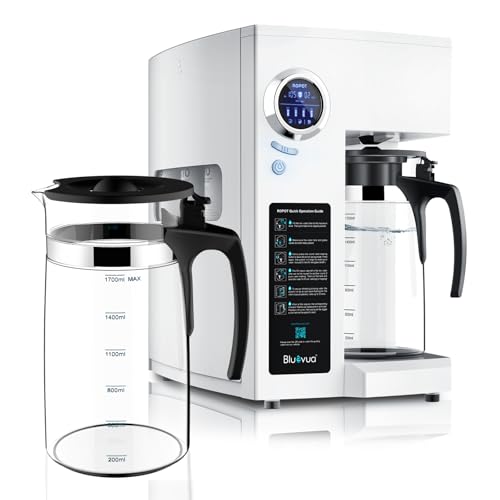
Not everyone wants to drill through their countertop or wrestle with under-sink plumbing. The Bluevua RO100ROPOT(UV) is the answer: a completely plug-and-play countertop RO system that requires zero installation, zero plumbing, and zero tools. Fill the reservoir, plug it in, and you're producing purified water in minutes. This bundle pairs the unit with one extra borosilicate glass carafe, doubling your storage capacity — a thoughtful addition for busy households or anyone who entertains frequently.
The 6-stage filtration is genuinely impressive for a countertop format. A 0.0001μm RO membrane handles the heavy lifting, backed by UV light sterilization (which kills bacteria and viruses that even RO can sometimes miss), a remineralization filter that adds essential minerals back for taste and pH balance, plus stages targeting TDS, PFOA/PFOS, chlorine, fluoride, arsenic, and lead. That UV stage is a meaningful differentiator — it adds a layer of biological protection that under-sink-only systems don't provide.
The borosilicate glass carafe prevents secondary contamination from plastic leaching — a legitimate concern with cheaper plastic pitchers. This system is ideal for renters, apartment dwellers, dorm rooms, offices, and anyone who wants serious water quality without a permanent installation commitment. Just remember that the storage volume is smaller than a pressurized under-sink tank, so it suits moderate daily use rather than large families drawing heavy volumes. Good pairing with a quality induction cookware set when you want clean water for cooking as well.
Pros:
Cons:
The LiquaGen 5-Stage RODI kit is designed for a fundamentally different use case than the other systems on this list. Where drinking water systems aim for 99% contaminant reduction, RODI (Reverse Osmosis Deionization) targets 0 TDS — literally zero dissolved solids. That's the standard demanded by reef tanks, marine aquariums, and high-sensitivity coral systems where even trace mineral levels can stress or kill livestock. If you're maintaining a serious aquarium setup in 2026, this kit is purpose-built for you.
The five-piece set includes a 5-micron sediment filter, granular activated carbon (UDF), coconut carbon block, inline deionization filter, and a 75 GPD GE USA-manufactured RO membrane. The sediment filter uses thermally bound polypropylene microfibers to capture dirt, rust, dust, and silt. The two-stage carbon filtration removes chlorine, taste, and odor while the DI stage polishes the output to true 0 TDS. The membrane meets ANSI Standard 58 for material requirements and is built from high-quality spiral-wound polyamide rated to 125 PSI.
Replacement lubricant jelly for the membrane is included — a small detail that shows LiquaGen understands their audience. The filters fit standard 10-inch housings, making them compatible with most existing RODI setups. While this kit is technically a filter replacement set rather than a complete system, it's the definitive upgrade or maintenance solution for aquarium hobbyists who need verified 0 TDS output.
Pros:
Cons:
The stage count tells you how many separate filtration steps the water passes through before reaching your glass. Here's what each stage typically does:
For most households, a 5-stage system delivers excellent results. If you want alkaline pH or live on well water, step up to 6 stages or add UV.
GPD stands for gallons per day — the rate at which the system produces purified water. The storage tank means you're not drawing directly from production speed in real time, but GPD determines how quickly the tank refills between uses.
Don't obsess over GPD if you're a small household — a 50 GPD system like the APEC ROES-50 keeps up with daily drinking and cooking demand without issue.
Marketing claims are cheap. Third-party certifications are what actually matter. Look for these two specifically:
Both iSpring RCC7 (NSF/ANSI 58) and APEC ROES-50 (WQA) carry verified third-party certifications. If a system makes no mention of certification, that's a red flag in 2026.
Your living situation determines which format makes sense:
If you're outfitting a full kitchen setup and also browsing for complementary tools, check out the best microwave rice cooker — pure RO water makes a noticeable difference in how rice cooks and tastes.
For most 5- or 6-stage under-sink systems, the pre-filters (sediment and carbon) need replacement every 6–12 months depending on your water quality and usage volume. The RO membrane itself typically lasts 2–3 years. Post-carbon and remineralization filters generally fall in the 12-month range. Higher-sediment or heavily chlorinated water sources shorten those intervals. Most manufacturers include a replacement schedule in the manual — stick to it for consistent performance.
Yes. Reverse osmosis water is safe for daily long-term consumption. The process removes harmful contaminants while leaving the water itself pure and clean. The one nuance is that RO also removes beneficial minerals like calcium and magnesium — if you're relying on water as a meaningful mineral source, a 6-stage system with a remineralization filter (like the APEC ROES-PH75 or iSpring RCC7P-AK) addresses that concern directly.
Standard residential RO systems produce approximately 3–5 gallons of wastewater (drain water) for every 1 gallon of purified water. More efficient modern systems can achieve ratios closer to 2:1 or even 1:1. Higher water pressure, a well-maintained membrane, and quality pre-filters all improve efficiency. If water conservation is a priority in your area, look for systems that advertise a low waste ratio, and keep your pre-filters fresh to protect membrane efficiency.
Yes. Reverse osmosis is one of the most effective methods for removing fluoride from drinking water. Quality RO systems like the APEC ROES-50 and iSpring RCC7 remove fluoride at rates up to 96–98%. If fluoride reduction is your primary motivation for buying an RO system, virtually any NSF-certified system on this list will meet your needs.
It depends on your home's water pressure. Most RO systems operate optimally at 50–80 PSI. If your incoming pressure falls consistently below 40–45 PSI, a booster pump is worth adding — you'll get significantly faster production rates, better membrane efficiency, and less wastewater. The iSpring RCC7P-AK is the cleanest solution since the pump is built in. Alternatively, you can add a standalone booster pump to any system after the fact.
A 5-stage RO system delivers fully purified, clean-tasting water with contaminant reduction rates of 99%+. A 6-stage system adds a remineralization or alkaline filter as the final stage, which reintroduces calcium and magnesium minerals to slightly raise the pH and improve taste. The filtration performance through stages 1–5 is essentially identical. The 6th stage is about water quality preference and health considerations, not about cleaning the water more thoroughly. If you like the taste of mineral water or want slightly alkaline pH, go 6-stage.
 |
 |
 |
 |

About Christopher Jones
Christopher Jones holds an MBA from the University of San Francisco and brings a business-minded approach to kitchen gear evaluation — assessing products not just for performance but for long-term value, build quality, and real-world usability in everyday home cooking. He has spent years testing appliances, cookware, and kitchen gadgets with the same analytical rigor he developed in business school. At BuyKitchenStuff, he covers kitchen appliance reviews, buying guides, and practical cooking tips.
