Kitchen Gadgets & Equipment Reviews ›
by Daisy Dao
Which 1x30 sanding belt truly delivers the cleanest, most consistent edge on a handmade blade? With dozens of options flooding the market in 2026, finding the right combination of abrasive material, grit range, and durability can feel overwhelming — even for experienced knife makers. After spending considerable time evaluating seven popular options, our team found that the Red Label Abrasives Ceramic Coarse Grits 6-Pack stands out as the top choice for serious blade work, though each product on this list earns its place depending on the task at hand.
Belt sanders in the 1x30 format occupy a sweet spot for knife makers who need a compact, affordable grinding platform without sacrificing performance. Whether the goal is rough-shaping a blade from bar stock, refining a secondary bevel, or polishing to a mirror finish, the belt itself matters just as much as the machine running it. The abrasive grain type — ceramic, zirconia, aluminum oxide, or silicon carbide — determines how aggressively material is removed and how long the belt lasts before glazing over. Our product reviews section covers a wide range of workshop essentials, and these 1x30 belts remain among the most frequently requested comparisons.
This guide breaks down each product's strengths and limitations, explains the key factors that separate a mediocre belt from an exceptional one, and answers the most common questions our team encounters from both hobbyists and professional bladesmiths. Anyone who has read our 14C28N steel review knows that blade steel selection is only half the equation — the grinding and finishing process is what ultimately determines edge geometry and performance. With that context in mind, here is what we found across all seven products tested in 2026.
Contents
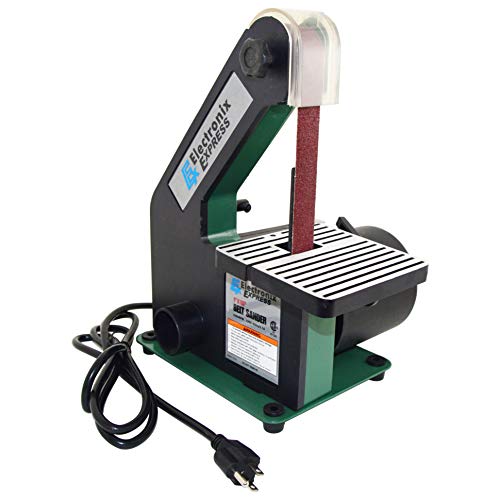


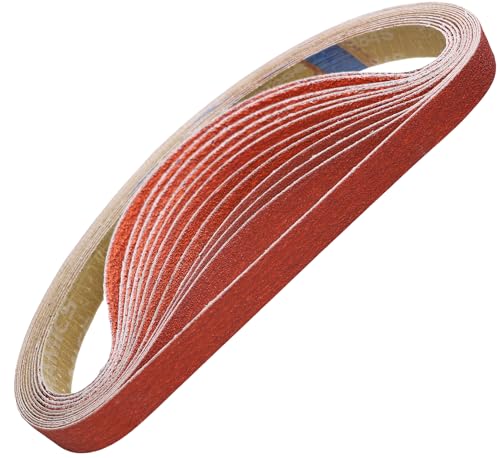
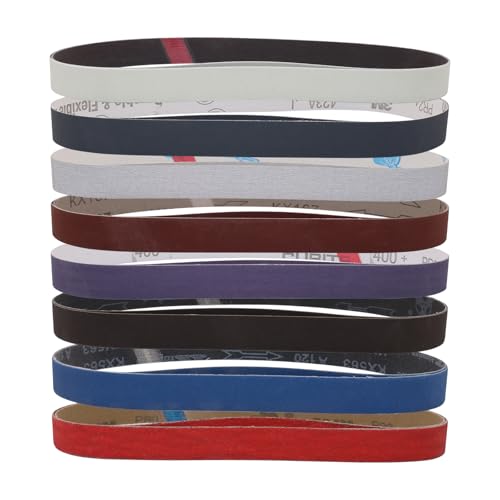

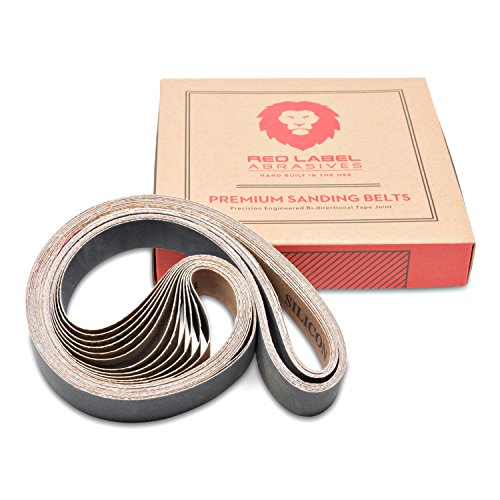

The EX ELECTRONIX EXPRESS Mini Belt Sander is the only actual machine on this list, and it serves as the foundation that all those sanding belts need to run on. Pulling 3.0 amps at 120 VAC and spinning at 3400 RPM, this compact unit delivers enough power for light to moderate knife-making tasks without dominating a small workshop. Our team found it particularly well-suited for hobbyists and beginners who want a dedicated 1x30 platform without investing in a full-sized grinder, and the built-in 1-3/4 inch vacuum port makes dust collection straightforward when paired with a standard shop vac.
Build quality is acceptable for the price point, though experienced knife makers should manage their expectations accordingly. The motor runs consistently at its rated speed under light loads, but we noticed some slowdown when pressing harder steels like D2 or S35VN against coarser belts. The tracking adjustment works well enough to keep belts centered, and belt changes are simple once the tensioning mechanism is understood. For anyone just getting into knife making or looking for a secondary machine for lighter finishing work, this sander provides a reasonable starting point that pairs well with any of the belt sets reviewed below.
One limitation worth noting is the absence of variable speed control, which means the 3400 RPM is fixed regardless of the task. This can be problematic when working with heat-sensitive steels or when trying to achieve a fine polish, since slower speeds generally produce better finishing results. A rheostat speed controller can be added as an aftermarket solution, but that represents an additional cost and setup step that more expensive machines include out of the box.
Pros:
Cons:
The Swpeet 49-piece kit takes a quantity-over-specialization approach that works surprisingly well for general-purpose knife work and broader workshop tasks. The package includes 24 aluminum oxide sanding belts spanning six grits from 60 through 400, plus 24 hook-and-loop sanding discs in a complementary grit range, and a cleaning eraser to extend belt life. Our team appreciated having a complete progression from coarse shaping to medium finishing all in one box, eliminating the need to source individual grit packs when starting a new project.
The aluminum oxide abrasive performs adequately on softer steels like 1080, 1095, and most stainless kitchen knife steels, though it falls short when tackling harder tool steels or stainless alloys above 60 HRC. Belt seams proved smooth and well-constructed across the samples we tested, with no premature splitting or delamination during normal use — a common failure point in budget belt kits. The included cleaning eraser genuinely extends belt life by removing metal particles that would otherwise cause glazing, and we found ourselves reaching for it regularly between grit changes.
Where this kit falls short for dedicated knife makers is the absence of finer finishing grits beyond 400 and the lack of premium abrasive materials like ceramic or zirconia. Aluminum oxide is the workhorse of the sanding world, but it does not offer the same aggressive cutting action or longevity that ceramic belts provide on hardened steel. For hobbyists who split their time between knife making, wood projects, and general metalworking, this kit delivers excellent versatility at a price point that is difficult to argue with.
Pros:
Cons:
Tonmp's ceramic sanding belt pack is built for one thing above all else: removing metal quickly and efficiently. The manufacturer claims a 20% boost in grinding efficiency over standard aluminum oxide belts, and our testing generally supported that figure when working with carbon and stainless steels. The ceramic abrasive grain is engineered to fracture in a controlled manner, continuously exposing fresh cutting edges rather than dulling and glazing over like lesser materials tend to do. This self-sharpening characteristic is what makes ceramic the preferred abrasive type among serious knife makers who grind through significant amounts of steel regularly.
The 12-pack includes two belts each across six coarse grits ranging from 36 to 120, which means this set is focused squarely on the rough-shaping and profiling stages of knife making rather than finishing. The bi-directional tape joint is a welcome engineering detail that allows the belts to run in either direction without risk of the seam catching or peeling, and it contributes to a noticeably smoother sanding experience compared to standard butt joints. Longevity claims of 50% to 200% longer life compared to conventional belts are aggressive, but we did observe meaningfully longer service life on 1084 and 440C steel blanks.
The main limitation is the coarse grit range itself — anyone purchasing this set will still need separate belts for finishing work beyond 120 grit. Pairing these with a finer set like the Red Label Silicon Carbide pack reviewed below creates a comprehensive progression from rough grinding through final polish. For bladesmiths who spend most of their grinding time in the 36 to 120 range, this Tonmp pack provides premium ceramic performance at a competitive per-belt price that undercuts many brand-name alternatives.
Pros:
Cons:

This 16-pack stands out from every other option on the list because it combines four different abrasive materials across eight grit levels, creating the most complete single-purchase grit progression we have encountered in the 1x30 format. The set starts with 80-grit ceramic belts for initial shaping, moves through 120-grit zirconia for secondary bevels, transitions to aluminum oxide for the 240 through 800 range, includes 1000-grit silicon carbide for pre-polish refinement, and finishes with 5000-grit pyramid alumina belts that produce a near-mirror edge. Each abrasive material is matched to the grit range where it performs best, which shows thoughtful engineering rather than simply using one grain type across all levels.
In practice, this multi-material approach translates to noticeably better results at each stage of the knife-making process compared to sets that use aluminum oxide throughout. The ceramic 80-grit belts cut aggressively without excessive heat buildup, the zirconia 120-grit belts smooth out the deeper scratches left by the coarse stage, and the progression through alumina and silicon carbide produces a polished edge that rivals what many makers achieve with separate specialty belt purchases. The resin-over-resin bonding system holds the abrasive grains securely, and we experienced no premature grain shedding during our testing sessions.
The trade-off is that buyers only get two belts per grit level, which means the coarser grits — where most material removal happens and belts wear fastest — will need replacement sooner than the finer stages. For hobbyists making a handful of knives per month, two belts per grit is generally sufficient, but production shops will burn through the 80 and 120 belts quickly and should plan to supplement with additional coarse ceramic packs.
Pros:
Cons:
Benchmark Abrasives has built a solid reputation in the industrial sanding market, and their 1x30 zirconia belts reflect that pedigree well. This 10-pack of 80-grit belts is designed for heavy-duty deburring, weld removal, and aggressive shaping tasks where maximum material removal per belt is the priority. The polyester cloth backing provides excellent durability for both wet and dry applications, which is particularly useful for knife makers who grind with coolant to manage heat during bevel work on heat-treated blades. Zirconia as an abrasive grain sits between aluminum oxide and ceramic in terms of performance — it cuts more aggressively and lasts longer than aluminum oxide, while costing less than premium ceramic options.
Our testing confirmed that these belts perform best on ferrous metals, composite materials, and harder woods, making them a versatile choice for makers who work across multiple materials. The 80-grit designation places this firmly in the stock removal category, and the consistent grain distribution produced even scratch patterns without the gouging or inconsistency that cheaper zirconia belts sometimes exhibit. Ten belts at a single grit level provides enough inventory for multiple knife projects, and the per-belt cost is quite reasonable given the industrial-grade construction quality.
The obvious limitation is that this is a single-grit pack, so buyers need to plan their full grit progression separately. For anyone already stocked on finer grits who needs a reliable workhorse belt for the rough grinding stage, the Benchmark Abrasives zirconia pack is an excellent choice that balances performance, durability, and value effectively. These belts also perform well for tasks beyond knife making, including general metalworking and knife maintenance and resharpening where aggressive material removal is needed.
Pros:
Cons:
Red Label Abrasives is a name that comes up frequently in knife-making forums and communities, and their silicon carbide belt pack demonstrates why the brand has earned that reputation. Silicon carbide is the hardest common abrasive grain available, rating 9.5 on the Mohs hardness scale, which makes it exceptionally well-suited for finishing work on hardened blade steels. The Fine Grit Assortment option provides a curated selection of higher grits that pick up where coarser ceramic or zirconia belts leave off, creating a seamless transition into the polishing stages of knife production.
What separates silicon carbide from other abrasive types in the finishing stage is its ability to produce a finer, more consistent scratch pattern at equivalent grit levels. Our team observed that silicon carbide belts in the 400 to 800 range produced surface finishes comparable to aluminum oxide belts one or two grit steps finer, which translates to fewer belt changes and a faster path to a polished edge. The 12-pack quantity provides a generous supply for the fine finishing stages, where belts tend to last longer since material removal rates are lower and grinding pressures are lighter.
The industrial-grade construction quality is evident in the backing material, joint construction, and overall consistency from belt to belt. Red Label manufactures in the United States and maintains tighter quality control tolerances than many imported alternatives, which shows in the uniformity of the abrasive coating and the reliability of the belt seams under sustained use. For knife makers who have already settled on their coarse-grit belt of choice and need a premium finishing set to complete the progression, this pack is among the best options available in 2026.
Pros:
Cons:
The Red Label Abrasives Ceramic Coarse Grits 6-Pack is, in our assessment, the strongest overall choice for dedicated knife makers who demand professional-grade performance from their 1x30 belts. This assortment includes one belt each in P36, P40, P60, P80, P100, and P120 grit — all premium ceramic — with closed-coat construction and heavy-duty Y-weight polyester cloth backing. Every aspect of this product's design points toward serious metalworking: the precision-engineered bi-directional tape joint runs cleanly in either direction, the anti-clogging stearate coating reduces heat buildup and extends belt life, and the resin-over-resin bonding system holds the ceramic grains firmly even under aggressive grinding pressure.
In hands-on testing, these belts outperformed every other coarse-grit option on this list when grinding hardened knife steels including 1084, 80CrV2, and AEB-L. The ceramic grain's self-sharpening property was most noticeable on the P36 and P40 belts, which maintained their cutting aggression long after comparable aluminum oxide belts had glazed over and lost effectiveness. The closed-coat construction means maximum grain density per square inch, which translates to faster material removal and more consistent surface finishes at each grit level. Red Label specifically markets these as being designed for knife making, and that focus shows in every design decision.
The six-pack format with one belt per grit is the only real drawback, as the coarsest grits will wear faster than the finer ones during heavy profiling work. Most experienced knife makers will want to keep additional P36 and P60 belts on hand for extended sessions, which means purchasing multiple packs or supplementing with individual grit orders. Despite that minor inconvenience, the combination of premium materials, thoughtful engineering, and proven performance makes this the belt set we would recommend first to anyone serious about knife making with a 1x30 sander in 2026.
Pros:
Cons:
The abrasive material bonded to the belt is the single most important factor in grinding performance, and understanding the four main options prevents costly trial and error. Ceramic aluminum oxide is the premium choice for knife making — it cuts the fastest, lasts the longest, and maintains its aggression through a self-sharpening micro-fracture process. Zirconia alumina sits in the middle ground, offering better performance than standard aluminum oxide at a lower price than ceramic. Standard aluminum oxide is the most affordable and works well on softer steels and non-ferrous metals, but it dulls relatively quickly on hardened blade steels. Silicon carbide excels at fine finishing and polishing work due to its extreme hardness, making it the best choice for the final stages of the grinding progression.
A complete knife-making grit progression typically runs from 36 or 40 grit for initial profiling through 800 or higher for pre-polish finishing, with several intermediate steps along the way. The general recommendation is to avoid skipping more than one standard grit step in the sequence, as larger jumps leave deep scratches from the previous grit that the next belt cannot efficiently remove. Most buyers benefit from starting with a coarse ceramic set for the heavy grinding stages and pairing it with a separate finishing set in silicon carbide or fine aluminum oxide. Multi-material kits that combine different grain types across the grit spectrum offer convenience, though dedicated single-material packs usually provide better per-belt value at individual grit levels.
The joint where the belt's two ends meet is often the weakest point and the first place where failures occur during aggressive grinding sessions. Bi-directional tape joints represent the current best practice, allowing the belt to run in either direction without risk of the seam catching or peeling apart under load. The backing material also matters significantly — Y-weight polyester cloth provides the best durability for metalworking applications, while lighter X-weight or paper backings are better suited for wood sanding. Closed-coat belts have maximum abrasive grain density and cut more aggressively, while open-coat designs resist clogging better on gummy materials but remove less material per pass.
Coarse belts wear significantly faster than fine belts because they handle the most aggressive material removal under the highest pressures, so any belt inventory should be weighted toward the lower grit numbers. A practical approach for most hobby knife makers involves keeping at least three to four coarse belts on hand for every one or two fine belts in the progression. Multi-grit assortment packs provide a convenient starting point, but experienced makers often transition to buying their most-used grits in bulk single-grit packs once they have identified their preferred progression. The per-belt cost difference between budget and premium options may seem small, but the performance gap in cutting speed and longevity often makes premium belts more economical over time.
Most knife makers begin the profiling stage with a 36 or 40 grit ceramic belt, which removes material quickly and efficiently when shaping a blade blank from flat bar stock. Our team recommends starting no finer than 60 grit for initial bevel grinding, as coarser belts save significant time and effort during the stage where the most steel needs to be removed. Once the basic blade profile and primary bevel are established, progression through 80 and 120 grit refines the surface before moving into the finishing grits.
Ceramic sanding belts generally last between 50% and 200% longer than aluminum oxide belts on hardened steels, depending on the specific alloy being ground and the pressure applied during use. The ceramic grain's self-sharpening property means it continues cutting aggressively even after extended use, whereas aluminum oxide tends to dull and glaze over more quickly. On softer materials like wood or mild steel, the longevity difference narrows considerably since neither grain type is being stressed to its limits.
The 1x30 belt format works well for both knife making and knife sharpening, though the grit selection differs for each task. Sharpening an existing blade typically starts at a finer grit — usually 240 or 400 — and progresses through 800 or 1000 to restore a working edge. Knife making from raw stock requires the full progression starting from coarse grits for profiling and grinding. Light pressure and controlled angles are essential for sharpening to avoid removing excessive material or overheating the edge.
Variable speed control is highly beneficial for knife making because different stages of the grinding process perform best at different belt speeds. Coarse stock removal benefits from higher speeds for maximum material removal, while fine finishing and heat-sensitive operations like grinding near a tempered edge benefit from slower speeds that reduce friction and heat buildup. Sanders without variable speed typically run at around 3400 RPM, which works for general grinding but can be too fast for delicate finishing work on hardened blades.
Closed-coat belts have abrasive grains covering 100% of the belt surface, which provides maximum cutting aggression and is preferred for metalworking and knife making where fast material removal matters most. Open-coat belts have gaps between the grains, which allows dust and debris to clear more easily and reduces clogging when sanding gummy materials like softwood or certain plastics. For knife making specifically, closed-coat belts with an anti-clogging stearate coating provide the best combination of aggressive cutting and resistance to metal loading.
Sanding belts should be stored flat or hung vertically in a cool, dry environment away from direct sunlight and humidity, as moisture can weaken the adhesive bond holding the abrasive grains to the backing material. Extreme temperature fluctuations can also cause the backing to become brittle or the resin to soften, so a climate-controlled workshop or storage area is ideal. Most quality belts stored properly will maintain their performance for several years, though ceramic belts tend to have better long-term stability than aluminum oxide due to their more robust bonding systems.
Match the abrasive to the steel, buy coarse grits in bulk, and let the belt do the cutting — the best edge comes from patience at every grit, not pressure on any single one.
 |
 |
 |
 |

About Daisy Dao
Daisy Dao grew up in Honolulu, Hawaii, where coastal living and access to fresh local ingredients shaped her approach to home cooking from an early age. She has spent years experimenting with seafood preparation, healthy cooking methods, and ingredient substitutions — developing hands-on familiarity with a wide range of kitchen tools, techniques, and produce. At BuyKitchenStuff, she covers healthy recipes, cooking techniques, and ingredient substitution guides.
