by Daisy Dao
Studies show that people with strong social connections are 50% more likely to live longer than those who feel isolated — and if you've been searching for how to improve social skills, you're already making the most important move toward a richer, more connected life. Whether you freeze up at dinner parties, go blank in group conversations, or just want to feel genuinely comfortable around people, this guide gives you a concrete, step-by-step plan. Bookmark our social skills resource hub for more practical guides like this one.
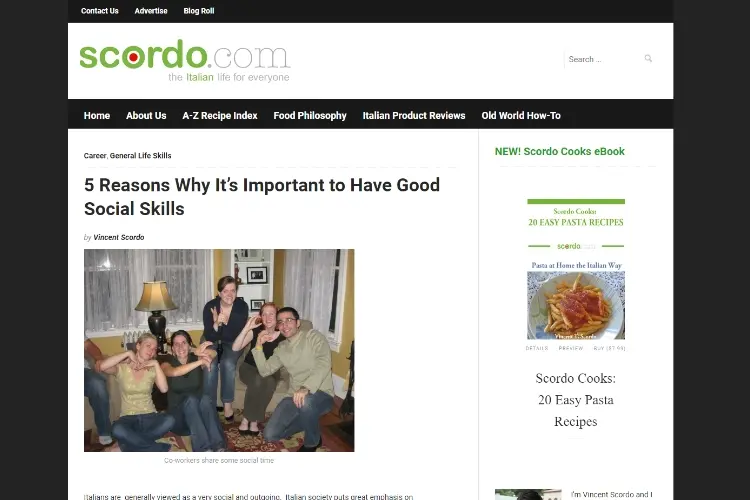
Being sociable doesn't mean being the loudest person at the table or telling the funniest stories. It means making people feel heard, comfortable, and genuinely valued. Social skills are the tools people use to communicate and interact with others effectively — and research consistently confirms they can be developed at any age through deliberate, consistent practice.
This guide breaks down seven key areas, from the easiest changes you can make today to long-term habits that keep your social confidence sharp. You'll also find a side-by-side skill comparison table, myth-busters, and real troubleshooting advice for when things go sideways in a conversation.
Contents
Before you dive in, it helps to see what you're actually working with. Not all social skills are equally difficult to build — or equally impactful on your relationships. The table below lets you see the full picture at a glance so you can focus your energy where it matters most.
| Social Skill | Difficulty to Learn | Impact on Relationships | Time to See Results | Best Way to Practice |
|---|---|---|---|---|
| Active Listening | Medium | Very High | 1–2 weeks | One-on-one conversations |
| Eye Contact | Low | High | A few days | Daily interactions |
| Open Body Language | Low | High | Immediate | Mirror practice at home |
| Asking Good Questions | Medium | Very High | 1–2 weeks | Casual social settings |
| Remembering Names | Medium | Medium | 2–4 weeks | Repeat-and-associate technique |
| Managing Social Anxiety | High | Very High | 4–8 weeks | Gradual exposure + breathing |
| Reading the Room | High | High | Several months | Group observation |
| Small Talk | Low–Medium | Medium | About 1 week | Cashiers, neighbors, strangers |
Focus on the "Impact on Relationships" column first. Active listening and asking good questions consistently rank as the highest-leverage skills you can build — they change how people experience you at a fundamental level, not just a surface one.
If you're new to working on social skills, pick one item from the "Low" difficulty row and commit to it for a full week. Do not try to fix everything at once — that's exactly how people give up after three days and conclude they're just not a social person.
Stacking skills gradually is far more effective than trying to overhaul your personality in a weekend. One solid habit per week compounds into a completely different social presence within two months. Trust the process and stay consistent.
You don't need months of preparation to feel a difference today. Some of the most powerful social changes are also the simplest — and you can start using them in your very next conversation.
Your body communicates before you say a single word. Open, relaxed body language signals that you're approachable and genuinely interested. Closed-off posture — crossed arms, shoulders hunched, body angled toward the exit — tells a different story, even when your words are friendly.
Think about hosting a dinner party. When someone at the table shares a great story, your body naturally leans in. You can practice that exact posture in any social situation. And if you're planning to host soon, our Honey BBQ Pulled Pork Slow Cooker recipe is a crowd-pleasing dish that practically runs itself — so you can keep your attention on your guests instead of hovering in the kitchen all evening.
These two things sound almost too obvious to mention. But most people underdo both, especially when they're nervous — and that combination reads as cold or uninterested even when you're neither.
These small physical cues communicate warmth and confidence before you've said anything meaningful. People decide very quickly whether they feel comfortable around you, and body language drives most of that split-second decision.

Beyond the quick fixes, there are deeper skills that fundamentally change how people experience you. These require more deliberate practice, but the payoff is lasting and compounding.

Most people think they're good listeners. Research consistently says otherwise. True listening means you're fully present — not planning your next sentence, not waiting for a gap to jump in, not half-watching the TV screen behind someone's head.
Active listening is one of the rarest gifts you can give another person. Most people spend their whole lives feeling like no one really hears them. When you listen well, people are drawn to you — often without knowing exactly why.
Here's a useful parallel: learning which flour is right for fresh pasta requires paying close attention to details that most people skim past. Social listening works exactly the same way. The details — the pauses, the word choices, the things someone almost said but didn't — are where real connection lives.
The fastest shortcut to interesting, natural conversations is asking open-ended questions — the kind that genuinely can't be answered with a flat "yes" or "no."
The open version invites them to reflect, share, and connect. Here are reliable conversation-starters that work in almost any setting:
Don't treat this like an interview checklist. The goal is to actually listen to their answer and ask follow-up questions based on what they share. Genuine curiosity is what makes conversation feel natural rather than scripted or forced.
Sometimes the problem isn't what you're failing to do — it's what you're actively doing wrong without realizing it. These habits push people away slowly and steadily.
This is the single most common social mistake, and almost everyone does it at some point. When you dominate a conversation with your own stories, opinions, and achievements, the other person disengages — even when they're too polite to show it.
The best conversationalists make the other person feel like the most interesting person in the room — not themselves. Keep that as your north star in every interaction.
Glancing at your phone during a conversation sends a very clear, unspoken message: whatever is on that screen matters more than the person standing in front of you. Even a single quick check breaks the connection and communicates low interest.
Hosting a meal is a great practice environment for this. When you've got a quality non-stick grill pan handling dinner with minimal supervision, the food takes care of itself — and you can give your guests your undivided, genuine attention.
Outdated and just plain wrong advice about socializing is everywhere. These myths hold people back from even trying to improve — because they've convinced themselves that real change isn't possible. It is. Here's what the evidence actually says.
This one is completely false. Introversion describes where you get your energy (through solitude, not from crowds) — not how good you are at connecting with people. Some of the world's most compelling communicators, therapists, and leaders are introverts.
You don't have to be an extrovert to learn how to improve social skills. You just have to show up, stay present, and put in the practice consistently over time.
Social skills are like cooking skills. Nobody is born knowing how to make fresh pasta from scratch — you learn through practice, repetition, and a few failed attempts along the way. Just like knowing the right technique for storing fresh pasta makes you a more confident and capable cook over time, practicing social skills deliberately makes you a more confident communicator over time.
A few more myths worth busting fast:
Even with the best intentions and solid preparation, social situations go sideways sometimes. What separates socially confident people from anxious ones isn't that they never mess up — it's that they have a clear recovery plan and they use it.
This happens to almost everyone, especially in new or high-stakes situations. You're mid-sentence and your mind goes completely blank. Here's how to handle it without spiraling:
The more you practice real conversations, the less often this happens. Mind blanks are a sign of low exposure, not low intelligence or social ability. The fix is more practice, not avoidance.
Maybe you made a careless comment. Maybe a joke landed flat. Maybe you brought up something that made the other person visibly uncomfortable. Here's the recovery playbook:
Other common situations that feel disastrous in the moment but genuinely aren't:
Think about it this way: when something goes wrong with a recipe you're making for guests, you don't abandon the dinner — you adapt and keep going. Social situations are exactly the same. If you've ever rescued a dish by swapping out a key ingredient at the last minute, our guide to substitutes for tomato paste is a great reminder that the flexibility mindset applies just as much to conversations as it does to cooking.
Social ability isn't a switch you flip once and leave on. Like any skill, it fades without regular use. The people who are consistently great with others don't have a secret talent — they keep putting themselves in situations that require genuine connection, presence, and practice.
You don't need a big social event on the calendar to practice. Small, daily interactions accumulate into a completely different social presence over weeks and months.
Cooking for others is one of the most natural environments for building social confidence. It gives you a built-in reason to connect and host, and the food gives everyone something comfortable to talk about. If guests have specific dietary needs, knowing your sugar substitutes for baking before you host a dessert night shows the kind of thoughtfulness people genuinely notice and remember. And if you're ready to take hosting seriously as a way to build real social practice, our guide to the best chef coats is a fun place to start.
Growth is difficult to see from the inside while you're living it. Tracking helps you recognize how far you've come — and keeps you from quietly drifting back to old habits.
Consistency beats intensity every time. Twenty minutes of genuine, engaged connection every single day will outperform one marathon networking event per month. Keep showing up, keep practicing, and the results compound faster than you'd expect.
Most people notice a real, meaningful difference within two to four weeks of consistent daily practice. Basic skills like eye contact and open body language can start feeling natural in just a few days. Deeper skills — like reading the room or managing social anxiety — take several months of steady, intentional effort. The most important variable is consistency. Sporadic practice produces sporadic results. Show up every day, even for small, low-stakes interactions, and the compounding effect becomes undeniable within a month or two.
It is never too late. The brain retains the ability to form new patterns and habits well into adulthood — this is called neuroplasticity, and the research on it is solid. Adults actually have meaningful advantages over younger people: more life experience, sharper self-awareness, and stronger motivation to change. Many people report their most significant social growth happening in their 30s, 40s, and beyond. The only thing that genuinely makes it harder is the belief that growth is no longer possible. That belief is wrong.
Active listening is the highest-leverage skill you can build, and it's the one most people neglect the most. It's the foundation of every meaningful conversation, every close relationship, and every successful social interaction you'll ever have. When you genuinely listen — without planning your next sentence, without glancing at your phone, without waiting for your turn to talk — people feel it immediately and powerfully. Most people are not good listeners, which means becoming one gives you a real and immediate advantage in any social setting you walk into.
Start very small and build gradually — this is the most important piece of advice. Social anxiety responds well to gradual exposure. The more often you do something that makes you nervous, the less nervous it makes you over time. Begin with the lowest-stakes interactions you can find: a brief exchange with a cashier, a smile and nod to a neighbor, a casual question to a coworker. Work up slowly from there. Focus entirely on what you can control — your listening, your body language, your questions — rather than on outcomes you can't control, like whether someone likes you. If your anxiety is severe and affects your daily life, a therapist who specializes in social anxiety can accelerate your progress dramatically.
Yes, and the connection is stronger than most people realize. Cooking for others creates a natural, low-pressure environment for real connection and conversation. The food itself gives everyone a shared topic, which removes the anxiety of having to perform or entertain on your own. Hosting a dinner, cookout, or even a casual weeknight meal gives you direct practice in being present, reading your guests' comfort levels, and making people feel genuinely welcome — all of which are core social skills. Starting with a reliable, crowd-pleasing recipe reduces the cooking stress so your full attention can go to the people, not the pan.
Learning how to improve social skills is one of the highest-return investments you can make in your quality of life — and everything in this guide is something you can act on starting today. Pick one skill from the comparison table, commit to it this week, and build from there. Your relationships, your confidence, and your daily happiness will all be better for it.
 |
 |
 |
 |

About Daisy Dao
Daisy Dao grew up in Honolulu, Hawaii, where coastal living and access to fresh local ingredients shaped her approach to home cooking from an early age. She has spent years experimenting with seafood preparation, healthy cooking methods, and ingredient substitutions — developing hands-on familiarity with a wide range of kitchen tools, techniques, and produce. At BuyKitchenStuff, she covers healthy recipes, cooking techniques, and ingredient substitution guides.
Check for FREE Gifts. Or get our Free Cookbooks right now.
Disable the Ad Block to reveal all the recipes. Once done that, click on any button below
|
|
|
|
