by Christopher Jones
Indoor air is up to five times more polluted than outdoor air, according to the U.S. Environmental Protection Agency — and your kitchen is one of the biggest contributors in any home. If you've ever wondered how air purifiers work and whether they actually make a difference, the answer depends entirely on the mechanism inside the unit. Browse our full air purifier reviews for model-specific picks, but this guide focuses on the technology itself.
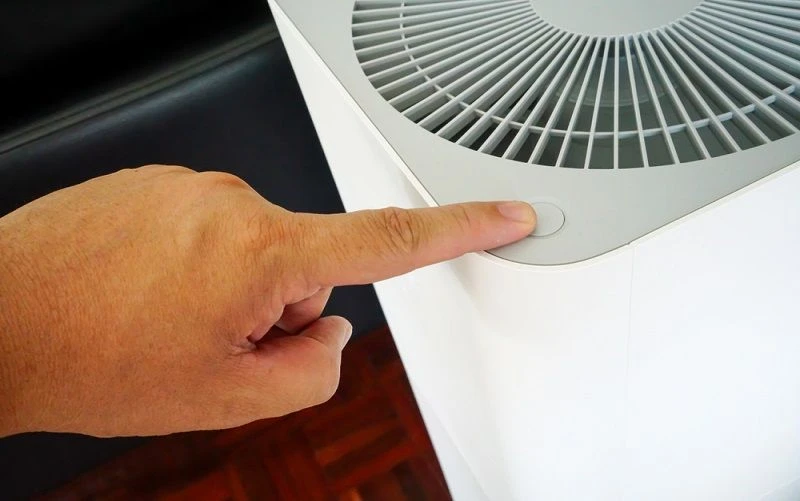
Every purifier on the market uses one or more of five core technologies: HEPA filtration, activated carbon, ionization, UV-C light, or ozone generation. Each targets different pollutants through a completely different physical or chemical process. Knowing which mechanism matches your specific problem saves you money and prevents the frustration of buying a unit that doesn't actually solve anything.
This guide walks through all five mechanisms, shows you where each performs best, and flags the most common mistakes that cancel out every benefit you paid for.
Contents
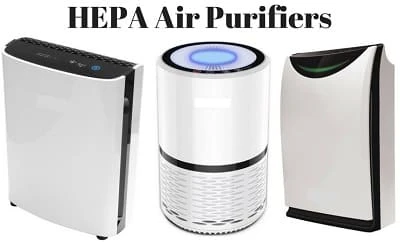
HEPA stands for High-Efficiency Particulate Air. A true HEPA filter captures 99.97% of particles at 0.3 microns — that size threshold covers dust mites, pollen, mold spores, pet dander, and most smoke particles. The filter is a dense mat of randomly arranged glass fibers that traps particles through three distinct mechanisms:
One important limitation: HEPA filters do not remove gases, chemicals, or odors. They're purely mechanical. That's why serious units always pair HEPA with a second layer.
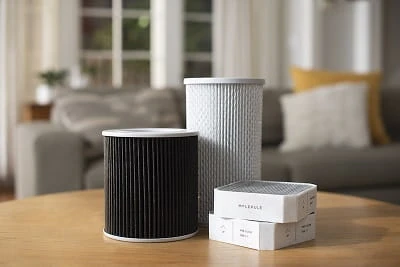
Activated carbon works through adsorption — gas molecules bond chemically to the enormous surface area of treated carbon. One gram of activated carbon contains roughly 500 square meters of internal surface area. That's what makes it effective at trapping gases that HEPA physically cannot catch.
What activated carbon removes effectively:
What it won't touch: particulate matter, allergens, or biological contaminants. You need HEPA for those. The two technologies are complementary, not interchangeable.
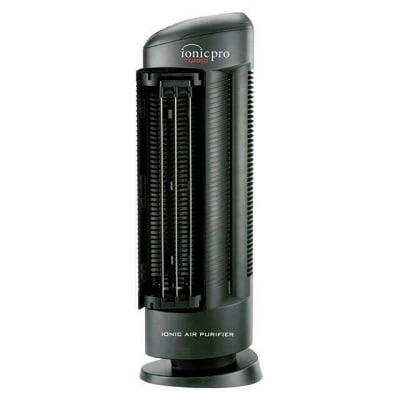
Ionizers release negatively charged ions that attach to airborne particles, making them heavy enough to fall out of suspension or cling to surfaces. No filter required — but nearby surfaces collect more dust, and some ionizers produce trace ozone as a byproduct. Always verify the ozone output is below 0.05 ppm for occupied spaces.
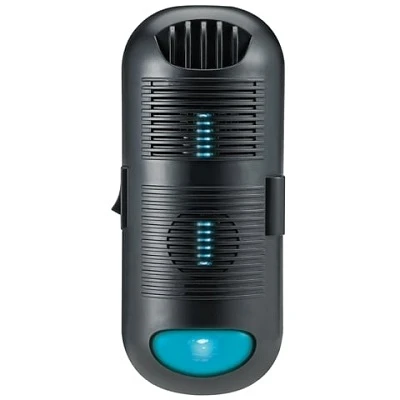
UV-C purifiers expose passing air to ultraviolet light in the 100–280 nm wavelength range, which damages the DNA of bacteria, viruses, and mold spores — rendering them unable to reproduce. UV-C doesn't remove particles. It neutralizes biological threats. Pair it with HEPA for complete coverage.

Ozone generators intentionally produce ozone (O₃), which reacts with and neutralizes contaminants. Professional restoration teams use them after fires or floods. However, ozone is a lung irritant at elevated concentrations. Never run an ozone generator in an occupied room — always vacate and ventilate thoroughly before re-entry.
Your kitchen generates more airborne contaminants than any other room in your home. Frying, roasting, and even toasting bread simultaneously releases particulate matter and VOCs. You need a unit that handles both at once.
The right combination for a kitchen:
A range hood vents air out of the house but doesn't filter the return air. An air purifier running continuously handles what the hood misses. If you already know how to stay on top of appliance maintenance — like learning how to clean and maintain your Shark vacuum — you understand that consistent upkeep is what separates a performing unit from a useless one.
For allergen control, HEPA is non-negotiable. Prioritize these specifications:
A unit running on low speed all day delivers more filtered air cycles than one blasting on high for two hours. Consistency beats intensity every time.
UV-C technology excels here — but only when paired with HEPA. UV-C alone doesn't remove spores from the air; it only inactivates the ones passing through the light chamber. HEPA captures spores before they can settle and colonize surfaces. For homes with moisture issues or anyone managing respiratory conditions, this combination produces measurable results. Just as proper hydration supports your body's natural defenses, clean air lets your respiratory system function the way it's designed to.
| Technology | Removes Particles | Removes Odors/Gases | Kills Biological Threats | Safe for Occupied Rooms | Maintenance Interval |
|---|---|---|---|---|---|
| True HEPA | Yes — 99.97% ≥0.3µm | No | No | Yes | Filter every 12–18 months |
| Activated Carbon | No | Yes | No | Yes | Filter every 3–6 months |
| Ionic / Electrostatic | Partially | No | No | Check ozone output | Clean collector plates monthly |
| UV-C Light | No | No | Yes (in light path) | Yes | Bulb every 1–2 years |
| Ozone Generator | No | Yes — powerful | Yes | No — vacate space | Bulb maintenance only |
The best-performing units sequence three to four mechanisms in a single airflow path:
This isn't marketing language — it's physics. No single mechanism handles every threat category. A properly specced multi-stage unit outperforms a single-mechanism unit at any price point.
Room size determines everything. Every purifier lists a maximum square footage — treat that as a ceiling, not a recommendation. A unit rated for 300 sq. ft. in a 500 sq. ft. kitchen runs continuously and never fully cleans the space.
Calculate the minimum CADR you need:
A clogged HEPA filter doesn't just lose efficiency — it becomes a contamination source. Bacteria and mold colonize saturated filters and push back into your room air. Follow this replacement schedule without exception:
Most users push units into corners or against walls, which restricts both intake and exhaust airflow. Correct placement:
A faint burning or plastic odor during the first 24–48 hours of use is normal — new components off-gas briefly. Persistent odor after the break-in period means one of three things:
If your monitor doesn't improve after several hours of operation, work through this checklist:
Loud motor with weak airflow points directly to a clogged pre-filter. Reduced airflow with normal motor noise means a saturated HEPA filter creating excessive back-pressure. Both conditions force the motor to work harder while delivering less clean air — and they increase energy consumption significantly. Check the pre-filter first. It's usually washable and takes five minutes.
Cooking odors are gaseous VOCs, not particles — so you need activated carbon to address them. HEPA alone won't touch cooking smells. Look for a unit with a thick carbon filter, not just a thin carbon coating on the HEPA layer. The thicker the carbon bed, the longer it lasts and the more effectively it adsorbs VOCs from frying, roasting, and other cooking methods.
Yes — kitchens generate both particles and gases simultaneously, making a combination HEPA and activated carbon unit the correct choice regardless of kitchen size. Size the unit to the actual room volume rather than guessing. A compact multi-stage unit rated for your square footage outperforms a large single-mechanism unit every time.
No. Ozone generators must never operate in occupied spaces. Ozone at concentrations sufficient to neutralize odors irritates the lungs and airways. Use a HEPA plus activated carbon unit for continuous kitchen air cleaning. Reserve ozone generators for unoccupied spaces requiring deep deodorization after smoke damage or serious contamination events.
Replace your HEPA filter every 12–18 months under normal use. In a kitchen environment, replace the activated carbon filter every 3–6 months — cooking accelerates carbon saturation significantly faster than manufacturer estimates, which are typically based on average household conditions. Pre-filters should be cleaned monthly by rinsing or vacuuming.
No. Air purifiers filter airborne particles, gases, and biological contaminants — they don't affect humidity or temperature. For humidity control, you need a dehumidifier or humidifier. Some units include a humidity sensor as part of an air quality display, but they don't actively change moisture levels in the air.
Now that you understand exactly how air purifiers work across all five core mechanisms, you have everything you need to make a well-informed purchase. Match the technology to your actual problem, size the unit correctly for your room, and commit to a filter replacement schedule — those three steps account for nearly every performance gap between a purifier that delivers results and one that collects dust in the corner. Head to our air purifier category to find the specific models that pair the right mechanisms for your kitchen and home environment.
 |
 |
 |
 |

About Christopher Jones
Christopher Jones holds an MBA from the University of San Francisco and brings a business-minded approach to kitchen gear evaluation — assessing products not just for performance but for long-term value, build quality, and real-world usability in everyday home cooking. He has spent years testing appliances, cookware, and kitchen gadgets with the same analytical rigor he developed in business school. At BuyKitchenStuff, he covers kitchen appliance reviews, buying guides, and practical cooking tips.
Check for FREE Gifts. Or get our Free Cookbooks right now.
Disable the Ad Block to reveal all the recipes. Once done that, click on any button below
|
|
|
|
