Kitchen Gadgets & Equipment Reviews ›
by Daisy Dao
You're standing in the kitchen aisle — or more likely, scrolling through product listings at midnight — trying to figure out which electric spiralizer is actually worth your money. There are dozens of options out there, and the specs can start to blur together fast. Whether you want to cut back on carbs, sneak more vegetables into family meals, or just do something creative with a zucchini, the right machine makes all the difference.
Electric spiralizers take the manual effort out of turning whole vegetables into noodle-like strands. Unlike hand-crank models, they do the spinning for you — which means consistent results without the wrist fatigue. They're especially useful if you cook for a family, prep meals in bulk, or deal with tougher root vegetables like beets and sweet potatoes. Browse our full kitchen equipment reviews to see how spiralizers stack up against other countertop tools.
In this guide for 2026, we've put together detailed reviews of four standout models — from a straightforward budget pick to professional-grade stand mixer attachments. We'll walk you through what each one does well, where it falls short, and what to look for before you buy. If you've been curious about making homemade pasta-style dishes with fresh vegetables, a good electric spiralizer is your starting point.

Contents
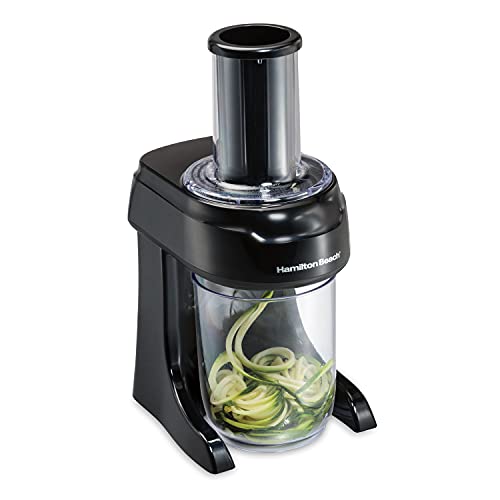




If you're looking for an accessible entry point into electric spiralizing, the Hamilton Beach 70930 is one of the most practical options on the market in 2026. It's a standalone countertop unit — no stand mixer required — and it comes with three cutting cones that let you choose between spaghetti, linguine, and ribbon styles. That alone covers the majority of everyday cooking needs, whether you're making zoodles for one or a big batch of vegetable pasta for the whole family. Setup is quick, and the machine is intuitive enough that you won't need to read the manual twice.
The 2.5-inch round chute is one of this model's best practical features. You can feed a whole zucchini or cucumber straight in without pre-cutting, which saves a meaningful amount of prep time. The built-in bowl holds up to six cups of spiralized vegetables — a generous capacity for a single-family meal. Performance is solid on medium-density vegetables like zucchini, yellow squash, and cucumbers. You may find that denser produce like sweet potatoes or beets requires a bit more patience, as the motor isn't the most powerful in this category. That said, for everyday soft-to-medium vegetables, it delivers consistent, clean spirals without much fuss.
Cleanup is reasonably straightforward. The cutting cones and bowl are dishwasher safe, and the base wipes down easily. The compact footprint means it won't monopolize counter space when you need it out, and it stores away without drama. At its price point, the Hamilton Beach 70930 is hard to beat for cooks who want reliable results without investing in an attachment ecosystem. It's a commonsense choice for anyone building a healthy eating routine on a budget.
Pros:
Cons:
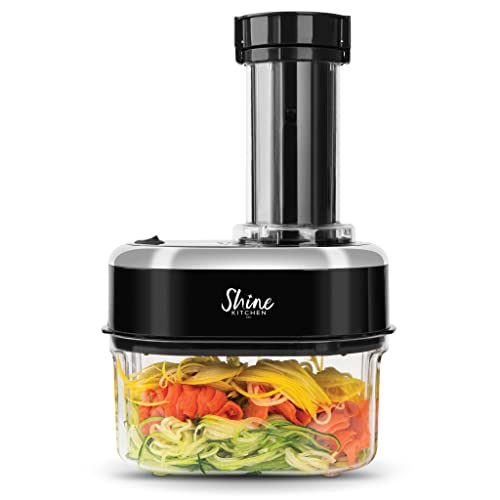
The Shine Kitchen Co. SES-100 is a purpose-built electric spiralizer that addresses one of the most common frustrations with this type of appliance: soft vegetables slipping and producing uneven results. The machine features a no-slip outer grip holder specifically designed to secure soft vegetables like zucchini, beets, cucumber, and squash during spiralizing. If you've ever watched a zucchini wobble its way through a cheaper machine and come out in uneven chunks rather than clean noodles, you'll understand why this feature matters. It's a thoughtful design detail that translates directly into better output.
The SES-100 comes with four blade attachments — angel hair, spaghetti, fettuccine, and ribbon-styled garnishes. That's a broader range than the Hamilton Beach and gives you more flexibility depending on the dish you're preparing. Angel hair is great for lighter salads and garnishes; fettuccine-width strands hold up better in warm sauces. The machine itself is straightforward to operate, and switching between blades is quick. Vegetables like zucchini, which are popular for low-carb noodle dishes, come through cleanly and consistently.
Build quality is a step up from entry-level models, with a sturdier feel during operation. It sits firmly on the counter and doesn't walk around while processing. The four-blade variety makes the SES-100 a better fit if you cook a range of dishes that call for different noodle textures. It's especially well-suited for health-focused households where vegetable noodles are a weekly staple rather than an occasional experiment. The grip system is the standout feature here — it genuinely makes a difference with soft produce that would otherwise be difficult to process cleanly.
Pros:
Cons:
The KitchenAid KSM2APC is not a standalone appliance — it's a stand mixer attachment that connects to the power hub of any KitchenAid stand mixer. That's an important distinction before you buy. If you already own a KitchenAid stand mixer, this attachment transforms it into one of the most capable spiralizers available for home kitchens. If you don't own a KitchenAid stand mixer, you'll need one before this is useful to you. Assuming you're in the first camp, this is a genuinely impressive tool. The stand mixer's motor provides consistent, powerful torque that handles everything from zucchini to raw sweet potatoes and apples without hesitation.
The KSM2APC comes with seven quick-change blades: three spiralizing blades, three slicing blades, and an optional peeling blade. That's a lot of versatility in one attachment. You can spiralize fine or medium strands, slice thin or thick, core fruits and vegetables, and even peel them — all with the same unit. The blades swap in and out easily, and the overall operation is smooth and quiet compared to most standalone electric spiralizers. Construction is all-metal, which gives you confidence in long-term durability. The attachment also locks firmly onto the mixer, so there's no wobbling or instability during use.
The upgrade over the standard KSM1APC (reviewed below) is meaningful: three additional slicing blades and the peel/core functionality expand what you can do considerably. If you regularly make homemade noodle dishes or cook a wide variety of vegetables, the extra blades pay off quickly. This is the attachment for cooks who want one tool that handles spiralizing, slicing, and prep work without compromise. Premium performance at a premium price — but justified if your KitchenAid already lives on your counter.
Pros:
Cons:
The KitchenAid KSM1APC is the original KitchenAid spiralizer attachment — the predecessor to the seven-blade KSM2APC — and it remains a strong option for stand mixer owners who want capable spiralizing without paying for features they may not use. Like the KSM2APC, it attaches directly to any KitchenAid stand mixer's power hub and relies on the mixer's motor for consistent performance. The result is the same stability and power advantage over standalone units. This is not a weak machine. It handles zucchini, squash, cucumbers, potatoes, apples, and similar produce without breaking a sweat.
The KSM1APC includes five quick-change blades: medium and fine spiralizing, large and small core slicing, and an optional peeling blade. If you compare that to the KSM2APC's seven, you're missing some slicing variety — specifically the extra slice widths and some of the more specialized cutting options. But for most home cooks, five blades are more than sufficient. You can produce two noodle thicknesses, two slice sizes, and peel vegetables, which covers the vast majority of everyday recipe needs. The build quality is all-metal, matching the KSM2APC in durability, and the attachment locks in just as securely.
If you already own a KitchenAid and you're deciding between the two attachments, the question is really about how much variety you need. The KSM1APC is the pragmatic choice. It does the core jobs well, costs less, and won't leave you with unused blades cluttering a drawer. For dedicated spiralizing — especially if your cooking leans toward simple, fresh vegetable dishes rather than elaborate prep work — it's an excellent value. Reliable, durable, and well-integrated with the KitchenAid ecosystem at a lower entry price than its sibling.
Pros:
Cons:

Before you commit to a purchase, there are a few practical factors worth thinking through. Electric spiralizers are simple appliances in concept, but the differences between models add up quickly in real-world use. Here's what to focus on when comparing your options in 2026.
This is the first and most important question. Standalone electric spiralizers like the Hamilton Beach and Shine Kitchen Co. models are self-contained countertop appliances. You plug them in and they're ready to go — no additional equipment required. Stand mixer attachments like the two KitchenAid options require that you already own a compatible KitchenAid stand mixer. If you do own one, the attachment approach has real advantages: the stand mixer's motor is typically more powerful than a dedicated compact spiralizer motor, and the attachment locks onto a stable platform that won't move during operation. If you don't own a KitchenAid, a standalone unit is the straightforward answer. If you do, the attachment route is worth serious consideration.
More blades means more flexibility, but only if you'll actually use them. Think about the noodle shapes you cook with most often. Fine angel hair strands work beautifully in cold salads and light preparations. Spaghetti-width strands are the most versatile all-purpose option for warm sauces and stir-fries. Wider fettuccine or ribbon cuts hold up better in heartier dishes. If you mostly make one type of dish, a three-blade set may be all you need. If you like to experiment across a range of preparations, a four- or seven-blade model gives you room to play. Consider also whether you want slicing capability — the KitchenAid attachments double as vegetable slicers, which can replace a separate mandoline for some tasks.
The feed chute diameter determines what vegetables you can process whole versus what you'll need to pre-cut. A 2.5-inch chute like the Hamilton Beach handles most common vegetables like zucchini, cucumber, and medium squash without any prep. Smaller chutes require cutting larger vegetables to fit, which adds time and effort. Also think about the density range of what you plan to spiralize. Soft vegetables like zucchini and yellow squash process easily through any machine on this list. Harder root vegetables like raw beets, turnips, or sweet potatoes need a more powerful motor — which is where the KitchenAid stand mixer's torque has a clear edge over most standalone electric models.
Capacity matters if you're cooking for more than one or two people. The Hamilton Beach's six-cup bowl is one of the more practical designs in this regard — you can spiralize a full meal's worth of vegetables without stopping to empty the bowl. For stand mixer attachments, spiralized vegetables fall into whatever bowl you've placed beneath the attachment, so capacity is effectively unlimited. Cleanup is another real-world consideration. Look for models with dishwasher-safe blades and bowls. Hand-washing blades with food lodged between the cutting edges is tedious, so confirm the blades are safe for the dishwasher before you buy. Finally, think about storage — compact standalone units tuck away easily, while a stand mixer attachment requires storing the blades separately and the attachment in or near the mixer's footprint.
It depends on the model and the size of your vegetables. Many electric spiralizers, like the Hamilton Beach 70930, have a wide 2.5-inch feed chute that accepts whole zucchini, cucumbers, and similar vegetables without pre-cutting. Larger or oddly shaped vegetables may need to be trimmed to fit. Always check your machine's chute diameter and compare it against the vegetables you plan to use most often.
Yes, but not all models handle dense produce equally well. Compact standalone electric spiralizers with smaller motors can struggle with raw sweet potatoes or beets and may produce uneven results. Stand mixer attachments like the KitchenAid models use the powerful motor of the stand mixer itself, which handles hard root vegetables with much more consistency. If you plan to process tough produce regularly, the motor power of the appliance matters a lot.
Both are KitchenAid stand mixer spiralizer attachments with all-metal construction and quick-change blades, but the KSM2APC is the upgraded version. The KSM1APC includes five blades covering two spiralizing sizes, two slicing sizes, and a peeling option. The KSM2APC includes seven blades — three spiralizing, three slicing, and a peeling blade — which adds more slice width variety and greater versatility for produce prep. If you do a lot of varied vegetable prep beyond spiralizing, the KSM2APC is the better investment. For focused spiralizing use, the KSM1APC covers the essentials for less money.
Most electric spiralizers are designed with cleanup in mind. The blades, bowls, and food contact parts on most models — including the Hamilton Beach and Shine Kitchen Co. — are dishwasher safe, which simplifies the process significantly. The motorized base wipes down with a damp cloth. KitchenAid attachments can also typically be cleaned in the dishwasher, though checking the manual for specific blade care is always a good idea. Sharp cutting edges can snag sponges during hand washing, so dishwasher-safe blades are a feature worth prioritizing.
Manual spiralizers require you to physically crank or push the vegetable through the blade, which takes time and physical effort — especially with larger batches or harder vegetables. Electric spiralizers do the work automatically once you feed the vegetable into the chute. This means more consistent noodle output, less wrist fatigue during batch prep, and faster overall cooking. If you spiralize vegetables more than a few times a week or cook for multiple people, the convenience of an electric model is genuinely useful.
Zucchini is the most popular choice — it's soft, consistent in shape, and produces clean noodles across all blade sizes. Yellow squash, cucumbers, carrots, beets, sweet potatoes, and apples all work well in most electric spiralizers. Leafy vegetables and anything too soft or too flat (like tomatoes or leafy greens) don't spiralize well. The best candidates are firm, cylindrical or round vegetables without large seed cavities. For ideas on building dishes around spiralized vegetables, pairing them with ingredients from our guide to common cooking substitutes can help you adapt recipes to your dietary needs.
The best electric spiralizer for you in 2026 comes down to what you already have in your kitchen and what you plan to cook. Take a few minutes to match the models above against your actual cooking habits — whether that's a budget-friendly standalone like the Hamilton Beach for occasional weeknight zoodles, or a full KitchenAid attachment setup for serious meal prep — and you'll be spiralizing consistently good vegetable noodles in no time.
 |
 |
 |
 |

About Daisy Dao
Daisy Dao grew up in Honolulu, Hawaii, where coastal living and access to fresh local ingredients shaped her approach to home cooking from an early age. She has spent years experimenting with seafood preparation, healthy cooking methods, and ingredient substitutions — developing hands-on familiarity with a wide range of kitchen tools, techniques, and produce. At BuyKitchenStuff, she covers healthy recipes, cooking techniques, and ingredient substitution guides.
