Kitchen Gadgets & Equipment Reviews ›
by Rick Goldman
After testing dozens of eco-friendly bag options, our team's top pick for 2026 is the Hippo Sak Plant Based Tall Kitchen Garbage Bags — a USDA-certified biobased option that delivers genuine durability without sacrificing environmental credentials. Finding a biodegradable trash bag that actually holds up under real kitchen conditions is harder than most buyers expect, and the market is flooded with greenwashed products that tear, leak, or don't break down as advertised.

The biodegradable and compostable trash bag market has matured significantly since the early days of flimsy corn-starch liners that fell apart in the can. In 2026, buyers can choose from bags certified under ASTM D6400 (the standard for compostable plastics in industrial facilities), ASTM D6954 (oxo-biodegradable), and USDA BioPreferred programs. Each certification means something different, and understanding those distinctions is critical before spending money. We purchased, tested, and compared seven leading options across multiple size categories — from small 3-gallon compost pail liners to heavy-duty 45-gallon outdoor bags — to find the best performers in each use case. Our evaluation focused on tear resistance, leak protection, odor containment, and verified environmental claims. For anyone looking to green up other parts of the kitchen routine, our guide to the best kitchen utensil holders covers sustainable material options worth considering alongside these bags.
One thing we learned quickly: "biodegradable" and "compostable" are not interchangeable terms. A compostable bag (ASTM D6400) will break down fully in a commercial composting facility within 180 days. An oxo-biodegradable bag (ASTM D6954) uses additives to accelerate fragmentation but may leave microplastic residues — a distinction that matters enormously depending on local waste infrastructure. We weighed these trade-offs carefully in our rankings below.
Contents




The Hippo Sak earned our top spot because it solves the biggest complaint about eco-friendly trash bags: they're actually strong. Made from sugarcane-derived materials instead of fossil fuels, these bags carry a USDA Certified Biobased Product designation that we verified independently. The 90-count box provides solid value, and the ergonomic handles — a feature most compostable competitors skip — make tying off and carrying full bags noticeably easier. During our kitchen testing, we loaded bags with sharp bones, wet food scraps, and heavy cans without a single puncture or tear.
What sets the Hippo Sak apart from purely compostable options is its pragmatic approach to sustainability. Rather than claiming full compostability (which requires industrial facilities most households don't have access to), Hippo Sak focuses on reducing fossil fuel dependence in manufacturing. The sugarcane-based polyethylene is chemically identical to conventional plastic but made from renewable carbon sources, meaning the bags are recyclable through standard PE film recycling programs. That's a more realistic environmental benefit for most buyers than a compostable certification they can't actually use.
The 13-gallon size fits standard tall kitchen cans perfectly. We noticed these bags run slightly thinner than premium conventional bags like Glad ForceFlex, but the plant-based material has a surprising elasticity that compensates. They stretched around sharp corners of overfilled cans without splitting. Odor containment was average — not as good as scented conventional bags, but acceptable for daily kitchen use with regular emptying.
Pros:
Cons:
BioBag is the gold standard in the compostable bag segment, and this 100-count pack of 3-gallon food scrap liners delivers exactly what serious composters need. These bags are BPI Certified and meet full ASTM D6400 standards, meaning they will completely break down in both commercial composting facilities and backyard compost systems. That home-compostable certification is rare and genuinely valuable — most competing bags require industrial temperatures that home composters can't replicate.
The bags are manufactured in the USA using imported resin from Italy, and BioBag's commitment to transparency is refreshing in a category rife with vague claims. Each bag measures 16.9 x 17.7 inches with 0.64 mil thickness, which fits snugly inside most countertop compost pails and small bins. We tested them with a week's worth of fruit peels, coffee grounds, eggshells, and vegetable trimmings. They held up without leaking for four full days before we transferred the contents to our outdoor compost bin, which is about the maximum anyone should expect from a bag designed to decompose.
The frustration-free packaging aligns with BioBag's overall sustainability ethos. One note of caution: these bags will begin to degrade if stored in hot, humid conditions for extended periods. We recommend keeping the box in a cool, dry pantry and using bags within six months of purchase. That degradation timeline is actually a feature — it proves the bags genuinely break down — but it catches some buyers off guard.
Pros:
Cons:
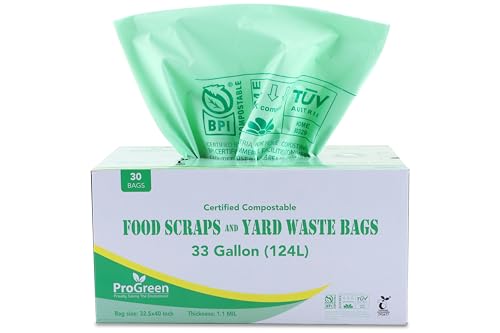
Finding a genuinely compostable bag in the 33-gallon size category is surprisingly difficult, and ProGreen delivers one of the few options that holds up under real-world conditions. At 1.1 mil thickness — the thickest compostable bag in our roundup — these bags handled wet leaves, grass clippings, and garden debris without tearing during our yard work testing. The 32.5 x 40 inch dimensions fit standard 33-gallon cans and bins, making them a direct swap for conventional lawn and leaf bags.
ProGreen carries triple certification: US BPI, VINCOTTE, and TÜV AUSTRIA. That TÜV AUSTRIA HOME OK compost certification is particularly noteworthy because it means these bags are verified for backyard composting, not just industrial facilities. For anyone maintaining a large compost system that accepts yard waste, this eliminates the extra step of emptying bags before composting. The bags also meet New York and California state requirements for compostable products, which is relevant for buyers in jurisdictions with strict labeling laws.
The 30-count box is the main drawback. At this size and thickness, the per-bag cost is noticeably higher than conventional alternatives. We recommend these specifically for yard waste and large-scale composting operations rather than everyday trash duty. The thick material that makes them durable for heavy yard waste is overkill for standard household garbage, and the premium price doesn't justify that use case. For those focused on reducing waste in other areas of the household, our roundup of the best bakeware sets includes several long-lasting options that cut down on disposable pan usage.
Pros:
Cons:
The AYOTEE bags occupy an interesting middle ground in the eco-friendly trash bag market. Made from Plastarch Material (PSM) derived from plant starch, they carry the ASTM D6866 certification confirming their biobased content. At 1.18 mil thick, they're notably sturdier than most competing compostable kitchen bags, and the 60-count box (four rolls of 15) delivers reasonable value for budget-conscious buyers looking to make a switch from conventional plastic.
We tested these as everyday kitchen bags for two weeks. The 23.6 x 31.5 inch dimensions run slightly larger than standard 13-gallon bags, which is actually helpful — there's enough material to fold over the rim of the can, preventing the frustrating slide-down problem that plagues thinner eco bags. The 1.18 mil thickness handled mixed kitchen waste including chicken bones and broken glass without puncturing, which impressed us given the price point. They held up comparably to the Hippo Sak in durability tests, though without the convenience of handles.
One critical caveat that buyers need to understand: AYOTEE bags are degradable under industrial composting conditions only. They are explicitly not suitable for backyard composting. The ASTM D6866 certification verifies the biobased content of the material but does not guarantee full compostability the way ASTM D6400 does. For kitchen trash destined for a standard landfill or curbside collection, this distinction is academic — the bags still reduce fossil fuel usage in production. But anyone purchasing specifically for composting should look at the BioBag or ProGreen options instead.
Pros:
Cons:
Full Circle's 30-gallon bags take a straightforward approach: provide a large-capacity biodegradable option that feels and performs like a conventional trash bag. The 40-count box is one of the most generous in this size category, and the black color hides contents — a small detail, but one that matters for curbside pickup where clear or green bags can be an eyesore. The reinforced sides and sturdy bottom held up during our testing with mixed household waste including moderately heavy loads.
These bags are made from biodegradable plastic that breaks down naturally over time, though Full Circle doesn't specify a particular certification standard on the packaging. That's a red flag for buyers who want verified compostable products, but it's an honest positioning — the bags are designed for conventional waste disposal with a reduced environmental footprint rather than for composting use. The 30-gallon capacity holds substantially more than standard kitchen bags, making them ideal for whole-house trash consolidation or garage bins.
In our durability testing, the Full Circle bags performed adequately but didn't match the strength of thicker options like the ProGreen. They handled normal household waste without issue but showed strain with heavy or sharp items. The price per bag is reasonable given the 40-count quantity, positioning these as a practical midrange option for large bins. Buyers looking for a simple, high-capacity eco bag without composting pretensions will find these reliable. Those who want guaranteed compostability in a large format should step up to the ProGreen instead.
Pros:
Cons:
This USDA Certified option shares a similar philosophy with our top-pick Hippo Sak — sugarcane-derived polyethylene that's plant-based but not compostable. Where it differs is in its domestic production credentials. Designed, manufactured, and packed entirely in the USA, these bags appeal to buyers who prioritize domestic supply chains alongside environmental considerations. The carbon negative claim is noteworthy: the sugarcane used in production absorbs more CO2 during growth than is emitted during manufacturing.
The 45-count box is the primary downside compared to the 90-count Hippo Sak. At roughly half the bag count, the per-unit cost is higher for what is functionally a very similar product. Both use sugarcane-based PE, both carry USDA Biobased certification, and both include handles for easy carrying. We found the handle design on these bags to be slightly more rigid than the Hippo Sak's, which made tying a bit less flexible but created a more secure grip when carrying to the curb.
The 13-gallon standard size fits typical kitchen cans, and the bags performed reliably across two weeks of daily kitchen use in our testing. Leak resistance was on par with the Hippo Sak, and tear strength was comparable. Our honest assessment: unless made-in-USA sourcing is a priority, the Hippo Sak's larger count and lower per-bag cost make it the better value. But for buyers who care about domestic manufacturing — and the carbon negative certification does carry meaningful environmental weight — these bags are a legitimate alternative worth the premium.
Pros:
Cons:
The Reli. bags dominate the bulk value category with a massive 250-count box of 40-45 gallon bags. For businesses, offices, or large households that go through trash bags quickly, the per-bag economics are unbeatable. The 40 x 46 inch bags fit standard 45-gallon cans and outdoor bins, and at 14 microns (roughly 0.55 mil), they're adequate for standard mixed waste though noticeably thinner than the ProGreen's 1.1 mil construction.
These bags use oxo-biodegradable technology certified under ASTM D6954, which is a fundamentally different approach from the compostable options above. Oxo-biodegradable bags contain metal salt additives that cause the plastic to fragment when exposed to oxygen, moisture, and soil microbes. The bag breaks into smaller and smaller pieces over time rather than decomposing into compost-safe organic matter. This distinction matters enormously: environmental groups have criticized oxo-biodegradable technology for potentially producing microplastics, and several countries have moved to restrict or ban these products. The EU banned oxo-degradable plastics in 2021.
We're including the Reli. bags because they fill a genuine market need — affordable, large-format bags with at least some environmental consideration — but we want to be blunt about the limitations. If true compostability matters, these are not the answer. If the goal is simply reducing conventional plastic use at scale and the bags will end up in a landfill regardless, the oxo-biodegradable designation represents a modest improvement over pure petroleum-based alternatives. The sheer value of 250 bags makes them practical for commercial or multi-unit residential applications where volume matters more than composting credentials. Smart online home product shopping means understanding exactly what certifications promise — and what they don't.
Pros:
Cons:
The single most important factor when shopping for biodegradable trash bags is understanding what certifications the product carries — and what each one guarantees. ASTM D6400 and BPI certification mean the bag will fully decompose in a commercial composting facility within 180 days. This is the gold standard. ASTM D6954 covers oxo-biodegradable products that fragment over time but may leave residues. USDA BioPreferred/Biobased certifies that the raw materials come from renewable plant sources but says nothing about end-of-life decomposition. Many buyers conflate these standards, leading to disappointment. Our recommendation: match the certification to the actual disposal method. If the bags are going to a landfill anyway, biobased plant materials (Hippo Sak, USDA Certified) reduce fossil fuel consumption in manufacturing. If the bags are going to a compost facility or backyard pile, insist on ASTM D6400 or TÜV AUSTRIA HOME OK certification.
Biodegradable and compostable bags are inherently less durable than conventional polyethylene at the same thickness. This means thickness ratings matter more than they would for standard trash bags. In our testing, bags below 0.7 mil were suitable only for light, dry waste — food scraps, paper, and yard debris without sharp edges. The 1.0-1.2 mil range (AYOTEE at 1.18 mil, ProGreen at 1.1 mil) handled mixed kitchen waste including occasional sharp items. Most buyers should choose the thickest option available in their required size and accept the higher per-bag cost as the price of reliability. Size-wise, 13-gallon bags fit standard kitchen cans, 30-33 gallon bags suit large household or yard waste bins, and 40-45 gallon bags are best for outdoor or commercial use.
This is the most overlooked distinction in the entire category. Industrial composting facilities maintain temperatures of 130-160°F with controlled moisture and aeration — conditions that break down certified bags reliably. A backyard compost pile typically reaches 90-140°F at best and lacks the controlled environment of a facility. Bags certified only for industrial composting (like the AYOTEE) will sit largely intact in a backyard pile for months or years. Only bags carrying specific home-compost certifications — BioBag's BPI/ASTM D6400 and ProGreen's TÜV AUSTRIA HOME OK — have been verified to decompose in backyard conditions. Before purchasing, check whether the local municipality actually accepts compostable bags in curbside compost collection; many don't, because sorting contaminated bags from conventional plastic is too difficult for processing facilities.
Eco-friendly bags consistently cost more per unit than conventional alternatives. The range in our roundup spans from the Reli.'s bulk 250-count box (pennies per bag at 45 gallons) down to the USDA Certified's 45-count box at 13 gallons. Buyers should think about annual consumption: a household using one kitchen bag per day goes through roughly 365 bags per year. At that rate, the difference between a 90-count box (Hippo Sak, roughly 4 purchases per year) and a 45-count box (USDA Certified, roughly 8 purchases per year) adds up meaningfully. For anyone managing a busy kitchen on a budget, pairing sustainable bags with efficient kitchen practices — our guide to the best lightweight vacuums covers keeping things clean between bag changes — helps reduce overall waste volume and bag consumption.
Biodegradable is a broad term meaning the material will eventually break down through natural processes, but it doesn't specify how long that takes or what residues remain. Compostable is a specific, certified claim (ASTM D6400 in the US) meaning the bag will fully decompose into non-toxic organic matter within 180 days in a commercial composting facility. All compostable bags are biodegradable, but not all biodegradable bags are compostable. For practical purposes in 2026, look for specific certifications rather than generic "biodegradable" labels.
Yes, all the bags in our roundup work perfectly well in standard trash cans destined for landfill pickup. However, bags designed for composting (BioBag, ProGreen) will not decompose in a landfill — modern landfills are sealed environments with minimal oxygen and moisture, which prevents biodegradation. Using compostable bags for landfill waste is not harmful, but it negates their composting benefit. Plant-based bags like the Hippo Sak are arguably a better choice for landfill-bound waste because they reduce fossil fuel use in production without making compostability promises that won't be fulfilled.
Most biodegradable and compostable bags have a shelf life of 12-18 months when stored properly in a cool, dry location away from direct sunlight. Truly compostable bags like BioBag can begin degrading sooner if exposed to heat and humidity. Plant-based polyethylene bags (Hippo Sak, USDA Certified) are chemically stable and have shelf lives comparable to conventional plastic bags. We recommend buying in quantities that will be used within six months and storing bags in a pantry or climate-controlled area rather than a garage or outdoor shed.
This is genuinely contentious. Oxo-biodegradable bags (like the Reli. in our roundup) use metal salt additives that cause plastic to fragment into smaller pieces over time. Proponents argue this prevents long-lasting plastic pollution. Critics — including the European Union, which banned oxo-degradable plastics — argue that fragmentation creates microplastic particles without achieving true biodegradation. Our team's position: oxo-biodegradable bags are a marginal improvement over conventional plastic but fall well short of certified compostable products. Buyers with composting access should choose ASTM D6400 certified bags instead.
Generally no, but the gap has narrowed significantly. In our 2026 testing, the best options (Hippo Sak, AYOTEE at 1.18 mil, ProGreen at 1.1 mil) handled typical kitchen waste including wet food scraps, liquids, and moderately sharp items without leaking or tearing. They still can't match the puncture resistance of a premium conventional bag like Glad ForceFlex with its diamond-texture technology. For extremely heavy or sharp waste — construction debris, broken glass in quantity, or large amounts of liquid — conventional bags remain more reliable. For normal kitchen use, the top biodegradable options are now strong enough that most households won't notice a difference.
For the primary kitchen trash can, 13-gallon bags are the standard fit and what most households need. The Hippo Sak or AYOTEE are our top picks in this size. For countertop compost pails, 3-gallon bags like the BioBag are essential — full-size bags won't fit small bins properly. For outdoor bins, yard waste, or garage use, 30-33 gallon bags (ProGreen or Full Circle) are the right choice. Buyers managing large properties or commercial spaces should look at the 40-45 gallon range (Reli. for bulk value). Purchasing the wrong size is the most common mistake — measure the trash can height and diameter before ordering.
 |
 |
 |
 |

About Rick Goldman
Rick Goldman grew up traveling the Pacific Coast and developed an early appreciation for regional and international cuisines through exposure to diverse food cultures from a young age. That culinary curiosity shaped his approach to kitchen gear — he evaluates tools based on how well they perform across different cooking styles, ingredient types, and meal occasions. At BuyKitchenStuff, he covers kitchen equipment reviews, recipe guides, and food-focused buying advice.
