by Rick Goldman
The global sugar substitutes market surpassed $20 billion in 2025, and coconut sugar alternatives now represent one of the fastest-growing segments as home bakers and health-conscious cooks search for options that match coconut sugar's caramel depth without its price tag or glycemic impact. Whether you're running low on your favorite bag of coconut sugar mid-recipe or actively looking for a permanent swap, the good news is that several excellent alternatives exist in 2026 — each with distinct strengths depending on whether you prioritize flavor, health metrics, or baking performance.
Coconut sugar has earned its reputation as a "better" sweetener thanks to its lower glycemic index compared to white sugar and its trace minerals like iron, zinc, and potassium. But it's not perfect. It's expensive, it can be hard to source consistently, and its strong molasses-like flavor doesn't work in every recipe. The substitutes on this list range from zero-calorie monk fruit blends to minimally processed cane options, giving you flexibility whether you're managing blood sugar, counting calories, or simply need something that measures cup-for-cup in your favorite cooking projects.

After testing and comparing dozens of sweeteners for taste, baking behavior, nutritional profile, and value, we've narrowed the field to seven standout products. Some mimic coconut sugar's caramel warmth almost perfectly. Others take a completely different approach — stripping out calories entirely while still delivering sweetness you can actually enjoy. Here's what you need to know before you buy.
Contents
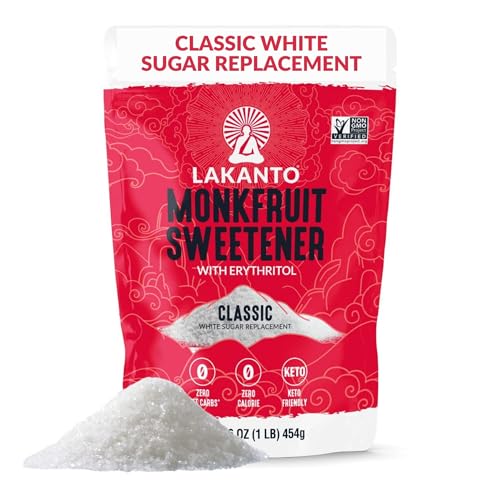




If you want a coconut sugar substitute that measures cup-for-cup and brings zero calories to the table, Lakanto's monk fruit and erythritol blend is the one to beat in 2026. The sweetness comes from mogrosides — compounds extracted from monk fruit that are roughly 200 times sweeter than sugar — balanced with erythritol to achieve a granulated texture and sweetness level that genuinely mirrors white sugar. You won't get the caramel depth of coconut sugar here, but the clean, neutral sweetness makes this the most versatile zero-calorie option on the market.
In baking, Lakanto dissolves smoothly into batters and doughs without the gritty residue that plagues some erythritol-heavy sweeteners. Cookies spread properly, muffins rise predictably, and you can cream it with butter just like conventional sugar. For beverages — coffee, tea, smoothies — it disappears almost instantly. The 1 lb bag is a practical starting size, though serious bakers will want to size up quickly given how fast you'll run through it when using it as a 1:1 replacement.
Where Lakanto falls short is in recipes that rely heavily on sugar's moisture-retention and browning properties. Caramelization is limited compared to real sugar, and very delicate pastries may notice a slight cooling sensation from the erythritol. But for everyday cooking and baking where you want to slash calories without sacrificing sweetness, this is our top pick. If you enjoy experimenting with healthier ingredients in your morning routine, you might also appreciate our guide to the best electric milk frothers for crafting café-quality drinks at home.
Pros:
Cons:
Swerve is the sweetener that converted a lot of skeptics. Built on a blend of erythritol and oligosaccharides derived from starchy root vegetables, it delivers something that most sugar alternatives struggle with: genuine browning and caramelization. If your coconut sugar recipes lean heavily on cookies, crème brûlée, or anything that needs a golden crust, Swerve handles that chemistry in ways that monk fruit blends simply cannot match.
The 1:1 measurement ratio keeps things simple. A cup of Swerve replaces a cup of sugar — no conversion charts needed, no guesswork. The granular texture is slightly finer than standard white sugar, which actually works in your favor for creaming with butter and achieving smooth batters. Taste-wise, Swerve is remarkably clean. There's no metallic edge, no licorice undertone, and no lingering bitterness. It's not identical to coconut sugar's deep molasses character, but as a neutral sweetener that performs like real sugar in the oven, it's outstanding.
The 12-ounce package is on the small side, especially at the premium price point. And like all erythritol-based sweeteners, consuming large quantities in one sitting can cause digestive discomfort for some people. But for controlled baking use where you need zero net carbs and reliable performance, Swerve earns its spot as the baker's choice among coconut sugar alternatives.
Pros:
Cons:

If your goal is to replace coconut sugar with something that has a similar flavor profile — that deep, toffee-like richness — Sucanat is your best bet. Short for "SUgar CAne NATural," Sucanat is made by simply evaporating organic cane juice and retaining virtually all of the original molasses content. The result is a granulated sweetener with a warm, complex flavor that comes closer to coconut sugar than anything else on this list.
NOW Foods' version comes in a generous 2-pound bag, certified organic and non-GMO. The granules are slightly coarser than standard white sugar but finer than turbinado, making them easy to measure and incorporate into most recipes. You can use it as a straight 1:1 swap in cookies, quick breads, marinades, and sauces. It melts smoothly in hot liquids and adds a gorgeous amber color to baked goods. Nutritionally, Sucanat retains more minerals than refined sugar — small amounts of iron, calcium, and potassium — though it's still a full-calorie sweetener with a glycemic impact comparable to regular sugar.
The trade-off is clear: you're not cutting calories or carbs here. This is a flavor-focused substitute for people who love coconut sugar's taste but want a more affordable, easier-to-find alternative. For anyone following a calorie-conscious eating plan, you'll want to look at the monk fruit or stevia options instead. But for pure flavor matching, Sucanat is unbeatable.
Pros:
Cons:
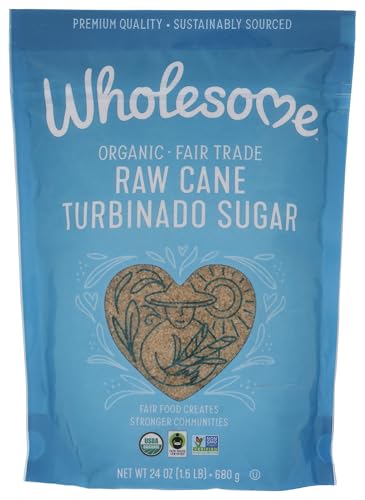
Turbinado sugar is what most people picture when they think "raw sugar" — large, golden crystals with a mild caramel flavor and a satisfying crunch. Wholesome's organic version delivers exactly that, sourced sustainably from South American sugarcane and minimally processed to retain a thin layer of natural molasses around each crystal. It won't replicate coconut sugar's full depth of flavor, but it bridges the gap between white sugar and coconut sugar at a fraction of coconut sugar's cost.
The 24-ounce package is ideal for moderate use, particularly as a topping for oatmeal, baked goods, and beverages. Those large sparkling crystals make a gorgeous finish on muffins, scones, and crumble toppings. In coffee and tea, turbinado dissolves slowly due to the crystal size, which some people actually prefer — it gives you a gradual sweetening effect as you sip. For baking, keep in mind that the coarser granules may not cream as smoothly with butter as finer sugars. You may want to pulse it briefly in a food processor for recipes that demand a smooth batter.
Wholesome earns points for its sourcing transparency and organic certification. The company is Fair Trade certified and committed to sustainable farming practices, which matters if your interest in coconut sugar alternatives extends to environmental concerns. This isn't a low-calorie option — turbinado has roughly the same caloric content as white sugar — but it's a minimally processed, great-tasting sweetener that works in the vast majority of recipes calling for coconut sugar.
Pros:
Cons:

Sometimes the simplest substitute is the right one. Light brown sugar is what many professional bakers reach for when coconut sugar runs out, and for good reason: the molasses content gives it a warm, butterscotch-like sweetness that overlaps significantly with coconut sugar's flavor range. Imperial's Dixie Crystals version is a dependable, no-surprises option — fine-grained, moist, and packed with the kind of flavor that makes cookies chewy and sauces rich.
The 2-pound bag provides excellent value, and the texture is exactly what you'd expect from a quality light brown sugar. It packs firmly into a measuring cup, creams beautifully with butter, and adds both sweetness and moisture to baked goods. That moisture component is actually where brown sugar has an edge over coconut sugar in certain recipes. Cookies stay softer longer. Banana bread comes out more tender. Marinades develop a deeper glaze. For these applications, brown sugar isn't just a substitute — it might actually be the better choice.
The limitation is nutritional. This is refined sugar with added molasses, full stop. There's no glycemic advantage, no meaningful mineral content, and no health halo. If you switched to coconut sugar specifically for health reasons, brown sugar moves you backward. But if you're purely chasing flavor and baking performance in traditional recipes, Imperial's light brown sugar does the job reliably and affordably. According to the Harvard T.H. Chan School of Public Health, the body processes all added sugars similarly regardless of their source, so the health distinction between coconut sugar and brown sugar is smaller than many people assume.
Pros:
Cons:

Stevia-based sweeteners have come a long way since the early days of bitter, metallic-tasting powders. Truvia's Sweet Complete formula combines stevia leaf extract with erythritol and chicory root fiber to produce a granulated sweetener that measures cup-for-cup like sugar and actually bakes and browns in recipes. The 32-ounce bag is generous — significantly more product than most zero-calorie competitors offer — making it a practical choice for regular use.
The flavor profile is cleaner than you might expect if you've been burned by stevia products before. The chicory root fiber adds body and helps mask the slight herbal edge that pure stevia can carry, while the erythritol provides bulk and that familiar granulated texture. In our testing, it performed well in cookies, muffins, and quick breads, with results that were only slightly less golden than sugar-based versions. In coffee and tea, it dissolves readily and sweetens without any lingering aftertaste — a genuine improvement over earlier stevia formulations.
That said, if you're particularly sensitive to stevia's flavor, you'll still detect a subtle green, herbal note in delicate applications like whipped cream or vanilla custard. It's faint, but it's there. For robust flavors — chocolate, cinnamon, coffee-based recipes — it's a non-issue. The sugar-free, non-GMO, gluten-free, kosher, and vegan certifications make this a strong all-around choice for health-conscious kitchens, and the price per ounce is competitive with Lakanto and Swerve. If you're looking for ways to incorporate this into a morning routine alongside healthier habits, our steel cut oats recipe pairs perfectly with a measured scoop of Truvia.
Pros:
Cons:

Crown Maple's organic maple sugar is the luxury pick on this list — and it earns that position. Made by slowly boiling estate-produced organic maple syrup until the moisture evaporates and the remaining solids crystallize, this is about as far from a processed sweetener as you can get. The flavor is extraordinary: deep, complex maple with notes of caramel, vanilla, and a subtle smokiness that coconut sugar simply can't replicate. It's a different flavor profile entirely, but it occupies the same "interesting, complex sweetener" space that draws people to coconut sugar in the first place.
The small-batch process produces what Crown Maple calls "maple pearls" — irregular, slightly coarse granules that dissolve readily in hot liquids and work beautifully in baking. You can substitute it 1:1 for cane sugar or coconut sugar in most recipes, and the maple flavor adds a dimension that elevates everything from morning oatmeal to cocktail rimming. It's particularly stunning in coffee, where the maple and roasted coffee notes complement each other naturally. For baked goods, think maple-walnut scones, pecan pies, or autumn-spiced cookies where the maple character enhances rather than competes.
The elephant in the room is price. At 8 ounces, this is dramatically more expensive per ounce than any other option on this list. You're paying for certified organic maple syrup, small-batch artisan processing, and estate production — and you can taste the difference. But this isn't an everyday sweetener for most people. It's a finishing sugar, a special-occasion ingredient, and a gift-worthy pantry item. If your budget allows it and you appreciate craft ingredients, Crown Maple is a genuine delight. It's also naturally rich in antioxidants and minerals including manganese and riboflavin, giving it a slight nutritional edge over refined sugars.
Pros:
Cons:

Your reason for switching determines which substitute makes the most sense. If you're cutting calories or managing blood sugar, zero-calorie options like Lakanto, Swerve, and Truvia are your only real contenders. If you're switching because of cost or availability, full-calorie alternatives like Sucanat, turbinado, and brown sugar give you similar flavor at lower prices. And if you're simply looking for variety or a flavor upgrade, Crown Maple offers something coconut sugar can't.
Be honest with yourself about your priorities. A sweetener that's zero-calorie but tastes slightly off in your favorite cookie recipe will end up collecting dust. Meanwhile, a full-calorie option you actually enjoy using will keep you cooking from scratch instead of reaching for processed alternatives. The best substitute is the one you'll consistently use.
Sugar does more than sweeten — it provides structure, moisture, browning, and tenderization in baked goods. Coconut sugar performs reasonably well across all these functions, so your substitute needs to keep up. Among the zero-calorie options, Swerve leads in browning and caramelization. Lakanto and Truvia handle creaming and dissolution well but brown less. Among full-calorie options, brown sugar adds the most moisture, Sucanat provides the closest flavor match, and turbinado contributes the best crunch for toppings.
For general-purpose baking, any of these seven will work in most recipes without disaster. But for precision baking — French macarons, Italian meringue, spun sugar work — you'll want to stick with full-calorie options that behave chemically like real sugar. Zero-calorie substitutes introduce too many variables in advanced pastry applications.
Coconut sugar's signature is a warm, caramel-butterscotch flavor with hints of molasses and a slightly lower sweetness intensity than white sugar. Here's how each substitute stacks up:
Sucanat comes closest — it has the same deep, unrefined complexity and toffee notes. Light brown sugar is the next best match with its butterscotch warmth. Turbinado offers a milder, more neutral caramel. Maple sugar goes in a completely different but equally interesting direction. The zero-calorie options (Lakanto, Swerve, Truvia) are clean and neutral — they don't try to mimic coconut sugar's flavor, and that's fine. They simply provide sweetness without the caloric cost.

Price per ounce varies dramatically across this list, so think about how much you'll use and how often. Imperial's brown sugar and Wholesome's turbinado offer the best value for heavy use. Lakanto and Truvia provide reasonable value in the zero-calorie tier, especially Truvia's 32-ounce bag. NOW Foods' Sucanat hits a sweet spot between specialty flavor and practical pricing. Crown Maple is the outlier — treat it as a finishing ingredient rather than an everyday workhorse, and the price becomes more palatable.
Storage matters too. Brown sugar needs airtight storage to prevent hardening. Erythritol-based sweeteners (Lakanto, Swerve, Truvia) are virtually indestructible in sealed containers. Maple sugar and turbinado both store well in cool, dry conditions. Sucanat can clump over time but breaks apart easily with a fork.
Yes, all seven products on this list can be used as 1:1 replacements for coconut sugar in most recipes. Lakanto, Swerve, Truvia, Sucanat, brown sugar, and maple sugar all measure cup-for-cup. Turbinado works 1:1 by volume as well, though its coarser crystals may benefit from a quick pulse in a food processor for recipes that need fine granules. The zero-calorie options may produce slightly different textures in delicate pastries, but for everyday cooking and baking, a straight swap works well.
Lakanto Monk Fruit Sweetener, Swerve, and Truvia are all suitable for diabetic and ketogenic diets. They contain zero net carbs and have no measurable impact on blood glucose or insulin levels. Among these three, Lakanto and Swerve are the most widely recommended in keto communities because of their clean taste and reliable baking performance. Sucanat, turbinado, brown sugar, and maple sugar all have glycemic impacts similar to regular sugar and should be used cautiously by anyone monitoring blood glucose.
The health advantages of coconut sugar are frequently overstated. It does contain small amounts of minerals like iron, zinc, calcium, and potassium, plus a fiber called inulin that may slightly slow glucose absorption. Its glycemic index (around 35-54 depending on the study) is lower than white sugar's 65, but the difference is modest in real-world portions. Your body still processes coconut sugar as sugar. If health is your primary motivation for finding a substitute, zero-calorie options like monk fruit or stevia blends offer a more meaningful nutritional shift than swapping one caloric sugar for another.
Somewhat, yes. Sugar plays multiple structural roles in baking beyond sweetness — it helps with moisture retention, browning through the Maillard reaction, and tenderizing gluten. Zero-calorie substitutes handle some of these functions better than others. Swerve browning is the closest to real sugar. Lakanto and Truvia dissolve well and cream adequately but may produce slightly paler results. Cookies made with erythritol-based sweeteners can sometimes have a drier or crumblier texture. For best results, consider adding a tablespoon of honey or molasses to the recipe to compensate for lost moisture and browning.
Absolutely, though you'll need to adjust your recipe. Both maple syrup and honey are excellent coconut sugar substitutes when you account for their liquid content. Use about three-quarters of a cup of liquid sweetener for every cup of coconut sugar, and reduce the other liquids in your recipe by about 3 tablespoons. Honey adds floral notes while maple syrup brings a warm, woodsy sweetness. Both brown nicely and add moisture to baked goods. Keep in mind that liquid sweeteners will change the consistency of dry mixtures like spice rubs or crumble toppings where a granulated sugar is essential.
All granulated sweeteners do best in airtight containers stored in a cool, dry place away from direct sunlight. Brown sugar requires the most attention — it hardens quickly when exposed to air, so store it in a resealable bag or container with a terra cotta brown sugar saver. Erythritol-based sweeteners like Lakanto, Swerve, and Truvia are the most shelf-stable and rarely clump or degrade. Sucanat and turbinado can develop minor clumping over several months but remain perfectly usable — just break apart any clumps with a fork. Maple sugar should be sealed tightly to prevent moisture absorption, which can cause it to soften and lose its granulated texture. Under proper storage, all seven products will last well over a year.
Match the substitute to the reason you're switching — zero-calorie monk fruit if you're cutting sugar, Sucanat if you're chasing that same caramel depth, and brown sugar if you just need something that works in every recipe without overthinking it.
 |
 |
 |
 |

About Rick Goldman
Rick Goldman grew up traveling the Pacific Coast and developed an early appreciation for regional and international cuisines through exposure to diverse food cultures from a young age. That culinary curiosity shaped his approach to kitchen gear — he evaluates tools based on how well they perform across different cooking styles, ingredient types, and meal occasions. At BuyKitchenStuff, he covers kitchen equipment reviews, recipe guides, and food-focused buying advice.
